


and played up scientific theory (or even “points of view”). It may seem odd to claim that Karl Popper downplayed scientific observation. This may be a position which many readers will associate with “radical” philosophers of science (such as Thomas Kuhn and Paul Feyerabend). However, downplaying observation isn’t the same as erasing observation. Indeed, this essay will attempt to clarify what exactly Popper’s position was.
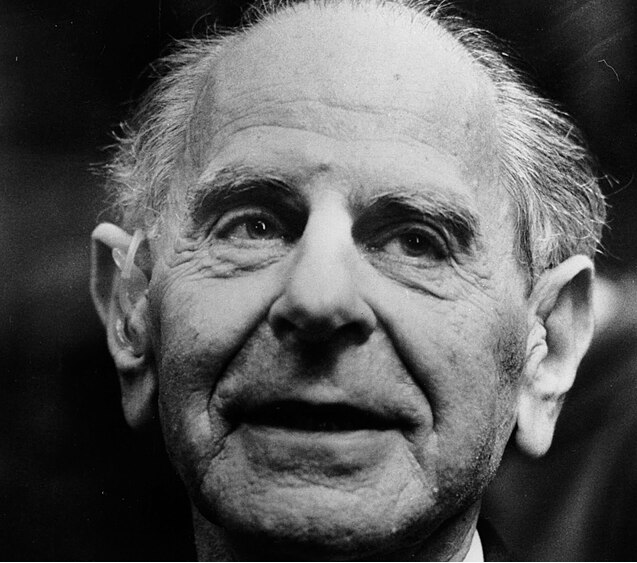
Karl Popper told two anecdotes to get his point across about what can be called the observations-first philosophy of science. The first anecdote was about a group of physicists (i.e., not philosophers) he was teaching in Vienna in the 1920s. Popper attempted to show these scientists why the observations-first position is “absurd”. Firstly, he said:
“‘Take pencil and paper; carefully observe, and write down what you have observed!’”
Predictably, the student physicists wanted to know what Popper wanted them to observe. So even though they might well have believed themselves to be observations-first physicists, they still wanted to know what it was they were supposed to be observing.
Yet if observation is everything, then they had no right to ask that question. (Or at least Popper seemed to believe that.) Again, observation must be motivated by things which are extraneous to the observation itself.
Popper’s second example seems just as extreme — at least in retrospect. He told his readers about a
“man who dedicated his life to natural science, wrote down everything he could observe, and bequeathed his priceless collection of observations to the Royal Society to be used as inductive evidence”.
At least here this natural scientist recognised the distinction which can be made between “pure” observations, and what may follow from them. In other words, he deemed his observations to be the fuel/ammunition (i.e., “inductive evidence”) to be used by other scientists. Yet this man still believed that he was simply observing “everything he could observe”. In other words, he didn’t believe that his observations expressed any “points of view” (see later), theory, interests, etc. Thus, he believed that all the theorising came later, when, in actual fact, he too was guilty of it. After all, and to state the obvious, he probably never went out of his way to observe a piece of shit on the ground, the stars in the sky, or anything else that didn’t interest him.
All this may seem like a simplification — or even a caricature — of a previous philosophy of science. Yet the English philosopher John Cottingham stated that both Francis Bacon and J.S. Mill believed that
“the characteristic method of science is to proceed from particular observations to general laws or theories”.
Popper on Scientific Points of View
One way in which Popper squares with later “radical” philosophers of science was when he stated that “there must always be a point of view”. He went on to provide some examples: “a system of expectations, anticipations, assumptions or interests”. In simple terms, scientific research, theorising or experimentation wouldn’t even occur in the first place if it weren’t for these points of view. Popper opposed this to the traditional observations-first position, which he stated is “still so widely and so firmly held that my denial of it is often met with incredulity”.
So scientists don’t just go out into the world and randomly observe things without prior expectations, anticipations, assumptions and/or interests. Indeed, all these points of view can be fleshed out individually. Thus, scientific observers expect at least some things (of a known kind) to happen. They assume that certain things will happen. Perhaps more importantly, they have an interest (whatever form that may take) in what it is they’re observing.
Popper later comes at this from a slightly different angle. He wrote:
“Observation is always selective. It needs a chosen object, a definite task, an interest, a point of view, a problem.”
Popper then broadened all this out by pointing out the fact that scientific observers require a scientific language… and much else. In Popper’s own words, the description of any given observation
“presupposes a descriptive language, with property words; it presupposes similarity and classification, which in its turn presupposes interests, points of view, and problems”.
The Interpretation of Nature
Popper went further than a mere stress on points of view by stating that
“our attempts to force interpretations upon the world were logically prior to the observation of similarities”.
Here interpretation is stressed. Now the importance of interpretation in physics is usually only seen within the domain of quantum mechanics. Yet Popper was arguing that scientific interpretation occurs across the board. Popper also wrote that scientists don’t “wait[ ], passively [for nature] to impress or impose regularities” on them. Instead, they “actively try to impose regularities upon the world”. In other words, the world (or nature) itself doesn’t tell scientists what to think and say about it. And it certainly doesn’t place its own theories on their plate.
Furthermore, where there are human interpretations there are human “inventions”. Popper also called such inventions “conjectures”. Such conjectures are “boldly put forward for trial, to be eliminated if they classed with observations”.
Popper and Hume
Popper expressed his position against observations-first science by going back to David Hume’s idea that observation alone isn’t enough when it comes, specifically, to induction and causality. In Hume’s case, it’s not theory which comes first, but “habit and belief”. Thus, Popper quotes Hume stating the following words:
“‘[E]ven after the observation of the frequent or constant conjunction of objects, we have no reason to draw any inference concerning any object beyond those of which we have had experience.”
Anything more we draw out of constant conjunction is not down to any observations we may make. We need to bring something else to the party. In Hume’s case, it was “habit and belief”. For Popper, it was theory and/or points of view. (The latter being similar to Hume’s habit and belief.) Popper himself concluded (from Hume’s words above) by stating that
“[a]s a result we can say that theories can never be inferred from observation statements, or rationally justified by them”.
We know that observation-first science and philosophy still existed when Popper wrote those words because he used the words “observation statements”. Observation statements were the building blocks of logical positivism’s philosophy of science… at least at a certain point in history. (In actual fact, logical positivists had slightly different views on observation statements.)
Popper in Favour of Observation
All the above said, it certainly wasn’t the case that Popper was attempting to get rid of the need for observations. Obviously not. However, such observations are “rarely accidental” in that they’re
“undertaken with the definite intention of testing a theory by obtaining, if possible, a decisive refutation”.
Again, the theory comes first, and only then are observations made (or cited) as a means to establish a specific end. (In this case, that end being to test the theory.) Again, Popper didn’t deny the importance of observation. He simply argued that observation isn’t everything, and it doesn’t come first. Here’s one example of that. Popper wrote:
“If observation shows that the predicted effect is definitely absent, the theory is simply refuted. The theory is *incompatible with certain possible results of observation*.”
In this instance at least, observation trumps theory. However, that doesn’t mean that the observation somehow came before any theories. This means that an observation which is already coloured with theory (or points of view) trumps another theory. So we really have two theories at different levels. In other words, we have an observation (which is coloured with theory) trumping a theory which is, well, more theoretical.
To repeat: is the prior theory really completely free of all observational data? More accurately, is it really free of all previous observations? In other words, the observations used to test the theory may come after the theory has been established. However, the theory itself will already have observational content. Indeed, it’s hard to know what a scientific theory would look like if it didn’t contain (in some way) any observational or empirical content.

No comments:
Post a Comment