


This essay tackles the statements “I know nothing” and “I know that I know nothing”. Many people believe that both statements were once uttered by Socrates. They weren’t. But if they were, then they’d generate what some people have called a “paradox”. Keith Lehrer is a contemporary philosopher who also believes that he knows nothing. However, his argument attempts to extricate himself from any form of self-refutation.

When I was younger, I believed that I’d scored a point against Socrates when I noted that when he claimed “I know nothing”, he contradicted himself. That was so because Socrates knew at least one thing — that he knew nothing. What’s more, Socrates couldn’t have known only one thing (i.e., that he knew nothing) because from the statement (or premiss) that “I know nothing”, various other statements will follow…
The problem for my young self was that Socrates never said “I know nothing”, let alone “I know that I know nothing”! The closest he came to saying that is in Plato’s Apology:
“I do not think I know what I do not know.”
That isn’t a universal claim like “I know nothing”. Instead, it’s often deemed to be a statement of “epistemic humility”.
That said, there is a passage by Diogenes Laërtius (in his Lives and Opinions of Eminent Philosophers) which was written long after the death of Plato. In that passage, Laërtius stated that Socrates used to say that
“he knew nothing except that he knew that very fact (i.e. that he knew nothing)”.
To complicate matters even more, according to Plato, Socrates did claim the following:
“I know virtually nothing, except a certain small subject — love, although on this subject, I’m thought to be amazing, better than anyone else, past or present.”
Now take this passage:
“I am wiser than this man; it is likely that neither of us knows anything worthwhile, but he thinks he knows something when he does not, whereas when I do not know, neither do I think I know; so I am likely to be wiser than he to this small extent, that I do not think I know what I do not know.”
Here everything is contextual. It’s about knowing things that are worthwhile. It’s also about not claiming that we know what we do not know. So this passage isn’t about universal knowledge or even about universal ignorance: it’s about people pretending to themselves — and to others — that they know (specific) things.
That passage also deems wisdom to follow from not believing that one knows what one doesn’t know. That makes sense. After all, if you believe that you have knowledge about any given subject, and if you don’t, then all sorts of other false claims to knowledge may — or will — follow from that.
Socrates also said that “I know nothing about these things”. Here he was referring only to the body and money.
Historically, Socrates’ dialectic method of teaching was based on the “fact” that he (as a teacher) knew nothing. This was a strategy (if an affected one) used in order to derive knowledge — yes, knowledge — from his students by means of a back-and-forth dialogue.
All that said, the American philosopher Keith Lehrer did tackle the statements “I know nothing” and “I know that I know nothing”. Importantly, he didn’t believe that the sceptic had to accept (or utter) the statement “I know that I know nothing”.
Keith Lehrer Believes He Knows Nothing
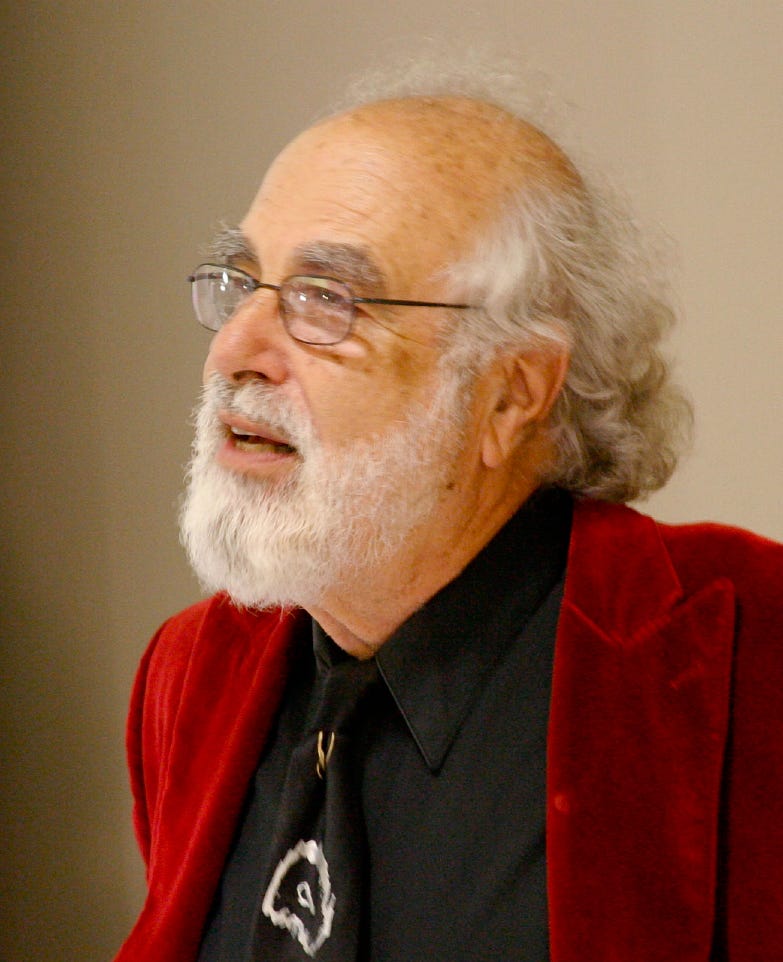
Keith Lehrer covered this issue in the following passage:
“The form of scepticism that concerns me does not embody the thesis that we know that we do not know anything. That thesis is obviously self-refuting.”
It clearly isn’t obviously self-refuting at all because many people have taken Socrates to have said “I know that I know nothing”. In any case, what is important here is that Lehrer attempted to get around this self-refutation when he continued:
“Rather, the contention is that no one knows anything, not even that no one knows anything.”
There is a fairly obvious response to that, which Lehrer himself picked up on. If the sceptic
“does not know that he is correct [then] he does not know that you are incorrect when you affirm that you do know something”.
According to the sceptic himself, he knows nothing. It follows that the anti-sceptic may know something simply because the sceptic cannot know that the anti-sceptic knows nothing. Therefore the anti-sceptic may well know something. Indeed, he may well know many things. What’s more, he may know that scepticism is false!
Yet the sceptic
“does not know that we do not know anything, so we do not know that we do know anything, and, moreover, that we do not know anything”.
The upshot here is that the anti-sceptic (whom Lehrer called a “dogmatist”) hasn’t scored a point against the sceptic in that according to the latter, both the sceptic and the anti-sceptic know nothing. Sure, by definition the sceptic cannot know that the anti-sceptic is incorrect about his affirmation — because he knows nothing. The sceptic simply believes that the anti-sceptic cannot know that his affirmation is correct.
To repeat. The anti-sceptic believes that he’s spotted a contradiction in the sceptic’s position. Yet it doesn’t follow that the anti-sceptic has knowledge of his affirmation. He is, however, free to believe that his affirmation is true. However, a belief in an affirmation’s truth alone doesn’t constitute knowledge.
Lehrer then highlights another approach the anti-sceptic may take.
Mustn't the sceptic “fall back on the claim that he knows various things to be true which support his conclusion”? According to the sceptic, he may believe certain things to be true (which can work as his premises). However, he doesn’t know that they are true. Thus, the sceptic
“is not prevented by his agnoiology from believing most of the same things that we believe; indeed, all his position debars him from is believing in such things as would entail that we have knowledge”.
A first reaction to this is to ask this question: Is this a difference that makes a difference? In other words, is there a substantive difference between the sceptic only believing most of the same things other people believe, and someone (perhaps even the sceptic himself) believing he has knowledge about these very same things? After all, if the sceptic believes most of the same things other people believe, then he must have reasons for doing so. The question is whether those reasons amount to — or constitute — knowledge.
In any case, it can be seen that various distinctions have been made between belief, truth and knowledge. In simple terms, one can believe anything. (One can believe that unicorns exist.) Can something be true without us also having knowledge that it’s true? Alternatively, do truth and knowledge form a single package?
The Practical Sceptic
Lehrer picked up on the practical nature of belief in that he acknowledged that the sceptic
“may even consider some beliefs to be more prudent than others or more useful, and he surely may distinguish between what is true and what is false”.
Of course, some beliefs may be more prudent, useful, wise and whatnot. (At least for a given person at a given time.) However, what of the clause “he surely may distinguish between what is true and what is false”? Is this a case of Lehrer claiming that a sceptic can acknowledge that a distinction can be made between what is true and what is false? Or is this simply about the sceptic being allowed (qua sceptic) to believe that certain things are true and certain other things are false?
What’s more, perhaps a belief can only be prudent or useful if we have a modicum of knowledge about the content of that belief, as well as what it is that makes that belief prudent or useful. In addition, isn’t knowledge necessarily involved in deciding what is true and what is false?
Leher summed up his position by saying that the sceptic’s positions
“must not be understood as claims to knowledge but only formulations of what he believes and hopes we shall concede”.
Thus, the sceptic simply believes in his scepticism. He cannot hope for anything more than that.
Yet why should the anti-sceptic care about what the sceptic believes and hopes if such things aren’t grounded in knowledge? Moreover, what status do the sceptic’s beliefs and hopes have if they aren’t grounded in knowledge?
Finally, Lehrer made his last distinction between knowledge and truth when he said that the sceptic’s “words are addressed to us in the full conviction that they are the truth but without any pretense to knowledge”.
This is another statement of Lehrer’s strict divorce between truth and knowledge.
Here again we must ask if Lehrer was simply talking about the sceptic’s belief that certain statements are true. Or was he arguing that even a sceptic can claim that certain statements are actually true?
At least in this sceptic’s case, it’s clear here that truth is utterly divorced from knowledge. Is truth divorced from knowledge in everyone else’s case too?

No comments:
Post a Comment