Saturday, 17 February 2024

Idealism, Mysticism and the Observer Effect


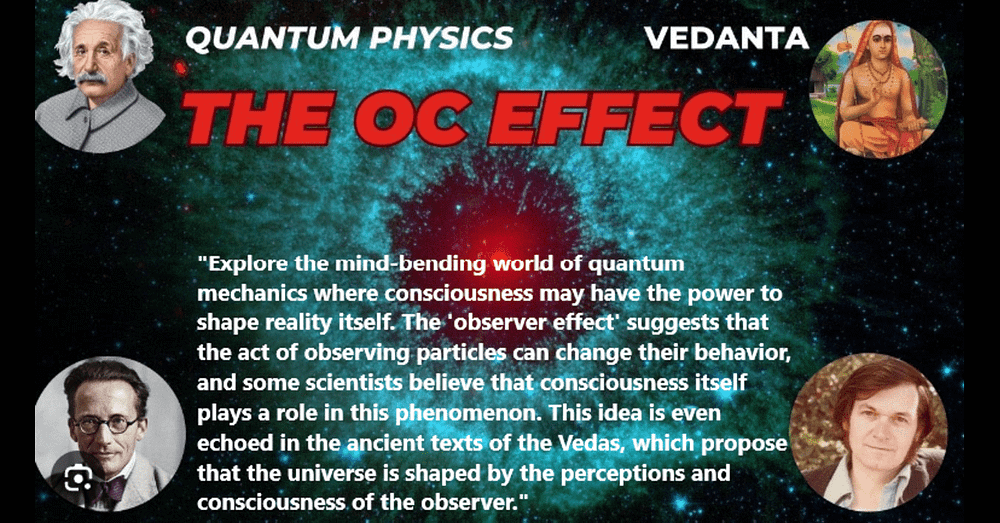
This image is from the YouTube video ‘The Observer Consciousness Effect’. The words embedded within it are from the introduction to this video. The physicists in the image are Albert Einstein, Erwin Schrödinger and Roger Penrose.
“Browse through any bookshop’s new-age section [] and you’ll find wild claims confidently asserted about the uncertainty principle [or observer effect], such as that its implications are ‘psychedelic’ and that it heralds ‘cultural revolution.’ [] Consider the following conversation, published in *American Theatre*, between the well-known theatre director Anne Bogart and Kristin Linklater, the noted vocal coach:
Linklater: ‘Some thinker has said that the greatest spiritual level is insecurity.’
Bogart: ‘Heisenberg proved that. Mathematically.’ 
Linklater: ‘There you are.’
[] The uncertainty principle sprang from a purely mathematical approach to atomic physics, where it has a well-defined and highly restricted scope of applicability.”

— — Robert P. Crease [See source here.]


(i) Introduction
(ii) Mystical Physics… or Simply Mystical Physicists?
(iii) Does Consciousness Affect Reality?
(iv) What Is a Scientific Observation?
(v) Idealism and Scientific Observation
(vi) An Heisenbergian Interlude: Intrinsic Weirdness
(vii) Consciousness, Making a Mark and Observation

Many idealists, New Agers and spiritual commentators (at least those who mention the subjects which will follow) have often focused on the “observer effect” in quantum mechanics. (This is the case even when they don’t actually use that precise technical term.) They do so because they believe that it strongly ties consciousness to reality (or reality to consciousness). Indeed, such people also believe that the observer effect makes reality a product (or an effect) of consciousness.

When the observer effect is discussed, the word “mysticism” is often used too.

The word “mysticism” is, admittedly, vague.

The Copenhagenists, for one, were often accused of “mysticism” in an entirely negative manner. However, New Agers and spiritual commentators use this term positively about the very same physicists.

So why was the word “mysticism” used?

It was primarily for “introducing consciousness into physics”. [See here.]

The other main sense of “mysticism” (i.e., in this context) refers to physicists being influenced (or inspired) by mystical literature of by Eastern religions.

New Agers, spiritual commentators and idealists believe that such physicists noted the observer effect (as well as the uncertainty principle, entanglement, complementarity, etc.) precisely because of their prior knowledge of mystical or eastern literature. The New-Age idea is that such physicists also believed that Eastern ideas provided a good philosophical explanation of such issues within physics.

Yet the vast majority of the physicists who’ve accepted and endorsed the observer effect, entanglement, etc. have done so without ever having read a single word of mystical and/or Eastern literature. Of course, New Agers, spiritual commentators and idealists will (or simply might) respond with the following words:

That doesn’t matter. Non-mystical physicists are still tapping into phenomena which ancient religions have known about for millennia.

What ancient religions understood can only tangentially, analogically and with a very-large amount of artistic license be tied to the theories and ideas of quantum mechanics. After all, anything can be tied to anything if you try hard enough. (This was certainly the case when, for example, Carl Jung’s notion of synchronicity was tied to quantum-mechanical theories.)

In any case, it can be argued that this mysticism best manifested itself in the way in which a very-small number of physicists attempted to “unify mind and physics” in the first half of the 20th century.

Mystical Physics… or Simply Mystical Physicists?
[W]hen a scientist says that he/she believes in god, believers take it to mean that god must be true — because it’s coming from the seekers of objective truth. Not that the believers really needed this validation (they were believers already), but belief is all about post-rationalization and confirmation bias. Hence, ‘validation’ from a few scientists goes a long way. [] They conveniently forget that a majority of scientists do not believe in god.”

— — — The Other Millennial [Source here.]

In his paper ‘Mysticism in quantum mechanics: the forgotten controversy’, the academic Juan Miguel Marin tells us that Hermann Weyl and Wolfgang Pauli

“were both immersed in mysticism, searching for a way to unify mind and physics”.

Some readers may ask why the project of unifying mind and physics is automatically deemed to be a case of “mysticism”. So perhaps this isn’t an automatic thing at all. Yet when it comes to New Agers, spiritual commentators and idealists, it often does seem as if they believe that there’s some kind of automatic link here.

In any case, when Hermann Weyl and Wolfgang Pauli attempted to unify the mystical (if not the mind) with physics, they weren’t doing neuroscience — or, indeed, any kind of science. They had nothing to say about the brain itself. What’s more, physics was only tangentially and analogically linked to this attempted unification of the mind (seen mystically) with physics.

Basically, then, Weyl and Pauli were essentially doing philosophy when they attempted to unify mind and physics.

Juan Miguel Marin also asks us the following question about Arthur Eddington and Erwin Schrödinger:

“Did their shared mysticism have a role to play in whatever insights they gained or mistakes they made? [].”

The answer to that question may well be “Yes”. After all, this is nothing less than the context of discovery. And contexts of discovery are real things.

By way of a comic illustration.

In ‘The Relationship Diremption’ episode of The Big Bang Theory sitcom, the “nerd” character Sheldon Cooper admitted that he “didn’t seek out string theory”. Instead, string theory “just hit [him] over the head one day”.

So what did Mr Cooper mean by that? The following:

“A bully chased me through the school library and hit me over the head with the biggest book he could find.”

That book was on string theory. And Sheldon Cooper was hooked on string theory from that day on.

This fictional account is obviously a joke. However, it has an element of sociological and psychological truth. Indeed, it’s part of the context of discovery. Of course, the context of discovery-context of justification distinction may well be a little too neat and tidy for some people. Yet it still has its large degree of truth, its value, and its uses.

So if we return to the non-fictional physicists Eddington and Schrödinger.

It’s certainly possible that Eddington and Schrödinger might not have had their “insights” had they not also been influenced by mystical literature.

That said, questions can still be asked about this.

At the very least, mystical literature would have had a very minimal role to play on these physicists’ actual theories in physics (i.e., the technical stuff they had published in physics journals).

Take the specific case of Schrödinger.

According to the writer Walter Moore (in his Schrödinger: Life and Thought),

“the philosophy of Schrödinger at this time does not appear to have been influenced by his physics”.

In parallel, Schrödinger also

“often said that one cannot derive philosophical conclusions from physics”.

Yet even when biographical information is included (Marin relies heavily on much context-of-discovery stuff, and Walter Moore obviously mentions it too), it’s still very difficult to establish any concrete, important and relevant links between actual theories in physics and any “eastern” religious texts these named physicists might have read (i.e., at some point in their lives).

In any case, does it matter?

That is, are their genuinely and purely mystical elements embedded within the actual scientific theories of, say, Eddington and Schrödinger?

Alternatively, is all this stuff about physics-and-the-mystical made up of analogy, metaphor, biography, scientifically irrelevant contexts-of-discovery, wishful thinking, wild interpretations, tangential links and circuitous reasoning?

What’s more, the vast majority of New Agers and spiritual commentators who mention these ideas from quantum mechanics, and who also frequently drop the names of famous physicists, do so exclusively to advance their religious (or spiritual) ideas, causes and goals…

In other words, such New Agers and spiritual commentators have almost zero interest in physics qua physics.

[There’s a sizable number of writers here on Medium to whom all this applies. Deepak Chopra is one of that number.]

Does Consciousness Affect Reality?
Juan Miguel Marin also states the following:

[I]n quantum mechanics, physicists’ observations can sometimes affect what they’re observing on a quantum scale.”

To put it strongly: that is simply false…

Or, rather, it’s only false if Marin’s words are read in a certain way. More particularly, it depends on how the word “observations” is read.

The way the general idea above is usually expressed (i.e., by New Agers, spiritual commentators, etc.) makes it seem as if consciousness alone literally affects physical reality.

At an extreme level, this would simply be a form of telekinesis.

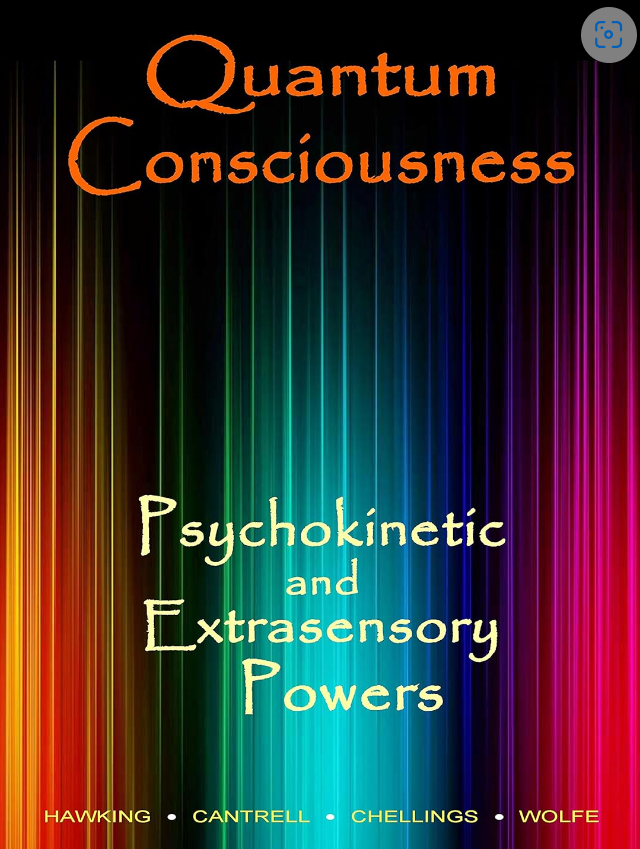
The definition of the word “telekinesis” perfectly fits some of the things New Agers, spiritual commentators, and some idealists say about the observer effect. Thus:

“Telekinesis [], also known as Psychokinesis, is a hypothetical psychic ability allowing an individual to influence a physical system without physical interaction.”

Yet consciousness alone does not affect physical reality.

However, observations as they occur in physics can affect reality.

So now let’s tackle the notion of observation.

What Is a Scientific Observation?

One factor which may well seem idealist to some occurs when one scientist’s observation-based interpretation of an experiment (or experimental space) conflicts with another scientist’s observation-based interpretation of the very same experiment. However, there is no actual causal, telekinetic or otherwise affect on the physical world here. It’s simply a case of different scientists coming to different conclusions, formulating different theories (or interpretations), and even “seeing” different things. [See note 1 on Norwood Russell Hanson.]

The paragraph above can also be deemed to be an indirect reference to Niels Bohr’s notion of complementarity. For example, in one experiment (or observation), a particle is “observed” (or at least posited), and in another experiment, a wave is observed (or posited). That said, it’s usually the different experimental setups which generate the complementary results in these cases.

Again, there’s no literal (or purely) “mental impact” on the world here either.

Of course, observations and experiments (or measuring devices) can and do change what is observed. Yet that’s not what New Agers, idealists and Juan Miguel Marin are attempting to tell us.

To be crude.

If a physicist is fumbling around with a given experimental space, then that will affect that space. However, that has little to do with his consciousness — free of all physical manipulations — affecting the world.

Of course, some believers in the Copenhagen interpretation may argue that we have no right at all to say anything about the world as it is free of minds, experiments, manipulations, etc. There may be no problem with that position. However, such people don’t also state that the consciousnesses of physicists alone affect what they’re observing.

So what about the observer effect itself?

Idealism and Scientific Observation
Almost every time the word “observer” (or “observation”) is used in physics, some level of physical manipulation of the experimental setup is meant.

Take the following basic introduction to the observer effect:

“In physics, the observer effect is the disturbance of an observed system by the act of observation.”

The cat is let out of the bag when this account continues in this way:

“This is often the result of utilizing instruments that, by necessity, alter the state of what they measure in some manner.”

None of the above even hints at idealism or anything mystical.

To repeat. In physics, there is never any (as it were) pure act of observation.

Thus, all this isn’t just a question of a mind observing an experiment and/or thinking about it. That act of observation includes “utilizing instruments”, and the physical manipulations of the experimental apparatus.

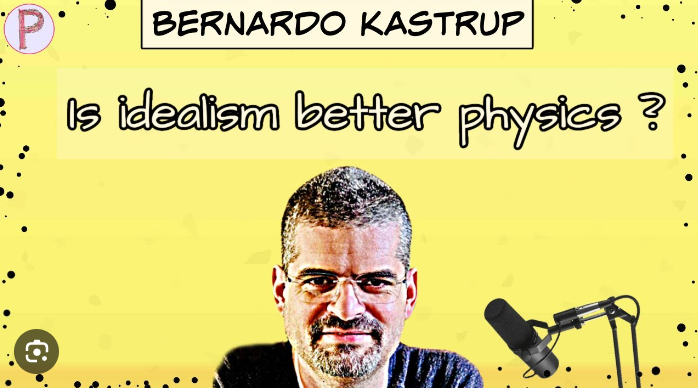
[In idealism, how can any separation at all be made between consciousness and an experiment? See note 2 on Bernardo Kastrup’s position.]

All this means that the word “observation” can be very misleading.

There are indeed conscious observations (carried out by persons) involved in experiments. However, there are physical elements to all these observations too.

Here again readers should note the words “the disturbance of an observed system”. Taken at face value at least, this clearly has nothing to do with (Carl Jung’s) “acausality”, “consciousness affecting reality”, mysticism, etc. It’s to do with the physical disturbances of an experimental setup (or physical arrangement) by the experimenters and their instruments.

Indeed, physicists also encounter the problem of making a separation between the behavior of a system, and that system’s interaction with measuring instruments and human experimenters. And that, in turn, leads to the problem of knowing what a quantum state is in the first place.

More specifically, in any double-slit experiment, it’s fairly uncontroversial to state that the observation of quantum phenomena by an instrument (or detector) can (or will) change the measured results.

To repeat. Here it’s said that the an instrument or electronic detector changes the results of the experiment. The very fact that we’re talking about an instrument shows that this isn’t only about consciousness, or even only about (purely mental) observations.

However, it’s worth mentioning the idea that the quantum realm is often deemed to be “weird” regardless of measurements, experiments and conscious observations.

An Heisenbergian Interlude: Intrinsic Weirdness
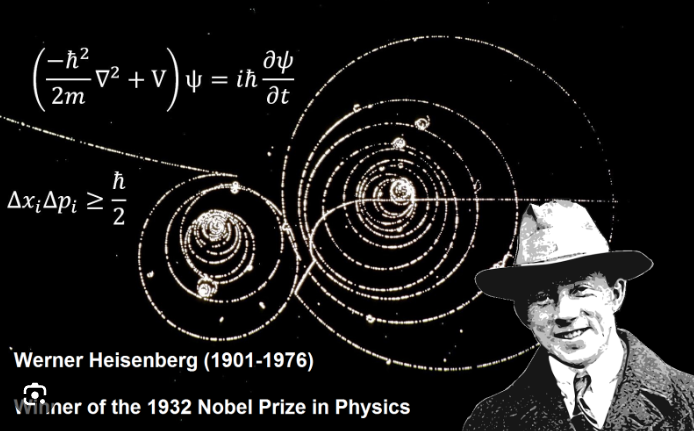
The philosopher and historian of science Robert P. Crease (quoted at the beginning) writes:

“The strangeness of the uncertainty principle is not due to the measurement process disturbing the object measured, which would be a feature of any Newtonian theory involving exchange of particles. Nor is it due to the presence of statistics. Rather, the strangeness of quantum mechanics is that quantum formulations are not ‘about’ a real or ideal object in the conventional sense.”

This position doesn’t help the mystical or idealist position either.

For a start, this essentially Heisenbergian passage doesn’t even mention “consciousness” or “the observer”. Instead, it can be taken to advance the position that the quantum realm is (as it were) intrinsically weird. That is, it is weird regardless of consciousness or the minds of physicists. Thus, this is hard position to directly (or even indirectly) connect to either idealism or to mysticism.

Despite all that, a double-slit experiment’s results have indeed been interpreted (with a stress on the word “interpreted”) as telling us that “consciousness can affect reality”.

Consciousness, Making a Mark and Observation
Many physicists are keen to stress that an “observer” needn’t be a conscious being — it simply needs to be a scientific instrument of some kind. Of course, minds need to read (or interpret) the instrument’s readings or “marks”. However, that alone hardly seems like a strong argument for idealism and/or for mysticism.

In any case, a mark is made before it is (further) registered by (the consciousness of) a physicist. In addition, the, say, “clicks of a detector” can only be noted by a conscious experimental physicist.

So it still seems obvious that a physicist (or consciousness) would be required to make sense of, say, a thermometer’s registration.

Erwin Schrödinger (who’s often pressganged into the idealist and mystical school) conveniently discussed both measurement and consciousness.

For example, in Schrödinger’s published lectures Mind and Matter (1956/58), he argued that

“there is a difference between measuring instruments and human observation: a thermometer’s registration cannot be considered an act of observation, as it contains no meaning in itself. Thus, consciousness is needed to make physical reality meaningful”.

So even if Schrödinger was influenced by mystical literature (though not when it came to his actual theories in physics), nothing in the passage above is (or need be) necessarily tied to anything mystical or idealist — not even his introduction of the word “consciousness”. In other words, the logical or philosophical point being made above is entirely free of any mystical and/or idealist connotations.

In any case, the thermometer still registered something regardless of any “consciousness” that later (as it were) made sense of that registration. More precisely, the thermometer must have gone through a certain physical process which ended up with a particular physical change. What’s more, all this must have happened before any mind gave it a (to use Schrödinger’s word again) “meaning”.

Sure, the thermostat’s state as it was before it was read or interpreted is of little (or even no) use to the physicist. However, it must still have had a physical state before it was read. [See note 3 on the Copenhagenist position on this matter.] In other words, the thermostat must have been in state x even before it was read or interpreted, and it was still in that state when it was read or interpreted.


Notes

(1) The latter issue was first extensively discussed by Norwood Russell Hanson in his well-known paper ‘Seeing and Seeing As’, which was published in 1969. See here too.

(2) In terms of idealism (or at least a certain brand of idealism), it simply can’t be said consciousness affects reality. That’s because reality itself is already supposed to be “universal consciousness”. So, on an idealist reading, consciousness affecting reality would actually be an example of consciousness affecting consciousness.

Interestingly, the idealist Bernardo Kastrup makes this point against other people who also deem themselves to be idealists. Specifically, Kastrup argues against those who say that “the brain is a conduit of universal consciousness”. (The “filter theory” of the brain.) He corrects them by saying that the brain too is an “image” or “representation” of consciousness. In Kastrup’s own words:

“The idea that the brain does not generate consciousness, but instead limits and filters it down, seems to require dualism and contradict idealism. After all, if all reality exists in consciousness, how can the brain — which is a part of reality — filter down that which gives it its very existence? A water filter is not made of water; a coffee filter is not made of coffee; how can a consciousness filter be made of consciousness? It sounds like a self-referential contradiction.”

Thus, consciousness can’t be “a conduit” of consciousness.

3) It can be supposed that idealists and perhaps some anti-realists can ask the following question:

How do you know the both states of the thermometer — both before and after any registration or interpretation — fully coincide?

This is a question that’s hard to take seriously in physics. However, it does have at least some philosophical substance.


Wednesday, 14 February 2024

Dear David Chalmers, Is it logically possible that logical possibilities mislead us?…

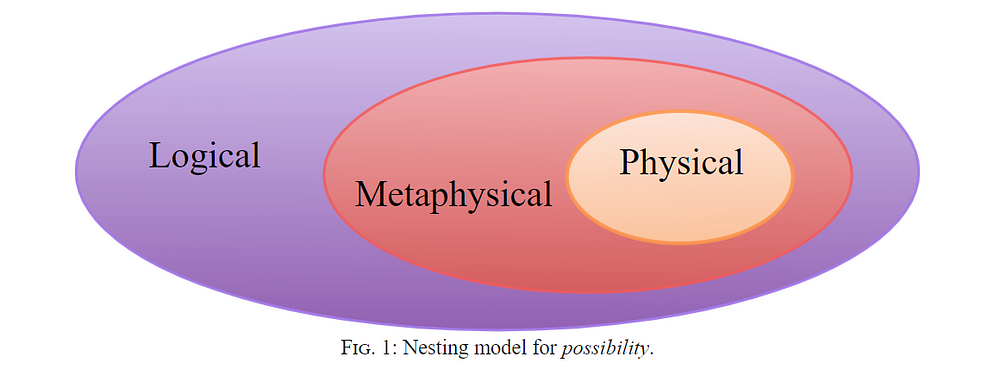
And also waste our time? More accurately, is it logically possible that a fixation on logical possibilities could mislead us and/or waste our time?


(i) Introduction
(ii) Why Fixate on Logical Possibilities?
(iii) Not All Logical Possibilities Are Equal
(iv) Schrödinger’s Cat
(v) Philosophically Necessary Logical Possibilities

The following essay will mainly be considering David Chalmers’ paper ‘Absent Qualia, Fading Qualia, Dancing Qualia’. However, absent, fading and dancing qualia won’t actually be tackled in detail. Instead, the subject of logical possibility will be discussed (as it were) in the abstract.

There is one bizarre passage (at least when taken out of context) in Chalmers’ aforesaid paper which summarises everything that will be tackled here. (It’s broken up into three parts.) It goes as follows:

[W]e have established that if absent qualia are possible, then fading qualia are possible; if inverted qualia are possible, then dancing qualia are possible.”

However:

“But it is implausible that fading qualia are possible, and it is extremely implausible that dancing qualia are possible. It is therefore extremely implausible that absent qualia and inverted qualia are possible.”

Chalmers concludes:

“It follows that we have good reason to believe that the principle of organizational invariance is true, and that functional organization fully determines conscious experience.”

That passage has it all!

It displays a (as it were) fixation with logical possibility, along with the strong belief that considering (or analysing) such possibilities leads to very real and important philosophical conclusions. Indeed, perhaps, non-philosophical conclusions too!

Why Fixate on Logical Possibilities?

It’s not only the paper ‘Absent Qualia, Fading Qualia, Dancing Qualia’ which focuses so much on logical possibility. David Chalmers’ well-known and brilliant book The Conscious Mind also seems to introduce one logical possibility or another on almost every page. Specifically, in that book Chalmers discusses “an angel world”, “flying telephones”, “ectoplasm”, and a monkey who writes Hamlet. Admittedly, most of these logical possibilities are of little (philosophical) interest to Chalmers.

So why is that?

It’s only partly because such logical possibilities are hugely improbable. However, the main reason why Chalmers has no deep interest in them is that they don’t help him philosophically.

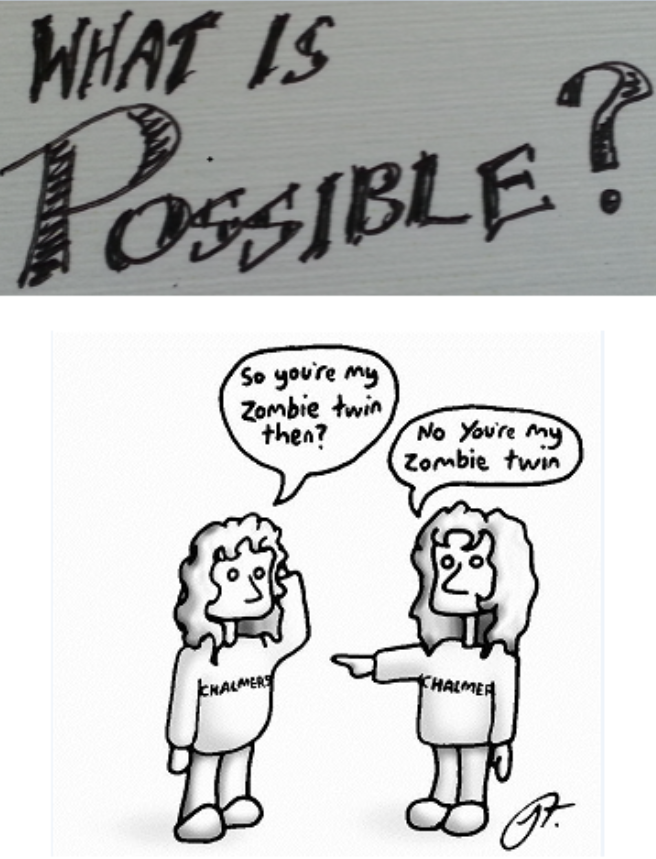
The logical possibilities of an angel world, flying telephones, ectoplasm, and a monkey who writes Hamlet have just been mentioned. However, and as many readers will know, it’s primarily (philosophical) zombies which Chalmers (as it were) specialises in. And it’s these logically-possible beings who (or is it which?) help him philosophically.

So despite all the logical possibilities which Chalmers does discuss, almost his entire philosophical project is motivated by it being (to use his own words)

“logically possible that a *physical* replica of a conscious system might lack conscious experience”.

Thus, all the other logical possibilities Chalmers discusses are but a means to add meat to that specific logical possibility. And that specific logical possibility, in turn, serves the purpose of showing readers that (to use Chalmers’ own words) “materialism is false”. In other words, if it’s “logically possible that a physical replica of a conscious system might lack conscious experience”, then materialism can’t be true…

Or so the argument goes.

[See note 1 for the full argument.]

To quote Chalmers himself:

“I am not the first to use the argument from logical possibility against materialism. Indeed, I think that in one form or another it is the fundamental anti-materialist argument in the philosophy of mind.”

So citing logical possibilities isn’t just another philosophical tool — it is (arguably) the philosophical tool to fight materialism. (Perhaps much more too.) Yet Chalmers also suggests that we shouldn’t get “too worried about odd things that happen in logically possible worlds”. That said, he then immediately takes that back by adding that “there is room to be perturbed by what is going on”.

In more detail.

Chalmers and certain other philosophers require logical possibilities in order to advance their case against materialism. What’s more, their arguments only work if one deeply considers all sorts of strange logical possibilities. Of course, this isn’t to say that materialists (as well as other kinds of philosopher) don’t themselves rely on (or simply use) logical possibilities in various ways. [See Joseph Levine’s words quoted in note 2.] However, they don’t do so nearly so often as philosophers like David Chalmers.

Now let’s forget anti-materialism and speak in broader terms.

When a philosopher cites various logical possibilities, all sorts of philosophical positions become available… or become possible. That’s primarily because once a given philosopher sets a particular logical possibility among the pigeons, then it’s surely the duty of other philosophers to tackle that logical possibility. However, if they don’t do so, then surely (some philosophers may argue) they’re philosophical (as it were) philistines.

To repeat. Chalmers’ main use of logical possibilities is to argue against materialism. That said, in the paper ‘Absent Qualia, Fading Qualia, Dancing Qualia’, Chalmers’ main purpose it to show his readers that (as already quoted) “functional organization fully determines conscious experience”.

[On the surface at least, that last quoted claim seems to work against Chalmers’ anti-materialism. However, that issue can’t be tackled in this essay either. See note 3.]

Not All Logical Possibilities Are Equal

David Chalmers argues that all the logical possibilities he discusses are “intelligible”. However, he also believes that some of them are “implausible”. In more detail, Chalmers states the following:

“Mere intelligibility does not bear on this, any more than the intelligibility of a world without relativity can falsify Einstein’s theory.”

Chalmers doesn’t believe that such logical possibilities are implausible because they’re merelylogical possibilities. Instead, it’s only specific logical possibilities which Chalmers finds implausible.

Chalmers also states (in one place) that the “hypotheses here are coherent, but there is little reason to embrace them”. In other words, coherency alone won’t force his readers to embrace such hypotheses. Yet elsewhere Chalmers also says that

“the question is not whether it is plausible that zombies could exist in our world, or even whether the idea of a zombie is a natural one; the question is whether the notion of a zombie is conceptually coherent”.

To Chalmers, “the notion of a zombie” is indeed “conceptually coherent”.

What’s more, the notion of a philosophical zombie has many other philosophical things going for it.

So Chalmers does argue that a lot can be derived from something’s “intelligibility”. This means that Chalmers stance on these “scenarios” (or logical possibilities) doesn’t entirely depend on mere intelligibility — it also depends on where these scenarios lead.

Basically, then, Chalmers isn’t questioning all modal speculations (or the use of thought-experiments) — clearly not! To Chalmers, it depends on which precise logical possibility he’s discussing.

Chalmers goes further on the subject of logical possibility.

He also believes that some of possibilities he discusses could (which is another modal term) also be “actual”. Yet this isn’t entirely clear because — as already stated — Chalmers does admit that some (even many) of the logical possibilities he discusses are “implausible”. That said, Chalmers must believe that such logical possibilities still need to be philosophically analysed (or dissected) in order to justifiably conclude that they’re implausible.

What’s more, even when logical possibilities can’t (or don’t) lead to actualities, then they may still be worth discussing — at least from a philosophical point of view.

Schrödinger’s Cat

David Chalmers discusses Erwin Schrödinger's famous thought-experiment about a cat in a box (i.e., Schrödinger’s cat). He does so in order to compare what he’s doing to what Schrödinger did way back in 1935.

Chalmers writes:

“Perhaps it is useful to see these thought-experiments as playing a role analogous to that played by the ‘Schrodinger’s cat’ thought-experiment in the interpretation of quantum mechanics.”

Chalmers then explains this analogous role in the following way:

“Schrödinger’s thought-experiment does not deliver a decisive verdict in favour of one interpretation or another, but it brings out various plausibilities and implausibilities in the interpretations, and it is something that every interpretation must ultimately come to grips with.”

Chalmers finally concludes:

“In a similar way, any theory of consciousness must ultimately come to grips with the fading and dancing qualia scenarios, and some will handle them better than others. In this way, the virtues and drawbacks of various theories are clarified.”

Schrödinger’s thought-experiment never became an actual experiment. That is, it has never been carried out… on a cat. In addition, Schrödinger himself never believed that a cat could be both alive and dead at one and the same time. On the other hand, other physicists — such as the theorists of many worlds— do believe that. (Such physicists believe that the possible alive-and-dead-cat superposition would be actual if the experiment were ever successfully carried out.)

In basic terms, Schrödinger intended his thought-experiment to illustrate the bizarre nature of the Copenhagen interpretation of quantum mechanics. Indeed, Schrödinger took it to be a reductio ad absurdum.

So Schrödinger was categorically against the Copenhagen interpretation, whereas Chalmers sees himself as considering various logical possibilities, and (as it’s often put) seeing where they all lead.

Oddly enough, Schrödinger can be seen as actually arguing against taking outlandish possibilities (in this case, quantum superpositions) seriously. Yet, ironically, he concocted a though-experiment (which includes the logical possibility of a cat being both alive and dead) to advance his case.

All that said, it can now be acknowledged that both Schrödinger’s thought-experiment and Chalmers’ many logical possibilities do indeed (as Chalmers puts it) “bring out various plausibilities and implausibilities”.

Philosophically Necessary Logical Possibilities?

It’s also odd that Chalmers states that

“any theory of consciousness must ultimately come to grips with the fading and dancing qualia scenarios”

when the vast majority of theories of consciousness haven’t done so. Indeed, many theorists and philosophers of consciousness have hardly considered these “scenarios” at all. That’s primarily because the interest in fading, inverted and dancing qualia has been an obsession of (only certain) analytic philosophers for only a limited period of philosophical history. (Roughly, since 1982 and onward. See here.)

So can we now also conclude that many theorists and philosophers of consciousness don’t consider inverted, dancing and fading qualia because they don’t place such a high premium on the status of (mere) logical possibilities?

Alternatively, perhaps it’s just these logical possibilities (i.e., inverted, dancing and fading qualia) which they don’t care too much about.

Finally, it does seem a little over the top when David Chalmers states that “any theory of consciousness must ultimately come to grips with the fading and dancing qualia scenarios”. Indeed, is that even the case when it comes to Chalmers’ famous and endlessly-discussed phil-zombies?


Notes:

(1) David Chalmers’ precise argument is the following:

“ 1. In our world, there are conscious experiences.
2. There is a logically possible world physically identical to ours, in which the positive facts about consciousness in our world do not hold.
3. Therefore, facts about consciousness are further facts about our world, over and above the physical facts.
4. So materialism is false.”

2) Is there no escape from logical possibility? The American philosopher Joseph Levine believes so — at least in the case of qualia. He wrote:

“Would could just deny that what is conceivable is possible. [] But now we have an answer as well to the multiple realizability argument. After all, what makes us so confident that QR [a particular “property of experience”] could be realized in a variety of different ways? Isn’t it just the same conceivability we appealed to in the conceivability argument?”

(3) David Chalmers’ mitigated functionalism is well summed up by the German philosopher Thomas Metzinger:

“Although the appropriate functional states are *nomologically sufficient* for conscious experience, they need not be *constitutive* of conscious experience. This leads to an interesting position which Chalmers calls non-reductive functionalism*, which is compatible both with property dualism and with some forms of physicalism.”


The Sociology and History of Qualia


In an earlier essay (called ‘Consciousness & Qualia: Who Cares About ‘How They Seem To Us’?’) I discussed Philip Goff’s words, “consciousness is a datum in its own right”. I asked how Goff’s datum that is consciousness stands within the context of all the books and papers which he — and other people — have read on the subject of consciousness.

The English philosopher Philip Goff.

Basically, I asked whether any clear distinction at all can be made between such a datum and all the things philosophers and laypersons have written and said about such a thing.

My point was that if (as some people put it) qualiaphiles have read lots of (or even just some) books on consciousness (or, alternatively, if they’ve come across the word “qualia” many times), then surely that will impact on how they describe and/or theorise about any ostensibly (to use Goff’s words again) “private seemings” they may have.

The entire issue was summed up by saying that as soon as a (as it were) layperson starts to use the word “qualia”, then that’s precisely the moment that he or she stops being a layperson (i.e., at least when it comes to qualia). More to the point, the philosopher Patricia Churchland once said that the word “‘qualia’ is a term of art, which was introduced by philosophers”. [See note 1.]

Of course, such a layperson doesn’t need to be an expert, or to have read lots of academic papers on qualia.

All the above was put in more technical terms by Daniel Dennett in 1991.

Dennett argued (as quoted by Martin Kurthen) that talk of “consciousness” was largely down to a “huge complex of memes”.

In addition, the American philosopher Richard Rorty (also quoted by Kurthen) argued that

“to become aware of qualia is the same thing as learning how to make judgments about qualia”.

Of course (as we’ll see), qualiaphiles may well happily admit that “qualia” is a term which was indeed “introduced by philosophers”. However, they may add: So what! They may then argue that “qualia” is a term that was simply introduced to capture something that is real, and which has a reality regardless of the recent history of the term itself.

In any case, there are many ways to approach our descriptions of qualia. However, the whole issue is summed up by the neuroscientist and philosopher Martin Kurthen (who’ll be featured in this essay) when he tells us that

“[i]t is not helpful to view *the way things seem to us* as stable elements of our inner mental lives and thus as mental sub entities with a constant constitution at all”.

[See note 2.]

Kurthen then offers his readers his own alternative to this. He argues that the ways things seem to us are

“rather ephemeral phenomena, dependent on cultural, historical, evolutionary, linguistic, etc. — preconditions — and they can change with a modification of any of these preconditions”.

All the above ties in with another theme to be tackled in this essay: the distinction which can be made — and which has been made — between our descriptions of qualia, and qualia as they are (as it were) in themselves.

Qualia and Descriptions of Qualia

Martin Kurthen tells us that how we describe qualia may well

“crucially depend on a very special history and a very special constitution of a linguistic or, more general, social community”.

The claim that that qualia “depend on” these things may seem odd (or even bizarre) to some readers. Thus, such readers may ask the following question:

Do qualia themselves really depend on such descriptions?

In other words, perhaps qualia are as they are regardless of our descriptions.

Indeed, perhaps qualia are as they are regardless of (to use Kurthen’s terms again) history, language and our social community.

What can now be said is that to believe that there is a quale (to use Kant’s terms) Ding an sich is also to be a qualia realist.

The neuroscientist and philosopher Martin Kurthen.

Kurthen himself tackles this distinction when he refers to Richard Rorty’s position on “judgments about qualia”. He then notes what the qualiaphile may say in response:

“I also think it would be a short-sighted reply to this to say that by making judgments about qualia, we only reach *descriptions* of qualia as opposed to qualia *themselves*, namely their like-to-be-ness.”

Kurthen also uses the term “given” to classify qualia when they’re (supposedly) taken as they are in themselves. However, he then argues that such givens may change even if they’re still taken to be givens. Kurthen writes:

“If qualia intuitions change with social, cultural historical and evolutionary contexts, then the features of qualia (as seeming ‘*givens*’) themselves might be overformed by these outward social, etc. modifications of how the subject of consciousness *takes* these seemings. Wouldn’t this be just another example of how cognitive preconditions influence the further cerebral processing and thus the conscious appearance of sensory or cerebral activation patterns?”

As opposed to this sociological and historical take on qualia, we have an/the alternative, which Kurthen calls “cultural transcendentalism”.

Cultural transcendentalism isn’t just a realism in the sense that qualia are taken to be real (or to exist). It’s also a realism in the sense that it’s argued that we get qualia as they’re given — even if we do later describe them!

So can we really make the (as it were) anti-realist move from stating that our descriptions of qualia

“depend on a very special history and a very special constitution of a linguistic or, more general, social community”

to also stating the following? -

Qualia themselves (i.e., regardless of our descriptions) depend on a very special history, and a very special constitution of a linguistic or, more general, social community.

Qualia Within Total Cognitive Systems

Martin Kurthen then approaches this issue from another angle.

He argues that qualia (or what we say about qualia) must surely be a result of what he calls our “total cognitive systems”. In other words, how we describe qualia isn’t just a historical and sociological issue.

How could anyone dispute that?

After all, qualia don’t occur in literal isolation.

What’s more, qualia certainly aren’t described in isolation.

Instead, according to Kurthen,

“qualia as phenomena occur in the same total cognitive system that is also subject of qualia intuitions and judgments about qualia, so that features of qualia might well be overformed by modifications of how the subject of consciousness *takes* these seemings”.

Thus, two things occur within the total cognitive systems of human subjects:

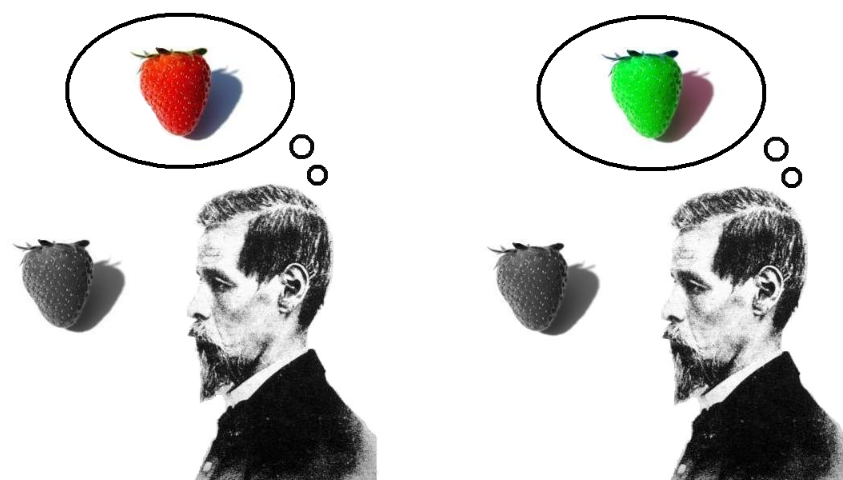
(1) Human subjects have “qualia intuitions”. 
(2) Such subjects make
judgments about their qualia.

Now as far as (1) is concerned: how seriously should we take people’s intuitions about qualia in the first place? And (2) was discussed earlier: can we truly separate people’s judgments about qualia from qualia in themselves?…

So what are qualia in themselves?

Tell me something about them.

When (or if) a qualiaphile answers that question, then he must surely make judgments about his and other people’s qualia. Thus, aren’t we back to judgments-about-qualia again?

Qualia Narcissism

In much broader terms, Martin Kurthen expresses his somewhat rhetorical — and even psychoanalytic — position on why qualia are discussed so much (i.e., both inside and outside philosophical literature). He writes:

“There certainly is such an aspect of narcissism and inflation of the subject in our incessant re-flection on subjectivity and the ‘genuinely subjective’ features of the mind.”

Of course, even if Kurthen’s claim in the above passage is true, there still may be serious epistemological and metaphysical problems with qualia — at least as far as naturalism is concerned. That said, Kurthen does (at least implicitly) note this (as we’ll now see).

Kurthen then reins himself in and adopts a (as it were) metaphilosophical approach. He writes:

“The propensity to assign a sort of epistemological or ontological significance to phenomenality is, in my opinion, an expression of our modern tendency to view our own subjectivity with all its phenomenal *presence* and *immediacy* an epistemologically and/or ontologically exceptional entity or constitution.”

It can be said that there is indeed a “modern” obsession with subjectivity. Yet, as stated a moment ago, there may still be a problem for the naturalisation of qualia and/or subjectivity.

So readers must now note that Kurthen doesn’t state the following:

There has been a modern propensity to assign significance to phenomenality.

Instead, he states this:

“The propensity to assign a sort of epistemological or ontological significance to phenomenality [].”

Here the relevant and important words are “epistemological or ontological”. So everyone can happily accept that qualia are important to us. After all, if qualia exist as the qualiaphiles say they do, then we’re experiencing qualia almost all our waking hours. Indeed, some people even deem qualia to be at the heart of what makes human subjects persons.

So, in this story at least, it’s no wonder that human persons assign significance to qualia…

However, what about the epistemological and metaphysical conclusions and theories of those philosophers and laypersons who’re also qualiaphiles?


Notes:

(1) At first glance at least, what Patricia Churchland says about “qualia” must surely be true of many — even all — other philosophical terms too!

(2) In the above, all the quotes from Martin Kurthen come from his paper ‘On the Prospects of a Naturalistic Theory of Phenomenal Consciousness’.