Wednesday, 29 September 2021

German Infinity and Egalitarian Plants: The Political Use of Science


i) Introduction
ii) Philip Goff & Pascual Jordan on the Politics of Plants
iii) German Mathematics
iv) Stephen Jay Gould on Evolutionary Progress
v) Science for the People
vi) Professor Elizabeth S. Anderson
vii) Conclusion

I came across the following incredible — almost surreal — passage written by a (London) Times correspondent who was writing in the 1930s. (It’s quoted in Andrew Hodge’s brilliant book Alan Turing: The Enigma.) The passage goes:

“A number of mathematicians met recently at Berlin University to consider the place of their science in the Third Reich. It was stated that German mathematics would remain those of the ‘Faustian man’, that logic alone was no sufficient basis for them, and that the German intuition which had produced the concepts of infinity was superior to the logical equipment which the French and Italians had brought to bear on the subject. Mathematics was a heroic science which reduced chaos to order. National Socialism had the same task and demanded the same qualities. So the ‘spiritual connexion’ between them and the New Order was established — by a mixture of logic and intuition [].”

I’ll comment in detail on this passage later. However, the first thing it brought to mind was the English philosopher Philip Goff and his political interpretations of recent experiments on plants.

Philip Goff & Pascual Jordan on the Politics of Plants
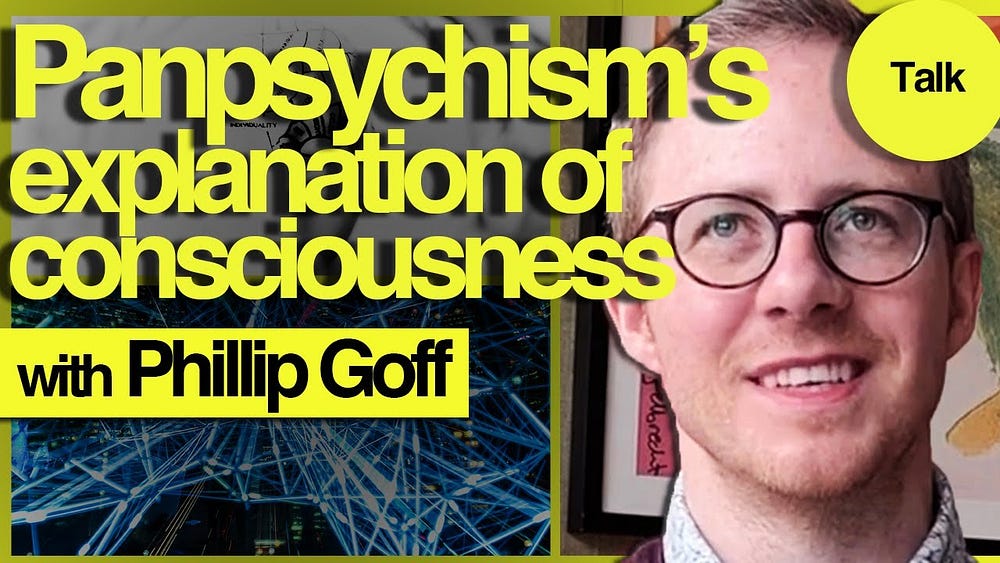
Professor Philip Goff offers us political and philosophical (i.e., panpsychist) interpretations of the experiments and research on plants carried out by the ecologists Professor Monica Gagliano and Professor Suzanne Simard. He makes all sorts of political claims about plants which just so happen to perfectly square with his own (prior) politics.

And that’s what the Nazis did with mathematics in the 1930s (at least according to the passage above), what the Radical Science Movement did in the 1960s/70s and what various activists are doing today.

Take Goff again. He says (of Suzanne Simard’s research) that

[t]he mycorrhiza structures allow for a complex system of egalitarian redistribution”.

And, elsewhere, Goff writes:

[H]uman societies social harmony is possible only when they are united by strong ties of kinship. No such prejudice exists among trees. Even across species there exist networks of reciprocal support. In summer, the birch trees help out the fir trees by passing along carbon, especially to the fir trees that are shaded from the sun. In winter, there is reciprocation: when the birches are leafless, the firs provide much needed carbon support.”

Of course the words “egalitarian redistribution” are taken from the human political domain. Indeed Goff himself — coincidentally enough — is strongly in favour of egalitarian redistribution in the human world and has written about it in newspapers and in his own blog. (See Goff’s article ‘Our Glastonbury U2 protest was a call for an ethical tax’, written for the Guardian newspaper.)

It’s worth mentioning here the well-known theory that exactly the same data, evidence or experiment about — or on — x (in this case plants) can be used as ammunition to advance just about any political position. (See underdetermination of theory by data/evidence.) Indeed, historically, this has often been done. (Think about how some 19th-century Darwinists and 20th-century fascists relied on the animal world to advance their politics — see later sections.) More specifically, Goff’s own talk of “quid pro quo relationship[s]” in the plant world could even be used to advance political positions which are diametrically opposed to his own.

This basic distinction between theory/experiment/data and interpretation goes all the way down to, for example, the distinction between the mathematical formalism/s of quantum mechanics and their interpretations.

So now let’s compare Goff’s words to the words of German physicist and Nazi (at least at this time) Pascual Jordan.
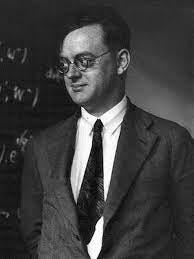
Pascual Jordan

Pascual Jordan (1902–1980) at one point interpreted biology through a Nazi lens. Take this passage:

“We know that there are in a bacterium, among the enormous number of molecules constituting this … creature … a very small number of special molecules endowed with dictatorial authority over the total organism; they form a Steuerungszentrum [steering centre] of the living cell. Absorption of a light quantum anywhere outside of this Steuerungszentrum can kill the cell just as little as a great nation can be annihilated by the killing of a single soldier. But absorption of a light quantum in the Steuerungszentrum of the cell can bring the entire organism to death and dissolution — similar to the way a successfully executed assault against a leading [führenden] statesman can set an entire nature into a profound process of dissolution.”

Is the above any different to interpreting plant behaviour through a leftwing lens?

(See also Soviet/communist Lysenkoism here and Stephen J. Gould later.)

German Mathematics?
If someone is extremely politically committed to a specific ideology or political movement, and is a diligent activist, then he/she may well interpret almost everything politically. (This is similar to what happens with religious fundamentalists.) And, of course, that everything will include science.

So it’s no surprise that the German National Socialists of the 1930s did this.

Just as recent activists and political theorists have classed maths as “white supremacist” (see here), so the Nazis believed that “German mathematics would remain those of the Faustian man” and suchlike. The Nazis wanted a Germanic maths; just as some activists today want maths to serve cotemporary political projects. But of course maths can be neither Germanic nor ideologically correct. Of course it can be pushed or interpreted in such ways — but it makes little sense to that maths itself is.

The passage above (from the 1930s Times) tells us that

“logic alone was no sufficient basis for them, and that the German intuition which had produced the concepts of infinity was superior to the logical equipment which the French and Italians had brought to bear on the subject”.

This contains some well-rehearsed points and distinctions in the philosophy of mathematics or in metamathematics.

For example, there was once a long-running debate as to whether maths is a part of logic or logic is a part of maths (see here). It just so happens that these Nazi mathematicians believed — in broad terms — that French and Italian mathematicians had focused on the logic of maths and their fellow Germans had focussed on intuition (see here). Indeed, culturally and historically, these 1930s Nazis might well have been correct. That is, perhaps the Italians and French did focus on the logic of maths and not on (Germanic) intuition at that time.

These German Nazi mathematicians can be criticised from a realist/Platonic angle too. (What nationality takes a specifically realist view on maths?) That is, a realist/Platonist would never argue that any nation could “produce the concepts of infinity”. People can only gain access (say, via “direct insight” or intuition) to infinity and then make use it. To realists and to many others, infinity isn’t created — it is discovered. Sure, the concept (or concepts) of infinity isn’t the same as infinity itself. But it’s still the case that its not a very realist/Platonic position to stress the production of the concepts of infinity.

That said, perhaps mathematical realism is actually a national phenomenon. So what about anti-realism?

And do the “concepts of infinity” serve right-wing or left-wing politics?

These German mathematicians also said that maths is a “heroic science which reduced chaos to order”. Is that statement any more or less political than the poststructuralists, etc. who’ve argued against the “mathematising of experience” or “the urge to reduce society to mathematics”? (Arguably, though, these are positions against the applications of mathematics, not mathematics itself.) Indeed many contemporary theorists have themselves stressed this negative aspect of maths — how mathematicians attempt to order everything. Then again, New Agers, mystics and “spiritualists” (who would deem themselves to be miles away from the Nazis) have also emphasised “intuition” against “cold logic” and “reductionism”. Indeed these Nazi mathematicians themselves used the words “spiritual connexion” to refer to what they were doing. Yes; Nazi spiritualism was quite a big thing at one point.

Now Take the case of Stephen J. Gould.

Stephen Jay Gould on Evolutionary Progress

American palaeontologist and evolutionary biologist Stephen J. Gould pointed out that various scientists had put “right-wing”, “racist”, “capitalist”, and even “fascist” slants on various evolutionary and biological data.

And what did Gould do in response?

He often put a Leftist/Marxist slant on evolutionary and biological data.

Take Gould’s case against evolutionary “progress”. This was infused by his leftwing politics. But that’s not a surprise because he was a self-described “Marxist” (see here) who was part of the Radical Science Movement.

Gould’s position is so overladen with political (as it were) concern and Marxist theory that he treated many of his opponents as no less than straw targets. Basically, Gould believed that any belief in evolutionary progress is always politically dangerous — and that position infused many of his arguments. (Many other commentators — both positive and negative — have connected Gould’s views on punctuated equilibrium to his Marxism too— see here.)

Take this highly political and rhetorical passage from Gould:

[E]volution has been saddled with a suite of concepts and meanings that represent long-standing Western social prejudices and psychological hopes, rather than any account of nature’s factuality.”

More relevantly, Gould concluded:

“Most pernicious and constraining among these prejudices is the concept of progress [].”

Many have said — in defence of Gould — that “facts are facts” and it simply doesn’t matter about his politics. True; but Gould’s political glosses or interpretations of those facts (as with those quotes just given) are not themselves (scientific) facts. (Ironically, those sympathetic to Gould have also freely admitted that his politics influenced his science; but, of course, in an entirely positive way — see here from www.marxists.org.)

The other problem here is that hardly any — if any — contemporary biologists or evolutionary theorists believe that evolution has an “inherent drive” (whatever that is!) towards “progress”. (They might have done on the 19th century and in the first half of the 20th century.) And they don’t do so because it’s almost impossible to see evolution is such a personified or reified way. That is, evolution can’t be seen as a single abstract entity or as a single whole. Thus evolution can’t go in any single direction — either toward progress or toward simplification (or even toward stasis).

So it’s not as if there is a single biologist or evolutionary theorist who isn’t fully aware of the many species that haven’t “progressed” at all in millions of years (e.g., crocodiles, velvet worms, cow sharks, lice, horseshoe crabs, cockroaches, etc.). Such biologists and theorists are also aware that evolution can move in the direction (which is a kind of personification itself) of simplification — as with certain kinds of parasites .

But why do these widely-accepted facts rule out progress for some species in some situations and in some respects? Of course the word “progress” is loaded and needs to be defined. However, the problem is that Gould took the word “progress” in a entirely political way and then he simply assumed that other biologists and evolutionary theorists were using that word in his own political way too. (This was a kind of psychological projection on Gould’s part.)

So take Richard Dawkins.

Dawkins — who Gould often attacked and vice versa (see here) — argued that there is a

“tendency for lineages to improve cumulatively their adaptive fit to their particular way of life, by increasing the numbers of features which combine together in adaptive complexes”.

More relevantly, Dawkins concluded:

“By this definition, adaptive evolution is not just incidentally progressive, it is deeply, dyed-in-the-wool, indispensably progressive.”

Ironically, Dawkins agreed with the broad gist of Gould’s argument on evolutionary progress. However, he simply saw exceptions to — and qualifications of — it. In other words, Gould’s political stance against progress in evolution turned out to be as simplistic and generalised as the the positions (many not actually held by any professional biologists) he was against.

Of course if someone says that Gould’s position is essentially political, then someone else may say that Dawkins’s own counter-position is political too. Except that Gould actually admitted that politics infused all his science (see here). Dawkins, on the other hand, never made any explicit connections, is not a “fascist” or “racist” (though many on the Far/Marxist Left believe he is) and is in fact a political liberal, anti-racist, etc. Of course these facts about Dawkins’ politics obviously don’t automatically stop his position on evolutionary progress from being political in some way.

Science for the People

It’s often the case that some of those who speak out against the political nature of science don’t do so because they believe that science should be apolitical: they do so because they believe that science should be political in the correct ways.

Take Science for the People and the Sociobiology Study Group in the 1970s and 1980s. Stephen Jay Gould — again — was a member of these two groups. So too was Steven Rose — an important member of the Socialist Workers Party (see here); and Richard Lewontin (“the Marxist geneticist”).

The Socialist Workers Party’s Steven Rose, speaking out against capitalism and “capitalist science”.

These two groups didn’t want to make sure that scientific theories were apolitical or that scientists kept out of politics. They wanted to make sure that scientific theories and scientists were political in the correct (i.e., Marxist) ways. And, as Marxist groups, they tied much science to racism, capitalism and imperialism.

(See ‘Radical Science and its Enemies’, by Steven Rose and Hilary Rose.)

Thus it was no surprise that the International Committee Against Racism (INCAR) grew out of this atmosphere of scientific intolerance. This group attacked another scientist Stephen Jay Gould had serious problems with — E.O. Wilson (see here). In detail, just before Wilson gave a talk, the microphone was taken over by members of INCAR. They chanted:

“Racist Wilson you can’t hide, we charge you with genocide.”

Then these same activists rushed Wilson and poured a pitcher of ice water over his head.

Professor Elizabeth S. Anderson

Now take the case of Professor Elizabeth S. Anderson and a paper she wrote in 1995.

When I first began reading Anderson’s paper it seemed to be — at least in part — highlighting and criticising the political nature of both scientific theory and the political and technological uses of science. However, it turned out that it wasn’t the political use of science Anderson has a problem with. It’s the political use of science by scientists and governments with incorrect politics.

In terms of her technical detail, Professor Anderson isn’t simply arguing that political and ideological (to use her own terms) “value judgements” and “background assumptions” exist in all scientific theorising. Anderson is also making the political point that there are many politically-incorrect value judgements and background assumptions which underpin scientific theorising. In addition, scientific theories are often applied in ways that (to her at least) are politically objectionable.

This means that Anderson’s paper is just as much a work of politics as it is a work of epistemology or of the philosophy of science.

So if Anderson is correct to argue (which she does indirectly and in academese) that politics and ideology pervade all scientific theories, and that she additionally argues (again, often indirectly) that such politics and ideology should be politically acceptable (to whom?), then scientific theory (alongside epistemology and philosophy of science) effectively becomes a political battleground. Despite all that, it’s probably the case that Anderson believes that this scientific theory/politics “binary opposition” is false and political battles within science have always occurred anyway.

Professor Anderson, then, basically advances the position that all science is inherently political. (Historically, this was also the position of both the Nazi and Soviet states — see ‘Ideologically Correct Science’.) Thus it follows (to her at least) that epistemologists, philosophers of science and political activists (or at least those who share her own politics) must try their hardest to make sure that all science is both politically acceptable and ideologically correct. In that sense, then, Professor Anderson is no different to the Nazi mathematicians, Pascual Jordan and Stephen J. Gould.

Conclusion

There’s usually an element of truth in all these politicisations of science. Indeed they probably wouldn’t even get off the ground in the first place if that weren’t the case.

So, in Philip Goff’s case, the experiments he cites were probably scientifically kosher and carried out under strict conditions. (The tests may even be capable of being repeated.) However, what is relevant is how these experiments have been politically interpreted by Goff and others.

The same goes for Germanic mathematicians of the 1930s. Sociologically and historically it might well have been the case that Italian and French mathematicians (at that time) pursued different elements of maths — and did so in different ways - to German mathematicians, Yet is that a question of mathematics itself or merely one of culture and history?

Of course some activists and philosophical theorists will take this maths/culture binary opposition to be naïve.

[I can be found on Twitter here.]

Saturday, 25 September 2021

The Copenhagen Interpretation of Quantum Mechanics Is Not Idealist in Nature


The Copenhagen interpretation of quantum mechanics — and even quantum mechanics generally — has been both loosely and strongly associated with the philosophical position of idealism (see here).

Of course there are almost as many varieties of idealism (from subjective idealism to absolute idealism to pluralist idealism) as there are idealists. So this isn’t the place to run through all of them. In any case, the kind of idealism I have in mind will become clear in this essay itself.

So take as an example the following passage (written in 2005) from Harry Nielsen:

“ Almost unbelievably perhaps, [the academics who developed quantum mechanics] chose to interpret the strangeness of quantum behaviour by denying the existence of physical reality. And as a standard textbook interpretation of quantum mechanics, physicists have been taught for the last 80 years that physical reality therefore only exists as a result of the act of observation. This is the ‘Copenhagen interpretation’ of quantum mechanics, developed in the late 1920’s by Niels Bohr and Werner Heisenberg. To quote Heisenberg: ‘I believe that the existence of the classical ‘path’ can be pregnantly formulated as follows: The ‘path’ comes into existence only when we observe it’.”

Of course the above doesn’t actually mention “idealism” — yet the general gist seems to be that the Copenhagen interpretation is idealist (or at least subjectivist). And it isn’t at all odd that this writer thought this way about this interpretation of quantum mechanics.

So it’s important to stress that the Copenhagen interpretation of quantum mechanics is not idealist. Or at least the Copenhagen interpretation itself can be interpreted as not being idealist. That said, it is difficult to explain why that’s so. Indeed not many physicists — or even philosophers — have fully clarified why that is so.

Finally, there are stronger arguments which assert that quantum mechanics — if not the Copenhagen interpretation itself — is entirely subjectivist in nature. Yet there are clear differences between subjectivism and idealism. Indeed Harry Nielsen’s words above can be interpreted as only claiming that the Copenhagen interpretation is subjectivist, not idealist.

Various philosophers (such as Karl Popper) have also argued against those who claim that quantum mechanics is subjectivist , let alone idealist (see Popper here).

Arthur Mach’s Position

It is therefore convenient that there’s a short and simple passage (as quoted in Karl Popper’s The Logic of Scientific Discovery) from the Austrian physicist Arthur March (1891–1957) which perfectly clarifies this issue.

Firstly, Arthur March makes an explicit anti-idealist statement. (It’s not clear if that was his main intention — indeed it probably wasn’t.) He wrote:

“Naturally nobody is so mad as to assert that a body ceases to exist the moment we turn our backs to it [].”

(March was referring to quantum bodies such as particles; not cups, trees or human beings.)

An idealist, on the other hand, would argue that

a body ceases to exist the moment we turn our backs to it.

And that’s because, to an idealist, “a body” — and everything else — only exists in the individual mind or in some kind of collective mind. Thus it does indeed cease to exist when “we turn our backs to it”. (Unless, that is, it still exists in the mind of God — as with Bishop Berkeley immaterialism, in some other being’s mind or in a collective mind.)

Arthur March, on the other had, stated that it is “mad [] to assert” that idealist position. Yet March did preface that phrase with the following words:

“One may say perhaps without fear of being misunderstood [] that for the physicist a body has reality only in the instant in which he observes it.”

It’s worth noting the phrase “for the physicist”.

This isn’t an expression of a philosophical view or even of a layperson’s position. As a physicist, March was speaking entirely qua physicist.

So even though it may be problematic to stress observation alone, this is still the stress of a physicist qua physicist. And, almost by definition, a physicist is only concerned with the observations of — and experiments on — a (in March’s word) body.

Thus March, qua physicist, stated that the

[body] does cease, in the moment, to be an object of inquiry for the physicist”.

Why is that? It’s

“because there exists no possibility of saying anything about it which is based on experiment”.

March’s statement above is true by definition. That is, what comes before the experiment can’t actually be part of the experiment. Or if someone does “say[] anything about it”, then what he says can’t be based on the experiment and is therefore not itself physics. Indeed even the mathematical formalism and/or the wave function required for the experiment has nothing to “say” about any bodies before the experiment.

The wave function has just been mentioned.

Thus the standard interpretation of the wave function is that — in itself — it has no physical interpretation. It is purely a mathematical function. A tool. Something physicists use to do things with. Of course it can then be given a physical interpretation.

Take the Schrödinger equation.

This doesn’t tell us what the wave function is — other than in purely mathematical terms. The physical meaning of the equation — i.e., what entities, etc. are posited — is a product of the interpretation of quantum mechanics the physicist adopts.

And even when physicists do “guess” at the (as it were) before-observation, that too is only a use of the wave function; which, again, is a large abstract mathematical object made of smaller mathematical objects.

So, basically, Arthur March, qua physicist, wasn’t interested in what might have been the case before the experiment. And, presumably, he wasn’t that interested in what was the case — i.e., in the experimental area — after he took off his white coat and packed up his bags to go home. Alternatively, if he was interested in both the before and after of the experiment, then it was as a philosopher or a layperson, not as a physicist.

Conclusion

As hinted at in the introduction, it is at least partly understandable that some people see the Copenhagen interpretation as idealist. In the passage in the introduction, for example, Harry Nielsen quoted Werner Heisenberg. So I’ll help Nielson’s cause along by also quoting Heisenberg stating the following:

[A]n ‘objective’ physics in this sense, i.e. a sharp division of the world into object and subject has indeed ceased to be possible.”

Such passages from Heisenberg and others have provided grist to the mill for various idealists, mystics, New Agers and whatnot. Yet even here (on my reading of idealism at least) an idealist simply can’t make any distinction at all between “object and subject”. (Of course it is possible that the word “object” can be defined in such as way that it squares with idealism.) That’s because (to an idealist) literally everything is in the individual’s (or experimenter’s) mind. (Either that, or everything is in a collective mind or in the mind of God.) In other words, there is simply no object in idealism — we only have a subject or subjects.

[I can be found on Twitter here.]

Wednesday, 22 September 2021

Peter Hacker on Philosophers and Scientists Violating Everyday Words


[Expressions] can and are violated by unconsciously crossing ordinary uses of expressions with half-understood technical ones.” — P.M.S Hacker

It can be asked why philosophers, academics and scientists use everyday words in new ways. Why don’t they simply create completely new technical terms (i.e., neologisms) to do the jobs they need to do? Is it because these new uses (or meanings) of the everyday words are strongly related to the old uses (or meanings)? Is it because academics, scientists and philosophers want to elicit easier understanding by using everyday words in new ways? Alternatively, are such philosophers, academics and scientists simply playing fast and loose with everyday words?

The British philosopher P.M.S. Hacker (1939-) has a very-strong position on these issues.

The fairly obvious point is that Hacker’s position on how academics, philosophers and scientists use everyday words in new ways is philosophical. More accurately, it’s a very-clear expression of a very particular philosophy. That philosophy is Wittgensteinianism — as expressed, in this case, by a late-20th and early-21st century British philosopher.

Peter Hacker believes in what’s been called the “linguistic-therapeutic approach to philosophy, as originally advanced by Ludwig Wittgenstein. That is, he believes that the words and concepts used by everyday people should be taken as given by philosophers. Consequently, he sees the role of philosophy (as did Wittgenstein) as one of dissolving (or resolving) philosophical problems by examining (among other things) how words are actually used in everyday life. More precisely, Hacker deems such philosophical problems to be primarily conceptual in nature. To him, this also means that these problems can be dissolved (or resolved) purely by “linguistic analysis”.

Take a specific example of this. Hacker believes that the “problems” and “mysteries” of consciousness dissolve once we realise that everyday words are either being (to use his own word) “misused” or that new technical terms simply don’t have any real content. 

For example, Hacker believes that the term “qualia” is a (as Daniel Dennett has also put it ) “philosopher’s artefact”. (See Hacker here.)

Clearly this philosophical stance is related to what was once called ordinary language philosophy.

This was a philosophical stance (rather than a specific school) which saw traditional philosophical problems as being rooted in the misunderstandings philosophers make when they distort (or simply change) everyday words. The upshot is that using everyday words in new ways can often create philosophical problems, rather than help solve them.

Despite all the above, philosophers, academics and scientists aren’t the only (as it were) culprits here. Laypeople are too. That is, everyday words often take on new meanings among laypeople. Indeed, it’s a commonplace to state that language always changes and adapts. And even in everyday terms, the same word can be used in different ways within different contexts. (This is something that Wittgenstein himself emphasised.)

Consequently, is what some philosophers, academics and scientists do really that different to what the folk” do?

Hacker on Philosophical & Scientific Violations of Everyday Words

There’s something a little off-putting about Peter Hacker’s stern 1950s-Oxford-University (or public school) way of putting things.

Take the following passage from Hacker’s ‘Languages, Minds and Brains’ contribution to the book Mindwaves:

[I’m only concerned with] what makes sense and what does not. The bounds of sense can be violated by the misuse of technical, not ordinary expressions no less than the misuse of ordinary ones.”

Hacker sounds like a Wittgensteinian professor who’s giving one of his own philosophy students a good telling off. More specifically, his phrase “the bounds of sense” seems a little pompous. (That phrase is actually borrowed from Peter Strawson’s book The Bounds of Sense.) It’s not entirely clear what the words “bound of sense” mean within Hacker’s philosophical context.

Hacker also refers to technical terms being “misuse[d]”. This is odd because technical terms are coined by specific academics, scientists, philosophers, artists, novelists, etc. at specific times for specific purposes. So such terms are virtual neologisms anyway — even when it’s a case of using everyday words in new ways.

So can we be so strict about technical neologisms? After all, the terms “wave”, “spin” and “information”, for example, are very technical and very specific, yet the words themselves also have an everyday use and origin.

Yet, on the surface at least, surely it’s taking a tremendous liberty if a philosopher, scientist or academic uses an everyday word in a completely different way. This is Hacker’s take on that issue:

“And, in particular, [expressions] can and — in the cases I have examined — are violated by unconsciously crossing ordinary uses of expressions with half-understood technical ones.”

Of course, a scientist, academic or philosopher may well argue that he’s not using that everyday word in a completely different way. But he will usually admit that he is using it in some kind of different way. (For example, the physicist’s use of the word “information” is — arguably — not completely divorced from its everyday use.)

Hacker also talks of “unconsciously crossing ordinary uses of expressions with half-understood technical ones”. Yet usually it is conscious — often very conscious — crossings of ordinary terms with new technical uses that can be seen. In addition, new technical uses of everyday words may be very well understood (i.e., not “half-understood”) and still bear no relation to how they’re used by laypersons.

Hacker’s Examples From Psychologists and Neurophysiologists

Hacker then comments on neurophysiologists and psychologists using everyday words in new ways. (This is his own personal bugbear.) He writes:

Secondly, it is not open to the neurophysiologist or psychologist to shrug off these criticisms on the grounds that he is using ‘language’, ‘represent’, ‘communicate’, ‘recognize’, etc. in a special technical sense, and that it is not he but his gullible reader (such as myself) who is guilty of crossing the ordinary use with his special technical one."

Firstly, it’s entirely understandable that when a layperson reads a word that he’s read many times before that he expects it to be used in the same way as before. Moreover, he’ll understand it in the same way as before. That said, the philosopher, academic or scientist may simply say that this reader should already know that the word is being used in a technical and/or new way because the context in which these words are embedded will make that very clear. In other words and to take Hacker’s own examples: if the layperson reads the words ‘language’, ‘represent’, ‘communicate’ and ‘recognize’ in the context of a piece of psychology or neurophysiology, then perhaps the reader should already know — or at least suspect — a technical meaning (or use) for these words.

That said, these technical uses of everyday words also crop up all over the place. They most certainly don’t only appear in academic papers. They can be found in popular journalism, in “popular science” books, on television/radio, etc. That is, the occur when and where no specialised knowledge is assumed or required. And, in these cases, technical terms — under the guises of everyday words — most certainly wont be understood in their new senses. What’s more, it can be argued that at least some academics, scientists and philosophers actually play on this conflation. And they do so because these crossovers (between everyday words and their new technical uses) make their words and theories more sexy, radical and saleable. In other words, such academics, philosophers and scientists know full well that they’re using old words in a technical way, even though they also know that these words will only be understood in their everyday senses.

So at least some academics, philosophers and scientists know that many (to use Hacker’s words) “gullible reader[s] [will be] guilty of crossing the ordinary use with [their] special technical one[s]” — and that’s precisely what they want! That crossing is a means to make their theories more sexy and saleable.

[Think here of Markus Gabriel’s book title Why The World Does Not Exist. In that book Gabriel uses the words “world” and “exist” in very technical ways. Yet when these words are actually understood in their philosophical and technical senses, then that immediately softens the impact of the title’s sexy punch.]

As it is, Hacker argues that the guilty academic, scientist or philosopher is having his cake and eating it. He writes:

“For were he so to argue, the initial analogy with which his story began, and which so impresses us all, is no analogy whatever [].”

In other words, such an academic, scientist or philosopher wants laypeople to fuse the everyday word with the same word used in his/her own technical manner. Or, in Hacker’s own example, such a academic, scientist or philosopher starts off by using that word in a way that’s akin to an “analogy”, and then he/she castigates the layperson for not taking it in its purely technical sense.

What’s more, it’s quite possible that some technical terms can’t be understood at all analogically. (Think here of the many disputes in quantum mechanics about the word “spin” or even “wave”!) Yet such everyday words are often used analogically simply to (as it were) entice the layperson in. More specifically and with Hacker’s own examples, the words ‘language’, ‘represent’, ‘communicate’, ‘recognize’ as used by (some) psychologists and neurophysiologists simply don’t have the same meanings as those very same words as they’re used in their everyday contexts.

A Less Stern Position on Semantics

A more (to use a word from Hacker) everyday position is to argue that it’s not really that “sense” is being “violated” or that “ordinary expressions” are being “misused”. It’s mainly a simple problem of understanding what some people say or write.

That said and as Humpty Dumpty once stated:

“When I use a word, it means just what I choose it to mean — neither more nor less.”

So Humpty Dumpty was right to argue that people — and that includes scientists, academics and philosophers — are free to use everyday words in their own new ways. However, surely that’s only as long as they back up their new uses. And there’s still a problem with Hacker’s word “misuse”. In fact it’s hard to even fathom who — or what — would decide if a term had been misused and what arguments would be deployed to characterise such misuse. On the other hand, it’s easy to understand basic problems of communication.

Perhaps this is to be too liberal. After all, if a scientist, philosopher or academic uses the word “cat” to refer to beans, then surely he’s misusing the word “cat”. Sure, that’s an extreme and silly example — but it gets the point across.

My own personal take on this is to say that when I’ve asked people to explain to me what they mean (or to “define [their] terms”), others have said that my request is “rhetorical”, “political” or “arrogant”. This is very odd. I simply want to know what people mean by their words. Now should I have pretended that I understood their use of words? Should I have patronised the writer of the words? Should I have simply guessed and based my guess on some kind of purely emotional, intuitive and immediate reaction to the words?

It’s easy to accept that some responders may ask for definitions for rhetorical, political or arrogant reasons. However, surely that isn’t always the case. And even if they do, then that still means that there must have been a problem with communication.

Now of course there are many complex and difficult issues relating to understanding, conversational implicature, “the play of the sign”, semantic indeterminacy, the inscrutability of reference, etc. However, I don’t think that these philosophical or semantic issues are that relevant to what’s just been discussed in this essay. In simple terms, if I don’t understand what people are saying, then I don’t understand what people are saying.

****************************

Note: More Passages from Peter Hacker

Here is a handful of other passages from Hacker’s ‘Languages, Minds and Brains’ contribution to the book Mindwaves:

“But, of course, there is no picture in the visual cortex representing what we see.”
“There are no symbols in the brain that by their array express a single proposition, let alone a proposition that is known to be true.”
[] I flounder in the mixed metaphors [] cells are not in the business of building perceptual concepts [] or any other kind of information in either sense of the term.”
[W]hen biologists talk of the ‘genetic code’ they are not using the word ‘code’ in the sense in which a code is essentially related to a language…”
[H]e comes perilously close to saying that when a person sees an object there is a map, a representation of the object. [] But now he must explain who or what sees or reads the map. If it is neither the mind nor a gnostic cell, what can it be?”

[I can be found on Twitter here.]

Saturday, 18 September 2021

Stephen Hawking’s Philosophical(!) Position on the Uncertainty Principle


In a debate called ‘Scientists vs Philosophers’ (on YouTube), the host opens up with this question:

“Why is it that so many physicists are bashing philosophers nowadays?”

Take Stephen Hawking.

As many people (especially philosophers!) know, Stephen Hawking (1942–2018) wasn’t very keen on philosophy and made that clear a couple of times in his later life.

The following is what Hawking himself said on the subject of philosophy:

“Traditionally these are questions for philosophy, but philosophy is dead. Philosophy has not kept up with modern developments in science, particularly physics. Scientists have become the bearers of the torch of discovery in our quest for knowledge.”

What’s more, Hawking made the following incredible claim about his own (philosophical!) position:

“Model-dependent realism short-circuits all this argument and discussion between the realist and anti-realist schools of thought.”

So perhaps it wasn’t philosophy simpliciter that Hawking was against; but only philosophy “which has not kept up with modern developments in science”. (Many philosophers themselves have said the same about their fellow philosophers.) As it is, I don’t believe that Hawking was actually being selective about philosophy; though it’s worth raising that possibility.

It’s strange, then, that in his book The Grand Design (cowritten by Leonard Mlodinow) Hawking himself indulges in a fair bit of philosophy.

So here’s a taster of Hawking’s philosophy:

“There is no picture- or theory-independent concept of reality. Instead we will adopt a view that we will call model-dependent realism: the idea that a physical theory or world picture is a model (generally of a mathematical nature) and a set of rules that connect the elements of the model to observations. This provides a framework with which to interpret modern science.”

Sure, it might have been the case that Stephen Hawking didn’t see his own model-dependent realism as a philosophical position. He might have seen it as a simple description of the methodologies and facts of physics. Yet that too would have been both a philosophical position and also very naïve.

In addition, it’s also worth noting here that Hawking classed himself as “a positivist”. This is what he wrote in his book The Universe in a Nutshell:

“Any sound scientific theory [] should in my opinion be based on the most workable philosophy of science: the positivist approach put forward by Karl Popper and others… If one takes the positivist position, as I do, one cannot say what time actually is. All one can do is describe what has been found to be a very good mathematical model for time and say what predictions it makes.”

The words above make Hawking’s rejection of philosophy even stranger.

As it is, this essay is going to concentrate on Hawking’s philosophical words on on the realism-vs.-anti-realism debate — as it specifically relates to the uncertainty principle.

Firstly, a few words on realism in science.

Realism vs. Anti-Realism

In the following Stephen Hawking mentions “realism”. He wrote:

“Though realism may be a tempting viewpoint, as we’ll see later, what we know about modern physics makes it difficult one to defend.”

Obviously it’s the case that realism is most certainly a philosophical — i.e., not a scientific — term.

On the surface at least, Hawking seems to be taking some kind of anti-realist position. This, by definition, must be as philosophical a position as realism. Yet the fact is that (as it were) practising scientists— and perhaps even theoretical physics — needn’t take any position on the realism-anti-realism debate. They could simply “shut up and calculate”. In addition, most physicists probably never even think about this issue at all. Indeed other physicists would argue that taking a realist or anti-realist position wouldn’t — and doesn’t — make the slightest bit of difference to what they do.

I said earlier that Hawking adopted some kind of anti-realist position. More accurately, however, he adopted what he called “model-dependent realism” (as discussed in the introduction).

So not only did Hawking indulge in philosophy: he even went so far as to concoct his own philosophical theory! (Of course model-dependent realism isn’t entirely Hawking’s work.)

Now for the uncertainty principle.

Hawking on the Uncertainty Principle

Stephen Hawking dug himself even deeper into his own philosophical hole when he discussed the uncertainty principle. He wrote:

“For example, according to the principles of quantum physics, which is an accurate description of nature, a particle has neither a definite position not a definite velocity unless and until those quantities are measured by an observer.”

Some physicists may argue that there’s not much — or even any — philosophy in the words above. Yet that simply isn’t the case.

Firstly, stating that

“a particle has neither a definite position not a definite velocity unless and until those quantities are measured by an observer”

is an explicitly philosophical position. Indeed Hawking didn’t even say that

we cannot know if a particle has a definite position/velocity before measurement.

He stated that

a particle has neither a definite position nor a definite velocity unless we measure such a thing.

That is Hawking’s statement about the ontological situation of x before measurement. In addition, Hawking was saying something about x.

Again, many physicists have argued that (other) physicists needn’t say anything about whether a particle has a “definite position” or a “definite velocity” before being “measured”. Raising that very question (or subject) is itself philosophical. Instead, all scientists really need is the mathematical formalism (including the wave function), the predictions, the experiment itself, the observations, etc.

After all, from a purely scientific point of view, if a scientist can’t know whether the particle has a definition position, etc. before the measurement or experiment, then what scientific purpose does a postulation of “its” previous status actually serve? (This is a point that Werner Heisenberg, Wolfgang Pauli, etc. made in the 1920s and 1930s.)

All this means that when Hawking was being philosophical when he so much as raised these issues. Indeed he offered his own philosophical position on them!

Hawking continued:

“It is therefor not correct to say that a measurement gives a certain result because the quantity being measured had that value at the time of the measurement.”

In the words above, Hawking became even more philosophical. That is, qua scientist, he didn’t need to say anything about what status the “quantity” had before measurement. But he did. Hawking took an explicitly philosophical position on this. That is, he said — or implied — that it is (philosophically) wrong to believe that

“a measurement gives a certain result because the quantity being measured had that value at the time of the measurement”.

On the other hand, Hawking believed that it is (philosophically) right to believe that

“in some cases individual objects don’t even have an independent existence” [i.e., before measurement].

But how could Hawking have known that?

In addition, he would have needed to defend his position philosophically — and many philosophers and indeed physicists have done so.

So the philosophical position may be one (or both) of the following:

(1) We can simply never know what state a particle (or “quantity”) had before measurement.

Alternatively:

(2) It makes no sense at all to believe x had a particular state before measurement.

Hawking seems to have opted for that latter philosophical interpretation when he said that these “individual objects [] exist only as part of an ensemble of many”. This is an indirect reference to the wave function. That is, there is an ensemble of individual objects until there’s an observation — and then we (as it were) bring about a single definite object. (Put differently: until the wave function is collapsed, we have an ensemble of individual objects.)

But note that not only was Hawking doing philosophy, a (quasi?)realist position is also hidden in his words. That is, Hawking did say something about the world (or individual objects) before any measurement. In detail, he wrote:

“In fact, in some cases individual objects don’t even have an independent existence but rather exist only as part of an ensemble of many.”

Thus Hawking believed that there was an “ensemble of many” individual objects (or quantities) before any measurement.

So isn’t the belief that there is an ensemble of many individual objects before measurement just as realist a position as the belief that there’s a definite object in a definite state before measurement?

In addition, isn’t it the case that in order to be consistent, Hawking should have said nothing about this previous state. He should have only talked about (in whichever order) the wave function (or the mathematical formalism) for the experiment, the experiment itself, the predictions, the observations and so on.

[I can be found on Twitter here.]