Sunday, 16 February 2025

Did Daniel Dennett Believe that Qualia Are Real?

According to Owen Flanagan, Daniel Dennett happily accepted that there is a way things seem to us. However, is that the same thing as accepting the philosophical notion of qualia?
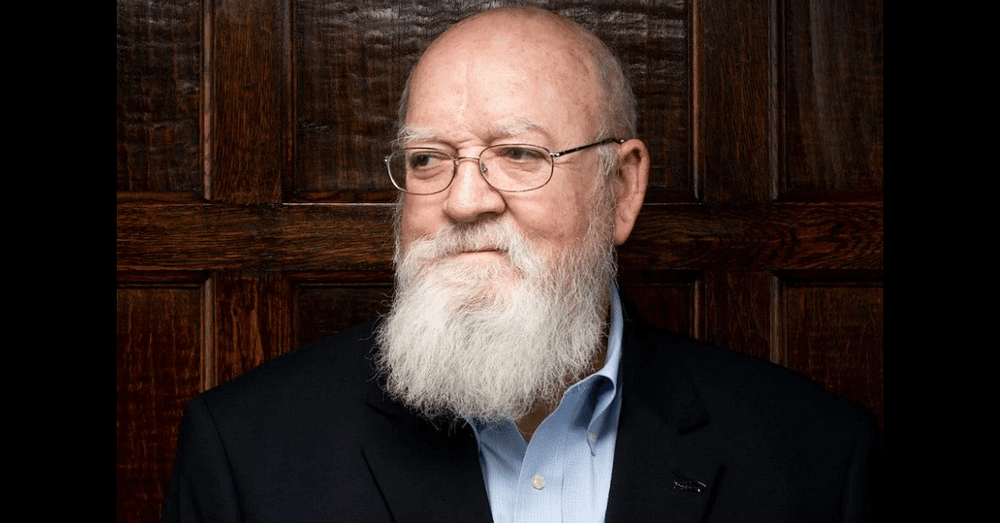
Despite the general view, the philosopher Daniel Dennett believed (or accepted) that “qualia are for real”… at least according to the American philosopher Owen Flanagan.

Flanagan wrote the following:

“Qualia are for real. Dennett himself says what they are before he starts quining. Sanely, he writes, ‘‘Qualia’ is an unfamiliar term for something that could not be more familiar to each of us: the ways thing seem to us’ [].”

Saying “what [x’s] are” isn’t the same as believing that x’s are “for real”. I can, after all, say what goblins are, without also believing that they are real.

Yet, okay, there are ways things (i.e., certain conscious mental states) seem to us

But where do we go from there?

More relevantly, is accepting that there is a way things seem to us the same as accepting the philosophical notion of qualia?

Dennett might well have (initially) accepted qualia. (“Dennett himself says what they are before he starts quining.”) However, he certainly didn’t accept what he took to be the main philosophical account of them to be. [“Seemings [which are] atomic, intrinsic, exhaustive, ineffable, and so on.” See here.] In other words, such qualia (at least in Dennett’s view) are mere “quicksilver”. (Quicksilver? Things with very little scientific or philosophical point?)

So can we untangle the way things seem to us from qualia?

Flanagan (again) put Dennett’s position on qualia in the following way:

“To think this, Dennett must think that the identification of qualia with the ‘way things seem to us’ must be interpreted as meaning that a quale is a state such that, necessarily, being in it seems a certain way and, necessarily, there is nothing else to it.”

On this account of Dennett, if quale x “seems a certain way”, then it seems a certain way

There is nothing else to it.

So perhaps Dennett’s account of qualia (if via Flanagan) raises certain questions.

If Dennett’s account of qualia weren’t broadly accurate (i.e., that they are “atomic, intrinsic, exhaustive, ineffable”), then qualia wouldn’t do all the work their supposed to do for anti-physicalists and many others. In other words, such people actually require Dennett’s account of qualia to be accepted. And that’s because without it their own qualia-based case against physicalism simply wouldn’t work. [Note: some physicalists accept the existence of qualia. See here.]

So it’s not just the case that Dennett wanted to portray qualia in this (extreme) particular way: it seems that qualia enthusiasts do so too. That’s because (again) if qualia aren’t taken to be as Dennett believes they’re taken to be (i.e., by qualiaphiles), then what would be the (philosophical) point of them?

More broadly, much qualia-talk is designed to end up with Flanagan’s final statement — “there is nothing else to it”. That nothing else to it is used to guarantee qualia complete freedom and autonomy from any physical, functionalist and/or scientific account (or description) of them.

As it is, Flanagan isn’t entirely happy with Dennett’s account.

Flanagan Explains His Own Position

Owen Flanagan wrote:

[] I claim that the concept simply doesn’t need to be understood that way. The alternative interpretation is that a quale is a state such that being in it seems a certain way. This interpretation is better because it allows us the concept of the way things seem without making seemings atomic, intrinsic, exhaustive, ineffable, and so on.”

This is a hard passage to grasp.

On first reading, Flanagan seemed to be simply repeating Dennett’s own account of qualia — if with slightly different wording.

Thus, in one passage Flanagan says that Dennett identifies qualia “with the ‘way things seem to us’”. On Flanagan’s own account, on the other hand, a quale is “a state such that being in it seems a certain way”.

So is there a substantive difference between the way x seems to us, and quale x is a state such that being in it seems a certain way?

That question just asked, I believe that Flanagan’s point is the following:

For qualiaphiles, qualia seeming a certain way is (literally) the end of the story…

To Flanagan, on the other hand, being in state x, as well as quale x seeming a certain way to us, isn’t the end of the story.

On this reading, then, we have an explanation as to why Flanagan concluded with the following words:

“This interpretation is better because it allows us the concept of the way things seem without making seemings atomic, intrinsic, exhaustive, ineffable, and so on.”

Thus, Flanagan’s interpretation is better (to Flanagan at least) because even though there are indeed brute seemings— that’s not the end of the story…

Yet surely that wasn’t the end of the story for Dennett either!

So perhaps Flanagan’s point is that we can accept that there is a way things seem, yet not also take these seemings to be (Flanagan quotes Dennett’s terms) “atomic, intrinsic, exhaustive, ineffable, and so on”.

Flanagan’s conclusion (if I have it right) can be summed up in this way:

(i) Because Dennett believes that qualia are construed as being “atomic”, “intrinsic”, “exhaustive” and “ineffable”,
(ii) then to qualiaphiles, that must be the end of the story.

Does this mean that Dennett is taking the qualiaphiles and anti-physicalists at their word?

Flanagan, on the other hand, isn’t taken them at their word.

Instead, Flanagan’s “alternative interpretation” is that “a quale is a state such that being in it seems a certain way”. Yet that isn’t the end of the the story for Flanagan. Indeed, Flanagan supplies lots of very persuasive and interesting philosophical and scientific detail as to why seemings aren’t — or even can’t be — the end of the story.


Monday, 10 February 2025

A Deflationary View of Information in Physics

This essay tackles the notion of information as it’s used by physicists.

The science writer Philip Ball stresses the importance of what he and others call information. Ball allows the physicist Christopher Fuchs to express his own informationalist view when he writes:

[Christopher Fuchs’] approach argues that quantum states themselves — the entangled state of two photons, say, or even just the spin state of a single photon — don’t exist as objective realities. Rather, ‘quantum states represent observers’ personal information, expectations and degrees of belief’, he says.”

According to this position, a photon isn’t in both spin up and spin down at one and the same time. Instead, we simply have the “information” that it can be either in spin-state up or spin-state down. In other words, until a measurement is made, we simply don’t know which state it’s in.

One may wonder, then, what point a realist notion of a spin state would serve — since (realist) physicists could never know if they were right about what they say. In other words, what’s the point of stating the following?-

Well, this photon is either in spin-state up or spin-state down, regardless of what we know — or our “information”.

Is it? How could this (or any) physicist know that?

Philip Ball

Since we are discussing the state of a photon, let’s trace all this back to John Wheeler.

John Wheeler on Information

The American theoretical physicist John Archibald Wheeler (1911–2008) once wrote the following words:

“An example of the idea of it from bit: when a photon is absorbed, and thereby ‘measured’ — until its absorption, it had no true reality — an unsplittable bit of information is added to what we know about the world, and, at the same time, that bit of information determines the structure of one small part of the world. It creates the reality of the time and place of that photon’s interaction.”

Wheeler seemed to be arguing that a photon literally gains its “reality” when it’s “absorbed”. Thus, if a particular photon gained its reality only when (or after) it was absorbed, then it mustn’t have had any reality before that absorption…

So can we now conclude that there simply was no photon before the absorption!

Basically, then, Wheeler stressed that the absorption can be seen in informational terms. That is, when the photon was absorbed, then “an unsplittable bit of information is added to what we know about the world”. In other words, only when the photon was absorbed could “we” (i.e., experimental physicists) gain information about it. Before that, the photon had zero reality because such physicists had zero information about it.

In more general terms.

Wheeler believed that everything we discover (at least in science or, perhaps, only physics) is about bits of information. Indeed, Wheeler believed that an object (or what he called an “information-theoretic entity”) is derived from (our?) information. Technically, this is a transformation which Wheeler called “it from bit”.

Thus, we don’t have an “it” (i.e., a physical object) until we firstly have a “bit” (a unit of information).

What Is, and What We Know

Philip Ball also quotes the physicist and philosopher of physics Jeffrey Bub as essentially putting a similar point about information, and quotes him saying:

[]‘[F]undamentally a theory about the representation and manipulation of information, not a theory about the mechanics of nonclassical waves or particles’ [].”

This means that there’s an important distinction to be made here between what is (i.e., regardless of minds, observations, tests, experiments, etc.), and the information we have about what is.

Fuchs (at least as presented by Ball) also makes it explicit that this stress on information is on a par with philosophical anti-realism when he argues that it isn’t an ontic position. (Neither Fuchs nor Ball ever mention the philosophical position of anti-realism.) It is, instead, an epistemic (i.e., a knowledge-based or information-based) position. In Ball’s words:

“Fuchs sees these insights as a necessary corrective to the way quantum information theory has tended to propagate the notion that information is something objective and real — which is to say, ontic. ‘It is amazing how many people talk about information as if it is simply some new kind of objective quantity in physics, like energy, but measured in bits instead of ergs’, he says. ‘You’ll often hear information spoken of as if it’s a new fluid that physics has only recently taken note of.’ In contrast, he argues, what else can information possibly be except an expression of what we think we know?”

This means that stuff (in a manner of speaking) gives off information, rather than stuff being information in and of itself. In other words, information as seen in the latter way almost seems like a misuse of the word “information”.

[See ‘Quantum Bayesianism’.]

Yet Fuchs’ position conflicts with what other philosophers and physicists see as information.

Such people believe (as Fuchs himself says) that information is in no way mind-dependent. It is “ontic”. [See note.] In other words, they believe that information is information regardless of persons, minds, observers/observations, tests, and experiments.


Note:

I’m not really sure about Philip Ball’s use of the word “ontic”, which I find difficult to decipher. That said, perhaps this position best squares with object-oriented ontology:

“Object-oriented ontology holds that objects are independent not only of other objects but also from the qualities they animate at any specific spatiotemporal location. Accordingly, objects cannot be exhausted by their relations with humans or other objects in theory or practice, meaning that the reality of objects is always ready-to-hand.”