Monday, 6 September 2021

Professor Philip Goff’s (Panpsychist) Philosophy of Trees


“The mycorrhiza structures [between tree roots and fungi] allow for a complex system of egalitarian redistribution.” — Philip Goff (in Galileo’s Error)
i) Introduction
ii) Philip Goff’s Anthropomorphisms Galore
iii) Professor Gagliano’s Experiments on Pea Seedlings
iv) Professor’s Simard’s Research on Trees
v) Conclusion

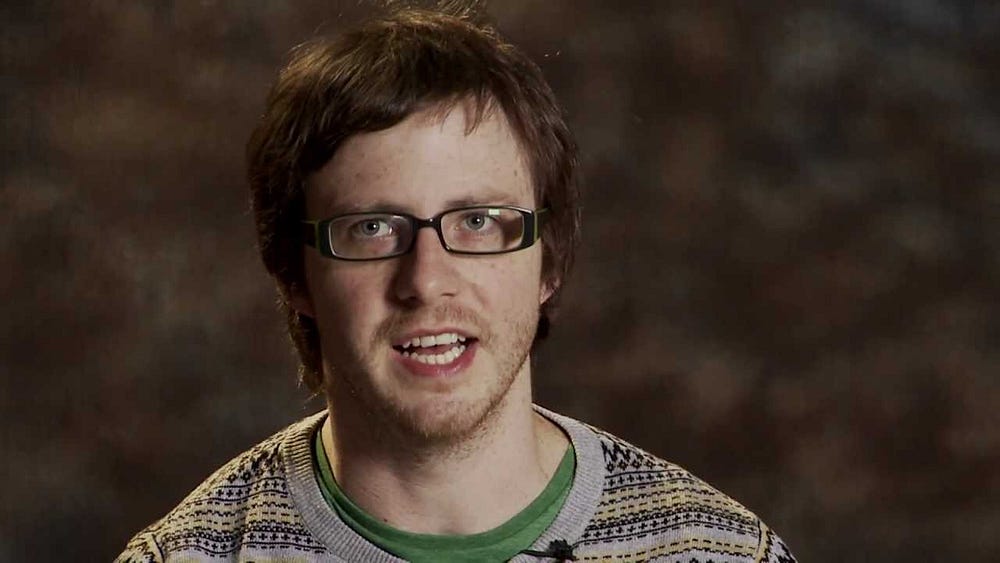
Philip Goff

This essay is an account of Professor Philip Goff’s philosophical and political interpretations of the experiments and research on plants carried out by the ecologists Professor Monica Gagliano and Professor Suzanne Simard. This means that it won’t be focussing purely on the actual experiments and research — at least not as they’re presented by these scientists. Instead, the focus will be on what Goff philosophically and politically draws out from them.

So it may be the case that Gagliano and Simard have arguments which are more (or less) convincing than Goff’s own. In addition, their experiments may be scientifically kosher and their papers abound with mathematical equations and an infinity of footnotes/references. (Think here of those books by Creationists, Flat-Earthers, New Agers, Deepak Chopra, etc. which often run wild with mathematical equations and technical terms from science.) However, Goff’s interpretations of these experiments are the main theme of this piece.

That said, both of Monica Gagliano and Suzanne Simard do foist philosophical baggage onto their experiments. That philosophical baggage goes way beyond the science itself. Indeed this is a very good example of the common phenomenon of scientists — as well as philosophers and political activists — using scientific data or experiments as ammunition to advance their own political and/or religious/spiritual causes and goals.

To give an an example of that last claim.

In one interview with Monica Gagliano, the interviewer (a Dr Prudence Gibson, who’s clearly very sympathetic) keeps on using the word “radical” in a very positive manner (i.e., about Gagliano’s views). It’s as if she believes that being radical in itself is always and automatically a good thing. (Does being radical also mean being true or correct?) In addition, Gagliano classes (some of?) those who’re critical of her views as being “passive aggressive”. (Some of the people who adopt Gagliano’s views are often passive aggressive against those who reject them.) In addition, apparently Gagliano’s critics are suffering from the (to use the interviewer’s own word) “affliction” of plant blindness. That’s also the case according to those other academics who work in the field of Critical Plant Studies. (CPS seems to more of an idea or project than an actually-existing field of study.)

Philip Goff’s Anthropomorphisms Galore

The main theme in this piece is Goff’s clear anthropomorphism; which he uses to back up his prior panpsychism. The problem is that Goff doesn’t see the words and phrases he uses as examples of anthropomorphism.

For example, in the following Goff will be quoted using the words “associate”, “meaningless”, “preferential treatment”, “for their young”, “mother”, “kin”, “prejudice”, “reciprocal support”, “passing along” “egalitarian redistribution” and “dinnertime” (the last one, surely, is Goff’s joke) to refer to plants.

Perhaps the most extreme example of all is Goff’s use of the word “wisdom”. He uses that word when he says that “mother trees [] pass on their wisdom to the next generation”. Now this is an professional analytic philosopher using the word “wisdom” about trees without even hinting at it being a metaphor or a poeticism. Yet, as stated, that’s because he’s not using the word “wisdom” metaphorically or poetically.

Now it must be said that it’s of course the case that anthropomorphic words and phrases about plants or trees can be — and often are — used poetically and metaphorically, as well as to enable understanding. And, in that simple sense, such uses aren’t truly anthropomorphic at all. So this means that the least a philosopher or scientist can do is make it clear to his/her audience that he/she is using such words (or phrases) in a poetic or metaphorical way. That said, in Philip Goff’s case at least, it’s very clear that he’s not using these word and phrases metaphorically, poetically or to enable understanding: he’s using them literally.

So take this passage as an example of this:

“[W]e now know that plants communicate, learn and remember. I can see no reason other than anthropic prejudice not to ascribe to them a conscious life of their own.”

It’s ironic that Goff mentions “anthropic prejudice” when he himself is clearly indulging in gross forms of anthropomorphism. (Many people have a problem with anthropomorphism even when it comes to animals — never mind plants.)

Readers may now wonder why anthropomorphism is seen to be somehow better than what Goff calls “anthropic prejudice” (i.e., anthropocentrism). Yet don’t both positions share the same (as it were) ánthrōpos (i.e., “human being”) toward plants? And so aren’t both positions equally suspect?

Of course Goff doesn’t believe he’s being at all anthropomorphic.

Ironically enough, I once wrote a piece on the author and theoretical physicist Sabine Hossenfelder and her (seemingly) naive position on panpsychism. (It’s called Sabine Hossenfelder Doesn’t Think… About Panpsychism’.) I now believe that she might have been right to be highly suspicious of panpsychism (even if her arguments are poor) — at least when it comes to Philip Goff and panpsychists with similar views. (She didn’t actually have Philip Goff in mind; at least as far as I know.)

In that piece I stressed that most panpsychists don’t think in terms of electrons (Hossenfelder’s own example) “thinking”, let along “imagining” (see later quotes from Goff). Instead, some panpsychists talk in terms of the very basic phenomenal properties — or even protophenomenal properties — of electrons and other basic entities. Basically, such panpsychists believe that electrons don’t actually think at all; though they do instantiate phenomenal properties.

(Goff now includes spacetime itself in his panpsychism. For example, he writes: “Spacetime on its own is a simple and ubiquitous experience [].”)

So in the following we’ll see the monumental leap from those basic claims of panpsychists to claims about plants “thinking”, “imagining”, etc.

Professor Gagliano’s Experiments on Pea Seedlings

Professor Monica Gagliano

Philip Goff uses highly-selective scientific research on plants as a means to back up and advance his philosophical and political panpsychism.

Firstly, his cites an experiment by Professor Monica Gagliano. Goff writes:

“In order to set up a similar scenario with her pea seedlings, Gagliano put a pea plant at one end of a Y-shaped tube, so that it could grow in either of two directions, left or right. In one direction was the seedling’s ‘food,’ in the form of blue light. In normal circumstances, the pea seedlings will instinctively grow toward where the light was last present. However, Gagliano tested whether the seedlings could associate the sound of a computer fan with the presence of the blue light, by repeatedly placing the noise at the end of the tube where the blue light was located. Upon repeated trials, she found that just as Pavlov’s dogs had salivated at the sound of the bell, so the pea seedlings grew toward the noise of the computer fan. In both cases, a sound that was initially meaningless to the organisms had come to represent dinnertime.”

Firstly and to state the obvious. Plants don’t near to hear sounds or see light. Yet, despite that, they can still be causally affected by both sound and light.

More particularly, isn’t it the case that the seedlings in this experiment would have also been causally affected by the sound of a computer fan? That is, rather than the seedlings

“associat[ing] the sound of a computer fan with the presence of the blue light”

they might have simply been causally effected by the fan sound instead of the blue light.

So where does the supposition of association come from?

In more detail, light is a wave and sound is also a wave — both with very determinate physical natures. Thus the seedlings might have moved toward the computer fan’s sound waves because in many respects they were like the blue light waves. That is, the sound waves of the fan must have causally impacted on the seedlings; just as the light waves had done so previously.

Thus there’s no (immediate) need to talk of “meaning”, “association”, “value”, etc. — as both Goff and Gagliano do.

To repeat: might the sound waves (from the fan) have had a similar causal impact on the seedlings as the (blue) light waves had previously done?

(See the BBC’s ‘Light and sound — reflection and refraction’.)

Goff must also know that even non-biological objects display “movement” in response to their environments. Take the computers and other electronic devices. They change or move in (causal) response to that which is external to them. Yet, oddly enough, Goff himself doesn’t seem to believe that computers are — or even can be — conscious. Indeed he spends some time in Galileo’s Error saying so — if only implicitly. (At the very least, Goff seems to be sympathetic to John Searle’s well-known Chinese Room argument.)

Yet despite focussing on Goff’s panpsychist position on Gagliano’s experiment, it seems that Gagliano herself is a panpsychist… of sorts. (Perhaps that’s why Goff noted her experiments in the first place.) For example, she states (as quoted by Goff) the following:

“‘If the plant is imagining its dinnertime arriving, based on a simple fan that is associated to the light, then who is doing the imagining? Who is thinking here?’”

It’s clear (even if only from Goff’s own words in Galileo’s Error) that Gagliano already had reasons to believe - or hope — that she’d find the results she found. (See Fudge Factor and Experimenter-Expectancy Effect.) After all, she actually set up a (according to Goff) “similar scenario” to Ivan Pavlov’s well-known experiments on dogs in order to see if her pea seedlings would behave in the same — or in a similar — manner to dogs.

Professor’s Simard’s Research on Trees

Professor Suzanne Simard

Philip Goff also uses Suzanne Simard’s scientific research to back up his political and spiritual panpsychism.

Goff writes:

[H]uman societies social harmony is possible only when they are united by strong ties of kinship. No such prejudice exists among trees. Even across species there exist networks of reciprocal support. In summer, the birch trees help out the fir trees by passing along carbon, especially to the fir trees that are shaded from the sun. In winter, there is reciprocation: when the birches are leafless, the firs provide much needed carbon support.”

It be argued that simply because entities have various causal (non-anthropomorphic) relations with one another, then that alone doesn’t mean that an entity within such a causal web must also display “reciprocal support” toward or “help out” the other entities within that same web.

Take a silicon chip in a computer or a piano string in a piano. Can we use the same kind of anthropomorphic words about these entities within the causal web that is a piano or a computer?

Of course Goff himself is referring to biological entities — trees and pea seedlings; but does that automatically change things in any relevant or fundamental way?

In addition, many animals (never mind trees) “help out” animals from other species for simple reasons of survival — not for reasons of “kinship” or “reciprocal support”. That is:

Animal x carries out action A, which also enables animal z (from another species) to survive, in order to bring about its own (or its species) survival.

And, if anything, the above will be even truer of trees. That is, birch trees “help out” (by “passing along carbon”) fir trees (which, in turn, “provide much needed carbon support” for birch trees) because birch trees gain from such a causal relation. This is the case even if both birch trees and fir trees turn out to be (anthropomorphic) “winners” when such mutual causal interactions occur.

Strangely enough, Goff himself cites evidence which may work against the political values which he extracts from this research. (This may be because Goff was either putting “both sides of the argument” or because he didn’t think through the implications of his own statements.)

The lack of (for want of a better word) altruism in the animal and tree world has just been mentioned. And Goff himself writes that “trees and the fungi enjoy a quid pro quo relationship”. Now would Goff like it if all human relationships were based on such quid pro quo arrangements? Of course no doubt Goff can interpret quid pro quo relationships in the world of trees in a way that squares with his own personal politics — and someone else could interpret it in a way which doesn’t.

That said, Goff then immediately shifts gear and says (of Simard’s research) that

[t]he mycorrhiza structures allow for a complex system of egalitarian redistribution”.

Of course the words “egalitarian redistribution” are taken from the human political domain. Indeed Goff himself — coincidentally enough — is strongly in favour of egalitarian redistribution in the human world and has written about it in newspapers and in his blog. And here is Goff spotting egalitarian redistribution in the world of trees. (See Goff’s article ‘Our Glastonbury U2 protest was a call for an ethical tax’, written for the Guardian newspaper.)

Goff offers more on Simard’s research which may also be taken to go against his political interpretations of the plant world. He writes:

[L]ike humans, trees do exhibit preferential treatment for their own young. Simard has shown that the ‘mother’ trees at the center of the network not only give greater amounts of carbon to their own kin, but also send them defense signals which can increase by a factor of four the young trees’ survival chances. This intergenerational transfer is particularly pronounced at the point when the mother trees die, as they pass on their wisdom to the next generation.”

Now since Goff himself mentions human “ties of kinship”, would he be happy with the idea that a specific human being only helps out other human beings because doing so actually helps that said human being? Indeed some theorists have argued that this is indeed always the case with all human beings. However, surely this interpretation wouldn’t please Goff or help his political panpsychism.

Take this other example.

You may think that the fact that “mother trees [] give greater amounts of carbon to their own kin” would work against Goff’s political and spiritual (as it were) holism. Isn’t this example a display of the (to use an anthropomorphic word) selfishness of trees vis-à-vis non-kin? (This all ties into very complex and long-running debates — often political in nature — about whether it’s a self-replicating molecule, gene, cell, organism, group or species that is subject to natural selection — see unit of selection.)

In any case, it can be argued that trees neither give preferential treatment nor don’t give preferential treatment to their “kin” (or, for that matter, to anything else). That’s because phrases like “preferential treatment” seem odd in these non-human (scientific) contexts.

Conclusion
All the above means that Goff uses anthropomorphic ways of speaking even when his examples can be made to work against his political and spiritual panpsychism.

And that highlights a problem here.

Exactly the same data, evidence or experiment about — or on — trees and other plants (as well as animals) can be used as ammunition to advance just about any political position. (See underdetermination of theory by data/evidence.) Indeed, historically, this has often been done. More specifically, talk of “quid pro quo relationship[s]” in the plant world could be used to advance political positions which are diametrically opposed to Goff’s own.

Finally, on the words “wisdom”, “egalitarian”, etc. again — as used by Philip Goff, Gagliano and Simard.

The simple argument here is that Goff, Gagliano and Simard are using these terms in ways that are massively at odds with how they’re used by laypersons when they refer to human individuals, institutions or societies. That is, they’re using them as highly-specific technical terms. What’s more, such technical terms pick out behaviours which are displayed by every member of a plant species — at least in a given environment.

Yet that simply isn’t the case with human beings.

The word “wisdom”, for example, is always used in a relative or contextual way — it’s never used to refer to every human being in all circumstances dating back tens of thousands of years. That is, person, institution or society x is (or was) wise in comparison with other persons, institutions or societies.

As for Goff’s word “egalitarian”: if every plant of a given species is egalitarian, then no plant of that species is egalitarian. Like wisdom, a tree can only be egalitarian if there’s the possibility that this tree (or the entire species) can choose not to be egalitarian. Again: the word “egalitarian” implies that an individual, institution or society chooses to be egalitarian. In other words, the word “egalitarian” has moral or normative content. That isn’t the case with the plant species Goff artfully selects. According to Goff (though he doesn’t explicitly state this), every plant of that species — and perhaps all plants! — are wise or egalitarian.

The same is true of Goff’s use of the words “prejudice” and “reciprocal support” when he refers to plants. Do these plants have the choice to actually embrace prejudice? Do such plants ever go against the reciprocal support Goff highlights? And say that there are indeed some exceptions (which is doubtful — unless for genetic and/or environmental anomalies, etc.) displayed by the plants of a given species — would they be morally flawed to display prejudice or reject reciprocal support?

So what’s the point of using these words at all? They have almost zero connection to how they’re used by laypersons — and probably even by Goff himself when he’s uses them in all other (non-plant-related) contexts.

In conclusion: perhaps it would be wise for Goff not to use the plant world as a weapon in his philosophical and political battles.

[I can be found on Twitter here.]

Saturday, 4 September 2021

Eliminative Materialism: Paul and Patricia Churchlands’ Strong Neuronal Activations For Each Other


“One can’t help wondering whether the Churchlands’ early courtship involved poetry expressing the strength of their neuronal activations for each other.” — Professor Philip Goff (in his book Galileo’s Error)

i) Introduction: Philip Goff on the Churchlands
ii) The Future of Mind
iii) Those Damn Propositional Attitudes!
iv) Reductionism or Eliminativism?
v) Paul Churchland Believes That the Mind Exists
vi) Mental Contents and Their Expressions
vii) Problems With Eliminative Materialism
viii) Conclusion

Introduction: Philip Goff on the Churchlands

Professor Philip Goff (who’s a well known advocate of panpsychism) tells us a joke (though it’s possible that it wasn’t meant as a joke) about Paul and Patricia Churchland and their general materialist position on the mind. He writes:

“One can’t help wondering whether the Churchlands’ early courtship involved poetry expressing the strength of their neuronal activations for each other.”

Of course Paul and Patricia Churchland wouldn’t have used such neurobiological technical terms when they courted. And no one would use such a vocabulary today. That’s partly because it can be said that eliminative materialism (the position that Paul and Patricia Churchland advance) is a kind of philosophical (as it were) futurism in that it’s a position that predicts what form future scientific theories will take. That is, the Churchlands believe that the sciences will — or perhaps may — one day reveal that the mental states we refer to every day (i.e., when we use words like “love”, “believe”, “desire”) do not refer to anything real.

So what about the future?

This is how the Canadian philosopher Paul Churchland (1942- ) himself states his desire for a new language of mind:

“Neuroscience may appear to be defective in providing a purely ‘third-person account’ of mind, but only familiarity of idiom and spontaneity of conceptual response are required to make it a ‘first-person account’ as well. But it is entirely possible for a person or culture to learn and use some other framework in that role, the framework of cognitive neuroscience, perhaps.”

So is Philip Goff ruling out a change in vocabulary (as philosophers put it) a priori? And if he is, then why is he doing so?

After all, it’s a contingent fact that we use the terms we do to refer to our mental lives. Of course it can be argued that the words we use about our mental lives are somehow hardwired into our brains. But is that really the case? Are there natural-language cognates of all the contemporary terms of Western folk psychology which date back, say, 20,000 years? (The first human languages are thought to have begun between 50,000 and 150,000 years ago.) And have such terms (when translated into other languages) really been used by all other cultures too?

Despite those questions, even if such terms have been the norm throughout all histories and all cultures, then that surely still doesn’t — of necessity — stop us from acquiring a different way of speaking about the mind.

More specifically, surely Philip Goff can’t be arguing that all the expressions of (in his example) love can’t — by definition — be expressed in terms of what he calls “neuronal activations”. Indeed what’s so special about the words and concepts we currently use?

Yet, ironically enough, Goff himself unwittingly provides Paul Churchland with just the kind of argument he may well use himself. It just so happens that Goff (in this case) is talking about dualism, not love (or, for that matter, beliefs, desires, etc.). Goff writes:

“The psychologist Paul Bloom has argued that dualist thought is hardwired into use and that from an early age children categorize ‘mental things’ as distinct from ‘physical things.’”

More relevantly, Goff immediately continues with these words:

“Just because a view comes to us naturally or is hardwired, it doesn’t mean it’s true [].”

Goff’s joke is also almost like a version of the (as it were) self-refuting argument against eliminative materialism. This argument has it that because eliminative materialists use words like “belief” and “true” (or they simply believe that eliminative materialism is true), then this is evidently self-refuting. And that’s simply because, according to eliminative materialism, such things as truth and belief don’t exist. (This is covered later when Quine raises the question as to whether eliminative materialism expresses various mental states in neurobiological terms or whether it eliminates them tout court.)

Of course Paul and Patricia Churchland have offered ripostes against this argument. And Michael Devitt, for example, has offered a “deflationary” account of “x is true” that may help eliminative materialism.

Similarly (or at least fairly so), the serious part of Goff’s joke may be that in order for Paul and Patricia Churchland to be consistent about their belief in eliminative materialism, then when they courted, they should have used various words or terms from neurobiology to express their love for one another.

The Future of Mind

Paul Churchland goes into more detail on his own futurism in the following:

“Given a deep and practiced familiarity with the developing idioms of cognitive neurobiology, we might learn to discriminate by introspection the coding vectors in our internal axonal pathways, the activation patterns across salient neural populations, and myriad other things besides.”

Of course at present it would be virtually impossible (even for a neuroscientist) to describe our (to use Churchland’s own term) “first-person” thoughts, feelings and beliefs in terms of “coding vectors in our internal axonal pathways”, “activation patters across salient neural populations”, etc. It may even be hard to imagine such a state of affairs at present.

Yet Churchland wasn’t talking about the case as it is today. He explicitly stated that

“it is entirely possible for a person or culture to learn and use some other framework in that role”.

Clearly this is a statement about the future. In other words, this isn’t about a elite of neuroscientists imposing a new language on the populace today — or even next year. (Or such an elite banning all the words from folk psychology.) That said, if the “language” of folk psychology has been with us since human language itself began, then perhaps Churchland’s wishes for the future may be a little utopian. (Or, depending on one’s views, dystopian.) After all, there’s surely a difference between picking up new words or terms (which happens all the time) and picking up a new language to talk about ours minds. However, this clearly isn’t something that won’t — or can’t — happen in the future.

Those Damn Propositional Attitudes!

The following passage is a take on Paul Churchland’s general position on mind as expressed by Tadeusz Zawidzk:

“Churchland is famous for for championing the thesis that our everyday, common-sense, ‘folk’ psychology, which seeks to explain human behavior in terms of the beliefs and desires of agents, is actually a deeply flawed theory that must be eliminated in favor of a mature cognitive neuroscience.”

The main problem — so Churchland believes — with beliefs, desires, etc. is that they’re (deemed to be) propositional attitudes. And the main problem with propositional attitudes is that they (are seen to) have semantic and syntactic properties. Yet such semantic and syntactic properties can’t be translated into what goes on in the brain. Instead, what we really have are spiking frequencies, action potentials and other (neuroscientific) things. And these things, moreover, are distributed and continuous in nature, not precisely located in the brain or discrete.

Of course some philosophers have retorted that these mental states needn’t be seen as being linguistic in nature.

To take just one example. Many connectionist models of the brain do make use of what’s called representations (see here). Yet these (quasi?)representations are instantiated in the brain in a parallel and distributed manner (see here).

Reductionism or Eliminativism?

The important point now is to distinguish eliminative materialism from reductionism in the philosophy of mind.

Paul Churchland believes that “folk” concepts shouldn't be reduced to something neurobiological or scientifically kosher: he believes that they should be eliminated.

Why is that?

It’s because he believes that they don’t correspond to anything (to use a philosophical term) real or objective — that is, to anything in the brain.

Of course if beliefs, desires and the other propositional attitudes don’t exist in the first place, then it doesn’t really make sense to argue that they can be expressed in other ways. And, a few decades ago, the American philosopher W.V.O. Quine (1908–2000) made this point. He wrote:

“Is physicalism a repudiation of mental objects after all, or a theory of them? Does it repudiate the mental state of pain or anger in favor of its physical concomitant, or does it identify the mental state with a state of the physical organism (and so a state of the physical organism with the mental state)?”

So this can be expressed in the following way: either beliefs, desires, etc. exist and they’ll ultimately be explained in neurobiological terms — or they don’t exist at all and therefore they can’t be expressed in any way.

That said, Churchland would simply argue that it isn’t beliefs, desires, etc. that are being expressed with our Folk words or concepts — that’s if these things are seen as “sentences in the head”. And therefore it isn’t our beliefs, desires, etc. that are — or will be - expressed in neurobiological terms either.

So all this becomes a little circular.

Paul Churchland Believes That the Mind Exists

Despite all the above, one point that’s worth making is that Paul Churchland’s position isn’t as extreme as some people (not least Philip Goff) paint it.

Firstly, Churchland accepts that reality of the mind. Or, at the very least, he uses the word “mind”. (After all, Churchland may want to substitute or eliminate that word too.) More specifically, the mind itself (as such) isn’t denied. Instead Churchland's eliminativism is a position which states that that certain types of mental states (mainly propositional attitudes) do not exist.

Now can we even have a mind without such mental states?

That said, when it comes to consciousness (i.e., not the mind), Churchland (in his book The Engine of Reason, The Seat of the Soul) did argue that consciousness may — in the future — be explained entirely in terms of neurobiology — i.e., physical events in the brain, biochemicals, parts of the brain, etc.

Yet here again (as with beliefs, desires, etc. earlier) the following can be asked:

Is it the case that consciousness does in fact exist but that it can be — or must be — described (or expressed) in terms of neurobiology?

Or alternatively:

Is it that consciousness simply doesn’t exist at all and all we need are neurobiological descriptions of people’s brains?

Churchland also accepts that there is such thing as a “first-person account” of (my own two words) inner processes. And he even uses the word “introspection”. It’s just that Churchland also believes that these processes should be described in the language of neuroscience or cognitive neurobiology, not in the language of folk psychology. In these cases at least, then, we don’t really seem to have any eliminations at all. Perhaps that’s mainly because Churchland has focussed primarily on the propositional attitudes when it comes to his eliminativism (though recall the earlier comments on his position on consciousness itself.)

(The words “inner processes above are italicised because traditional behaviourists would never have been happy with any mention of them — and, arguably, Daniel Dennett still isn’t.)

Mental Content and its Expression

Paul Churchland also stated the following:

“What makes an account a ‘first-person account’ is not the content of that account, but the fact that one has learned to use it as the vehicle of spontaneous conceptualization in introspection and self-description.”

I don’t entirely understand Churchland's phraseology when he writes “is not the content of that account”. That said, his words may simply mean that we can make a distinction between (mental) “content” and the way we express that content. That is, there are things which occur in the mind regardless of the specific and contingent natural-language words we use to express them. (This is similar to the point philosophers have made — since Gottlob Frege here — about a single abstract proposition which can be expressed by many natural-language sentences.) In other words, we’ve acquired the words/terms of folk psychology to talk about (mental) content in our “first-person account[s]”. So we could, in the future, use the terms of neurobiology — instead — to express that very same content. (Or at least similar content as it’s “found” in the future.)

So the fact that we use words like “belief” and even “love” — and have the concepts belief and love — is a contingent fact about how we express such mental content. Indeed such words are now “spontaneous” simply because we happen to have been brought up in a particular culture at a particular time. Now these words might well have been used for centuries or even much longer. Yet even that fact (if it is a fact) wouldn’t stop such words from being highly contingent and variable entities.

For example, think here of how the words “troll”, “hi-fi”, “progressive”, “computer”, “transgender”, “race”, “electron”, etc. would have sounded (or seemed) to a 19th century person - let alone to a person from the 203 BC.

Yet despite all that, the words we use today may still seem entirely natural. Indeed they may even be entirely natural — what else can they be?

But so what?

Problems With Eliminative Materialism

There are problems with Churchland’s position. Take this passage:

“Given a deep and practiced familiarity with the developing idioms of cognitive neurobiology, we might learn to discriminate by introspection the coding vectors in our internal axonal pathways, the activation patterns across salient neural populations, and myriad other things besides.”

This is an odd.

Firstly, it seems to hint at the possibility that literally everyone in our community could — or even should — learn the “idioms of cognitive neurobiology”. Alternatively, does Churchland simply believe that these terms would — or could — be passed down from scientists to the whole population? Surely he can’t believe that they could be taught to — or even enforced upon — the populace! (The word “abolished” has indeed been used in the eliminative materialism literature and might even have been used by Paul Churchland himself — see here.)

The basic point here is that languages aren’t imposed or passed down — they grow organically and over time. Of course particular words or even ways of speaking can be taught, suggested or even imposed. (This is happening today — at least to some extent — in the political domain.) But is it likely that all speakers and thinkers would need to know anything — let alone much — about neurobiology? Again, perhaps the terms from neurobiology will — or may — simply filter down in the way that so many other words/terms from academia or science have filtered down over the years. (This is especially the case when it comes to political terms from academia.)

Conclusion

In purely personal terms, I can’t even imagine expressing anything in terms of my brain’s “coding vectors in internal axonal pathways”, “the activation patterns across salient neural populations”, etc. And that’s simply because I know very little about neurobiology. And most other people know very little about neurobiology too. But, again, Paul Churchland was talking about the future. In addition and as just stated, academic or scientific terms being passed (or filtered) down — if over time — to the populace is a commonplace fact. So perhaps that’s what Churchland had in mind.

[I can be found on Twitter here.]

Monday, 30 August 2021

Does Jim Al-Khalili Argue That “Quantum Tunnelling” Isn’t…Well, Tunnelling?


It can be argued that it is the interpretation of the mathematical formalism of quantum mechanics which makes the latter “weird” or “counterintuitive”.

Take theoretical physicist and broadcaster Jim Al-Khalili’s words (in his book Life on the Edge: The Coming of Age of Quantum Biology) on quantum tunnelling. He writes:

“Although it would be wrong to think that quantum tunnelling entails the leaking through barriers of physical waves; rather, it is due to abstract mathematical waves that provide us with the probability of instantaneously finding the quantum particle on the other side of the barrier.”

So, in the above, Al-Khalili explicitly states that

“it would be wrong to think that quantum tunnelling entails the leaking through barriers of physical waves”.

Does that mean that there is no literal tunnelling at all?

Alternatively and at the very least, Al-Khalili is stating that there is nothing equivalent to tunnelling (as it would occur at the “classical” scale) that’s going on at the quantum scale. In other words, there’s no equivalent of, say, tunnelling through a six-foot-thick gold wall with a wooden spoon in quantum mechanics — despite the hype! (Or, less dramatically, there isn’t even an equivalent of simply tunnelling through the ground into your next-door-neighbour’s living room.)

Having written the passage quoted above, however, elsewhere Al-Khalili also writes the following:

“Just as waves can flow around objects… they can flow through objects, like the sound waves that pass through your walls… But if you behave like an atomic nucleus then you would sometimes be able to pass, ghostlike, straight through a solid wall.”

It’s not being said that this second passage from Al-Khalili somehow contradicts the first. However, it does highlight the problems tackled in this piece.

Firstly, “sound waves” passing through bedroom walls may be compared to quantum tunnelling - but this is obviously not the same thing. In addition, “you” can never “behave like an atomic nucleus” because if you did behave that way, then you wouldn’t be you. This is like saying the following: “If x = y, then x would be like y.” Or: “x would be like y, if x = y.” That is, if “you” were a particle/wave, then you would “be able to pass, ghostlike, straight through a solid wall”. But, of course, it makes no sense to say that you could be like a particle/wave passing through a subatomic “barrier”.

Finally, Al-Khalili uses the words “solid wall”. There are no solid walls at the subatomic scale . And even when the words “solid wall” are used as an analogy, this usage may still not work. Or, at the least, the analogy needs to be taken for what it truly is — i.e., simply an analogy. (Who knows, perhaps no one takes it any other way.)

Probabilities

When tackling quantum tunnelling, what we’re mainly dealing with is probability — or what’s called a probability wave. Thus, on this reading at least, the “wave” is literally abstract — i.e., not a wave at all! That is, the word “wave” is simply a colourful way of describing an abstract mathematical function. So, in quantum mechanics, these particles or waves — unlike footballs — can, with a small probability, tunnel to the other side of a barrier.

The important point here is that we’re dealing with quantum waves and particles. Or, at the least, waves and particles as they’re seen in quantum mechanics. And, because we’re dealing with waves and particles (though perhaps not only because), then no probability of a particle/wave tunnelling across a barrier can ever be zero. Another way of putting that is to say that the probability of a given particle/wave being “found” on the opposite side of a given barrier is not zero. In other words, it could happen. In terms of the barrier itself, the wider and higher the barrier is, the lower the probability of a given particle/wave tunnelling “through” it. (It must be noted here that some physicists identify the simple penetration into the barrier — i.e., without it reaching the other side — as an example of tunnelling.)

Quantum Tunnelling is Real

Despite stating all the above, Al-Khalili did also say that there is a

“probability of instantaneously finding the quantum particle on the other side of the barrier”.

And if there’s a probability of x, then it’s possible that x could happen. So, in this case, we could find a quantum particle/wave “on the other side of the barrier”.

So quantum tunnelling most certainly occurs — a hell of a lot! And that’s primarily because a hell of a lot of particles/waves — over various timespans — are involved in this phenomenon.

Now take the following selected examples of quantum tunnelling.

Quantum tunnelling occurs in nuclear fusion. It’s also “used” in the scanning tunneling microscope, in the tunnel diode (when electrons tunnel into solids) and in quantum computing. In addition, quantum tunnelling may be one reason for proton decay. Added to all that is the fact that quantum tunneling has been known about since 1927 (even if the term “quantum tunnelling” was never used in the 1920s or for a long time after).

That said, perhaps Al-Khalili’s own more concrete and up-to-date biological examples of quantum tunnelling are far more interesting. (Interesting in the simple sense that the other examples above have been known about for decades.) For example, Al-Khalili writes:

“[T]unnelling [has] been detected in lots of biological phenomena, from the way plants capture sunlight to the way that all our cells make biomolecules. Even our sense of smell or the genes that we inherit from our parents may depend on the weird quantum world.”

Yet, as in the other examples, these quantum-tunnelling and other cases still occur at the quantum (or micro) scale — even though they all have classical (or macro) effects.

Classical Pictures and Analogies

On this essay’s interpretation of Jim Al-Khalili’s words, there’s a stress on the mathematical formalism alongside literal physical interpretations of that formalism. Yet even though such physical events as quantum tunnelling occur, it may still be inadvisable to compare them to anything which occurs at the classical level. Thus not only may the words “wave” and “particle” create complications (at least for laypersons), so too may such words as “tunnelling” and “barrier”.

Again, obviously no one will question the fact that these physical things occur at the quantum scale. The question is whether the “classical” words or pictures accurately capture what actually happens. Indeed, as Werner Heisenberg (1901–1976) argued some nine decades ago (if not about exactly the same thing), perhaps no classical words, descriptions or visualisations will ever accurately capture these quantum phenomena. Indeed, in stronger terms, this is what Heisenberg once wrote (in a 1926 letter) to Wolfgang Pauli:

“The more I think of the physical part of the Schrödinger theory, the more detestable I find it. What Schrödinger writes about visualization makes scarcely any sense, in other words I think it is shit.”

Yet, of course, as Niels Bohr (1885–1962) also argued that we have no choice but to use classical terms (or classical descriptions) in our interpretations of quantum mechanics. Bohr once wrote the following:

“It is decisive to recognize that, however far the phenomena transcend the scope of classical physical explanation, the account of all evidence must be expressed in classical terms. The argument is simply that by the word ‘experiment’ we refer to a situation where we can tell to others what we have done and what we have learned and that, therefore, the account of the experimental arrangement and of the results of the observations must be expressed in unambiguous language with suitable application of the terminology of classical physics.”

The above seems to be a simple account of Bohr’s more technical correspondence principle; which states (broadly speaking) that the behavior of systems described by quantum mechanics reproduce classical physics when it comes to large (what’s called) quantum numbers.

So perhaps even trained physicists (i.e., those who’re adept at the mathematical formalism/s of quantum mechanics) also need such “classical pictures” in order to understand what’s going on. And that may be because in physics it’s almost impossible to rely entirely on the mathematical formalism/s. That said, many commentators have claimed that, for example, Paul Dirac (1902–1984) didn’t require any additional “classical pictures” or interpretations (see here). Indeed Dirac himself (more or less) said the same about his own stance on these matters. ( For example, he once wrote: “The interpretation of quantum mechanics has been dealt with by many authors, and I do not want to discuss it here. I want to deal with more fundamental things.”) Yet Dirac did class himself as “mathematical physicist”, not as a “mathematician”. (Incidentally, Dirac didn’t even class himself as a “theoretical physicist” — though most other physicists always saw things differently.)

Jim Al-Khalili himself tells us that he

“tr[ies]… to provide intuitive analogies wherever possible to explain quantum phenomena”.

So that surely means that the words “wave”, “barrier”, “tunnelling” — and especially “particle” — are analogical too.

But what are these words analogies of?

Basically, they must be analogies of (to use Philip Ball’s words) “what the maths tells us”.

But what does the maths tell us?

Perhaps the maths tells us nothing beyond itself.

Yet surely that can’t be the case!

Anyway, Al-Khalili also says that

“the reality is that quantum mechanics is utterly counterintuitive and there is a danger of oversimplifying for the purpose of clarity”.

Perhaps it’s the case that the “analogies” Al-Khalili refers to are almost entirely responsible for the “counterintuitive” or “weird” nature of quantum mechanics. That is, QM becomes weird the moment it’s interpreted using analogies or classical descriptions.

The other thing is that such analogies don’t actually (as Al-Khalili put it) “oversimplify[]” at all — they do the opposite. Perhaps the analogies are actually creating the complications (alongside the weirdness). That is, these analogies are effectively attempting to place round shapes in square holes. And, because of that, rather than analogies (or classical pictures) simplifying things, what we get are complications… And we most certainly get weirdness or counterintuitive scenarios.

So on the one hard we have the seeming clarity which everyday analogies or pictures provide (i.e., those analogies/pictures which help the laypersons who don’t know the mathematics of quantum mechanics). Yet, on the other hand, these analogies or pictures actually add to — or even complicate — the mathematics. More strongly, the analogies or pictures simply don’t work in that they don’t — and even in principle can’t — describe or express the mathematics.

All this should be obvious really.

Think about what we have here.

Particles, waves or events at the quantum scale are at a level that is fantastically smaller than, say, a football. In terms of detail, a sheet of paper is about six orders of magnitude thicker than an atom. Now think about how much “thicker” a football is to a sheet of paper. (100,000,000 atoms would stretch along the width of your fingernail.)

More relevantly to this piece, take the case of the barrier through which the particle/wave tunnels. Usually, this tunneling only happens when it comes to barriers of thickness around 1–3 nm (i.e., nanometres) or smaller. A nanometre is equal to one billionth of a metre.

A Final Word

So when we use the kind of words we use to describe the kicking of a ball to describe what happens at the quantum scale, no wonder things become weird. Doing so is roughly like using poetry to describe the internal workings of a cell phone. Or, alternatively, it’s like expecting a virus or lice to behave (entirely) like a cat or a human being.

[I can be found on Twitter here.]