Tuesday, 6 December 2022

Was Bishop Berkeley a Constructivist, an Idealist, an Empiricist or an […]ist?

The 18th-century philosopher George Berkeley can be deemed to be a scientific constructivist, an idealist or an empiricist. So is Berkeley one or none of the above? Indeed, does it matter which label we attach to him?
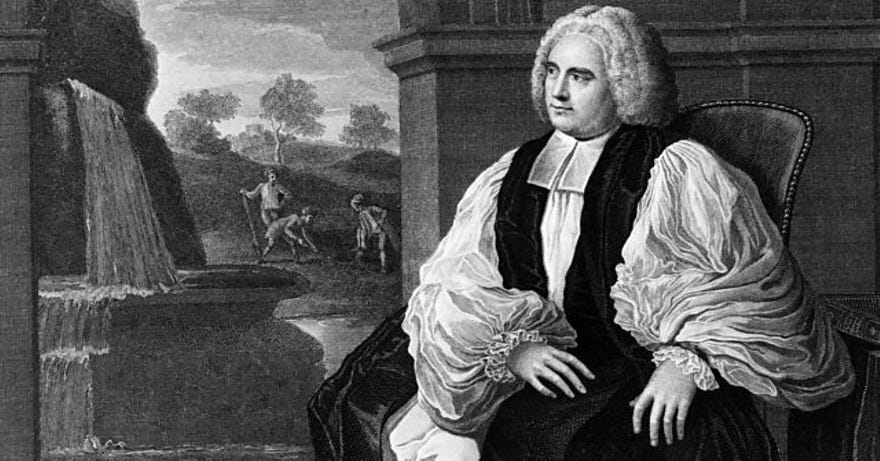
Readers will note how Bishop Berkeley’s ideas seem very contemporary in resonance. Indeed, 21st-century idealists like Donald Hoffman, Bernardo Kastrup, etc. are harking back to George Berkeley — at least to various degrees. Then again, perhaps it can be argued that Berkeley himself was harking back to even older philosophical traditions.

So George Berkeley can be seen as an idealist, empiricist or an instrumentalist. Of course, some of these isms can be upheld together at one and the same time. Others can’t.

In any case, some readers may get annoyed with all these isms. And because of this plethora of labels (as with many other debates on “dead philosophers”), it’s probably best to simply discuss what George Berkeley actually believed and not spend too much time attempting to squeeze him into a neat and tidy retrospective box.

All that said, and in respect to the title of this essay, Berkeley can indeed be seen as a scientific constructivist (or at least as a proto-scientific constructivist).

Is George Berkeley a Scientific Constructivist or an Idealist?

That’s primarily because constructivists argue that science consists in “mental constructs” which have the purpose of explaining and describing measurements and experiences (or observations) generally. Yet, and noting the abundance of isms just mentioned, this too reads like a simple description of empiricism. In fact, it certainly squares well with — and here we go again — constructive empiricism.

Where scientific constructivism may differ from what Berkeley himself believed is its emphasis on the idea that scientific knowledge is constructed by scientific communities. This is a (partly) sociological angle that doesn’t seem to completely ring true in Berkeley’s 18th-century context.

That said, Berkeley mightn’t have had a problem with this sociological position. Indeed, he even argued as much himself in various places (if in his own 18th-century prose style). For example, Berkeley once stated the following:

[M]athematical entities have no stable essence in the nature of things; and they depend on the notion of the definer. Whence the same thing can be explained in different ways [].”

Oddly enough, Berkeley-as-idealist (i.e., rather than Berkeley-as-empiricist) can be deemed to be more radical than 20th-century scientific constructivists. That’s because, on one reading at least, constructivists are said to believe that the world is actually independent of human minds. However, they also believe that our knowledge of the world (somewhat obviously) is not. And that’s because our knowledge of the world is said to be a “social construction”.

Arguably, Berkeley-as-idealist might have scoffed at such a distinction because talk of “the world itself” is (to quote Ludwig Wittgenstein) “a wheel that can be turned though nothing else moves with it is not part of the mechanism”.

[Some claims about social, scientific and other kinds of “social construction” seem banal and/or truistic. For example, saying that the English language, a motorway, money, or even a particular sexual kink is a social construction is a statement of the bleeding obvious.]

Now let’s turn to Berkeley’s philosophy of physics.

Berkeley on Newton and Intrinsic Properties

George Berkeley was certainly very interested in physics. Indeed, his first published book was on physics — An Essay Towards a New Theory of Vision (1709). More specifically, much relevant material (in relation to this essay) can also be found in Berkeley’s Philosophical Commentaries (1707–1708), in which he discusses Isaac Newton’s Principia.

In broad terms, George Berkeley believed that physics doesn’t provide us with any (as it’s been put) “true insight” into the nature of the world.

Thus, Berkeley pre-empted the position of panpsychists like Philip Goff who often tell us that physics has nothing to say about what they call “intrinsic properties”. Indeed, Newton himself believed that physics only mathematically maps the actions, relations and correlations of bodies with mass — yet it has nothing to say about the forces themselves. That is, physics (at least at that time) had nothing to say about what forces actually are.

All this is almost to deem physics as being (another ist!) behaviourist in nature. That is, in Newton’s day, physics took a behaviourist stance on physical phenomena, rather than on human beings and other animals. In other words, physics was — and perhaps still is — about the behaviour of bodies and forces (i.e., or the behaviour of bodies when subject to forces).

In more concrete terms, Berkeley made a distinction between the mathematics involved in describing gravitation and refraction, and the (as it were) real nature of gravity and light. Here again, the maths simply describes the effect of forces (e.g., gravity and light) on bodies. It doesn’t tell us what gravity and light are.

Now, to use the terms of contemporary analytic philosophy, it can be said that Berkeley believed that the terms (for example) “action”, “attractive force” and “impetus” had no referents. However, we do know that bodies move and that they move in very-specific ways in very-specific situations (or conditions).

Yet all this didn’t mean that Berkeley also believed that we should eliminate such terms. He still believed that such terms are useful. It’s just that they don’t refer to anything.

So, for all that, the mathematics of physics can be perfect when it comes to descriptions and predictions. (At least in can be if the physicist gets his sums right.)

To sum up: Berkeley believed that the whole of Newtonian mechanics is simply a “set of equations” and nothing more. Newton, on the other hand, believed (at least according to Berkeley himself) that there’s more to physics than mere equations.

Berkeley on Occult Qualities

Berkeley’s position on physics (or at least on Newtonian physics) — as mainly expressed in his De Motu (1721) — was (proto) instrumentalist in nature. Indeed, it even retrospectively chimes in with Bas van Fraassen’s own constructive empiricism.

At least on some readings, then, Berkeley believed that science is essentially all about the description and explanation of the regularities, which are discovered primarily through experiment and observation. Indeed Berkely himself once wrote:

[T]o be of service to reckoning and mathematical demonstrations is one thing, to set forth the nature of things is another.”

[The very notion of observation is problematic on an idealist reading, if not on an empiricist reading.]

On a broadly instrumentalist reading, then, scientific theories are “useful fictions”. These useful fictions, nonetheless, do explain the data. Indeed, on some positions, such theories can even be taken to be true. (Perhaps primarily because such theories have nothing to say about intrinsic properties, noumena, “nature itself”, etc.)

Berkeley even went so far as to argue that forces are “occult qualities” which “expressed nothing distinctly”.

This is hardly a surprising position (at least in retrospect) for a 18th-century empiricist. After all, you can’t see, touch, smell or whistle gravity or any other force known to 18th-century physics.

Berkeley put it more technically than that when he stated that

“something unknown in a body of which they have no idea and which they call the principle of motion, are in fact simply stating that the principle of motion is unknown”.

Simply put: motion is known. However, what causes motion isn’t known. Again, Berkeley goes further. He states an empiricist position in which those who

“affirm that active force, action, and the principle of motion are really in bodies are adopting an opinion not based on experience”.

Berkeley then advanced a position that may seem more akin to idealism (if to subjective idealism) than to empiricism. That is, Berkeley believed that forces are the products of what he called the “soul”. Therefore, forces are “incorporeal thing[s] [which] do not properly belong to physics”.

My flickr account:


Thursday, 1 December 2022

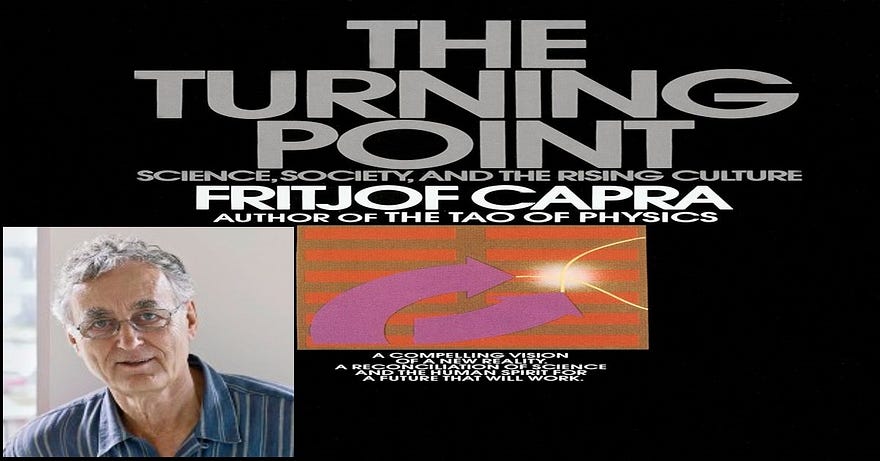
Fritjof Capra’s Political Reasons for Using Quantum Physics to Bring About an “Eastern Liberation”

Physicist, best-selling author and “deep ecologist” Fritjof Capra believes that Western ways of thinking and behaving have “brought political disorder; an ever-rising wave of violence and an ugly, polluted environment”. He offers his solution to all that. That solution is a fusion of quantum mechanics (actually, specific interpretations of QM) and Capra’s own political and religious (“Eastern”) views.

“In our Western culture [] many have turned to Eastern ways of liberation.”

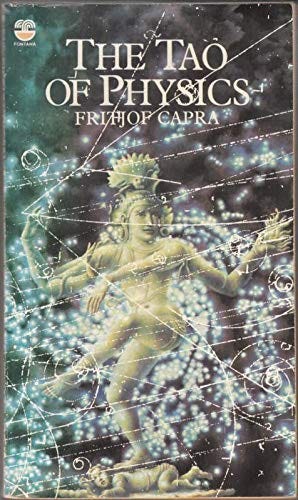
— From Fritjof Capra’s The Tao of Physics (see passage here).

(i) Introduction
(ii) Anti-Science and The Tao of Physics
(iii) Fritjof Capra’s Physics
(iv) Fritjof Capra’s Politics
(v) Thomas Kuhn and Capra’s Political Activities

The fact that some (or even many) self-described “spiritual” people embrace quantum mechanics (actually, specific interpretations of QM) for exclusively spiritual reasons is (almost) true by definition.

However, their drawing political conclusions from quantum mechanics isn’t really obvious at all.

So why stress this physics-politics link?

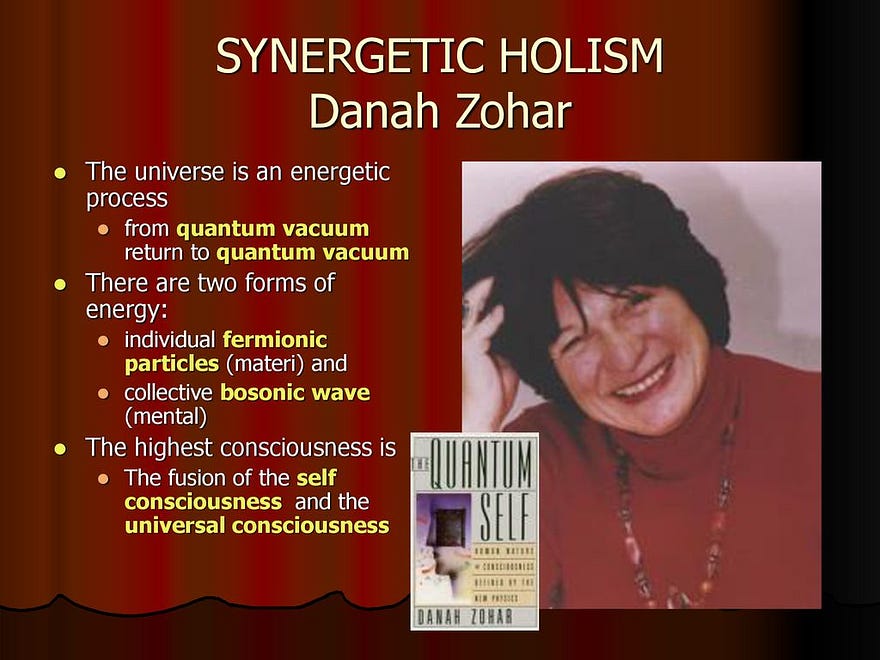
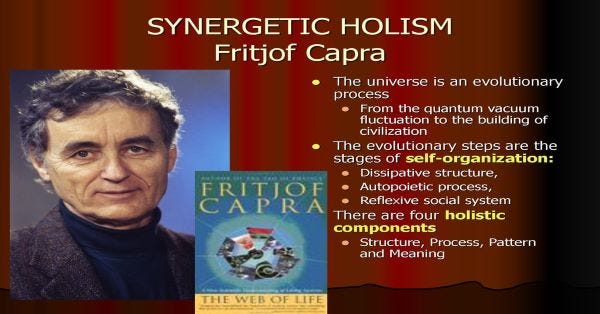
It’s stressed primarily because physicist Fritjof Capra himself stresses it. That is, Capra is open (as is Danah Zohar and others) about this link— as the quotes in this essay will clearly show.

Oddly enough (or perhaps not), Capra admits that most — perhaps even all (i.e., by definition!) — New Agers, spiritualists, etc. are anti-science.

That said, some (i.e., a small number) of those otherwise anti-science New Agers are nonetheless happy with quantum science. More accurately, such people are happy with those particular interpretations of quantum mechanics which can be used to back up their prior spiritual views.

Anti-Science and The Tao of Physics

One of Fritjof Capra’s main themes is that he isn’t himself anti-science at all.

Indeed (as the subtext often goes), how can he be? After all, Capra is a scientist himself.

Capra tells us that spiritualists and other New Agers, on the other hand,

“tend to see science, and physics in particular, as an unimaginative, narrow-minded discipline which is responsible for all the evils of modern technology”.

Thus, Capra wants to save science from itself at the same time as bringing “spiritual people” on board his “spiritual science” boat (see here)…

But first of all, such people must fully embrace Capra’s very own scientific-political-religious worldview.

So the following often-quoted passage (from Capra) may make things much clearer:

“Science does not need mysticism and mysticism does not need science, but man needs both.”

It was just said that Capra is not anti-science.

However, Capra (as with Danah Zohar) is certainly against “Newtonian science”. He spends much time telling us so. Indeed Capra may not even be a (as it were) unqualified fan of quantum physics. That is, he has little to say about quantum physics (at least in his best-selling books) as it can be presented completely divorced from all the political, spiritual, ecological, sociological, psychological, historical, etc. interpretations which he indulges in. Indeed, even the technical sections of Capra’s The Tao of Physics, for example, read like mere preludes to what he clearly sees as his own far more important political and spiritual interpretations. (Those interpretations which inevitably follow all that prior data on actual quantum mechanics.)

So (again, just like Danah Zohar), quantum physics became a tool which Capra used to advance his spiritual-political worldview.

In actual fact, Capra was very clear about his prime motivation for writing his best-selling book, The Tao of Physics. For example, he wrote:

“My starting point for this exploration — the threat of nuclear war, the devastation of our natural environment, our inability to deal with poverty and starvation around the world…”

The “worldview” Capra is fighting against is “inadequate for dealing with the problems of our overpopulated, globally interconnected world”.

His own worldview (or political religion) is, of course, the answer or solution.

But there’s one thing that needs to be got straight out of the way:

What about Capra’s actual physics?

Fritjof Capra’s Physics

This is a random example which isn’t actually from anything Capra has written.

The best way to tackle the relation of actual quantum physics to Fritjof Capra’s politics is to quote Capra himself thus:

[] I am very pleased that in all the criticism I have had from fellow physicists, not one of them has found any fault in my presentation of the concepts of modern physics. [] to the best of my knowledge nobody has found any factual errors in The Tao of Physics.”

This is odd.

I don’t believe that many — or even any — of the physicists (as well as many others) who’ve criticised Capra ever claimed that he got the quantum physics wrong. (At least not in a way that is relevant.) That’s because their criticisms usually had — and still have — nothing to do with Capra’s (to use his own words) “factual errors” or his “presentation of the concepts of modern physics”. (This may depend on how he presents each particular concept and theory of quantum physics and physics generally.) The criticisms were primarily to do with how Capra extrapolated from physics to a whole host of political, sociological, spiritual, historical, psychological, ecological, etc. conclusions and interpretations.

Thus, even if Capra’s physics is perfect in every single detail (or at least his presentations of other people’s physics is perfect), then that would still be irrelevant to the issue at hand here: Capra’s political interpretations and uses of the actual physics.

All this is also the case when it comes to Danah Zohar.

Her actual physics — and, in her case, also her neuroscience and biology — may well be faultless too. However, that simply doesn’t matter here.

[Danah Zohar’s neuroscience and her interpretations of it are almost entirely down to (as she more or less admits) four papers her husband — Dr I.N. Marshall — wrote, all of which strongly emphasise the role of Bose-Einstein condensates when it comes to consciousness.]

This situation, then, is a little like quantum mechanics and its many and varied interpretations. That is, most interpreters agree on the quantum theory, mathematical formalism/s, the mathematics generally, the experiments, the predictive results, etc. However, they interpret what metaphysically underlies all that in different — sometimes very different — ways.

In fact, Capra knows full well what the problem is.

Capra does so because he too makes a (to use his own words) “distinction between the mathematical framework of a theory and its verbal interpretation”. And then he continued:

“The mathematical framework of quantum theory has passed countless successful tests and is now universally accepted as a consistent and accurate description of all atomic phenomena. The verbal interpretation, on the other hand — i.e., the metaphysics of quantum theory — is on far less solid ground.”

All that said, other important and well-known interpretations of quantum mechanics never include references to politics, spirituality, sociology, history, ecology, “Eastern thought”, etc. So, in that sense, Capra is going much further than any other accepted interpretation of quantum mechanics. (This is even true of David Bohm, who, arguably, never went as far as Capra.)

Fritjof Capra’s Politics

One of Capra’s books.

Fritjof Capra’s political, spiritual and Eastern-centric (Capra himself often uses the word “Eastern”) account of the West’s many faults are captured in his following words:

“The natural environment is treated as if it consisted of separate parts to be exploited by different interest groups. The fragmented view is further extended to society which is split into different nations, races, religious and political groups.”

This Western way of thinking and behaving leads to Capra’s End Times and hyperbolic conclusion:

“The belief that all these fragments — in ourselves, in our environment and in our society — are really separate can be seen as the essential reason for the present series of social, ecological and cultural crises. It has alienated us from nature and from our fellow human beings. In has brought a grossly unjust distribution of natural resources creating economic and political disorder; an ever rising wave of violence, both spontaneous and institutionalized, and an ugly, polluted environment in which life has often become physically and mentally unhealthy.”

These words from Capra’s own pulpit (which are very Biblical in both content and tone) would be deemed racist if they were said by a white person about any non-white (or non-Western) culture or group.

For example, many would pick up on what they’d call its stereotypes, crude simplifications, vagueness, rhetoric, exaggerations, loaded philosophical interpretations, etc. Indeed, Capra’s words are an example of classic Occidentalism.

So perhaps the cultural critic Edward Said (who died in 2003) would have classed Capra’s views as a perfect example of positive — i.e., not negative — Orientalism. (Or at least Said should have done so had he been made aware of Capra’s work.) In other words, Occidentalism and Orientalism have often occurred together. And Capra’s own words are a good example of that fusion.

[China has roughly 254,700,000 Buddhists - so is China a deeply ecological and non-patriarchal society? What about Japan, Thailand, North Korea, Nepal and South Korea? Are they New Age, Green and spiritual utopias?]

As already stated, Capra is open about his politics-spirituality fusion. For example, he wrote:

[S]pirituality corresponding to the new vision of reality I have been outlining here is likely to be an ecological, earth-centred, post-patriarchal spirituality.”

Here, spirituality is clearly fused with politics. Of course Capra could say that “the spiritual is the political”. After all, political activists, feminists, etc. in the 1960s and beyond said that “the personal is the political”. So that would be fair enough. And at least that would place Capra’s position out in politically open fields.

Capra is even clearer about his spirituality-politics fusion when he says that the “rising concern with ecology” has paralleled the “strong interest in mysticism”.

Yet all interest in mysticism — and even in ecology — won’t necessarily lead in the same political direction. Moreover, it definitely won’t lead (i.e., of necessity) in the very precise political directions which Capra himself strongly desires — as the Nazi movement of the 1920s and 1930s graphically shows.

So let’s take a short detour here.

Many National Socialists (i.e., Nazis) in the 1920s and 1930s were keen ecologists, believers in “animal rights”, and deeply influenced by certain mystical and spiritual traditions. So it’s ironic that much has been made of the Christianity-Nazi link by various people. The Nazi-mysticism/spirituality link, on the other hand, is rather understressed or even completely ignored.

[SeeExamining Nazi Environmentalism During Earth Week’, ‘Animal welfare in Nazi Germany’, ‘How Mysticism and Pseudoscience Became Central to Nazism’, and the chapter ‘Lucifer’s Court: Ario-Germanic Paganism, Indo-Aryan Spirituality, and the Nazi Search for Alternative Religions’.])

To return to Capra’s own politics.

Capra became even more open when he cited the following silly binary option of moving “to the Buddha or to the Bomb”. (The former is “the path of the heart”.)

So If we choose the Buddha, then we’ll essentially choose Capra’s very own political-spiritual/religious worldview. But if we choose the (Platonic) Bomb, then we’re all, well, typical “Westerners”.

Thomas Kuhn and Capra’s Political Activities

Capra is clear that he wants to create a new (to use his word) “worldview” (i.e., a spiritual-political religion). However, he sometimes uses the word “paradigm” instead. Capra uses the word “paradigm” primarily because he’s been influenced by the philosopher of science Thomas Kuhn.

In his book Belonging to the Universe, Capra refers to Kuhn’s own well-known book, The Structure of Scientific Revolutions. Thus, Capra uses Kuhn’s ideas as a basis for his own Kuhn-like “revolution”, as well as for the creation of his own paradigm. That paradigm is a fusion of science, politics and religion. Or, more accurately, it’s a fusion of Capra’s very own religious and political views and only certain interpretations of quantum mechanics.

So Capra’s demands are far from modest.

In the books Belonging to the Universe and The Tao of Physics, Capra demands that Western culture reject what he calls “linear thought” (see here) and the “mechanistic views” (see here) of Newton and Descartes. Predictably, he’s against reductionism too. (See ‘Hang the Reductionists’, which is the New Scientist’s account of Capra’s position on reductionism.)

Indeed, apart from his best-selling books, lecture tours, seminars, educational courses (one of which is dedicated entirely to his own worldview — see Capra Course), etc., Capra has a few other means to bring forth his political-spiritual vision.

For example, Capra is a founding director of the Center for Ecoliteracy in California. This organisation “promotes ecology” and is involved with educating American schoolkids and students. Another political string to Capra’s bow is being a member of the Earth Charter International Council. The idea of the Earth Charter began with Maurice Strong and is strongly connected to both The Club of Rome and the United Nations.

So, as already stated, Fritjof Capra’s political demands are far from modest.

******************************

Notes:

(1) On a psychological reading, perhaps Fritjof Capra is rebelling against the West as a teenager fiercely rebels against his father. Indeed Capra’s Occidentalism has a long tradition among largely upper-middle-class Western men, dating back to the explorer and writer Richard Burton in the 19th century and even before that. Today we also have the very-privileged examples of George Monbiot, Jonathon Porritt and many more of this ilk. There’s probably also a very strong element of upper-middle-class “guilt” — or even “white guilt” — here too.

(2) The quantum physicist Pascual Jordan (1902–1980) at one point interpreted biology through a Nazi lens. Take this passage:

“We know that there are in a bacterium, among the enormous number of molecules constituting this … creature … a very small number of special molecules endowed with dictatorial authority over the total organism; they form a Steuerungszentrum [steering centre] of the living cell. Absorption of a light quantum anywhere outside of this Steuerungszentrum can kill the cell just as little as a great nation can be annihilated by the killing of a single soldier. But absorption of a light quantum in the Steuerungszentrum of the cell can bring the entire organism to death and dissolution — similar to the way a successfully executed assault against a leading [führenden] statesman can set an entire nature into a profound process of dissolution.”

That’s the thing about the interpretations of quantum mechanics — they can be innumerable and infinitely variable.

My flickr account:


Saturday, 26 November 2022

Are Facts Found and Then Simply Registered? Or Are Facts… Made?

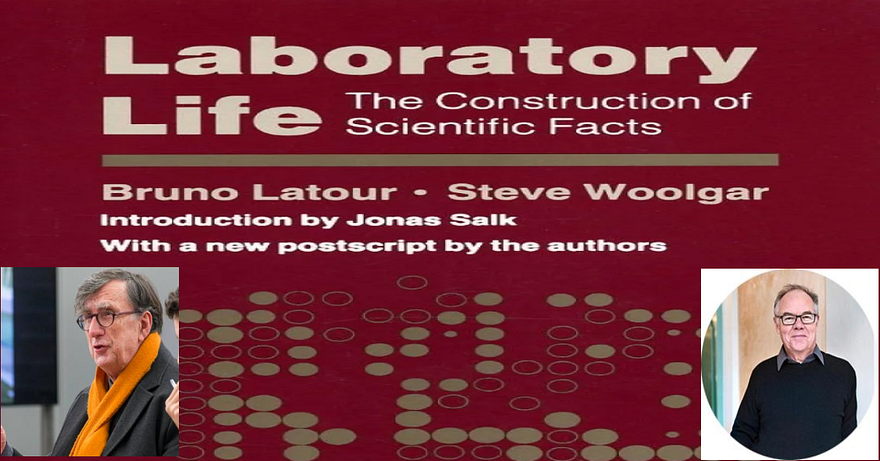
The sociologists Bruno Latour and Steve Woolgar claim that what we take to be reality “can’t be used to explain why a statement becomes a fact”. Basically, then, they believe that facts are made… But don’t we firstly need to establish what a fact is?

According to Ian Hacking (in his book The Social Construction of What?), the French philosopher and sociologist Bruno Latour (1947–2022) and the British sociologist Steve Woolgar (1950-) claim that facts are made.

This must mean that Latour and Woolgar don’t believe (Latour died last month) that facts are found and then simply (as it were) registered.

So doesn’t Latour and Woolgar’s position seem… well, terrible?

Indeed, doesn’t it sound “postmodern” or even “relativist” in nature?

Yet analytic philosophers — and others — have never been able to agree on what a fact actually is. What’s more, they’ve debated what a fact is in minute and (perhaps) boring detail.

One common expression of the nature of a fact is extremely unhelpful and almost pointless. It’s this:

A fact is something that is the case.

This is a (kind of) variation on Aristotle, who wrote:

“To say of what is that it is, or of what is not that it is not, is true.”

There are many more definitions of the word “fact”.

There are also many philosophical analyses of what a fact is.

Added to all that is the fact that the word “fact” is used in very different ways in different disciplines.

For example, in mathematics, a fact is sometimes deemed to be (if, to me, oddly) a statement (called a theorem) that can be proven by logical argument from given axioms and definitions.

So a mathematical fact is about as far away from the everyday use of the word “fact” (if there even is an everyday usage) as can be.

All this may mean, then, that the claims above (i.e., those from Latour and Woolgar) may not be as objectionable as they at first seem. (Of course not everyone will see their claims that way.) Indeed, Latour and Woolgar’s position isn’t that far removed from what (at least) some analytic philosophers (as just mentioned) believe.

In any case, what does it mean to state that facts are found and then registered?

How can a fact (literally) be found?

Perhaps, then, there aren’t only two options here: (1) Facts being made. (2) Facts being found and then registered.

As for Latour and Woolgar, they got their own philosophical point across by doing a bit of Heideggerian etymology. In their book Laboratory Life: The Construction of Scientific Facts), they wrote that

“[t]he word ‘fact’ comes from the Latin factum, a noun derived from the past participle of facere, to do, or to make”.

Readers shouldn’t be too shocked by that little bit of etymology since, according to Hacking, “made things exist”. Indeed, Latour and Woolgar themselves say that they do

“not wish to say that facts do not exist nor that there is no such thing as reality”.

Well, obviously made things exist. Who’d dispute that?

So were Latour and Woolgar simply attempting to soften the blow with this (possibly weak) admission of theirs?

Well, that depends.

Latour and Woolgar’s basic point seems to be (or it could be) that facts aren’t like tables or chairs, or even like electrons or gravity. In other words, facts can’t really be things which are simply found and then registered. (Not that electrons and gravity are simply found and then registered.)

So take this “traditional” account of what a fact is:

“A fact is the worldly correlate of a true proposition, a state of affairs whose obtaining makes that proposition true.”

Even on this basic account, facts can’t be deemed to be like the tables or chairs which we simply bump into and then register. Here we have all sorts of other things too: words, whole sentences, (abstract) propositions, truth values, human utterances, etc. All these (non-factual) things may well be about something else (facts?). However, they’re still part of the picture. And if they’re part of the picture, then what they’re about on their own can’t be facts.

(The philosopher Peter Strawson once got his own sceptical point across when he said that facts are “sentence-shaped objects”.)

Then again, and here we go…

There are accounts of what a fact is that see such a thing as being purely (as Latour and Woolgar put it) “out there”. For example, the French philosopher Pascal Engel (among many others) has it that what makes a sentence true is that it corresponds to a fact (see here).

Scientific Facts

Latour and Woolgar’s take is a slightly different position to that which has just been articulated above. They state that

“‘out-there-ness’ is the consequence of scientific work rather than its cause”.

Perhaps, then, Latour and Woolgar touch on my previous remarks (i.e., about statements, sentences, utterances, etc.) when they conclude that

“‘reality’ cannot be used to explain why a statement becomes a fact”.

In actual fact, however, Latour and Woolgar’s position is fairly standard (if only in part) in science.

Scientists tend to see facts as being established as a result of repeatable observations, as well as repeatable measurements within repeatable experiments. In strong contradiction to Latour and Woolgar, however, scientists often see scientific facts as being independent of the observer — and, indeed, independent of all observers.

Latour and Woolgar also referred to what they called “scientific work”.

This seems to chime in with what Copenhagenist physicists argued in the 1920s and beyond. Indeed, John Archibald Wheeler later argued that the “answers which nature elicits” are due to the questions physicists ask. And the questions physicists ask will largely occur in tandem with the experiments they perform (along with the apparatuses they use, etc.).

Werner Heisenberg and Niels Bohr (among many others), for example, stressed that the experiment itself determines whether a wave or a particle is measured (or even discovered).

Yet, arguably, experiments determine far more than that binary wave-particle possibility.

In the Copenhagen interpretation (at least according to most interpretations of the Copenhagen interpretation), it’s the case that there is no wave or particle at all unless a scientist carries out an experiment (or simply observes it) in order to (as it were) quantify it.

On a more basic level, there are innumerable scientific facts which would never have been bumped into and then registered if it weren’t for the theories, experiments, etc. which led to them. Indeed, without such theories, experiments, etc. it can easily be argued that there would be no scientific facts at all.

All — or most — of the above clearly means that scientific facts can’t be (as it were) everyday facts. That said, perhaps what these scientific accounts of facts do share with the everyday notion of a fact is that a fact must be what’s often called “objective” and therefore verifiable in terms of observation. Yet even here scientific terminology has slipped in again.

None of this is to say there’s only a single scientific account of facts. Indeed, it’s the case that most scientists don’t spend much — or even any — time thinking about the nature of facts.

Now if we move away from science, the same line of reasoning can still be applied to everyday facts. They too required all sorts of things (i.e., other than themselves) to lead to them. Moreover, there are no facts without all these other sorts of thing which (metaphorically at least) lead to them.

My flickr account:


Thursday, 24 November 2022

Has philosophy influenced physics? Has physics influenced philosophy?


These two questions have been much debated in recent years. Particularly in the context of well-known scientists (such as Stephen Hawking, Laurence Krauss, Neil deGrasse Tyson, Lewis Wolpert, etc.) slagging off philosophy.

The usual debate centres around whether philosophy has influenced physics, not whether physics has — or can — influence philosophy.

Ironically, the Austrian physicist Erwin Schrödinger (1887–1961) seemed to reverse this stress. According to one biographer at least (i.e., Walter Moore, in his Schrödinger: Life and Thought),

“the philosophy of Schrödinger at this time does not appear to have been influenced by his physics”.

But this description of Schrödinger is anomalous anyway. The claim is about Schrödinger’s very own philosophy not influencing his physics, not the philosophies of all previous philosophers not influencing his physics.

So, despite that, Schrödinger was

“willing to admit that philosophy could influence physics”.

On the other hand, Schrödinger

“often said that one cannot derive philosophical conclusions from physics”.

Schrödinger’s words seem to put philosophy in a preeminent position, just as Arthur Schopenhauer (1788–1860) did. The latter once said that

“physics is unable to stand on its own feet, but needs a metaphysics on which to support itself, whatever fine airs it may assume towards the latter”.

This is interesting because many of the (for want of a better word) anti-philosophers and physicists I’ve debated with have assumed that philosophers believe (if with only a little of my own exaggeration) that physicists must consult the latest work in philosophy before they go to work to carry out their experiments.

That’s obviously not the case. And Schrödinger knew that too.

Schrödinger was arguing that physics (or simply the theories of physics) has a “metaphysics on which to support itself” even if any individual physicist has never read a single word of philosophy in his life. That is, there would still be metaphysics imbedded in such a physicist’s theories and indeed in much of his scientific thinking. So, even if he hadn’t read any philosophy, then that would be irrelevant: metaphysics would still be there. It would still be there both because he doesn’t realise it’s there and because he will have unconsciously adopted other physicists’ metaphysics instead. Thus, such a physicist’s happily-embraced ignorance of philosophy doesn’t mean that he actually has escaped philosophy.

And all this doesn’t have anything at all to do with such a physicist not ever having read Analysis or Mind or never having heard of Tim Maudlin or even David Hume.

Philosophical Naturalism

If a philosopher is a physicalist or naturalist, then one would guess (or even expect) that physics does, at least to some extent, influence his philosophy. But what about the other way around — philosophy influencing physics?

Historically, it’s well-documented that philosophy (or at least philosophers) did influence many famous physicists. The question is, then, how did it do so?

It can of course be said that not every physicist has been influenced by philosophy (as already argued). Then again, not every day-to-day physicist has been influenced by, say, the interpretations of quantum mechanics or even (I suspect) by quantum mechanics itself. Similarly, not every day-to-day mathematician has been influenced by any of the great names of mathematics.

So the matter of influence doesn’t need to apply to every physicist in every conceivable situation or when it comes to literally every physical theory. Of course not.

For one, the physicists who haven’t (knowingly) been influenced by any philosophy whatsoever may be (as it were) feeding off those physicists who have. Indeed, I suspect that’s true in many cases. Why is that? It’s largely because it was usually the revolutionary and/or important physicists who took philosophy seriously… Of course, this may not be true of literally every revolutionary and/or important physicist. However, even such a revolutionary physicist himself might have fed off those previous physicists who did take philosophy seriously.

Of course all these claims are hard to establish in terms of detail. Alternatively put, it would take much historical — as well as theoretical — data to demonstrate such (admittedly) broad claims.

My philosophy blog and flickr account: