Monday, 15 November 2021

Roger Penrose on Algorithms and Consciousness


(i) Introduction
(ii) Gödelian Truth
(iii) Algorithms and Judgements About Algorithms
(iv) Systems and Judgements About Systems
(v) Penrose on Algorithms, Turing and Artificial Intelligence


Everyone who knows anything about the mathematical physicist, theoretical physicist and mathematician Roger Penrose (1931-) knows that he’s a mathematical Platonist.

What may also be relevant (to this discussion) is the fact that Penrose also speaks (if indirectly) about Plato’s position on the transmigration (or metempsychosis) of the human soul! (The words “transmigration” and “metempsychosis” aren’t, of course, used by either Plato or by Penrose.)

Specifically, readers may wonder how and why (some) mathematicians (to use Penrose’s oft-used word) “see” mathematical truths — specifically of the Gödelian kind. Penrose himself provides an answer to that. And his answer includes an indirect reference to Plato’s theory of transmigration.

Penrose firstly explains the very particular nature of mathematical truths. He writes:

“Because of the fact that mathematical truths are necessary truths, no actual ‘information’, in the technical sense, passes to the discoverer.”

So far so good.

Yet then we get what must be a (if there is such a word) transmigrational reason for this. Penrose continues:

“All the information was there all the time. It was just a matter of putting things together and ‘seeing’ the answer! This is very much in accordance with Plato’s own idea that (say mathematical) discovery is just a form of remembering!

Penrose uses the word “information” in the same way that many physicists use it. In other words, it’s certainly not a word used by mathematicians in their everyday work. This means that if we aren’t dealing with information (i.e., in the physicist’s sense) when it comes to mathematical truths, then another way of accounting for such truth must be found.

[It’s not immediately clear how the “fact” that mathematical truths are also “necessary truths” glides over into Platonic seeing. Penrose must mean that, in a simple sense, necessity can never be seen, observed, or experimented upon — it must be “found” by insight or by Platonic seeing. Indeed most metaphysicians — if only the ones who accept it — would agree that necessity isn’t an “observable property”.]
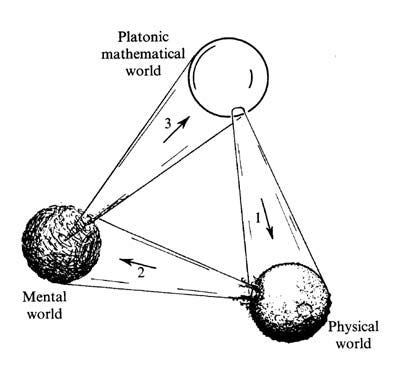
An image Penrose himself uses in one of his books.

As for Platonic transmigration specifically.

The word “transmigration” is used because Plato is widely thought to have believed in the transmigration of the human soul from one body to another. Thus when Penrose uses the word “remembering”, what that actually means — within this context — is that a mathematician alive today must remember what his “soul” saw when it existed in another body in a “previous life”. Perhaps more accurately, the mathematician alive today — or even Penrose himself! — literally remembers his previous access to mathematical truths.

(It must be said here that some commentators — such as philosophers dating back to the Catholic priest and scholar Marsilio Ficino (1433–1499)— argue that Plato’s references to transmigration — or to metempsychosis — were intended to be allegorical in nature. This isn’t a surprise since this interpretation of Plato’s philosophy has mainly come from Christian thinkers.)

Of course, this introduction of past selves (or past souls) doesn’t tell us how such beings themselves gained access to mathematical truths either!

More specifically on Penrose’s broader position on algorithms and consciousness: it’s probably best to allow Penrose himself to put it all in some kind of context. Here goes:

“Great works of art are indeed ‘closer to God’ than are the lesser ones. It is a feeling not uncommon amongst artists, that in their greatest works they are revealing eternal truths which have some kind of prior etherial existence I cannot help feeling that, with mathematics, the case for believing in some kind of etherial, eternal existence is a good deal stronger than in those other cases [such as art and engineering].”

Then Penrose (elsewhere) moves away from Platonic truth and toward the subjects of “awareness” (or consciousness) and “substance”. He writes the following:

“Perhaps, on the other hand, there is more to our feelings of awareness than mere algorithms. Perhaps the detailed way in which we are constituted is indeed of relevance, as are the precise physical laws that actually govern the substance of which we are composed.”

Penrose on Gödelian Truth
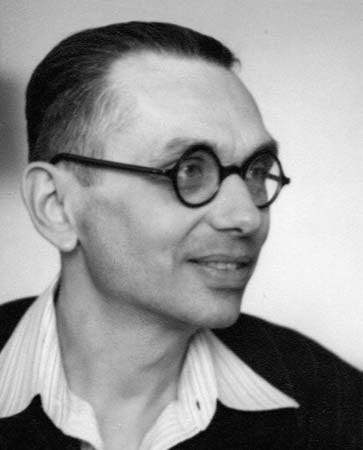
Kurt Gödel

The first thing to say is that if there is such a thing as mathematical truth (rather than mathematical correctness, formal consistency, etc.), then it must be very different from other kinds of truth. (Take these examples: truth as cashed out in terms of correspondence, coherence, “the word of God”, pragmatic utility, etc.) Roger Penrose himself acknowledges this. Basically, he believes that mathematical truth is Platonic. This means that Penrose has little time for naysayers when it comes to mathematical (therefore Platonic) truth. He makes that clear in the following passage:

“As to the very dogmatic Gödel-immune formalist who claims not even to recognize that there is such a thing as mathematical truth, I shall simply ignore him, since he apparently does not possess the truth-divining quality that the discussion is all about!”

[Note the word “divining”.]

In basic terms, mathematical truth — on Penrose’s definition — is exterior to all algorithms.

So what exactly does Penrose mean by “truth” in these contexts?

Penrose seems to assume that truth is part of (all?) mathematical systems when he says such things as “whatever formal system [a mathematician] might adopt as proving his criterion of truth”. In other words, not much more is said here — or indeed elsewhere — about what mathematical truth actually is. Then again, Penrose’s Platonic truth may be so brute (or fundamental) that nothing much can be said about it. (When a mathematician sees mathematical truth, is this an example of what the philosopher Paul Boghossian calls “flash grasping”? See also brute fact.)

Penrose explains what he takes to be the chasm which exists between algorithms and consciousness (primarily viewed in terms of Gödel’s first incompleteness theorem) in the following passage:

[T]he very essence of consciousness. It must be present whenever we directly perceive mathematical truth. When we convince ourselves of the validity of Gödel's theorem we not only ‘see’ it, but by so doing we reveal the very non-algorithmic nature of the ‘seeing’ process itself.”

The words above state an explicit and essential link between consciousness and the ascertaining of mathematical truth. Basically, consciousness is required to (using Penrose’s word) “see” mathematical truth. (Penrose repeatedly puts the word see in scare quotes — i.e., he doesn’t mean literal seeing through the eyes.) This also means— to Penrose at least — that mathematical truths can’t be seen by computers or machines. Yet that’s not because computerised robots or even rudimentary computers have no (non-biological) eyes or visual systems (some would argue that they do) — but because they have no consciousness.

So, unlike that artificial intelligence (AI) theorists (at least according to Penrose himself), not only is it impossible for algorithms alone to bring about (or even simulate) consciousness, consciousness actually predates both the human construction and the human use of algorithms (if not also their actual abstract existence — see the final section on AI). This means that if conscious human beings can do at least one thing (such as see mathematical truths) which the use — and existence — of algorithms alone will never allow us to do, then consciousness must be above and beyond algorithms. In other words, that which is above and beyond algorithms can’t also be brought about — or simulated — by algorithms.

Penrose (elsewhere) also wrote:

[C]oncerning Gödel's theorem, was that, at least in mathematics, conscious contemplation can sometimes enable one to ascertain the truth of a statement in a way that no algorithm could.”

Basically, the ascertaining of (Gödelian) truths is non-algorithmic. Thus — again — algorithms cannot bring about (or simulate) consciousness. Or, at the very least, algorithms cannot bring about (or simulate) the type of consciousness which is required to ascertain Gödelian truths.

Indeed not only is all this the case when it comes to Penrose’s position on consciousness, he even takes this position on (“genuine”) intelligence too. (As shall be seen in the final section.)

Penrose on Algorithms and Judgements About Algorithms
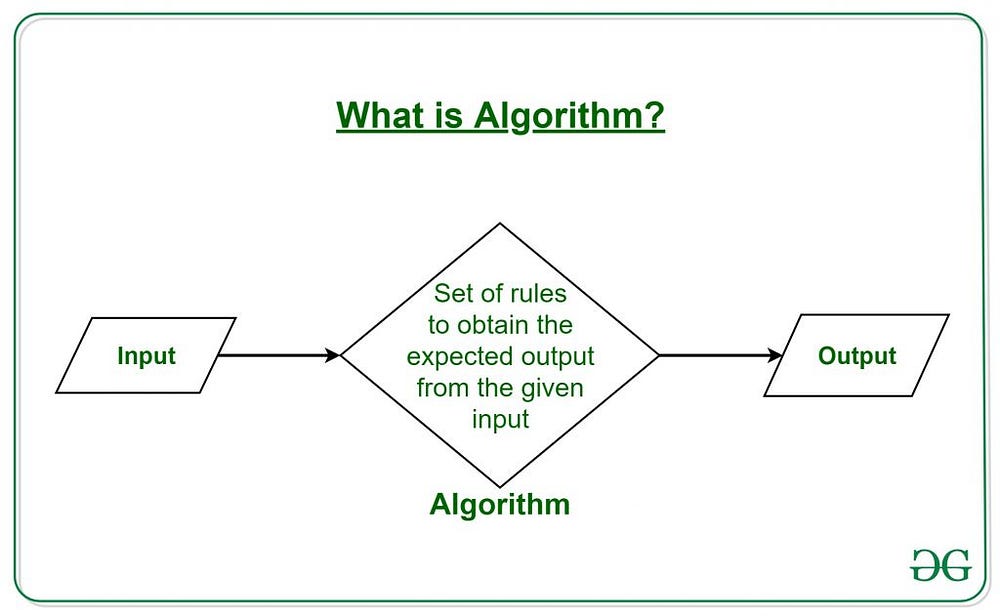
Penrose offers us a personal — and seemingly obvious — distinction between consciousness and using algorithms. Or, more precisely, he makes a distinction between consciousness and the conscious process of using (or performing) algorithms.

At first sight, however, it may seem that Penrose is simply assuming that

“the decision as to the validity of an algorithm is not itself an algorithmic process!”.

In other words, it can’t be seen in any of Penrose’s surrounding arguments why that must be the case. Unless that is, he simply means that, say, algorithm A can’t decide “the validity of”… algorithm A.

In any case, one can agree with Penrose and argue that in the conscious act of using (or performing) an algorithm there’s still a distinction which can be made between that algorithm itself and the conscious state/s in which that use (or performance) is (as it were) embedded.

Penrose goes into detail here and stresses consciousness.

He firstly asks this question:

“Why do I say that the hallmark of consciousness is a non-algorithmic forming of judgements?”

Penrose answers his own question by making an obvious(?) distinction between algorithms-in-the-brain and (as it were) algorithms-in-awareness. He continues:

“Part of the reason comes from my experience as a mathematician. I simply do not trust my unconscious algorithmic actions when they are inadequately paid attention to by my awareness.”

Basically, Penrose is arguing that we mustn’t confuse (or conflate) the algorithms which occur in the brain (i.e., the ones which AI theorists often focus on) and how these algorithms manifest themselves in what Penrose calls “awareness”.

So Penrose clearly doesn’t deny the algorithmic nature of many (or even all?) brain processes. (Penrose may well have changed his mind on this — it’s hard to say.) The following is what he says on that matter:

“My own line of reasoning has been that unconscious processes could well be algorithmic, but at a very complicated level that is monstrously difficult to disentangle in detail.”

What’s more:

“The fully conscious thinking that can be rationalized as something entirely logical can again (often) be formalized as something algorithmic [].”

That’s all fine as it stands.

However, what Penrose wants to stress is at an “entirely different level”. He continues:

“We are not now thinking of the internal workings (firings of neurons, etc.) but of manipulating entire thoughts.”

Penrose then concedes that “[s]ometimes this thought-manipulation [also] has an algorithmic character”. However, “sometimes it has not”. (He gives the example of seeing the truth of a Gödel sentence.)

Basically put, then, algorithms themselves simply don’t equal what happens when we consciously use those algorithms.

Penrose then makes another (obvious?) distinction between an algorithm itself and the conscious processes which are above and beyond the use of that algorithm. This is a clear hint at what differentiates human beings (or persons) from computers or machines. He continues:

“Often there is nothing wrong with the algorithm as an algorithm, in some calculation that is being performed, but is it the right algorithm to choose, for the problem in hand?”

Penrose (elsewhere) adds the following:

“Moreover the mathematical judgement that some algorithm is indeed accurate or appropriate is the sort of thing that requires much conscious attention.”

It’s not clear that Penrose’s distinction directly above is as strong as his previous ones. After all, it’s (fairly) obvious that an algorithm must be chosen and that choice comes before the use of the algorithm itself. That conscious choice isn’t — therefore — equal to the algorithm. More clearly, the conscious processes used to select an algorithm can’t be a product of the algorithm that’s chosen.

Yet it can still be argued that once the algorithm is chosen — and then performed (or used) — there’s nothing over and above that performance (or use). That is, there isn’t an extra insightful glow provided by consciousness itself. So even if there is a distinction between an algorithm as it is in itself (or even as it is in the brain) and the conscious awareness of that algorithm when performed (or used) by a conscious person, that something extra may not provide us with anything extra special or Gödelian.

Penrose then makes the same (or at least a similar) point in the following passage:

“One often strives for algorithms, when one does mathematics, but the striving itself does not seem to be an algorithmic procedure.”

This again seems like a statement of the obvious because surely no one would ever argue that this “striving” is itself algorithmic…. Or at least it must be said that the algorithms involved in the striving aren’t the same ones that are “found” as a result of that striving. Yet what if that that striving itself does indeed include the use (or performance) of different algorithms? That is, the use (or performance) of algorithms may lead to the discovery of other algorithms.

To repeat.

Stating that “the decision as to the validity of an algorithm is not an algorithmic process” doesn’t mean that another algorithm (or algorithms) can’t be used to decide on the validity of the algorithm under scrutiny. So this isn’t circular reasoning if two — or more — different algorithms are employed.

The same can be said about Penrose’s claim that

[i]n order to decide whether or not an algorithm will actually work, one needs insights, not just another algorithm”.

… Except that here Penrose squashes my previous point about using other algorithms to scrutinise a given algorithm.

In any case, what are these “insights”? And why can’t such insights (whatever they are) be strongly connected to algorithms — or even be algorithmic?

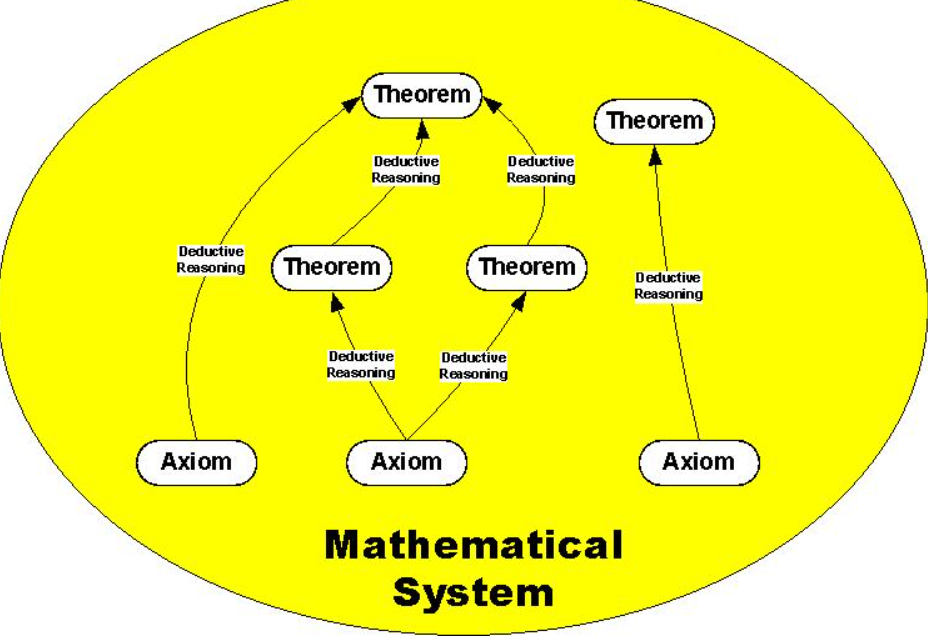
Now all the above was Penrose on what comes before the discovery of an algorithm. However, Penrose also has something to say about when a mathematician is working with a mathematical system of axioms, theorems and algorithmic rules. And here again he tells us that there’s still something above and beyond the system itself.

Penrose on Systems and Judgements About Systems
Firstly, a few words of warning.

In the following nothing detailed is going to be said about Gödel's theorems in themselves. That’s mainly because this is an issue which has already been extensively — very extensively! — covered. That said, it’s worth stating Penrose’s succinct encapsulation of Gödel's first incompleteness theorem (to get it out of the way) within this very discussion of the limitations (or not) of algorithms.

Penrose writes:

“If the workings of the mathematician’s mind are entirely algorithmic, then the algorithm (or formal system) that he actually uses to form his judgments is not capable of dealing with the proposition Pₖ(k), constructed from his personal algorithm. Nevertheless, we can (in principle) see that Pₖ(k) is actually true!

So the following words aren’t an attempt to question the “validity of the Gödel proposition Pₖ(k)”. In other words, one can accept that we “cannot derive it from the axioms” of any given mathematical system. The point being made is about how far and wide Penrose and others seem to stretch things — that is, way beyond the inability to “see the truth” of Pₖ(k) from within the mathematical system in which it is embedded. Indeed even most (or all) mathematicians and philosophers who’re inclined to formalism accept this Gödelian (as it were) fact. What they don’t accept is the stretching and widening of Gödel's first theorem way beyond mathematical systems — to such things as truth in general, systems in general, consciousness and (sometimes) everything else under the sun!

So what does Penrose himself have to say on these matters?

Penrose firstly links his Gödelian (or Platonic) position on an individual algorithm to his position on an individual mathematical system. He sees that both generate exactly the same problem for “formalists” and others.

Penrose writes:

[W]e shall need to employ insights from outside the system — just as we did in order to see that Pₖ(k) was a true proposition in the first place. It s these insights that cannot be systematized — and, indeed, must lie outside any algorithmic actions!”

Of course, Penrose accepts the utility of algorithms within any given mathematical system. He puts it this way:

“One may start with some axioms, from which are to be derived various mathematical propositions. The latter procedures may indeed by algorithmic [].”

And then Penrose follows with a “but”. He continues:

[B]ut some judgement needs to be made by a conscious mathematician to decide whether the axioms are appropriate. That these judgements are necessarily not algorithmic [].”

Again it can be said that the judgments as to “whether the axioms are appropriate” may also be algorithmic. Yet Penrose argues that “these judgments are necessarily not algorithmic”.

So why is that?

Penrose tells us that “we shall need to employ insights from outside the system”. Yet — again — these “insights” may well be algorithmic too. In fact, even when it comes to Gödel sentences (or truths), this is accepted by many commentators. Penrose himself denies this and cites the case of seeing the truth of Pₖ(k) and that “must lie outside any algorithmic action!”.

As already hinted at, it’s widely accepted that the truth of any given Pₖ(k) cannot be established from within the system it belongs to. Yet why can’t an algorithm on the outside of the system do that job instead?

Penrose’s own stance on this is that he believes that we have a (kind of) nesting problem (or situation) here in that any algorithm on the outside of the system would itself encounter the same Gödelian impasse. Yet surely this wouldn’t be a problem of not being able to use exterior algorithms to the given system, but one of a possible(?) infinity(?) of new Gödel sentences.

Penrose hints at this problem — or at least a similar one — when he tells us that this

“putative ‘universal’ system, or algorithm, cannot ever be known as the one that we mathematicians use to decide truth!”.

And then Penrose explicitly states the nesting problem by concluding with these words:

“For, if it were, then we could construct its Gödel proposition and know that to be a mathematical truth also.”

In addition, Penrose writes:

“Accordingly, we adjoin G₁ to our system also. This gives us a further amended system which will have its own Gödel proposition G₂ (again perfectly valid), and we can then adjoin this, obtaining the next Gödel proposition G₃, which we also adjoin, and so on, repeating this process indefinitely. What about the resulting system when we allow ourselves the entire list G₀, G₁, G₂, G₃,… as additional axioms? Might it be that this list is complete?”

To put in very simple terms: no matter what we add to our mathematical system, a new Gödel sentence (or truth) will arise. And the truth of that Gödel sentence can only be discovered via Platonic insight, not by the use of yet another algorithm.

To broadly comment — critically — on Penrose’s position as just expressed.

No one — not even a person Penrose (dismissively) calls “formalist” — would ever deny that there are elements of reasoning, judgments, thinking, etc. outside the system which the mathematician is presently dealing with. No one needs to be an across-the-board Gödelian to realise and accept that. So that means that we can indeed also “leap outside the rigid confinements of any formal system” to reason, think, etc. about the said system.

Yet should we draw all the same conclusions as Penrose himself does about all this?

Do these Gödelian realities about mathematical(!) systems really have the deep and wide implications which Penrose and so many others are so keen on stressing?

Penrose on Algorithms, Turing and Artificial Intelligence
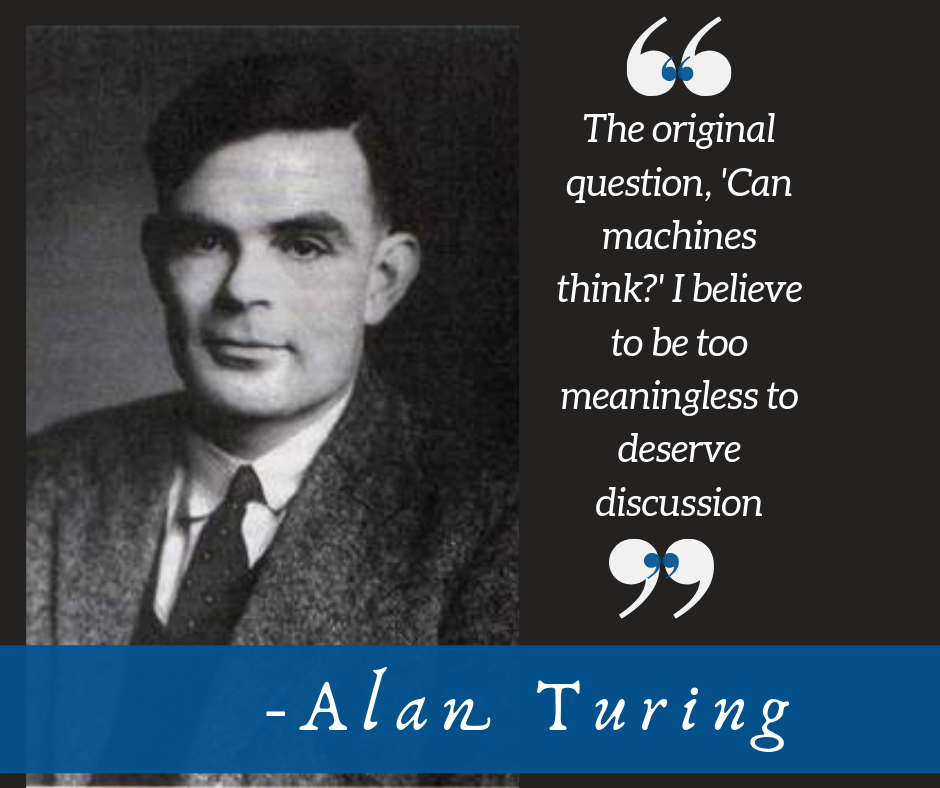
Roger Penrose — as is almost inevitable within this context — mentions Alan Turing (1912–1954). In Penrose’s own words:

“Alan Turing (1950), in his famous paper, did not refer so much directly to ‘consciousness’, but to ‘thinking’, and the word ‘intelligence’ was in the title. In my own way of looking at things, the question of intelligence is a subsidiary one to that of consciousness.”

Then comes a fundamentally important statement from Penrose. He continues:

“I do not think that I would believe that true intelligence could be actually present unless accompanied by consciousness.”

A few moments later, Penrose adds the following words:

“When I assert my own belief that true intelligence requires consciousness, I am implicitly suggesting (since I do not believe the strong-AI contention that the mere enaction of an algorithm would evoke consciousness) that intelligence cannot be properly simulated by algorithmic means, i.e. by a computer, in the sense that we use that term today.”

On the surface at least, this is an incredible and perhaps extreme claim. That’s said because most commentators accept that no computer is conscious and that algorithms alone may not be enough for consciousness. Yet Penrose is going one giant step beyond all that and saying that algorithms aren’t even enough to bring about (what he keeps calling) “true intelligence” either!

AI Platonists?
Interestingly, Penrose seems to argue (or he does argue) that AI theorists are actually closet (or disguised) Platonists anyway — at least when it comes to algorithms. Their sin is the (as it were) reification of abstract algorithms. This is how Penrose himself puts it:

“But for an algorithm to ‘exist’ independently of any particular embodiment, a Platonic viewpoint of mathematics would seem to be essential.”

That certainly seems like a convincing argument. After all, AI theorists repeatedly stress the abstract nature of algorithms. That is, they stress the fact that the same algorithm can be embodied in all sorts of very different physical substrates. Thus just as many philosophers argue that mental states, properties or events can be what they call “multiply realised”, so too can algorithms.

[The American philosopher John Searle similarly accuses strong-AI theorists of algorithm-brain dualism. As an example of this, Searle once stated the following: “[S]trong AI only makes sense given the dualistic assumption that, where the mind is concerned, the brain doesn’t matter.”]

Penrose’s additional statement, however, isn’t so clear. He concludes:

“It would be difficult for a strong-AI supporter to take the alternative line that ‘mathematical concepts exist only in minds’, since this would be circular, requiring minds for the existence…”

It’s not clear what philosophical (or ontological) position most (or even any) “AI supporters” take on algorithms or on “mathematical concepts” generally. That said, Penrose’s own description paints AI theorists as mathematical Kantians or intuitionists (i.e., in their stress on minds alone). Yet Penrose’s final clause (i.e., “since that would be circular, requiring pre-existing minds for the existence…”) still seems a little odd.

Is the following Penrose’s argument? -

i) If — as AI theorists argue — algorithms (in the brain and elsewhere) literally bring about “minds”,
ii) then how can they “only exist” in minds”?

In other words, within this seemingly Kantian (or intuitionist) position, minds must firstly exist in order for any algorithms (or “mathematical concepts”) to exist — or even be constructed — within them. Yet AI theorists won’t — or can’t — accept that because they see algorithms (not human minds) as being primary. Consequently, AI theorists must implicitly uphold— if we accept Penrose’s argument — their own kind of mathematical Platonism.

[I can be found on Twitter here.]

Sunday, 7 November 2021

Dr Christoph Schuringa Demands That Analytic Philosophy Become Political


i) Introduction
ii) Everything is Political: Therefore Analytic Philosophy is (“Unwittingly”) Political
iii) The Politically Suspect Identity of Analytic Philosophy
iv) Conclusion: Analytic Philosophy is Capitalist

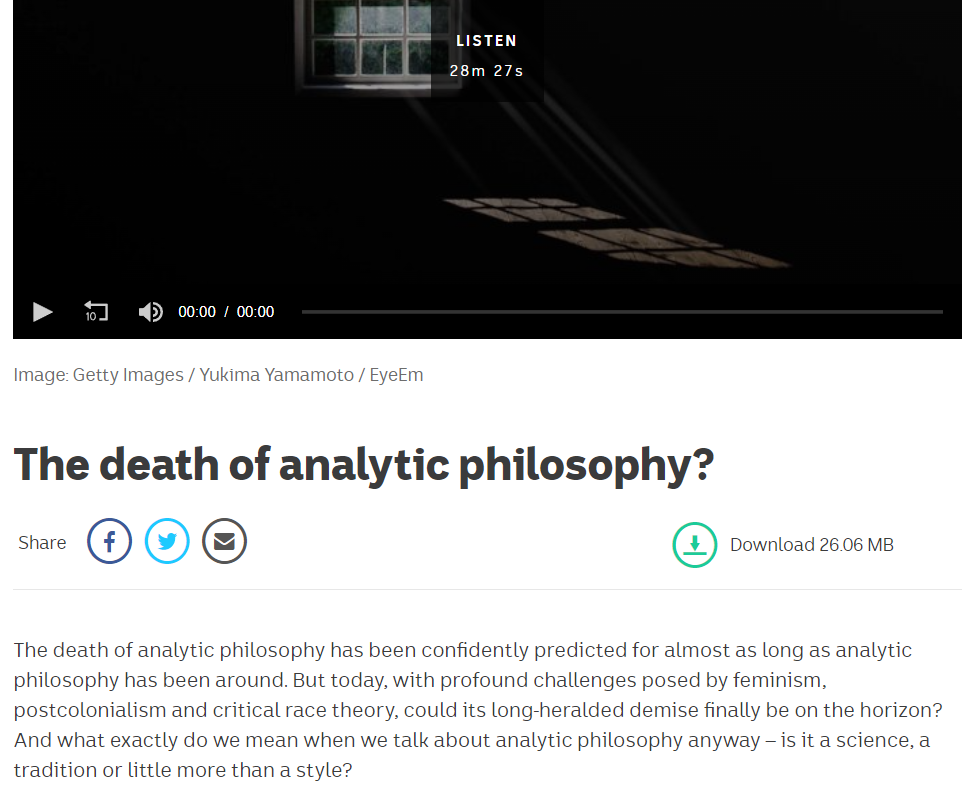
The following is a response to a piece called ‘The never-ending death of analytic philosophy’, by Dr Christoph Schuringa.

Despite the mention of “death” in his title, Schuringa goes on to tell us that

“analytic philosophy somehow seems to continue to be with us as the dominant force in academic philosophy”.

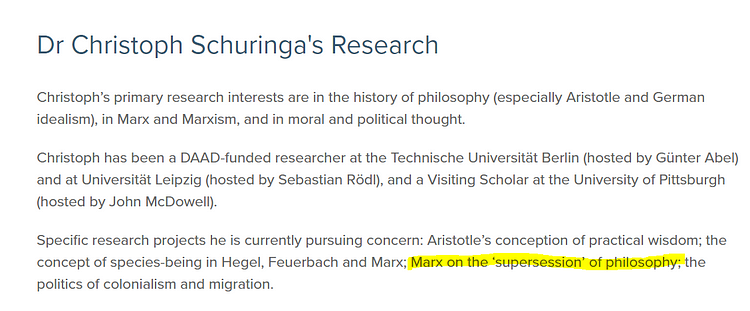
Christoph Schuringa has written a lot on Karl Marx. So perhaps Marx’s own well-known words against philosophy may well sum up Schuringa’s own position on analytic philosophy. Indeed there’s even a reference to “Marx on the ‘supersession’ of philosophy” on Schuringa’s academic webpage (see screenshot below).

In his Theses on Feuerbach, Marx wrote:

“The philosophers have only interpreted the world in various ways; the point, however, is to change it.”

So is Schuringa attempting his very own supersession of analytic philosophy?

Well, it’s certainly the case that Schuringa wants to change analytic philosophy — radically! Whether Schuringa also believes that philosophy’s main — or even only! — goal is to change the world will hopefully become clear in the following.

As for biographical details, let Christoph Schuringa speak (or write) for himself:

“I am Assistant Professor in Philosophy at the New College of the Humanities (part of Northeastern University), and Editor of the Hegel Bulletin. My chief interests are in the history of philosophy (especially Kant, Hegel, and Marx), in the traditions of Marxism and critical theory, and in social and political thought more widely. Specific current research projects concern Marx’s critique of Hegel, the concept of Gattungswesen, and ‘tragic’ conceptions of philosophy. My large-scale current project is a monograph I am writing on Marx… I was recently in the Philosopher’s Zone (ABC Radio National, Australia), talking about the history, and prospects, of analytic philosophy (broadcast 20th June 2021).”
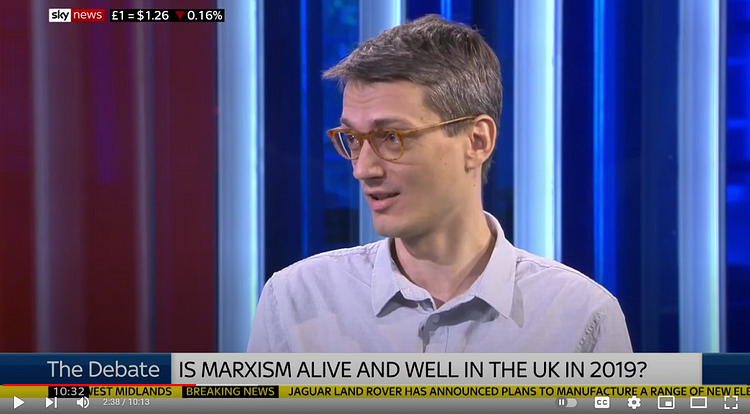
This is Christoph Schuringa advising Sky News viewers to read Marx (view here).

As you can see, there’s not much analytic philosophy above — save for the final bit about “talking about the history, and prospects, of analytic philosophy”. So Schuringa is essentially “talking about” analytic philosophy from the outside. (Although Schuringa might well have been “trained” in analytic philosophy.)

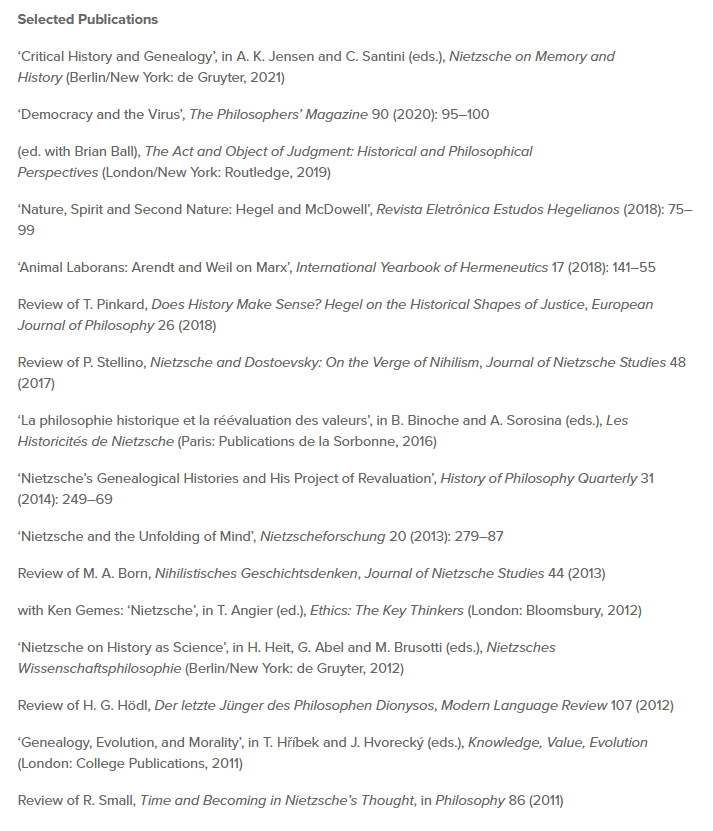
It can also be seen that in Schuringa’s ‘Selected Publications’ (screenshot above) there’s no analytic philosophy there either. (The one exception is The Act and Object of Judgment: Historical and Philosophical Perspectives — a book Schuringa edited but didn’t contribute to.)

So Schuringa has basically declared war on analytic philosophy from the outside. This is not, then, a civil war initiated by someone who finally came to see the limitations of — and problems with - analytic philosophy after years of writing and teaching it (say, as Richard Rorty did).

Everything is Political: Therefore Analytic Philosophy is (“Unwittingly”) Political

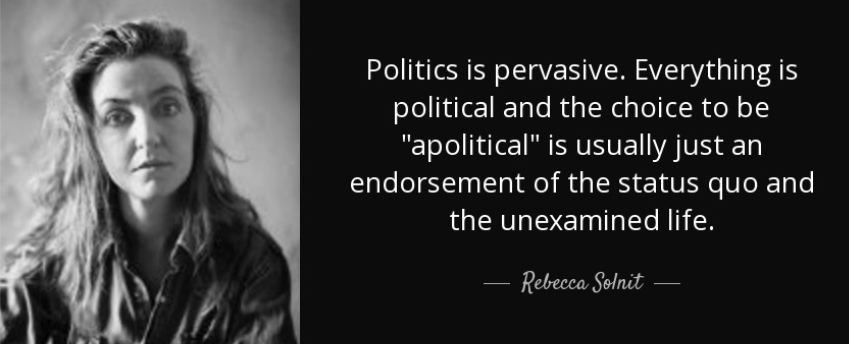
Rebecca Solnit’s words are almost identical to Christoph Schuringa’s own — as quoted below. (Solnit, like Schuringa, is a writer, political activist and anti-capitalist.)

To Dr Christoph Schuringa, it’s literally all about politics.

As Schuringa says of a previous period of analytic philosophy:

[T]he philosophical work [of analytic philosophers] remained untainted by politics.”

That statement statement basically contradicts other words by Schuringa in that to be “untainted by politics” (or to be “apolitical”) is actually to be political (see later). That said, to be untainted by politics is still a serious problem for Schuringa.

So why did Schuringa feel the need to talk about “the death of analytic philosophy” in the first place?

It can easily be shown that Schuringa desires (or wants) the death of analytic philosophy.

Of course Schuringa will deny that because it’s simply too extreme to put it in that absolutist way. Instead, he’ll probably argue that he simply wants to change (à la Marx) analytic philosophy.

Yes; Schuringa does want to change analytic philosophy — to radically change it. To change it in very specific political ways. Indeed to change it so radically that — it can be argued — it would no longer be analytic philosophy at all once all the changes Schuringa wants were carried out.

And if all this were to happen, then analytic philosophy will be yet another academic discipline — like the Critical Race Theory Schuringa positively cites — devoted entirely to political change.

What a miserable one-dimensional academic and intellectual world Schuringa wants. Indeed it can be wondered if he also has strong political problems with non-political art, music, physics, biology, mathematics, etc.

It’s not a surprise, then, that Schuringa barely conceals his anger (despite the controlled academese) that

“analytic philosophy somehow seems to continue to be with us as the dominant force in academic philosophy”.

Yet there’s also a lot of history in Schuringa’s article — all solely cited to (as it were) prove his political point.

So it seems that Schuringa is largely a historian of philosophy. He displays his historical scholarship in the following words:

“Analytic philosophy was once (in the 1950s) a strident, crusading movement. Having been constituted by Feigl and Sellars, and others, it quickly gained control of American philosophy departments.”

All I can say is that I’ve lost track of the many times I’ve read and heard people’s words against analytic philosophy which have been expressed in an extremely “strident” manner. Moreover, some of those strident voices in the past (as Schuringa tells us) moved away from (analytic) philosophy departments and “quickly gained control of [other humanities] departments” which weren’t explicitly devoted to philosophy.

In other words, were these academics pushed out of American philosophy departments (by analytics) or did they willingly decide to move? That is, did they take a mainly political (i.e., not philosophical) position (like Schuringa himself) against the lack of political activism in — and the lack explicit political commitment from — these philosophy departments and then decide to move elsewhere? Alternatively, perhaps there was a mixture of pushing and willingly moving.

In any case, it seems that people with very similar political views (to the ones who who “gained control” of many humanities departments) are still not happy that analytic philosophy so much as exists — despite the numerous departments which offer something very different.

Yet Schuringa still wants the death of analytic philosophy!

He also wants a political hegemony in philosophy departments which is much more loyal to his own personal politics.

And, again, Schuringa mentions analytic philosophy’s “strident opposition to alternative approaches to philosophy” without bothering to mention the strident opposition to analytic philosophy which has been displayed by many continental philosophers (including Jacques Derrida), political theorists, political activists, etc. Indeed, underneath the polite and (seemingly) careful academese, I would happily say that Schuringa is stridently against almost all analytic philosophy. (Check out his publications for evidence of that.)

Schuringa is also explicit in his political analysis of analytic philosophy; as well as in his view that it was always — if only by default (or “unwittingly”) — political anyway (as already mentioned). He writes:

[T]he ‘apolitical’ are, just by virtue of sealing themselves off from political engagement, particularly susceptible to unwittingly falling into line with the prevailing ideology and its structures.”

This is a classic expression of an endlessly-repeated Marxist trope. Here goes:

If one is apolitical, then one is political.

Or:

If one is anti-political, then one is political.

Pointing this out will lead many people on the Radical Left to question my “naïve” and “unsophisticated” bifurcation of philosophy and politics (Schuringa will certainly do so) — and that in itself will be a political position. This was the traditional Marxist response to all people who put the view that there are at least some domains that simply aren’t political — at least not in any clear or non-questioning-begging sense.

This complete denial — or rejection — of any separation of philosophy (or anything else for that matter) from politics has, of course, become de rigueur and hugely widespread in various domains in the last 30 years or longer — especially in many British and American university departments. Indeed the embracing of the idea that “everything is political” has given activists like Schuringa the perfect excuse to make everything political. That means that there’s nothing to hold such academics back once they embrace the essentially Marxist catechism that everything is political… even a lump of dogshit or the “idea of a quark”.

Yet this back and forth between stating that analytic philosophy isn’t political (or isn’t political enough) and saying that it was always political anyway leads Schuringa to state the following:

In order for analytic philosophy to “develop and grow”, it most become political in only radical ways.

… ways which just happen to perfectly square with Schuringa’s own personal politics.

Schuringa is explicit about his political demands when he writes the following words:

“It will not be enough to regiment some of the ideas in, say, critical race theory, extracted from another literature using its own procedures and on its own terms, into its own format.”

In other words, an analytic-philosophy version of Critical Race Theory (if such a thing could ever exist) simply wouldn’t be enough for Schuringa. He demands a literal Critical Race Theory (i.e., from analytic philosophers) which hasn’t been (politically) watered down with the tools, methods and standards of analytic philosophy. That is, he wants an analytic philosophy that has

“open[ed] itself to immersion in cultural, social and political reality”.

… But only an immersion that perfectly squares with the theories, values and goals of Schuringa’s personal politics.

All this is Schuringa’s roundabout — and academic — way of saying that analytic philosophy must become a weapon of social and political change. That is, it must actually stop being analytic philosophy and become something entirely different. More specifically, analytic philosophers must become exactly like those legions of Critical Race Theorists, Marxists, post-structuralist philosophers, postmodernist philosophers, etc. who basically believe — and have believed for the last six decades or so — that politics must always be First Philosophy.

So Schuringa’s political plan isn’t simply about making analytic philosophy more politically (or socially) aware. It’s about making analytic philosophy more aware of the political theories, causes and goals that Schuringa himself has thoroughly embraced — both in his academic work and in his non-academic activities.

For example, Schuringa writes:

[Analytic philosophy] has heard the call of feminism, of critical race theory, and of the movement to decolonize the curriculum, and it is actively in the business of trying to heed these calls.”

As with Schuringa’s remarks on Critical Race Theory above: it’s simply not enough to “hear[] the call” of feminism, Critical Race Theory and the movement to decolonize the curriculum: analytic philosophy must become as one with all of them.

Schuringa even tells us about what analytic philosophy may become once it has completely embraced and faithfully enacted every letter of his political plan (then politically redeemed itself). He writes these pompous words:

[Analytic Philosophy] will then have the prospect of being, for the first time, truly alive.”

So “truly alive” simply means being truly and correctly political.

Actually, it’s even more concrete than that: “truly alive” simply means being truly political in ways which Schuringa agrees with.

So the politicisation of analytic philosophy is not only what Schuringa demands. He also demands the politicisation of analytic philosophy in only his ideologically-correct ways. Hence Schuringa’s very specific and very positive references to Critical Race Theory, “the decolonisation of the curriculum”, etc.

[A quick aside: All this is very odd from a personal — social media — point of view too. In terms exclusively of Twitter: almost — or even literally — every analytic philosopher I “follow” and know is on the Left — from the Radical Left to the “centrist” or “liberal” Left. (There is a very-very small number of analytic academics who may well be Liberal Democrats — but they also lean to the Left. Not a single one is a Tory or right-wing in any sense — though more-Left-than-thou activists may disagree about that.) What’s more, many of these analytic philosophers on Twitter openly and explicitly express their leftwing views and do so very often. Indeed a small number of them could even be classed as political activists… All that said, Schuringa would — or could — simply argue that although these philosophers are indeed on the Left, what they do — i.e., analytic philosophy — most certainly isn’t!]

The Politically Suspect Identity of Analytic Philosophy

Schuringa then psychoanalyses analytic philosophers. He tells us that

[i]t might be thought that analytic philosophers have experienced a healthy (and mild) identity crisis”

in that they might — or should — have

“come to see that they have much in common with other approaches, so are less inclined to insist on their own identity”.

Yet, on the whole, Schuringa believes that most (or all) analytic philosophers certainly haven’t done this.

Schuringa has a problem with the “identity” of analytic philosophy… Basically, that it so much as has one.

Take the following words:

“An object lesson in the tendency of analytic philosophy to mark itself out as distinctive from the rest of philosophy is the divide that it created between itself and what it called ‘continental philosophy’.”

Yet it seems that Schuringa doesn’t have a problem with Critical Race Theory, feminism, etc. having their own identities. I suspect that he doesn’t have a problem with university departments specialising in Marxism, post-structuralism, Black Studies, etc. having identities either. Indeed I also suspect that he’s also very much in favour of “identity politics” too (though, of course, he’ll reject that term).

Schuringa says more about the identity of analytic philosophy. He wonders if

“there was ever a unified kind of philosophy called analytic philosophy”.

A philosopher may have a commitment to analytic philosophy without thinking too much about it. (Schuringa seems to argue that analytic philosophers both are and are not self-conscious about what they do.) After all, since a fair few non-analytic philosophers are keen to stress analytic philosophers’ complete ignorance of the history of philosophy (which Schuringa himself is attempting to rectify in his article), then this degree of historical self-consciousness among analytic philosophers won’t exist to any strong degree.

If we get back to his Schuringa and the identity of analytic philosophy.

Now every university faculty on the planet has its own focus and specialisms — such as Black Studies or much of what’s studied at the University of London School of Oriental and African Studies. Yet, according to Schuringa, this rejection of continental philosophy, Critical Race Theory, etc. is deeply suspect. So should the UK and US departments which concentrate on, say, Subaltern Studies also be more inclusive — should they also run a few courses on Hayekian economics or modal logic? Or, more relevantly, should philosophy departments which concentrate on what’s called Continental Philosophy broaden their own horizons by allowing in professors who are experts on the analytic philosopher Ted Sider, the (analytic) philosophy of science or the (analytic) philosophy of mind?

Moreover, there are countless university departments which offer “studies” which advance the political causes Schuringa believes in. Indeed some of them can even be vaguely construed as doing various kinds of (politically-committed) philosophy. Now is analytic philosophy really a rival — let alone any kind of political threat — to all the following? -

Black Studies, Social & Cultural Analysis, Post-Colonial Studies, Subaltern Studies, Deconstruction, Critical Race Theory, Global Liberal Studies, Ethnic Studies, Africana Studies, Cultural Studies, Gender and Sexuality Studies, Literary Theory, Peace and Conflict Studies, Feminist Geography, Discourse Analysis, Africana Studies, etc.

To add to the above it’s worth mentioning the fact that there was even a Centre for Contemporary Cultural Studies at Birmingham University which explicitly committed itself to what it called “cultural Marxism”. (Now that non-Marxists have caught onto the term “cultural Marxism”, Marxists rarely use it anymore - see here.) And there’s the New School for Social Research in New York which is devoted to teaching what it calls “progressive values”. (This “school” wouldn’t even allow a young student in if he/she had the wrong politics — not that such a person would attempt to gain entry in the first place.) There are many other educational institutions like this — a small number are on the Right too. Yet all these institutions are far more politically biased — indeed openly and blatantly so! — than any analytic philosophy department has ever been. That said, Schuringa actually endorses such political bias — or “political commitment” — in such institutions (if only bias of certain political kind).

In fact the studies (or the academics who teach and advance them) mentioned above rule the roost in many American university departments and even in the entire universities themselves.

More generally, it must also be said that literally all disciplines are isolated from other disciplines… to some degree. This is true of literary theory, poststructuralism, Critical Race Theory, history, anthropology, etc. It’s certainly true of physics, chemistry, etc. In fact it can be argued that that’s partly what makes a discipline a discipline — a degree of isolation from other disciplines. That said, almost every analytic philosopher I know — both throughout the 20th century and today — did have a keen interest in other disciplines such as physics, biology, ethics, neuroscience, mathematics, etc. And, more recently, in cognitive science.

It’s also worth adding here that it’s not just that Schuringa wants analytic philosophy to fully embrace Critical Race Theory, continental philosophy, etc., he also believes that it should embrace non-European thought too.

So once wonders what would be left of analytic philosophy after Schuringa’s political and academic Year Zero.

The following is Schuringa on the particular subject of non-Western thought:

“Philosophy as a discipline has a huge whiteness problem, and it is right that the hegemony of Western philosophy in the academy must be addressed if the curriculum is to be effectively decolonized.”

In this, Schuringa is adopting a similar position to Professor Bryan Van Norden. Indeed Van Norden once wrote an essay called ‘Western Philosophy is racist. In that essay he wrote the following:

“Mainstream philosophy in the so-called West is narrow-minded, unimaginative, and even xenophobic.”

Again, what would be left of analytic philosophy — or even “Western philosophy” — if these academic activists got their way?

Like Schuringa himself, Professor Van Norden’s case against Western philosophy is almost entirely political. Indeed he lays his own political cards on the table when he calls his position “a multicultural manifesto”. And whereas Schuringa suggests Critical Race Theory, etc. as an antidote to the political sins of analytic philosophy, Van Norden wants analytic philosophers to study

“African-American, Christian, feminist, Islamic, Jewish, Latin American, and LGBTQ philosophies”.

Conclusion: Analytic Philosophy is Capitalist

Schuringa does acknowledge that there has been at least some change when it comes to analytic philosophy … just nowhere near enough to please him. He writes:

“And so what we are left with is a more modest kind of analytic philosophy — a modesty perhaps reflected in a less strident opposition to alternative approaches to philosophy among analytic philosophers today.”

The assumption here is that if analytic philosophy becomes political (despite it already being apolitically political), then it must become political in very particular ways. And if it does become “more sensitive to the other”, then it must be more sensitive to the very particular others Schuringa himself has in mind.

Schuringa can’t even resist some explicit and classic Marxist politicking when he states the following:

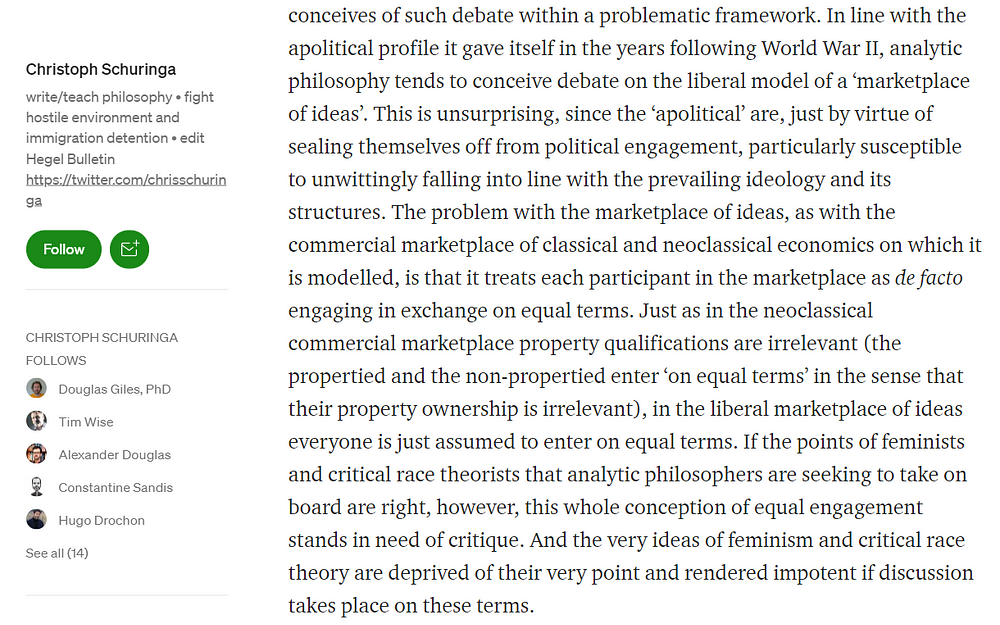
[A]nalytic philosophy tends to conceive debate on the liberal model of a ‘marketplace of ideas’…… The problem with the marketplace of ideas, as with the commercial marketplace of classical and neoclassical economics on which it is modelled, is that it treats each participant in the marketplace as de facto engaging in exchange on equal terms.”

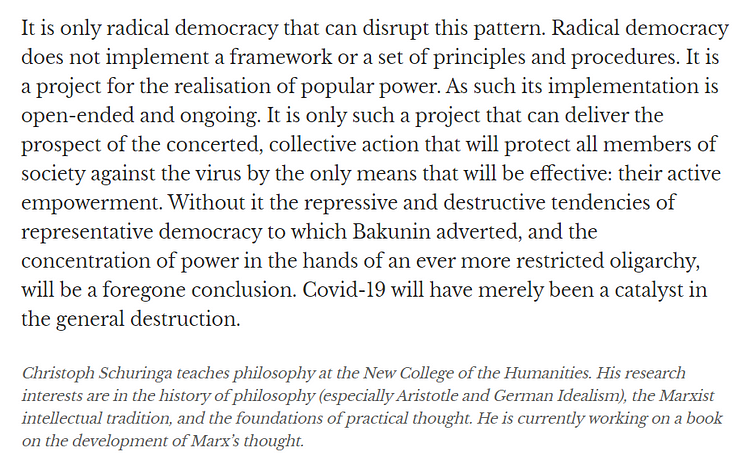
[Schuringa argues against what he calls “liberal democracy” — as well as against capitalism, the “founding fathers”, etc. — here. See screenshot left.]

So this isn’t really about philosophy or even about Richard Rorty’s analytic “style”. It’s not about the critical emphasis on logic, “scientism” and all the other sins of analytic philosophy either. It’s really about

“this whole conception of equal engagement stands in need of critique”.

And that’s why there’s hardly a word on what analytic philosophers have argued or believed in Schuringa’s article except from a self-consciously historical point of view — all designed to show how variable analytic philosophy has actually been. (Doesn't that fact actually work against much of what Schuringa says?) In other words, there’s virtually no philosophy in the article; though there is lots of history of (analytic) philosophy. Yet that historical research itself is only a tool to advance Schuringa’s central political aims.

Schuringa’s sees everything through a political lens.

He simply doesn’t do philosophy or engage with analytic philosophy at all. And that primarily because all (non-political) philosophy — as Marx argued 170 years ago — is by definition suspect or fallen. Thus analytic philosophy itself must redeem itself by committing itself to a very specific kind of politics — radical politics.

So unless analytic philosophy gets its act together and becomes politically activist (in the ideologically-correct manner, of course), then it will remain the case that

“the very ideas of feminism and critical race theory are deprived of their very point and rendered impotent if discussion takes place on these terms”.

This is like the Marxist idea that literally all criticisms of Marxism are the result of “false consciousness” or of being a member of the enemy class. Yet once you make the absolute and complete leap of faith into Marxism, then you will see that Marxism is the Truth and that all one’s previous criticisms were result of “class bias”, “brainwashing by the mainstream media”, political sin or whatnot.

Similarly with Schuringa’s Critical Race Theory, etc.

Analytic philosophers mustn’t — or can’t — simply take on board Critical Race Theory or even embrace many aspects of it. Instead, they must fully embrace it in thoroughly activist sense. (In the sense that Schuringa himself uses philosophy as a political weapon.) Because if analytic philosophers don’t do what Schuringa demands, then (among other things) “the very ideas of feminism and critical race theory are deprived of their very point and rendered impotent”.

So analytic philosophy must simply stop being analytic philosophy.

It must become a philosophy of political activism.

Indeed it must commit itself to very specific political theories, causes and goals and also to very specific political movements — all those which just happen to be endorsed by Schuringa himself.

One may ask, then, what would be left of analytic philosophy were Schuringa’s many absolutist and all-encompassing political demands ever met.

Nothing would be left.

Quite literally — nothing.

[I can be found on Twitter here.]