Some self-described “spiritual” people and idealists I’ve debated with have argued that the term “spiritual idealism” is a disingenuousneologism. However, if you Google the words “spiritual idealism”, you’ll find over 18 pages (with around ten entries on each page) of links to books, videos, papers and articles which refer directly to it. In any case, even if this term were an invention, then there’d still be very-good reasons to use it anyway.
Firstly, there are idealists who see themselves as what they call “spiritual”. And there are people who see themselves as spiritual who’re also idealists. More relevantly, there are people who fuse their spiritual and idealist beliefs together. Indeed, in recent years, this fusion has become very popular — at least in fairly limited circles.
Of course there are forms of idealism — dating back to the 18th century and before — that are in no way (at least obviously) spiritual. (This may depend on definitions.)
In most cases, the spiritual values and beliefs drive the idealist philosophies. That is, those who are spiritual (or who see themselves as spiritual) are attracted to the idealism because they deem it to have strong spiritual elements.
What is spiritual, then, about spiritual idealism?
More strongly, the central spiritual element of spiritual idealism is the idea that (to generalise and be slightly rhetorical) consciousness is everything, whether that is one’s own personal consciousness, Bernardo Kastrup’s transpersonal mind,Donald Hoffman’s collective of conscious agents, etc.
(There is a fair amount of consciousness-first spiritual philosophiesto choose from. However, many examples are almost identical to one another. That’s even the case when the advocates stress the differences. Indeed some examples are (quasi) scientific variations on this ancient theme.)
In a simple sense, then, believing that consciousness is everything makes the spiritual individual his or her own god. Spiritual idealists, however, would prefer to say that it makes individuals “at one with the Cosmos” (or variations thereon). Yet it’s still the case that such “spiritual autonomy” guarantees that the individual can be his or her own god, even if he or she claims to make “contact with Cosmic Consciousness”. This claim (i.e., aboutfusing with the Cosmos), however, often doesn’t really amount to much and is simply an emotional poeticism. That’s primarily because virtually all spiritual idealists retain not just a single part of their ego, but all of it. Indeed the very embrace of spiritual idealism often leads its advocates in very egocentric — even narcissistic — directions.
Basically, then, claiming to be (for example) at one with the Cosmos is one way of seeing oneself as being morally and intellectually superior to those mere mortals who areeither “traditionally religious” or not religious or spiritual at all. And this spiritualegotism (sometimes narcissism) is blatantly obvious in the case of at least some well-known spiritual idealists.
[See these many links to videos, articles, papers and essays on what psychologists and others call “spiritual narcissism”.]
Relevantly, it doesn’t really matter if atheists, materialists, realists, or those with other philosophical views (i.e., outside of ethics) are also egotists (or narcissists) because it’s not part of their philosophical position that they aren’t any of these things. Who they are as people is largely irrelevant to their metaphysical positions. In the case of most spiritual idealists, on the other hand, who they are as a person is important to themselves and to others. Or, more correctly, how they areseenby others is almost everything to them.
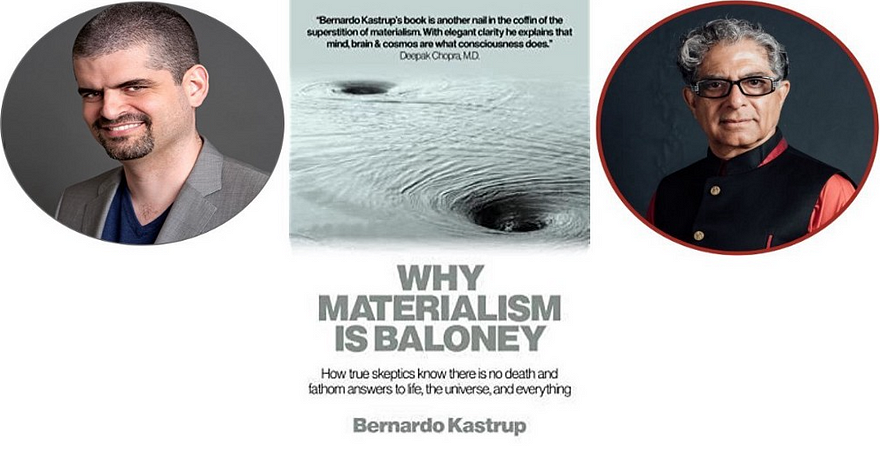
The spiritual idealists Bernardo Kastrup and Deepak Chopra would probably argue that I have “misunderstood” (a word Kastrup often uses against virtually all his critics) ego-dissolution and that it isn’t actually the termination of the (or his) ego at all. So, if he were to say that, then I would agree. His own clear example would show that to be the case.
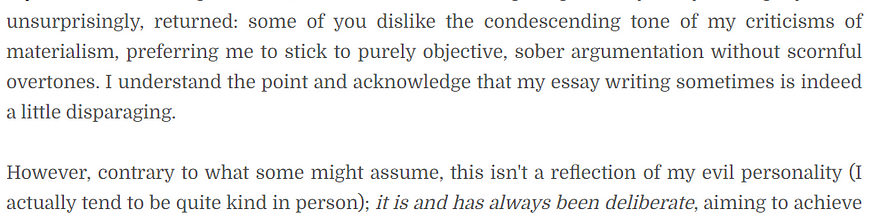
An extract from Bernado Kastrup’s article in which he tells his readers why he is so condescending.
(See Bernado Kastrup’s ‘There is method to the condescension’. Kastrup’s basic position is that since he believes that all his critics use condescension, and all those who advance positions he doesn’t like also do so, then he’s fully entitled to do exactly the same thing. The logic is flawless.)
Kastrup appears to be an admin of his own Facebook “fan club” — see image directly above. (See his fan club @ Facebook here.)
The egotism — and often narcissism of (Western) gurus, “spiritual leaders”, spiritual philosophers, cult leaders, etc. has been extensively commented on by psychologists, sociologists, political commentators, historians, documentary filmmakers, etc. (Perhaps all these commentators have been corrupted by our Western “physicalist paradigm”.) Many laypersons are also aware of the self-importance of such self-described “spiritual” types. Indeed such awareness is now almost commonplace and has become the subject of, for example, many comedy sketches and routines.
(1) This is the first of a series of short (as it were) off-the-cuff philosophical responses to various philosophical and non-philosophical questions. This means that these shorts won’t include new research. In addition, the quotations (from other people) within them will be kept to a minimum.
I personally have great respect for the Australian philosopher David Chalmers (1966-).However, I disagree with nearly all his main philosophical positions. So despite that philosophical disagreement, I still admire his analytic skills and his style of writing. Indeed, in an odd sense, I even admire the philosophical positions he expresses — without actually agreeing with them. That is, Chalmers offers clear accounts of his positions and convincing arguments on their behalf…
Yet obviously not convincing enough to persuade me!
All that may seem a little self-contradictory.
So one can recognise a good argument on behalf of position x, and still not embrace or accept it. The reason for this may be that although the argument for any given x may be very good and very clear, there will still be aspects of my own knowledge, as well as the subject under debate, which lie outside the argument itself (i.e., as expressed by a particular philosopher in a particular context). And it may be those outside elements which stop me — as well as others — from embracing (or simply accepting) argument or position x.
The opposite can occur too.
A philosopher may hold and express a philosophical position which I agree with. However, I may not like the particular argument for that position or the way the philosopher expresses himself. Indeed, there are lots of philosophers who fit this bill.
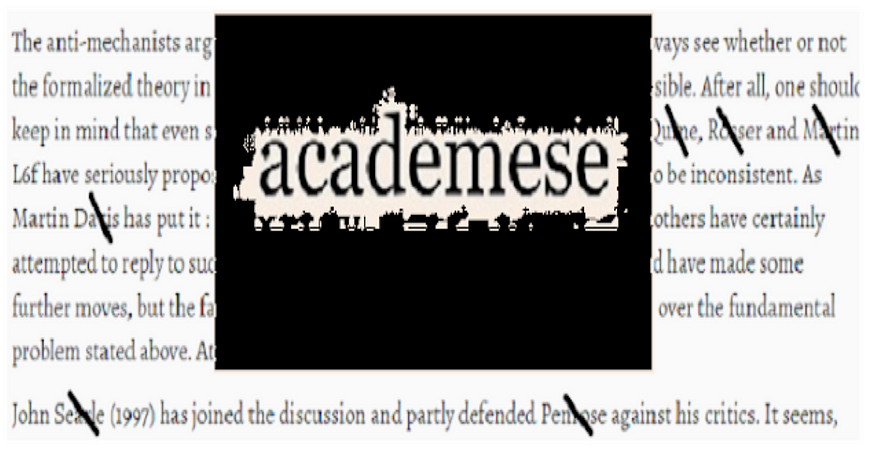
Specifically, I have in mind those academics (usually either postgrads or just-turned professionals) who never move past a rather predictable — and often annoying — academese, with its fetishization of infinite references and footnotes, alongside unhelpful schematic representations, gratuitous symbols, etc. Indeed all of this is often but a means to signal (for want of a better word) objectivity, fairness and a lack of bias, when all it really signals is that any lack of objectivity, bias and fairness is intentionally hidden under the academese.
So what these academics argue (in such analytic academese) I may well agree with. However, it’s still not expressed well. And that’s even though it supposedly has all the hallmarks of being clear. However, it is, in fact, quite the opposite.
Some readers might have noted the multitude of memes on social media posted by the advocates of spirituality, New Ageism and idealism which include the words of famous quantum physicists. So what’s behind this interest in these selected physicists?
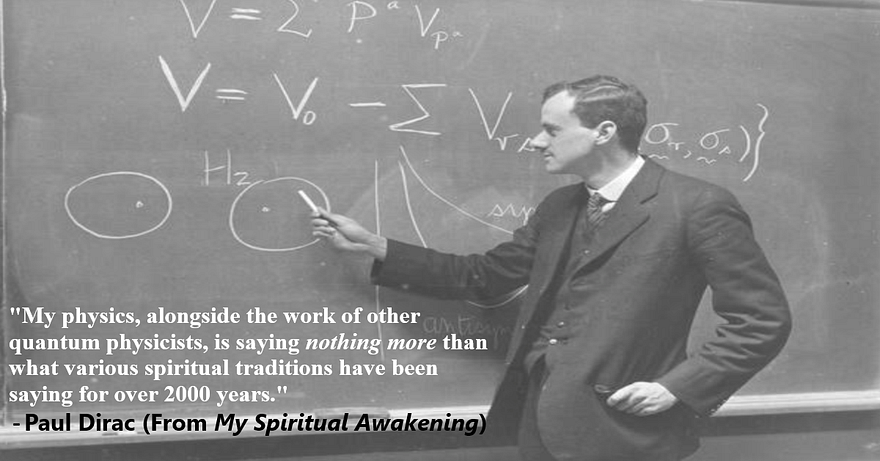
The words in this meme are fake. In fact I penned the words myself. Paul Dirac is, in fact, one physicist who would be very hard to appropriate, commandeer or annex for a spiritual or philosophical cause.
“Science does not need mysticism and mysticism does not need science, but man needs both.”
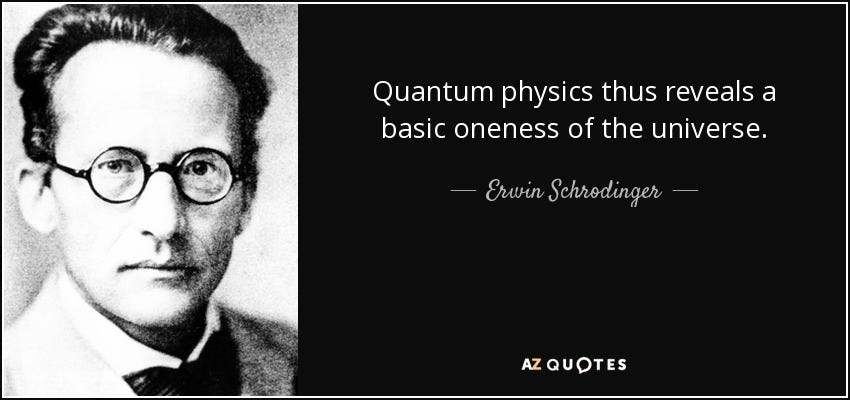
The users of Facebook and social media generally might have noted how often “spiritual idealists” (see here) and New Agers quote a handful of passages from German and Austrian physicists spoken (or written) in the first three decades of the 20th century… Or at least those who’re interested in philosophy and science might have noted this.
[See the section on the term “New Age” after this.]
The artfully-selected words of these artfully-selected physicists are quoted to back up various spiritual and (rather less so) philosophical positions.
It’s also worth stressing here that often such physicists are either misquoted or their words are simply made up by the memester. Indeed, when I checked some of these passages, all I could find were other out-of-context quotes of the very same words — without any references or sources.
So New Agers, etc. have created multiple images (or memes) with the words of these physicists embedded within them. The passages quoted are always the same ones. Indeed they’ve been used countless times by such people.
These passages are usually very short — often little more than a single sentence. And, as ever, they’re taken completely out of context.
All this quoting of physicists is usually (or even always) done for one reason and for one reason only:
To advance various spiritual and/philosophical beliefs (often about “cosmic consciousness”).
So spiritual idealists, “anti-materialists” and New Agers often quote and mention various physicists from the early 20th century (as well as beyond) to back up what they already believe anyway.
In other words, when you look into this, it can quickly be seen that virtually no contemporary New Ager, spiritual idealist, etc. became spiritual as a result of his or her research into quantum mechanics or, say, from reading the technical works (i.e., in papers, etc.) of Erwin Schrödinger. Instead, what nearly always happens is that such people became spiritual for exclusively personal reasons — and only then did they look to these physicists for scientific backup.
So most New Agers, etc. have no interest in science (specifically quantum mechanics) other than as a means to advance their spiritual and philosophical beliefs. (Beliefs they held long before encountering the work of these physicists.) This, then, is a kind ofargument from authority (or appeal to authority) which basically amounts to the following claim:
If Heisenberg, Schrödinger, Planck, Bohm, etc. believed and said these things, then they simply must be true.
The other point worth making is that although a tiny minority of physicists did say these things (although, as stated, they’re often either misquoted or the quotes are literally made up), these scientists rarely went into much — or sometimes any — detail. More importantly, they rarely made an effort to tie their non-scientific words to their actual physical (i.e., technical) theories. Indeed Erwin Schrödinger, for one, went out of his way to disconnect his interest in (loosely called) “eastern philosophy” from his actual technical physics. (See Walter Moore’s excellent biography: Schrödinger: Life and Thought. Moore goes into much detail on Schrödinger’s interest in Schopenhauer, Vedanta, etc.)
New Agers, on the other hand, do the opposite of this.
Such people go out of their way to connect quantum physics (as well as much else in science) to their prior spiritual and philosophical beliefs.
So why these particular German and Austrian physicists?
One reason for this is that from (roughly) the 19th century (particularly from the period of Arthur Schopenhauer’s strong influence on German and Austrian culture as a whole) to the first three decades (or less) of the 20th century, eastern philosophy (this term, like so many, is disputed) was popular among artists and intellectuals in both Germany and Austria. Thus, these physicists simply reflected the general intellectual milieu and culture of their time. Indeed, as they got older, they often stopped referring to such things…
That said, most of these oft-quoted physicists hardy referred to eastern thought in the first place. Hence the very-few passages which spiritual idealists, New Agers, etc. have access to.
New Age?
The word “New Age” was used throughout the section above. Admittedly, that was largely for convenience’s sake. So it is, indeed, an umbrella term.
Some academics say that the New Age movement is “dead” and that the term itself is “useless”. Other academics say that this movement is “very much alive” and that the term is still useful.
For example, a professor of religious studies, Hugh Urban, wrote:
“According to many recent surveys of religious affiliation, the ‘spiritual but not religious’ category is one of the fastest-growing trends in American culture, so the New Age attitude of spiritual individualism and eclecticism may well be an increasingly visible one in the decades to come.”
So take your pick on whether New Ageism is alive or dead.
At one point in history, New Agers used the term “New Age” themselves — a hell of a lot. Roughly between the 1930s and 1960s, various individuals and groups talked about a coming “New Age” and often used that term (see here). Then, when critics picked up on both the movement and the term itself, many (though not all) New Agers stopped using it.
“Most of the beliefs which characterise the New Age were already present by the end of the 19th century, even to such an extent that one may legitimately wonder whether the New Age brings anything new at all.”
More relevantly, many New Agers believe in what they call “holism”. They also believe that a “divinity” (or simply consciousness) pervades the universe. This leads — for various reasons — to New Agers rejecting “traditional religion” and the “monotheistic God”. New Agers, instead, emphasise the individual (or “self”) and their own “spiritual authority”.
Most New Agers also reject some (or all) of the following: materialism, rationalism, the scientific method, empiricism, etc. However, that doesn’t stop them from also using concepts and terms from science and particularly from what has been called theNew Physics. In the later respect, New Agers often mention David Bohm and Ilya Prigogine. All this has also largely been down to Fritjof Capra’s The Tao of Physics (1975), as well as Gary Zukav’s The Dancing Wu Li Masters (1979).
“The possibility of a mental universe has a strong lineage going in the quantum era, but present-day physicalists (physicists who accept the physical nature of reality as a given) feel free to dismiss or ignore figures as towering as Max Planck, Werner Heisenberg, and John von Neumann.”
Now take these words from an idealist (see here) who believes that he has (to use his own word) “proved” that heaven exists (as in his book, Proof of Heaven) — Dr Eben Alexander. He wrote:
“We live in a mental universe, projected out of consciousness, just as Heisenberg realized [].”
More technically, we also have the idealist Bernardo Kastrup’s long and wild jump from Werner Heisenberg’s stress on measurements to his very own “transpersonal mind” (see the ‘transpersonal movement’). As Shawn Radcliffe writes(in a website called Science and Nonduality):
“For Kastrup and his colleagues, these types of measurements [in quantum mechanics]can only be performed by a conscious observer. They write that inanimate objects like a particle detector can’t truly measure a particle. With the double-slit experiment, ‘the output of the detectors only becomes known when it is consciously observed by a person,’ writes Kastrup. Extending this to all of reality, he argues that a ‘transpersonal mind’ underlies the material world.”
A large part of all this (scare-quoted) “interest” in quantum physics boils down to the rejection of what spiritual idealists and New Agers often call “materialism”.
Take Bernardo Kastrup again and his broad sociological and politicaltake on materialism. Kastrup wrote thefollowing words(as taken from his book Materialism is Baloney) on materialism:
“A big part of the motivation for our culture’s current embrace of materialism is the observed regularities according to which reality seems to unfold.”
[It can be taken as given here that Kastrup means Western culture by “our culture”. That is, he means European, British and American culture.]
So clearly it isn’t just getting the metaphysics of “reality” right which concerns Kastrup and other self-styled “anti-materialists”. Kastrup is also concerned with what “our culture embrace[s]” and the fact that it (in his eyes) embraces materialism. And that may at least partly explain Kastrup’s words “materialism is baloney”; as well as Deepak Chopra’s similarly intemperate remarks on materialism.
It’s worth noting here that some spiritual idealists can be very vain, egotistical, aggressive and intolerant. New Agers also often conflate materialism with consumerism, rather than seeing materialism as a metaphysical position. So it’s odd that many New Agers are perfect consumerists who also consume large amounts of New-Age merchandise.
But is “our culture” really materialist?
The fact is that there are big chunks of our culture that certainly do not embrace materialism — from the large numbers of religious and “spiritual” people, to New Agers, to the lovers of the arcane. Now add to that the many political activists and political theorists who do not embrace materialism. And, last but not least, take on board the many idealists, realists,spiritual-but-not-religious people, etc. who’re strongly against what they describe as “materialism”. (See ‘Spiritual but not religious’.)
So our culture — at least as a whole — clearly does not embrace philosophical materialism. That’s unless Kastrup simply means that everyone in our culture unconsciously embraces materialism by osmosis or that most folk just catch it in the air. (This would be Kastrup’s very own version of the notion of “false consciousness”.)
In any case, the fact that Kastrup and other idealists believe that our culture does embrace materialism may well also explain why they (rhetorically) claim that the commitment to (philosophical) materialism is based on “faith” or even that materialism is a “religion” held (it seems to them) by literally dozens of millions (or more) of people.
*************************
Part Two: Comments on Specific New-Age Memes
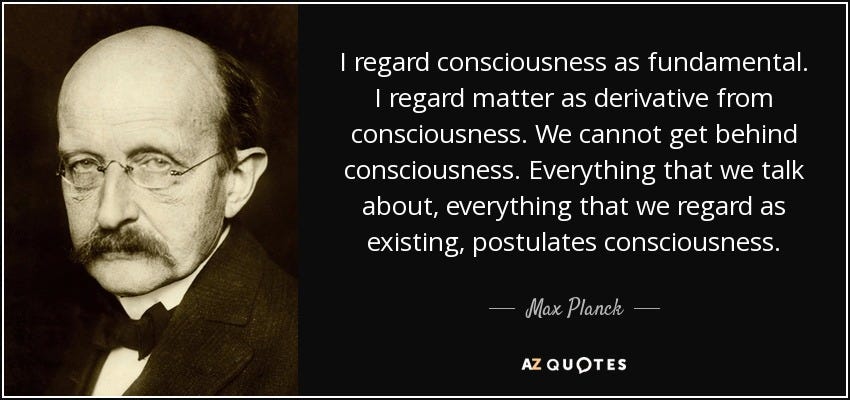
Max Planck’s words (in meme form) are posted all the time on Facebook and social media generally. It’s even possible that they are fake. Or, if not fake, then doctored to some extent… But perhaps not.
That said, there is nothing spiritual or even idealist about Max Planck’s words. The stress on consciousness (or mind) is similar to the stress on experience (or sense impressions). This is largely an empiricist position which dates back (in various strong or weak forms) to the ancient Greeks and which achieved an historical importance with the British Empiricists of the 18th century.
So, of course, everything we gain access to is done through our minds — or through “consciousness”. We have no other access to the world. However, empiricists, realists, materialists, etc. believe that too. So it’s what is derived from that which is important. And idealism — let alone spiritual idealism — is simply a single option. What’s more, it’s a position which Max Planck himself almost certainly didn’t uphold.
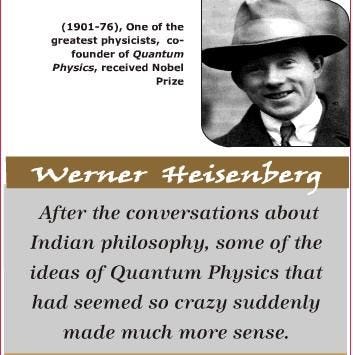
Is this a genuine quote? As ever, when I Googled this passage, all I could find was other out-of-context quotes (most in images or memes) of the very same words — without any context, references or sources. But I did find the following from Werner Heisenberg:
“The kinship between the ancient Eastern teachings and the philosophical consequences of the modern quantum theory have [sic] fascinated me again and again.”
If this claim is genuine, then it seems to be an acknowledgment that quantum mechanics came first (or at least Werner Heisenberg’s own work came first) and only then were there these “conversations about Indian philosophy” carried out. That said, anything can be connected to anything. It also seems that Heisenberg was saying that Indian philosophy may simply be of some help when it comes to understanding quantum physics. And so too is learning some mathematics. In addition, metaphors and analogies are often (very often) used when discussing quantum mechanics.
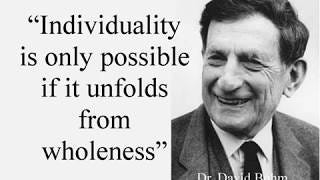
That probably is a genuine quote from David Bohm. However, it has very little to do with his actual physics. That is, it has little to do with Bohm’s technical physics as expressed in his papers. Sure, it may have something to do, on the other hand, with his interpretations of his own work.
It can be accepted that, like many other intellectuals, Bohm did read Indian religious texts, etc.
Apart from that, the passage above reads like a poeticism, not as science or even as philosophy.
So the passage above can be read as being as statement exclusively about nature’s fundamental laws, constants, forces, etc. and the omnipresence of energy. Or, alternatively, it can be read in an exclusively spiritual or idealist way. Whichever way it is read, the statement itself doesn’t belong to physics — quantum physics or otherwise.
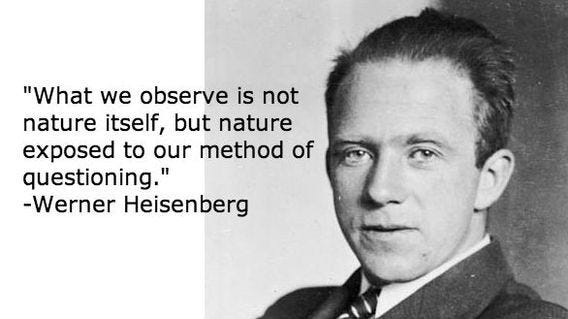
This passage is also often quoted. It’s a basic statement of one aspect of the Copenhagen interpretationof quantum mechanics.
It’s very hard to see why it’s spiritual or even idealist in content. So it can only be supposed that the reasoning is the following:
If nature depends on humanobservations and humanquestions, then it must also depend on minds (or on consciousness). Thus, surely nature itself must be mental (or constituted by consciousness).
Of course this is bizarre. But this is a good way of making sense of why this passage is quoted so many times by New Agers, spiritual idealists and anti-materialists.
Not all brands of panpsychism can be tied to spirituality, religion and/or politics. However, some (perhaps many) brands can be. This issue is complicated by those panpsychists who, in one breath, play down these connections; yet, in the very next breath, emphasise them. This essay, however, isn’t a critique of religion, spirituality or the politics of panpsychists. It’s simply an attempt to demonstrate these clear — indeed obvious — connections.
Philip Goff and Rudy Rucker
“Each object has a mind. Stars, hills, chairs, rocks, scraps of paper, flakes of skin, molecules — each of them possesses the same inner glow as a human, each of them has singular inner experiences and sensations.”
[Personally, I only know of a handful — or even less — of panpsychists who’ve used the word “atheist” to describe themselves. It also has to be remembered that many of those who class themselves as “spiritual” also frequently state that they don’t believe in the “traditional God”. Philip Goff himself makes much of this distinction.]
[Note: The word “craziness” — in the title — is borrowed from the panpsychist Philip Goff. He wrote an article called ‘Panpsychism Is Crazy, but It’s Also Most Probably True’, in which he compares panpsychism to Albert Einstein’s (supposedly) equally “crazy” (at least as seen at the time of its creation) Special Theory of Relativity. The very idea of a metaphysical thesis being “probably true” — as well as the comparisons with Einstein’s Relativity — won’t be discussed in the following essay.]
Introduction
It’s worth noting straight away that this essay only features two panpsychists who tie panpsychism to spiritual and political issues and positions. There are, of course, many others. For example, there are over 15 pages of search results (on Google) which contain numerous links to papers, articles and books which explicitly tie panpsychism to religion and spirituality (if in various ways). Hardly a single one of these links takes you to any critic of panpsychism attempting to (well) disingenuously connect panpsychism to spiritualism and religion. (That serious charge can, of course, be aimed at this essay.)
All that said, it’s not being argued here that all panpsychisms (i.e., in the plural) are, well, crazy or wacky. Some (though very few) panpsychists offer metaphysical theses which they argue for, and which can then be tackled by people who aren’t themselves panpsychists — even if, ultimately, they reject them.
Nonetheless, a philosopher like Philip Goff started off as simply offering technical papers and arguments (as expressed in academese in philosophy journals), but now he too is heading off in a crazy and/or wacky direction. And he’s doing so — at least partly — for the very same reasons as Rudy Rucker: politics, spirituality and ethics.
Rucker isn’t simply arguing that all these objects have “experiences” or instantiate what some philosophers call “phenomenal properties”. And he certainly isn’t arguing that they only instantiate (as some other philosophers call it) “proto-experience”.
All that said, perhaps Rudy Rucker’s own panpsychism — particularly — is a bad target because I have a very strong feeling that he knows that his ideas are crazy-wacky and that his crazy-wackiness is part of the point, and, indeed, part of the appeal. After all, Rucker describes himself as a “cyberpunk” and he does seem to cultivate a certain image which appeals to New Agers, hippies, tribal environmentalists, etc.
[I’m not sure how cyberpunk and its “dystopian societies” square with Rucker’s panpsychist environmental ethics. However, I’m not an expert on cyberpunks.]
So Rucker’s crazy-wacky beliefs are tailor-made for a tiny niche of society. His books also sell very well (see here). And, as almost everyone knows, there’s nearly always a guaranteed (if sometimes small) market for sexy, titillating and crazy-wacky stuff.
All this means that perhaps many (or even most) of Rucker’s claims aren’t meant to be taken literally. Perhaps they’re meant to be taken poetically, politically or even spiritually.
It’s not a surprise, then, that Rucker never supplies any arguments for his panpsychism (there is a ‘nine-step formal proof of panpsychism’): he simply makes categorical (often oracular) statements. (He once strung them together and called them a “proof”.) And that ties in with all of what’s just been said. After all, arguments, data and facts may unweave Rucker’s rainbow or unspool his craziness-wackiness.
Indeed don’t we have the phrase “there are many ways of knowing” to deal with here? So perhaps Rucker’s very own way of knowing is different to my own way of knowing. It may also be different to the ways of knowing of most readers of this essay. That said, it’s of course the case that some people will be keen to point out (if not in these precise words) that one person’s crazy-wacky position is another person’s truth.
It must also be stated here that Rucker doesn’t seem to do — at least some of — his fellow panpsychists any favours. Or, at the very least, he doesn’t do the more philosophically rigorous and less flamboyantpanpsychists any favours. (There aren’t many panpsychists who fit this description.)
In my view, then, spirituality, sexy philosophy and politics constitute the primary appeal of panpsychism when it comes to at least some (or even many) panpsychists and their followers. The hard analytical or philosophical work — which only exists in tiny academic niches — may well only arrive (as it were) after that fact.
The Spirituality and Politics of Rucker’s Panpsychism
It seems that radical environmentalism(perhaps alongside ecocentrism) and politics may be driving Rudy Rucker’s panpsychism. And now that seems to be the case with Philip Goff too. (See the last section.)
Both Rucker and Goff believe that upholding panpsychism will help the environment, our relationship with nature and the political state of society and the world generally.
Rucker himself is explicit about this whenhe wrote:
“If the rocks on my property have minds, I feel more respect for them in their natural state. If I feel myself among friends in the universe.”
As far as I know, Goff hasn’t delved into the afterlife yet. Rudy Rucker has.
Rucker offers us a spiritual, psychological and emotional take (actually, a conditional) on the afterlife when he stated the following:
“If my body will have a mind even after I’m dead, then death matters less to me.”
If Rucker’s previous speculations were true, then his position on his “mind” after his own death would also be true; or at least it could possibly be true. Thus, all this depends on the Rucker’s conjectures on panpsychism being true. (As stated in the opening square-bracketed note: metaphysical theories aren’t ideal candidates for truth.)
Yet Rucker’s panpsychist environmentalism and its lack of truth, fact or data may not matter to him. Thus, this is a reactive reply to Rucker’s general stance:
i) If Rudy Rucker’s panpsychism is all about his own emotional well-being (as well as about having a “positive attitude” to one’s environment), ii) then it may not matter if panpsychism is actually true. (“The point is to change the world, not interpret it.”)
What seems to matter to Rucker are the personal and even collective results of believing — or simply advocating — panpsychism as a philosophical and political position.
So here’s another conditional to get that point across:
i) If the political, social and/or ethical consequences of believing in panpsychism are deemed to be positive, ii) then perhaps the truth of panpsychism doesn’t matter.
Something similar to this ethical and pragmatic stance on truth has often been noted by philosophers and other commentators when it comes to religion. For example, many philosophers (such as the American philosopher William James) have talked about the “efficacy of religion”.(Sam Harris now talks about the efficacy of spirituality.)This has also been seen to be the stance of the “late Wittgenstein”; at least on certain readings. (Yet the man himself hardly wrote a word on the issue.)
Yet this fast-and-loose attitude to truth, fact and data would surely create a philosophical, scientific and ethical free-for-allif everyone adopted it.(Who knows, perhaps there are — relativist? — arguments which state that this would be a good thing too.)After all, I personally could believe that Rudy Rucker is a rock in order to bring it about that no one will take his views seriously. I could also believe that the Welsh are crabs in order to bring forward all sorts of negative political policies against Welsh people.
So why give Rudy Rucker free rein, but not other people with similarly absurd or extreme views? Some people may do so simply because they like — or empathise with — Rucker’s panpsychist philosophy. But is that a good enough reason? Some other people may also like my view that Rucker is a rock or someone else’s view that “alien lizards rule the world”.
In any case, let's move on to Philip Goff, who’s far less crazy-wacky than Rudy Rucker. He is, after all, a tenured professorwho specialises in analytic philosophy.
Part Two: Philip Goff
“Other[s] will identify as ‘spiritual but not religious’. The purpose of this article is simply to point out that there is a third option that many are not aware of, and that some may find attractive: religion without belief.”
“I’m exploring the position that there is some kind of teleology or goal-based activity at the fundamental level of the universe [] Like isn’t the universe conscious itself?”
Professor Philip Goff uses the experiments and research on plants (carried out by the ecologists Professor Monica Gagliano and Professor Suzanne Simard) to advance his panpsychism. That is, he interprets that research and the experiments in various political and philosophical ways.
Monica Gagliano
It can provisionally be accepted, then, that the experiments of Monica Gagliano and Suzanne Simard are scientifically kosher. And their papers, too, may well abound with mathematical equations and an infinity of footnotes and references. However, Goff’s political and philosophical interpretations of these experiments are what matters here.
That said, both of Monica Gagliano andSuzanne Simard themselves do foist philosophical and political baggage onto their own experiments and research. That philosophical and political baggage goes way beyond the actual science itself.
Indeed all this is a very good example of the common phenomenon of scientists — as well as philosophers and political activists — using scientific data or experiments as ammunition to advance their own political and/or spiritual beliefs, causes and goals.
Philip Goff’s Anthropomorphism
Philip Goff offers us some clear examples of anthropomorphism, which he uses to back up his priorpanpsychism.
For example, Goff uses the words “associate”, “meaningless”, “preferential treatment”, “for their young”,“mother”, “kin”, “prejudice”, “reciprocal support”, “passing along” “egalitarian redistribution” and “dinnertime” when he refers to plants and their behaviour.
[The word “behaviour” is tricky when used in this context. For a start, the way that this word is sometimes used about plants — i.e., mainly by those who want to get a larger ethical, political or environmental point across — can also be used, with almost no change, about smoke alarms, light sensors and even wind turbines. However, all that can’t be tackled here.]
Perhaps the most extreme example of all is Goff’s use of the word “wisdom”. He uses that word when he says that “mother trees [] pass on their wisdom to the next generation”.
Now this is a professional analytic philosopher using the word “wisdom” about trees without even hinting at it being a metaphor or a poeticism… But that’s because he’s not using the word “wisdom” metaphorically or poetically.
Now it must be said that it’s of course the case that anthropomorphic words and phrases about plants or trees can be — and often are — used poetically and metaphorically, as well as to enable understanding. And, in that simple sense, such uses aren’t anthropomorphic in a literal sense at all. So this means that the least a philosopher or scientist can do is make it clear to his audience that he’s using such words (or phrases) in a poetic or metaphorical way. That said, in Goff’s case and as already said, it’s clear that he’s not using these word and phrases metaphorically, poetically or to enable understanding: he’s using them literally.
“[W]e now know that plants communicate, learn and remember. I can see no reason other than anthropic prejudice not to ascribe to them a conscious life of their own.”
It’s ironic that Goff mentions “anthropic prejudice” when he himself is clearly indulging in gross forms of anthropomorphism. (Many scientists, philosophers and laypersons have a problem with anthropomorphism even when it comes to animals, never mind plants.)
Readers may now wonder why anthropomorphism is seen to be somehow better than what Goff calls “anthropic prejudice” (i.e., anthropocentrism). Yet don’t both positions share the same (as it were) ánthrōpos toward plants? Thus, aren’t both positions equally suspect?
Of course Goff doesn’t believe he’s being anthropomorphic at all.
Goff uses anthropomorphic ways of speaking when his examples can even be made to work against his own political take on plants.
And that highlights a problem here.
As noted, Goff does indeed refer to scientific research on plants.
However, exactly the same data, evidence or experiment about — or on — trees and other plants (as well as animals) can be used as ammunition to advance just about any political position. (See underdetermination of theory by data/evidence.) Indeed, historically, this has often been the case. (Think about how some 19th-century Darwinists and 20th-century fascists relied on the animal world to advance their politics.) More specifically, Goff’s talk of “quid pro quo relationship[s]” in the plant world could be used to advance political positions which are diametrically opposed to his own.
Finally, on the words “wisdom”, “egalitarian”, etc. as used by Goff.
The simple argument here is that Goff is using these terms in ways that are massively at odds with how they’re used by laypersons when they refer to human individuals, institutions or societies. That is, he’s using them in his own panpsychist and political way. What’s more, such terms pick out behaviourswhich are displayed by every member of a plant species — at least in a given environment.
Yet that simply isn’t the case with human beings.
The word “wisdom”, for example, is always used in a relative or contextual way. That is, it’s rarely used to refer to every single human being in all circumstances dating back tens of thousands of years (as must be true of most plants). That is, person, institution or society x is (or was) wise in comparison with other persons, institutions or societies who or which were unwise.
As for Goff’s word “egalitarian”: if every plant of a given species is egalitarian, then no plant of that species is egalitarian. Like wisdom, a tree can only be egalitarian if there’s the possibility that this tree (or the entire species it belongs to) can choose not to be egalitarian. Again: the word “egalitarian” implies that an individual, institution or society chooses to be egalitarian. In other words, the word “egalitarian” has moral or normative content and also involves various degrees of choice. That isn’t the case with the plant species Goff artfully selects. According to Goff (though he doesn’t explicitly state this), every plant of that species — and perhaps all plants! — is wise and egalitarian.
The same is true of Goff’s use of the words “prejudice” and “reciprocal support” when he refers to plants.
Do these plants have the choice to actually embraceprejudice instead?
Do such plants ever go against the reciprocal support Goff highlights?
And say that there are indeed some exceptions (which is doubtful — unless in cases of genetic and/or environmental anomalies) displayed by the plants of a given species — would they be morally flawed to display prejudice or reject reciprocal support?
So what’s the point of using these anthropomorphic words at all?
Such words have almost zero connection to how they’re used by laypersons — and probably even by Goff himself when he uses them in all other (i.e., non-panpsychist and non-political) contexts.
So that point must be political, spiritual or ethical — probably all three. What’s more, it can be argued that, when it comes to panpsychists like Rudy Rucker and Philip Goff, it really doesn’t matter if their claims are true (or if the terms they use are conceptually confused or simply deceitful) because they believe that embracing this way of looking at plants — and much else besides — is a means to change the world in a better political direction.
Finally, these brands of panpsychism are obviously not science. And perhaps most of them aren’t even philosophy either. Instead, they’re a type of politics and/or ethics which simply uses the findings of both science and philosophy to help bring about certain very specific social and political ends.