Friday, 29 September 2023

Why? The Philosopher Philip Goff’s New Cosmic Religion

The philosopher Philip Goff has just had a book published called Why? The Purpose of the Universe. According to the writer Philip Pullman, this book is “going to explain the purpose of the universe”. More relevantly, some reviewers have made a point of telling us that Goff’s philosophical speculations have nothing to do with religion. This essay argues that they have almost everything to do with religion. What’s more, Goff’s new cosmic religion is designed to express his prior political views and values.
[This essay isn’t going to tackle the technical details of the new speculations about “cosmic purpose” and suchlike. See the linked essays at the end of this piece for more detailed discussions on these subjects.]

(i) Introduction
(ii) The Politics of Philip Goff’s Cosmic Religion
(iii) Philip Goff’s Non-Traditional Religion
(iv) Philip Goff and the Physicist Paul Davies
(v) Davies and Goff and Their Non-Traditional Religion


In a review of Why? The Purpose of the Universe, the writer Philip Pullman claims that Philip Goff believes that his book is “going to explain the purpose of the universe”. It can be presumed that Goff himself would deny that his new book is so highfalutin. Perhaps, instead, Goff would say that it simply describes and analyses the various options on offer when it comes to explaining the purpose of the universe

But who knows?

In any case, Pullman finds Goff’s “cosmic chutzpah” appealing. Indeed, it “predisposed [him] in its favour before [he] even began to read the text”!

In a similar vein, rather than the Universe itself having a purpose, the professor of philosophy Josh Rasmussen actually states that Goff’s own book

“contributes to the purpose of the universe in a profound and beautiful way”.

Let’s return to Philip Pullman.

It’s worth noting here that Pullman also buys into the political and ethical underpinnings of Goff’s new speculative philosophies. Or, at the least, Pullman tells us that Goff’s new book will help us

“regain that sense of connectedness that’s so important not just to our well-being, but to our very survival”.

To add more academic backing to Goff’s speculations. The British philosopher Michael Tye believes that Goff’s book will (or simply may?) offer an answer to those of us who’ve “ever wondered what the point is in living”.

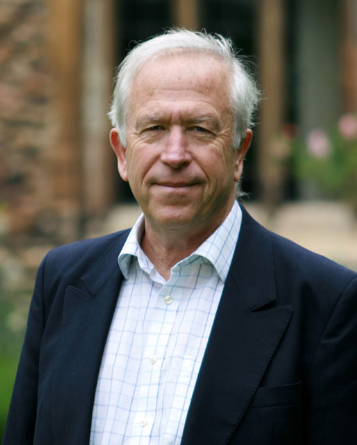
Philip Goff

… So it is these religious, political and ethical underpinnings of Goff’s philosophies (explicitly referred to by Michael Tye, Philip Pullman and Josh Rasmussen) which will be discussed in this essay. [See note 1 on Goff’s many academic fans.]

Finally, what also needs to be noted in this introduction is that Goff extensively refers to both science and philosophy in his new book.

Yet he’s doing nothing new here.

In fact, many of the followers of traditional religions did exactly the same thing, and they did so for many centuries before Goff was even born.

This means that Goff is simply making his own contribution to this long religious tradition.

The Politics of Philip Goff’s Cosmic Religion
Philip Goff and Rudy Rucker. Rucker, just like Goff, ties panpsychism very strongly to both politics and ethics. Indeed, both Rucker and Goff tie panpsychism to roughly the same political beliefs, values and causes. However, Rucker’s philosophy lacks the philosophical sophistication found in some of Goff’s work. That said, Rucker isn’t a philosopher. He’s a novelist and self-described “cyber punk”.

At least in one introduction, Goff seems to simply assume that there is such a thing as a “cosmic purpose without God”, and only then does he “explore a variety of hypothesis” to explain it.

Which “variety of hypothesis” is that? This variety:

[A] non-standard designer (e.g., a bad designer, a limited designer, or maybe just an ordinary person in the next universe up), teleological laws (laws of nature with purposes built into them), or cosmopsychism (the view that the universe itself is conscious).”

When it comes to Goff’s belief (or his entire belief system) in a “cosmic purpose”, he believes that it must “involv[e] political engagement”.

Indeed, Goff often admits that there are political and ethical motivations and beliefs hiding (or sometimes not actually hiding) underneath the philosophical positions which he does take.

For example, Goff states that

“living in hope of cosmic purpose is a deeply meaningful way of engaging with the world”.

In other words, Goff is stating (if perhaps implicitly) that believing in a cosmic purpose helps us (both politically and ethically) engage with the world. More specifically, Goff argues that a belief in a cosmic purpose helps us (as individuals and as societies) develop a superior political and moral attitude to the world.

Interestingly, the Belgium philosopher Helen De Cruz also believes that seemingly non-ethical philosophical theories should “provide an ethical guide”. Cruz then says that Goff’s book

“outlines an attractive picture of spiritual belonging and practice in a godless world []”.

So is Goff doing what so many poststructuralists, postmodern philosophers and Marxists have done when they placed Politics in the role of First Philosophy? (Such philosophers haven’t — as far as I know — put their own position in this simple way.)

Alternatively, is Goff doing what the French philosopher Emmanuel Levinas did when he placed Ethics in the role of First Philosophy? (Levinas actually put it this way himself. See here.)

Perhaps, instead, both Politics and Ethics together take on the role of First Philosophy in Goff’s philosophy.

Now it’s worth saying here that the very idea of keeping science and philosophy free of politics has been deemed to be naïve and unsophisticated by various Marxists, postmodern philosophers and poststructuralists. (A small number of Marxists don’t take the position that “all science and philosophy is inherently political”.) Consequently, in this Hobbesian world, all scientists — just like all academics — are always involved in a political (to use Antonio Gramsci's terms) “war of position”, as well as a battle for “hegemony”. [See note 2.]

Perhaps Philip Goff believes at least some of this too.

In any case, Goff himself has a fairly long history of admitting (if sometimes in roundabout ways) that politics and ethics are in the driving seat when it comes to at least some — perhaps many — of his philosophies.

Like the scientists and activists of Science for the People who believed that science should serve “radical politics”, or the countless academics who believe that their work should serve very particular political causes and goals, Goff believes that the philosophies he advances should also serve very particular political causes and goals.

This way of looking at science and philosophy has been taken to extreme levels.

For example, the Nazis in the 1930s and the Soviets from the 1920s to the 1950s explicitly and directly tied both science and philosophy to advancing, respectively, Nazi and communist goals and ideas. (Lysenkoism and racial science are just two obvious examples of this.) [See note 3.]

In terms of actual examples of the political and ethical underpinnings of Goff’s philosophies.

We have Goff’s “spiritual” and political takes on panpsychism itself, on the nature of plants, and now we have his political, ethical and religious take on cosmic purpose.

As an example of this, take Goff’s words in his book Galileo’s Error:

“For a child raised in a panpsychist worldview, hugging a conscious tree could be a natural and normal as stroking a cat.”

In the same book, Goff also wrote:

“My hope is that panpsychism can help humans once again to feel that they have a place in the universe. At home in the cosmos, we might begin to dream about — and perhaps make real — a better world.”

And one more passage:

[I]t’s reasonable to suppose that children raised in a panpsychist culture would have a much closer relationship with nature and invest a great deal more value in its continued existence.”

As for plants, Goff wrote:

[W]e now know that plants communicate, learn and remember. I can see no reason other than anthropic prejudice not to ascribe to them a conscious life of their own.”

And now for egalitarian plants:

“The mycorrhiza structures [between tree roots and fungi] allow for a complex system of egalitarian redistribution.”

So does all this mean that Goff’s politics and ethics are wagging the philosophical dog here?

Philip Goff’s Non-Traditional Religion
It can be strongly doubted that what Philip Goff offers us is a “religion without belief”. However, it certainly is a religion.

Some reviewers of Philip Goff’s new book make a point of saying that his philosophical speculations have nothing to do with religion. Or, at the very least, they make the point that Goff’s speculations have nothing to do with traditional religion.

For example, Geraint Lewis (Professor of Astrophysics at the University of Sydney) writes:

“In this new book, Goff explores purpose in the cosmos, not a purpose rooted in religion, but in a conscious fabric of the universe itself.”

This claim (i.e., Goff’s philosophical positions are not “rooted in religion”) will be rejected in this essay. Indeed, it seems obviously false.

It can easily be argued that Goff’s new philosophy is rooted in religion. What’s more, it can be argued that it’s even rooted in (as well as being a reaction to) traditional religion. However, to some readers it may seem otherwise (or it’s made to seem otherwise) simply because Goff is attempting to create a non-traditional religion — a new religion which he also believes is backed up by both science and philosophy.

None of that means that Goff has actually broken free of religion.

Far from it.

After all, a non-traditional religion (even one that refers to science and philosophy) is still a religion.

This is also a non-traditional religion which is perfectly in tune with Goff’s prior politics and ethics. That is, Goff’s new philosophical explorations reach political and ethical conclusions which just happen to perfectly square with what Goff believed well before such explorations. (Goff has provided enough biographical information — over the years — to substantiate this claim.)

Yet the notion of a cosmic purpose may seem like a strange thing to tie directly to politics. However, that’s exactly what Goff does.

Philip Goff and the Physicist Paul Davies

When I read Philip Goff’s own account of his new book, it, at times, seemed as if he was directly quoting the physicist and popular-science writer Paul Davies.

However, it’s not clear how extensively Goff has relied on the books of Davies, or even if he has done so at all. That said, it’s still the case that, at least at times, their mutual philosophical positions are almost identical. (One difference being that Davies’s positions — at least the relevant ones — date back to the 1980s. [See Davies’s God and the New Physics, published in 1983.])

Other commentators have noted these strong similarities too.

For example, Dr. Brandon Rickabaugh wrote the following:

“Goff is not the first to entertain this view. Paul Davies, for example, entertains the hypothesis that ‘the universe has engineered its own self-awareness through quantum backward causation or some other physical mechanism yet to be discovered.’ ‘In this way,’ says Davies, ‘the universe could both create itself and steer itself toward its destiny.’ Goff is, however, the first to develop a detailed defense of such a view.”

Well, Davies is a physicist. This means that he uses a different set of technical terms and modes of expression than those which Goff uses. This may also mean that Goff’s work on these issues isn’t really more (as Rickabaugh puts it) “detailed” than Davies’s own. Indeed, there isn’t really that much — technical — detail in Goff’s books. (There is technical detail in Goff’s academic papers.)

So to get back on track.

If Philip Goff isn’t clear (or perhaps honest) about his religious (as well as political) motivations, then Paul Davies certainly is. Or, at the very least, Davies has, at times, been upfront about all this.

For example, Davies once expressed his own position by using the American theoretical physicist John Archibald Wheeler as a proxy.

Firstly, Davies claims that Wheeler was

“not conventionally religious, but inspired by a reverence for nature and a deep sense that human beings are part of a grand scheme which we glimpse only incompletely”.

So surely it’s not unfair to say that Davies is also talking about himself here.

In any case, Davies finishes off with these words:

“So maybe that is a religious conviction of sorts.”

Elsewhere, Davies also talked in terms of his own “cosmic religious feeling”.

Davies and Goff and Their Non-Traditional Religion

Many people class themselves as “spiritual but not religious”. That’s partly because, like Philip Goff, they have political and ethical problems with traditional religions. There are, of course, other reasons for embracing new (as it were) spiritual religions. Another important reason is that such religions don’t make any demands on the believer. There’s also a strong whiff of narcissism when it comes to many spiritual-but-not-religious people.

Philip Goff is at pains to say that his philosophies aren’t religious. Similarly, Paul Davies is at pains to say that his religion isn’t “conventional”.

Goff states his non-traditional views in the following:

“I don’t believe in the Omni-God (the all-knowing, all-powerful, and perfectly good, creator that Christians, Muslims and Jews believe in) because I don’t think a perfectly good being who could do anything would create a universe with so much suffering.”

Like many people since since the 1960s (and a small amount of people before that), Goff and others may believe that it’s just not acceptable anymore to believe in (as Paul Davies puts it) “conventional religion”. After all, in many people’s eyes — including in Goff’s eyes — traditional religion has a bad history. Indeed, to some people, traditional religion has an evil history.

More relevantly, Goff is completely in tune with Davies when it comes to believing in “a universe with a purpose”. Of course, that purpose isn’t (to use Goff’s words) “driven by an Omni-God”. It’s driven by… well, other things.

Paul Davies put his own teleological position in the following way:

[T]he bio-friendliness of the universe arises from an overarching law or principle that constrains the universe/multiverse to evolve towards life and mind. It has the advantage of ‘taking life seriously’, treating it neither as a completely unexplained bonus [] nor as a mere passive selector [].”

He then continued:

“In short, it builds purpose into the workings of the cosmos at a fundamental (rather than an incidental) level, without positing an unexplained pre-existing purposive agent to inject purpose miraculously.”

[The technical details of this cosmic teleology aren’t going to be discussed in this essay. See links at the end of this essay.]

Goff sees traditional religion as being politically and ethically incorrect. In parallel, Goff’s new cosmic religion is deemed (by Goff himself) to be politically and ethically correct.

Goff expresses his position in the following way:

“Ultimately, I outline a way of living in hope that cosmic purpose is unfolding, involving political engagement and a non-literalist interpretation of traditional religion.”

The upshot here is that if one interprets traditional religion literally, then that will result in politically and ethically incorrect conclusions and beliefs. However, if one interprets traditional religion non-literally, then such interpretations — and traditional religion itself — can be shaped and fashioned into something that’s both politically and ethically correct.

Another way of putting this is to say that Goff’s new cosmic religion perfectly reflects what he takes to be the progressive (see here) values, causes, and beliefs of 2023.

Thus, this is the purest form of religious presentism one can imagine (i.e., in terms of Goff’s judgments about traditional religion).

Goff then gives more details about his non-traditional religion. (Except, of course, he’d argue that it isn’t any kind of religion at all.) He writes:

“Western thought has been dominated by the dichotomy of traditional religion and secular atheism. In Why? The Purpose of the Universe (Oxford University Press), I argue that it’s time to move on from both God and atheism.”

So is it time to “move on” to a non-traditional religion?

Is it time to move on to a religion which also abides by Goff’s own politics and ethics?

It certainly seems that way.

Again elsewhere, Goff distinguishes himself from traditional “religious thinkers” and their “traditional God”. He writes:

“In contrast to religious thinkers, I argue that the traditional God is a bad explanation of cosmic purpose. Instead, I explore a range of alternative possibilities for accounting for cosmic purpose, from the speculation that we live in a computer simulation to the hypothesis that the universe is itself a conscious mind.”

Goff is actually a religious thinker.

Sure, he also sees himself as a critic of traditional religion, and also as a critic of traditional religious thinkers.

So it can be said that Goff’s cosmic religion is very up-to-date. Yes, it’s fashionable and very 2023.

However, Goff believes that his non-traditional cosmic religion still needs the back up of both science and philosophy.

Thus, in the following passage Goff sells his own scientific credentials to his readers:

“Through an exploration of contemporary cosmology and cutting-edge philosophical research on the nature of consciousness, I argue for cosmic purpose: the idea that the universe is directed towards certain goals, such as the emergence of intelligent life.”

Well, at the least, Goff is informing people that he reads scientific literature.

Yet it must immediately be said here that traditional religion also needed the backup (or help) of both science and philosophy!

Or, at the very least, many theologians, philosophers and scientists in the past — and over many centuries — also believed that their own religions needed both scientific and philosophical backup (or help).

Thus, Philip Goff is doing nothing new when he extensively refers to both science and philosophy — while also advocating his new cosmic religion.

Finally, since politics, ethics and religion are in the driving seat here, we can expect no limit to Philip Goff’s future philosophical speculations.


Notes

(1) The abundance of positive reviews of Philip Goff’s new book (as featured in this essay) is partly — or even largely — down to a system of career networking that many academics — especially Goff himself — indulge in on Twitter/X, social media generally, and within the book-selling and seminar circuits. Indeed, I’ve personally seen it occur — many times — in practice. Another way to put that is to say that Goff — just like many other academics — has gone out of his way make many academic and career-related friends on social media, etc.

(2) Antonio Gramsci’s vision is a variation on Thomas Hobbes’s “the war of all against all” (i.e., Gramsci’s “war of position”). However, instead of individuals warring against individuals, we have social groups, political groups or identities warring against other social groups, political groups or identities.

(3) There’s a vast literature on this subject. See Science and technology in Nazi Germany’, and ‘The Soviet Academy of Sciences and the Communist Party’.


Friday, 22 September 2023

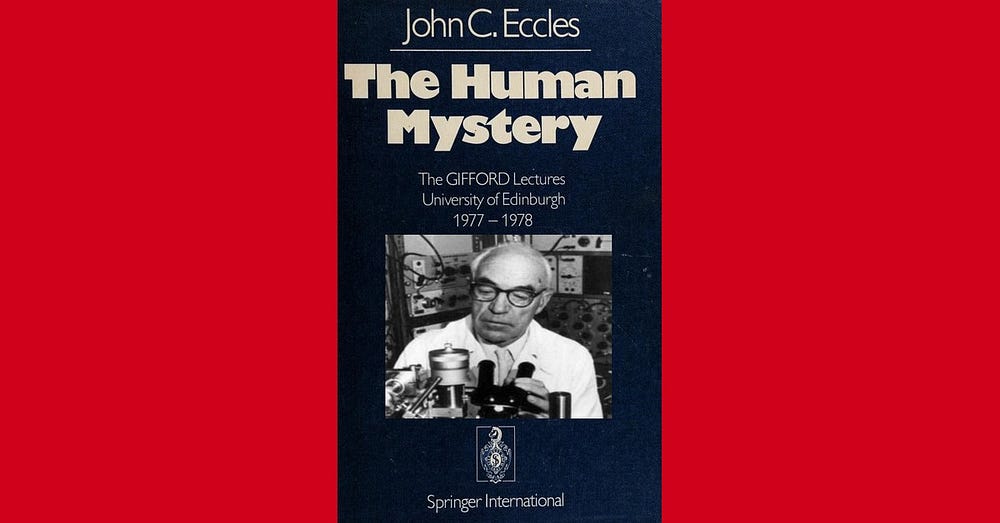
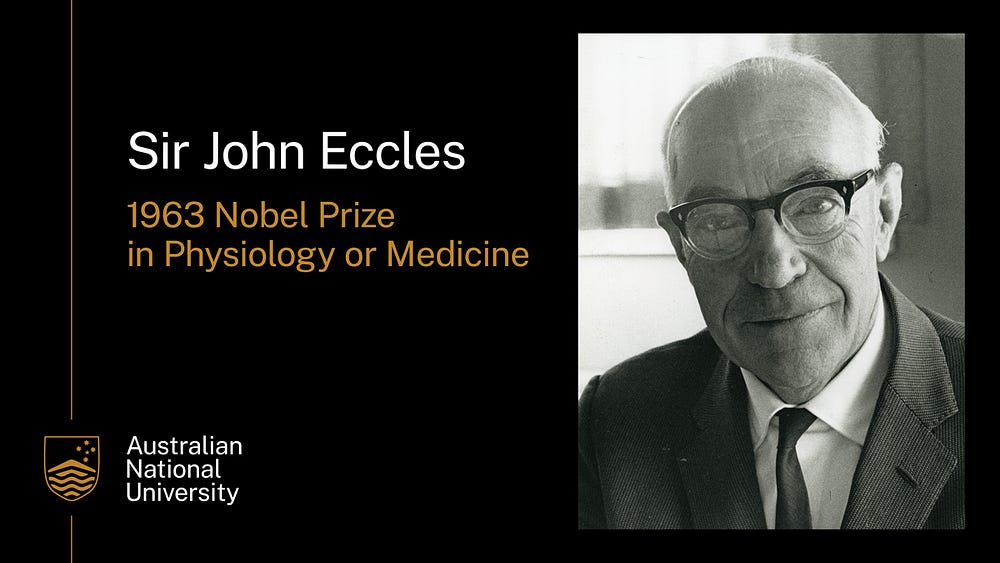
Nobel Prize Winner John Eccles on How Materialism Demeans Human Mystery

Some self-described “anti-materialists” have been open and honest about the religious and emotional motivations behind their (strong) anti-materialism. Take the case of the neurophysiologist and Nobel Prize winner John Carew Eccles, who died in 1997.

John Eccles (in his book How the Self Controls Its Brain) wrote the following:

“I maintain that the human mystery is incredibly demeaned by scientific reductionism.”

Eccles seemed to be tacitly admitting that it’s not that “scientific reductionism” is misconceived, limited, not the whole story, incorrect or outright false. It’s simply that it demeans human mystery.

However, it can be supposed that anti-materialists could now say that materialists aren’t honest and open about their own anti-religious and emotional motivations.

So surely the best remedy here is to suggest that both parties should stick to arguments and the data instead…

However, clearly John Eccles himself didn’t do that.

Of course, there’s also a problem with criticising Eccles’s positions.

Eccles was a scientist who performed research that lead to him receiving the Nobel Prize in 1963. [See here.]

I, on the other hand, am not a scientist. And I haven’t won the Nobel Prize.

So self-described “anti-materialists” and religious people have been keen to point out Eccles’s scientific credentials in debates like this [see here] — as they also are when it comes to those other scientists who they believe endorse anti-materialist, religious, idealist, dualist, etc. positions.

Of course, most of the people who vocally and rhetorically endorse Eccles’s positions — and the positions of other supposedly anti-materialist scientists — aren’t scientists or people who’ve won the Nobel Prize either. Yet that doesn’t stop them from commenting on these issues.

So any focus on scientific credentials here is hopeless.

Another reason for making that claim is that if Eccles’s many scientific credentials are clinching or decisive in this debate, then what of the credentials of equally-qualified scientists who’re taken to support materialist positions — or at least positions which criticise religion, dualism, idealism, etc?

What’s more, I’m being neither controversial nor original in my claims about Eccles’s motivations.

Take this bit of biography:

“A ‘sudden overwhelming experience’ [] during [John Eccles’s] first year at medical school took the form of a mystical feeling of existential wonder that owed much to his devout Catholicism and inspired him to be a neuroscientist.”

And, elsewhere, there’s the following:

“Eccles was, for much of his life, a practicing Roman Catholic, although he did not always attend mass. However, he retained a deep sense of the reality of mystery, and of a spiritual realm, that for him left scope for theology in addition to science. Unlike many scientists, he did not think that science alone could fully understand the universe, or the mystery of life.”

In any case, Eccles’s positions on dualism, “World 2”, the sins of materialism, etc. aren’t themselves scientific — they are philosophical. Indeed, some commentators have even claimed that they aren’t really philosophical either — they’re religious.

It’s important to state here that there is literally nothing in Eccles’s actual science (i.e., in his published papers) that points toward his views on “human mystery”, his dualism (or trialism), World 2, etc. At least there’s no necessary or direct link between Eccles’s science and all these things.

Thus, Eccles’s scientific credentials don’t really help much in these debates. Or at least his scientific credentials don’t make every word he uttered on these issues gospel…

Sure, exactly the same claim holds when supposedly materialist scientists utter critical words about religion, dualism, idealism, etc.

So now let’s return to the opening passage.

Scientific Reductionism Demeans Human Mystery?

To repeat Eccles’s words:

“I maintain that the human mystery is incredibly demeaned by scientific reductionism.”

Added to that passage, we also have the following from Eccles’s 1989 book Evolution of the Brain: Creation of the Self:

“I believe that there is a fundamental mystery in my existence, transcending any biological account of the development of my body (including my brain) with its genetic inheritance and its evolutionary origin. [] I cannot believe that this wonderful gift of a conscious existence has no further future, no possibility of another existence under some other unimaginable conditions.”

As stated, Eccles seems to be openly saying that it’s not that “scientific reductionism” is misconceived, limited, not the whole story, incorrect or just plain false. It’s simply that it demeans human mystery.

There is, of course, another option:

Scientific reductionism demeans human mystery, and it is also misconceived, limited, not the whole story, incorrect, and/or false.

However, if people already believe that scientific reductionism demeans human mystery, then perhaps some of them will go out of their way to find data and arguments which purportedly show that scientific reductionism is also scientifically misconceived, limited, not the whole story, incorrect, and/or false.

So what, exactly, did Eccles take scientific reductionism to be?

Eccles continued in the same vain with these words:

[W]ith its claim in promissory materialism to account eventually for all of the spiritual world in terms of patterns of neuronal activity.”

That passage is hardly a riposte to materialism. It’s simply a statement of what Eccles took the materialist position to be.

Yet Eccles seems to have assumed that the very stating of the materialist position would show his readers how deeply suspect it is. That is, the very attempt to account for what Eccles calls the “spiritual world” in terms of “patterns of neuronal activity” is itself suspect - regardless of data, facts, evidence, experiments (or tests) and arguments.

Of course, it must now be said that Eccles did provide arguments to back up his anti-materialist position elsewhere. (Whether they were successful or not is another matter.)

Eccles: First-Rate Scientist & Schoolboy Philosopher

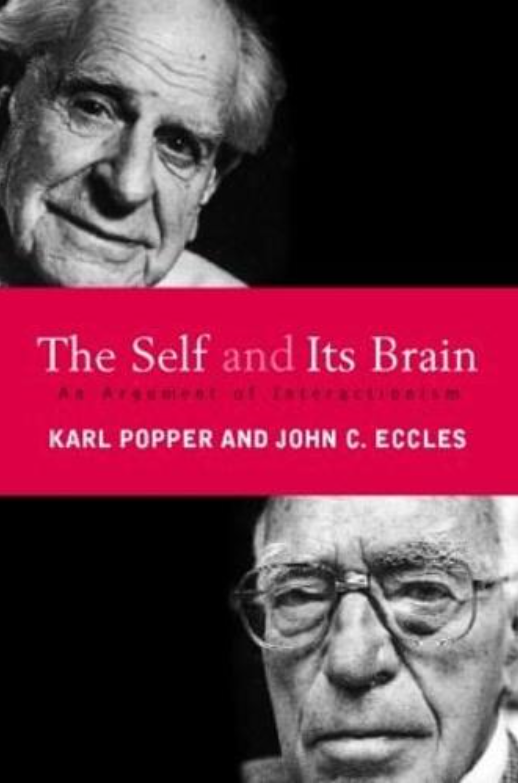
John Eccles was strongly influenced by Karl Popper. He even relied heavily on some (philosophical) technical terms which were coined by Popper.

Eccles again lurched into a rhetorical — and even incantatory — mode when he wrote the following in his book (which has already been quoted from) Evolution of the Brain: Creation of the Self:

“This belief must be classed as a superstition [] [W]e have to recognize that we are spiritual beings with souls existing in a spiritual world as well as material beings with bodies and brains existing in a material world.”

So materialists — and many others — have classed views like Eccles’s own as being “superstitious”, and also driven by “prior religious beliefs”. That is, such beliefs are prior in the sense that many (even most) anti-materialists held them long before they indulged in any science or philosophy. (This is certainly true of Eccles himself, as can be seen from the earlier biographical extracts.)

Now, guess what, such anti-materialists return the favour by saying that the belief in materialism is itself (or is also) a “superstition”.

Eccles elaborated here:

“Promissory materialism is simply a superstition held by dogmatic materialists. It has all the features of a Messianic prophecy, with the promise of a future freed of all problems — a kind of Nirvana for our unfortunate successors.”

Apart from Eccles’s extreme rhetoric, I myself have never once thought of materialism as promising a future free of all problems. Indeed, I’ve never read any materialists saying anything like this — even in their own words. (The closest philosopher I know who comes to saying this is Paul Churchland. He does so when he waxes lyrically about how his “eliminative” approach would lead to untold benefits for society. See here.)

So perhaps it depends entirely on which materialists Eccles had in mind. It also depends on whether the people he had in mind were materialists in any uniform — or clear — way in the first place.

[Often the critics of materialism class people as “materialists” even when such people don’t class themselves that way. This is particularly true of the idealist Bernardo Kastrup, who seems to class literally all non-idealists as “materialists”. See here.]

But let’s return to Eccles’s words “the materialist superstition”, “dogmatic materialists”, “Messianic prophecy”, “a kind of Nirvana”, etc.

These words are cheap, easy and rather predictable.

[See how often the phrase “superstition of materialism” has been used by other “anti-materialists” here. There are over 12 Google Search pages — of 10 links to each page — which cite this exact phrase. Talk about a meme.]

Bernardo Kastrup and Deepak Chopra

Now take the following very-similar passage in which Deepak Chopra uses the same techniques when he too talked about the “superstition of materialism”.

In a commentary on Barnardo Kastrup’s Why Materialism is Baloney, Chopra wrote:

Bernardo Kastrup’s book is another nail in the coffin of the superstition of materialism.”

This is an example of the tried-and-tested technique which many anti-materialists — along with those (it must be added) who reject evolution — employ on a regular basis.

To put it in a simple form.

If a materialist, “evolutionist” or atheist accuses a spiritual idealist, religious person, or New Ager of x, then the latter three will accuse the former of being x too. Thus, there have been lots of spiritual idealists, religious people and New Agers who’ve accused materialists, evolutionists and/or atheists of having “faith” in materialism (or faith in evolution or atheism). Indeed, they’ve also stated that “materialism [or atheism or evolution] is a religion”.

This kind of thing happens at a lot at infant and junior schools. That is, when a little kid accuses another little kid of being x, then that other little kid then accuses the accuser of being x too.

In any case, it can easily be argued that very few spiritual idealists, religious people, New Agers, etc. genuinely do believe that materialism, atheism or evolution is a religion or that people believe in material, atheism or evolution purely on faith. Of course, it must be admitted that there will be exceptions to this in that at least some materialists, atheists or evolutionists will use materialism, atheism or evolutionary theory as a literal substitute for religion. Yet the comparisons between religion and materialism, atheism and/or evolution are often so vague, tangential and rhetorical that, in most cases, I doubt that these claims are even believed by most of the anti-materialists who actually state them.

Still, to claim that materialists, atheists and evolutionists have faith in what they believe is extremely useful, and it scores many points.

Sunday, 17 September 2023

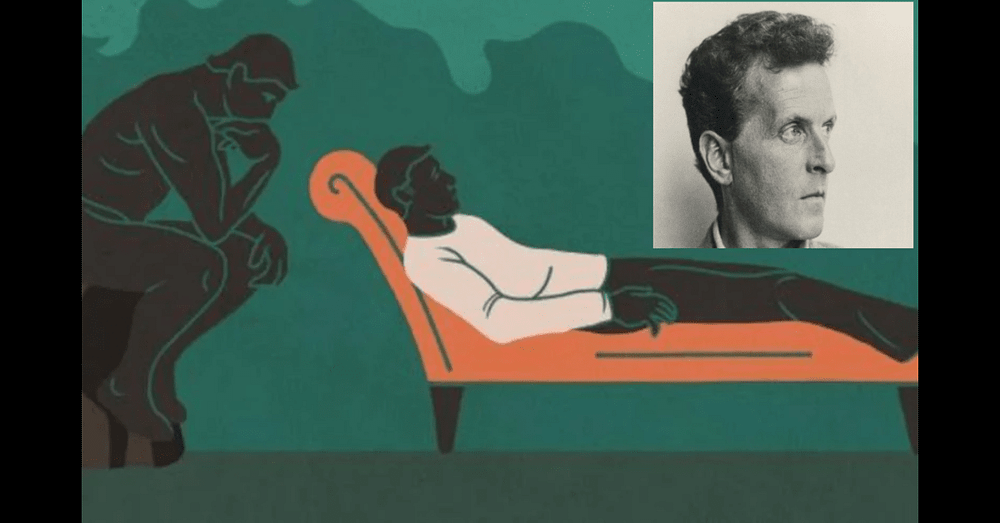
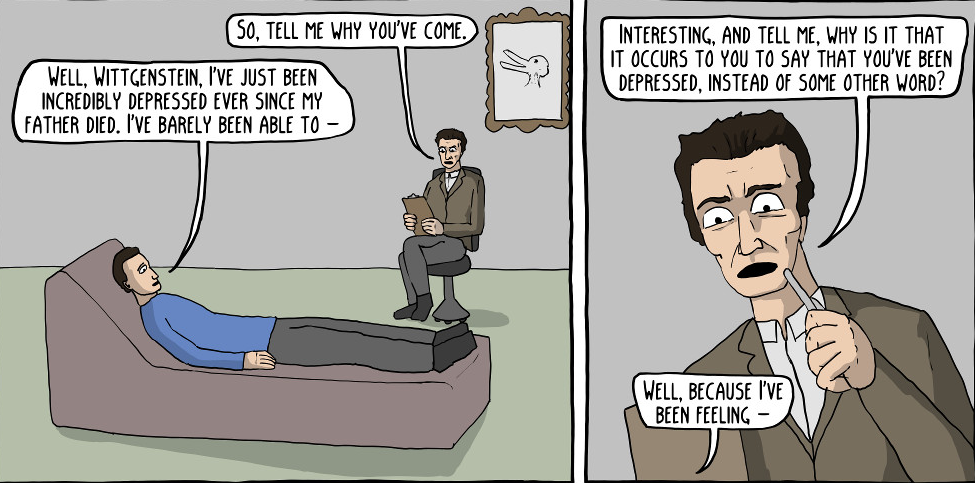
Wittgenstein’s Philosophical Therapy as Intellectual Suicide

Ludwig Wittgenstein offered his readers both therapy and philosophy. That (as it were) fusion is discussed in this essay. The following also focuses on Simon Blackburn’s critical reading of Wittgenstein. This reading puts Wittgenstein in the role of both a philosophical therapist, and someone who believed that philosophy itself is — or should be — therapy. More relevantly, Blackburn argues that this stance ultimately leads to “intellectual suicide”.

“Wittgenstein imagined that the philosopher was like a therapist whose task was to put problems finally to rest, and to cure us of being bewitched by them. So we are told to stop, to shut off lines of inquiry, not to find things puzzling nor to seek explanations. This is intellectual suicide.”

— Simon Blackburn

[This passage can be found in Blackburn’s book Essays in Quasi-Realism.]


(i) Introduction
(ii) Wittgenstein’s Philosophy as Therapy?
(iii) The New Wittgenstein School and Therapy
(iv) Philosophical Quietism?
(v) Wittgenstein’s Philosophical Anti-Philosophy

Simon Blackburn

Those words from the English philosopher Simon Blackburn (1944-) seem to contain at least some truth. After all, Wittgenstein did once say that “philosophical problems should completely disappear”. (Of course, these five words need to be placed in context.)

To repeat Blackburn’s final two sentences:

“So we are told to stop, to shut off lines of inquiry, not to find things puzzling nor to seek explanations. This is intellectual suicide.”

So, again, it’s not immediately clear that Blackburn’s words are an entirely accurate or faithful account of Wittgenstein’s intent. Moreover, they also seem a little rhetorical.

In any case, many — even most — philosophers have also claimed to “put [at least certain] problems finally to rest”. Or, at the very least, they’ve said that this was their aim. However, this was usually done by providing answers to those problems, not by offering a philosophical therapy which cures philosophers — as well as others — of the psychological need for philosophical answers.

To return to the opening passage from Blackburn:

“Wittgenstein imagined that the philosopher was like a therapist whose task was to put problems finally to rest, and to cure us of being bewitched by them.”

The issue of whether (all? most? many?) philosophers really are “bewitched” by philosophical “problems” needs to be tackled — although not in this essay. In other words, didn’t Wittgenstein only have his eyes on a small subset of philosophers when he advanced his therapeutic positions?

It’s now worth saying that Blackburn isn’t entirely alone in his critical reading of Wittgenstein.

Take the views of the British philosopher Paul Horwich.

In a New York Times article, Horwich stated that Wittgenstein believed the following:

“There are no startling discoveries to be made of facts, not open to the methods of science, yet accessible ‘from the armchair’ through some blend of intuition, pure reason and conceptual analysis. Indeed the whole idea of a subject that could yield such results is based on confusion and wishful thinking.”

Of course, that passage isn’t as critical and rhetorical as Blackburn’s own. However, it seems to be saying vaguely similar things, if in a different way.

As already stated, Blackburn himself may not be entirely convincing. Yet is anyone entirely convincing when it comes to “reading Wittgenstein”?

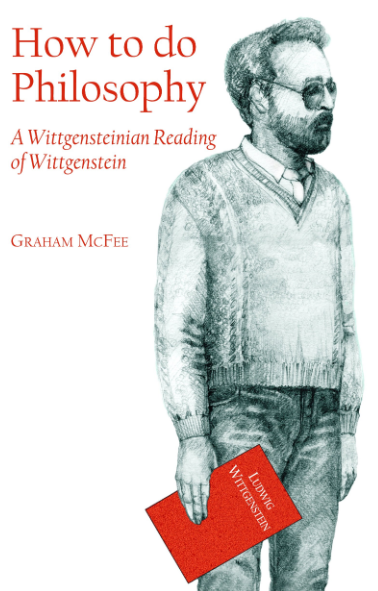
What about Wittgenstein’s own “reading” of Wittgenstein? Is there such a thing? Also, was Wittgenstein advising us, or telling us, “how to do philosophy”?

Thus, if all people can do is read (or interpret) Wittgenstein, then that’s what I, as a reader, shall do.

So let’s just go with Blackburn’s reading of Wittgenstein for now. If we don’t, then we’ll only need to go to other readings of Wittgenstein instead.

All that is a roundabout way of saying that this essay isn’t yet another piece of “Wittgenstein scholarship”. (At one point, there were over 1000 publications about Wittgenstein in a single year.) Instead, it focuses on a (as it were) second-hand Wittgenstein — i.e., Wittgenstein through the eyes of Simon Blackburn.

More relevantly, Blackburn certainly used the word “therapist” in the opening passage.

Wittgenstein’s Philosophy as Therapy?

Can readers, philosophers and commentators move from only a couple (?) of uses of the word “therapy”, to concluding that Wittgenstein’s overall philosophy is therapeutic?

That depends.

Arguing that Wittgenstein advanced a philosophy-as-therapy position isn’t exactly a wild interpretation (or reading) of him. After all, Wittgenstein used the word “therapy” himself. However, he hardly used that word (or its derivatives) at all. Indeed, when people quote Wittgenstein advancing what they take to be philosophical therapy, he doesn’t actually use that word…

Not that a philosopher needs to use the actual word “therapy” in order to believe that philosophy is — or should be — therapy.

Yet we do have the following passage from Wittgenstein’s Philosophical Investigations:

“There is not a philosophical method, though there are indeed methods, like different therapies.”

In terms of capturing Wittgenstein’s position of philosophy-as-therapy, take a passage (from Philosophical Investigations again) which doesn’t actually include the word “therapy” at all. Here it is:

“The real discovery is the one that makes me capable of stopping doing philosophy when I want to. The one that gives philosophy peace, so that it is no longer tormented by questions which bring itself in question.”

Now a good — if arcane — example of this desire for philosophical “peace” can be seen when Wittgenstein tackled the infamous Liar Paradox. In a discussion with Alan Turing, Wittgenstein said:

“Think of the case of the Liar: It is very queer in a way that this should have puzzled anyone — much more extraordinary than you might think. [] Because the thing works like this: if a man says ‘I am lying’ we say that it follows that he is not lying, from which it follows that he is lying and so on. Well, so what? You can go on like that until you are black in the face. Why not? It doesn’t matter? [] it is just a useless language-game, and why should anyone be excited?”

[See my ‘When Alan Turing and Ludwig Wittgenstein Discussed the Liar Paradox’.]

The few times (even a single time?) that Wittgenstein used the word “therapy” (or its derivatives), he did so in a context that isn’t as radical — or, indeed, as objectionable (at least to some) — as it may at first seem.

In a strong sense, Wittgenstein didn’t (as it were) literally mean therapy by his word “therapy”. Or, at the least, he didn’t mean therapy in the literal sense, or in the sense that entered 20th century European and American lingo. In fact, the “discourse theorist” Jonathan Potter says that Wittgenstein simply used the word “therapy” as a convenient “metaphor from psychology”.

So if we now return to the passage quoted a few moments ago:

“There is not a philosophical method, though there are indeed methods, like different therapies.”

Wittgenstein is only talking about “philosophical method” here, not philosophy generally. Indeed, he’s actually talking about “methods” in the plural, not a single method.

Still, Wittgenstein did equate philosophical methods with what he called “therapies”.

However, it was philosophical therapies which Wittgenstein was referring to, not psychological, psychoanalytic, behavioural, spiritual or religious therapies. That said, he did (as quoted earlier) use the psychological words “[gives me] peace”, “tormented by”, etc.

The New Wittgenstein School and Therapy

Is “the new Wittgenstein” better than the old Wittgenstein?

Simon Blackburn (as already quoted) wrote the following:

“Wittgenstein imagined that the philosopher was like a therapist whose task was to put problems finally to rest, and to cure us of being bewitched by them.”

Now let’s quote one take on “the therapeutic approach to philosophy”:

[It] sees philosophical problems as misconceptions that are to be therapeutically dissolved.”

This seems to be a normative position — at least in part. In other words, those who practice the therapeutic approach to philosophy are advising us (or telling us?) that (only certain?) philosophical problems can be (or must be?) “therapeutically dissolved”.

Still, that passage doesn’t tell us what it is to therapeutically dissolve a problem, and why anyone should have that aim in the first place.

To change tack a little.

There are two things which are worth distinguishing here:

(1) Wittgenstein’s own position of philosophy-as-therapy — and even if he held such a position for philosophy in general.
(2) Later Wittgensteinians who argued that much (sometimes all) of Wittgenstein’s work is
therapeutic.
[Not all Wittgensteinians have stressed philosophy-as-therapy.]

If we take the Wittgensteinian (i.e., rather than Wittgenstein’s) position (2).

The most (depending on philosophical taste) extreme form of Wittgensteinian philosophy can be found in the The New Wittgenstein “school”.

Philosophers in this school have argued that Wittgenstein’s early Tractatus Logico-Philosophicus is just “plain nonsense”. Indeed, the Tractatus is deemed to be therapeutic (by these Wittgensteinians) precisely because it it’s also deemed to be “self-undermining and paradoxical”. (It can easily be argued that Wittgenstein himself took this position about his own book. However, see note 1.)

On the Tractatus itself.

Considering the gnomic, poetic and oracular prose style of that book, some readers may wonder how it would

“help us work ourselves out of [the] confusions we become entangled in when philosophizing”.

Unless, that is, Wittgenstein’s oracular and gnomic writing style was the perfect way to untangle philosophers.

Sure. So how does that work?

In any case, the “New Wittgenstein school” believed that the Tractatus didn’t advance any broad philosophical positions or any single philosophical project. (Not even the project of making philosophy therapy?) Instead, it was Wittgenstein’s way of getting philosophers (or his readers) to give up on philosophical speculation, as well as to give up on endlessly attempting to solve (often ancient) problems.

To sum up the New Wittgenstein position, this is how Alice Crary (a New Wittgensteinian) puts her (or Wittgenstein’s) position:

“Wittgenstein’s primary aim in philosophy is — to use a word he himself employs in characterizing his later philosophical procedures — a therapeutic one. These papers have in common an understanding of Wittgenstein as aspiring, not to advance metaphysical theories, but rather to help us work ourselves out of confusions we become entangled in when philosophizing.”

Now what of Wittgenstein’s “quietism”?

Philosophical Quietism?

Perhaps the passage which best captures Wittgenstein’s quietist position is this (often-quoted) one:

“Philosophy may in no way interfere with the actual use of language, it can in the end only describe it.
“For it cannot give it any foundation either. It leaves everything as it is.”

That final sentence (i.e., “[philosophy] leaves everything as it is”) perfectly expresses philosophical quietism… Or, at the least, it seems to.

However, a quietist position toward philosophy may not itself be quietist philosophy.

In other words, when Wittgenstein told philosophers to (as it were) be quiet, he said that in a (philosophically) loud voice.

Indeed, advising philosophers not to “interfere with the actual use of language”, and to “leave[] everything as it is”, doesn’t seem quietist at all. These bits of philosophical advice seem to be, at best, normative. And, at worst, categorical.

Oddly enough, Simon Blackburn himself (in his A Dictionary of Philosophy) puts a position that distances Wittgenstein from quietism. He wrote:

“In philosophy the doctrine doubtfully associated with Wittgenstein. [] Wittgenstein sympathized with this but his own practice include a relentless striving to gain a ‘perspicacious representation’ of perplexing elements in our thought.”

Now take the following account of what philosophical quietists believe. Apparently, they believe that

“advancing knowledge or settling debates (particularly those between realists and non-realists) is not the job of philosophy, rather philosophy should liberate the mind by diagnosing confusing concepts”.

The following questions now seem somewhat obvious:

(1) Isn’t philosophical Quietism itself a way of “settling debates”? (It settles debates by — among other things — “dissolving problems”.)
(2) Doesn’t philosophical Quietism
settle the debate by “liberating the mind” via the method of “diagnosing confusing concepts”?
(3) More narrowly, doesn’t philosophical Quietism
settle the debate between realists and non-realists by (completely) rejecting both realism and non-realism?
[See note 2.]

Of course, it can be assumed here that quietists would deny (or would they?) that they’re attempting to settle the debate. However, why should non-quietists accept that (seemingly modest) denial?

What’s more:

(1) Doesn’t philosophical Quietism advance the knowledge that philosophers use “confusing concepts”? [Sure, we can now ask: What is knowledge?]
(2) Doesn’t philosophical Quietism
advance the knowledge that the realism-vs.-nonrealism debate is bogus?

Of course, it can be assumed here that quietists would claim (or would they?) that these aren’t actually attempts to advance knowledge at all. However, why should non-quietists accept that (seemingly modest) claim?

It’s also worth saying here that (perhaps) one can be a Wittgensteinian without also being a quietist. Indeed, (perhaps) one can be a Wittgensteinian without also believing that philosophy is therapy.

So now take these words from Wittgenstein himself:

“It is not our aim to refine or complete the system of rules for the use of our words in unheard-of ways.”

The Wittgensteinian P.M.S. Hacker (Peter Hacker) brings Wittgenstein up to date (i.e., by discussing neurophysiologists and psychologists) without necessarily committing himself to the philosophy-as-therapy position. Yet Hacker still takes almost exactly the same position as Wittgenstein in the following:

[Expressions] can and are violated by unconsciously crossing ordinary uses of expressions with half-understood technical ones.”

Hacker believes in what’s been called the “linguistic-therapeutic approach to philosophy. In other words, he believes that the words and concepts used by everyday people should be taken as given by philosophers… and also (it seems) by scientists. Consequently, he sees the role of philosophy (as did Wittgenstein) as one of dissolving (or resolving) philosophical problems by examining (among other things) how words are actually used in everyday life. More precisely, Hacker deems philosophical problems to be primarily conceptual in nature. To him, this also means that these problems can be dissolved (or resolved) purely by “linguistic analysis”.

Wittgenstein’s Philosophical Anti-Philosophy

Wittgenstein was “anti-philosophy” in a very philosophical kinda way. So is this just like those scientists who’re critical of philosophy, but who, inadvertently, offer us their very own philosophical positions and ideas? Of course, unlike such scientists, Wittgenstein must have known that he hadn’t broken free of philosophy.

Wittgenstein did a lot of philosophy in order to reach his (scare-quoted) “therapeutic” conclusions. Indeed, his critical statements about philosophy are themselves philosophical.

Now do some of Wittgenstein’s statements and positions on philosophy land him in self-referential quagmires — at least to some degree?

Thus, three questions can now be asked:

(1) Didn’t Wittgenstein require philosophical arguments (or at least philosophical positions) to advance the thesis that “the philosopher is like a therapist”?
(2) Didn’t Wittgenstein require philosophical arguments (or at least philosophical positions) to advance the idea that philosophers should “put problems to rest”?
(3) Didn’t Wittgenstein require philosophical arguments (or at least philosophical positions) to state that philosophers are
bewitched by problems, and that curing them of that bewitchment is the role of philosophy?

Of course, Wittgenstein never claimed that his statements and positions weren’t philosophical. And Wittgensteinians have never claimed that they weren’t philosophical either.

So it can be argued that Wittgenstein (perhaps like the “historian” — rather than therapist — Jacques Derrida) wasn’t attempting to close the book of philosophy: he was simply wanting to point philosophy in new directions.

Yet there’s much dispute about all this.

(As there is when it comes to literally everything Wittgenstein wrote and said.)

So this is the time that readers may want to consult the more upfront and explicit “anti-philosophy” readings of Wittgenstein…


Notes

(1) The German philosopher Hans-Johann Glock argued that this “plain nonsense” account of Wittgenstein’s Tractatus is

“at odds with the external evidence, writings and conversations in which Wittgenstein states that the Tractatus is committed to the idea of ineffable insight”.

(2) At least according to the philosopher Alexander Miller. He wrote:

“Philosophers who subscribe to quietism deny that there can be such a thing as substantial metaphysical debate between realists and their non-realist opponents (because they either deny that there are substantial questions about existence or deny that there are substantial questions about independence).”