Thursday, 23 July 2026

An Anti-Materialist Warrior on Physicalism


This essay tackles Rupert Sheldrake’s many criticisms of what he calls “materialism”. Indeed, he’s at war with materialism, and mentions it in almost every paragraph he writes. Sheldrake takes materialism to be a dangerous and malign worldview that should be replaced with an alternative benign worldview — his own. In this essay, it’s also shown that Sheldrake has a penchant for straw men and straw positions. This shouldn’t be a surprise if you place it in the context that Sheldrake believes that adopting his own worldview will “make[] a huge difference”. Indeed, his worldview will “affect[] the way we relate to other people and to the world”. It will “shape[] our experience of ourselves” too.
Note that I’ll be using the word “physicalism” in the following. I do so partly because the biologist, writer and parapsychology researcher Rupert Sheldrake himself states the following:

“Physicalism means much the same as materialism, but rather than asserting that all reality is material, it asserts that it is physical, explicable in terms of physics, and therefore including energy and fields as well as matter. In practice, this is what materialists believe to.”

In my discussions with anti-materialists, spiritual idealists, religious people, etc., a few — very few — of them have acknowledged that there are differences between physicalism and materialism. However, they claim that such differences don’t make a difference. That simply means that both physicalism and materialism, despite their differences, aren’t spiritual idealism, panpsychism, neo-vitalism, etc., and that neither posit non-material spirits and souls.

Sheldrake falls into this position too.

There is a big difference between old-style materialism and contemporary physicalism. Many pre-20th century and even 20th century materialist philosophers didn’t pay much attention to physics. Physicalists obviously do. In addition, it’s bizarre that Sheldrake plays down the fact that physicalists accept the reality and importance of “energy and fields” (i.e., not only “matter”) because in many discussions I’ve had with anti-materialists, they claim that “materialists” aren’t even aware of fields and energy, and that such people are still stuck in the 19th century. Anti-materialists, spiritual idealists, etc., on the other hand, are very keen on energy and fields. The problem here is that they see energy and fields in many ways that go against the actual physics. In fact, the metaphors which Sheldrake champions (“science can’t escape metaphors”) rule the roost when spiritual idealists, etc. discuss energy and fields. What’s more, Sheldrake’s morphic resonance hypothesis is itself deemed to be a “field theory”.

Sheldrake’s Worldview

The bottom line is that Sheldrake doesn’t just have a philosophical problem with physicalism: he believes it is morally and politically dangerous too. In his own words, it negatively impacts on “the way we relate to other people and to the world and shapes our experience of ourselves”. In addition, Sheldrake states that physicalists believe that we aren’t “capable of making choices” or “living among other beings with sensations, experiences and desires”.

Sheldrake carries on with his theme of adopting a philosophical position because it makes a “huge difference”. He writes:

“It makes a big difference if you think of yourself as a zombie-like mechanism in an unconscious mechanical world, or as a truly conscious being capable of making choices, living among other beings with sensations, experiences and desires.”

What a stark and crude binary Sheldrake has just set up.

Not even the most extreme physicalist — or an eliminative materialist— thinks of himself as a zombie-like mechanism, and he doesn’t adopt anti-physicalism in his private life either, as Sheldrake alleges occasionally. Sheldrake may well believe this is the logical conclusion of physicalism without even bothering to argue why that’s the case. The thing is, it’s not the logical conclusion of physicalism that we’re all zombie-like creatures, let alone that all physicalists must think of themselves in these terms.

Of course, the word “zombie” isn’t defined by Sheldrake, and perhaps there’s no reason why he should do so in a popular book for the layperson. In any case, we all more or less know what a zombie is… or do we? Not really. There’s a big difference between a philosophical zombie and a Hollywood zombie, a distinction that Sheldrake ignores for rhetorical effect.

Finally, rather than attacking physicalism, Sheldrake tells his readers about what he’s offering the world as an alternative. He’s “[l]iberating minds from confinement in heads”. And such a liberation is “like being released from prison”.

Is Sheldrake a Panpsychist?

In one place, Sheldrake defends panpsychism simply as a means to attack what he calls “materialism”. Yet it’s not at all clear that he was a panpsychist at this point. Take this example:

“The question ‘Is Matter Unconscious’ is not just an abstract, intellectual question. It makes a huge difference. It affects the way we relate to other people and to the world and shapes our experience of ourselves.”

Perhaps, then, Sheldrake places matters as to how “we relate to other people and to the world”, etc. before truth or theoretical consistency. The panpsychist Philip Goff certainly does. Take Goff’s own very Sheldrake-like account of matters. In Mind Chat (2021), he said:

“If we see trees and rivers as conscious, it changes the way we legislate and act politically. Panpsychism could inspire a movement where environmental protection becomes a moral imperative, not just a pragmatic choice.”

[Goff’s book Galileo’s Error is similar to Sheldrake’s The Science Delusion, which was published some seven years before. The prose is similar, and at points the ideas are identical.]

To repeat. To Sheldrake and most panpsychists it “makes a huge difference” (i.e., beyond philosophy and truth) if you accept panpsychism. That is correct. Panpsychism is essentially a worldview that incorporates politics, morality, religion, social relations… everything.

Similarly, at least according to Sheldrake (as well as Goff), if one accepts materialism, then that makes a huge difference too. The difference here is that many materialists may not realise that their embrace of materialism makes a huge difference to everything. In fact, many materialists (according to people like Sheldrake, Bernardo Kastrup, etc.) don’t even realise that they’re materialists!

Sheldrake on Materialism

Sheldrake states what he takes to be the (i.e., the singular definite article) materialist position:

“If materialism is true, all bodies, including yours and mine, are essentially unconscious.”

Then Sheldrake assumes that every physicalist is an epiphenomenalist:

“Your subjective experiences emerge from your brain as epiphenomena, or they are merely an aspect of the physical activity of your brain, but they cannot have any effects. Your thoughts, desires and decisions cannot interfere with regular physical causality.”

Not all physicalists are epiphenomenalists. Of course, Sheldrake may argue that physicalists must be epiphenomenalists if they follow the logic of their own position, even if they don’t realise this. The problem is that Sheldrake doesn’t argue this case. In fact, he rarely argues his case at all.

Subjective experiences can “emerge” from the brain and still not be epiphenomena. Sheldrake doesn’t even care to mention this possibility. Perhaps, again, this is because he assumes that such a stance is logically incoherent. Sheldrake does mention one possibility: that subjective experiences may be aspects of the physical activity of the brain. Yet Sheldrake takes this possibility to be an example of epiphenomenalism too. That’s because he concludes that such subjective experiences “cannot have any effects”. Why can’t they? If they’re aspects of the physical activity of the brain, then it seems that they can have effects.

A clue to Sheldrake’s position can be found in his use of a single word: “merely” (as in “merely an aspect of the physical activity of the brain”). Why merely? This seems to work against both monism and panpsychism. That because according to these positions, matter has two aspects. Therefore, the brain has two aspects. The point here being that the brain having aspects which are subjective experiences doesn’t rule out the latter having effects. In fact, the opposite is the case.

Sheldrake adds to his conflation of physicalism with epiphenomenalism when he states that according to the former,

“[y]our thoughts, desires and decisions cannot interfere with regular physical causality”.

Not only is this a conflation of physicalism with epiphenomenalism, Sheldrake is smuggling in determinism too. The thing is, regardless of determinism, your thoughts, desires and decisions can interfere with regular physical causality if they’re taken to be aspects of the physical activity of your brain.

Sheldrake then continues his conflation in the form of his ‘Questions for materialists’. His first question goes as follows:

“Do you believe that your own consciousness is merely an aspect or epiphenomenon of the activity of your brain?”

Then comes yet another conflation:

“If consciousness does nothing, why has it evolved as an evolutionary adaptation?”

It may seem to some readers that Sheldrake is offering two alternatives when he uses the word “or”. That is, either you’re an epiphenomenalist or you believe that consciousness is an aspect of the activity of your brain. As stated, consciousness could be an aspect of the brain and not be an epiphenomenon. So Sheldrake’s epiphenomenalist conclusion that “consciousness does nothing” needn’t follow at all.

Sheldrake’s last question about consciousness — when seen in evolutionary terms — simply assumes that it “does nothing”. (How can it be an “evolutionary adaptation”?) Not all physicalists do believe that consciousness does nothing. What’s more, many believe that it is an evolutionary adaptation.

Yet again, there are problems with these physicalist alternatives. Sure! But Sheldrake simply ignores the alternatives entirely and sticks to his straw targets. Moreover, conceding that there are problems for physicalism isn’t really to concede that much. That’s because for every problem that physicalism has, spiritual idealism, panpsychism, etc. have — rhetorically - two or more problems. And when it comes to Sheldrake’s own philosophical worldview, it’s full to the brim with problems.

Again, all these physicalist alternatives to Sheldrake’s neat conflation of physicalism and epiphenomenalism may well be problematic. However, it would help if he had the decency to so much as mention them. So perhaps Sheldrake knows that turning his straw men into steel men would negatively impact on his philosophical worldview.

Saturday, 18 July 2026

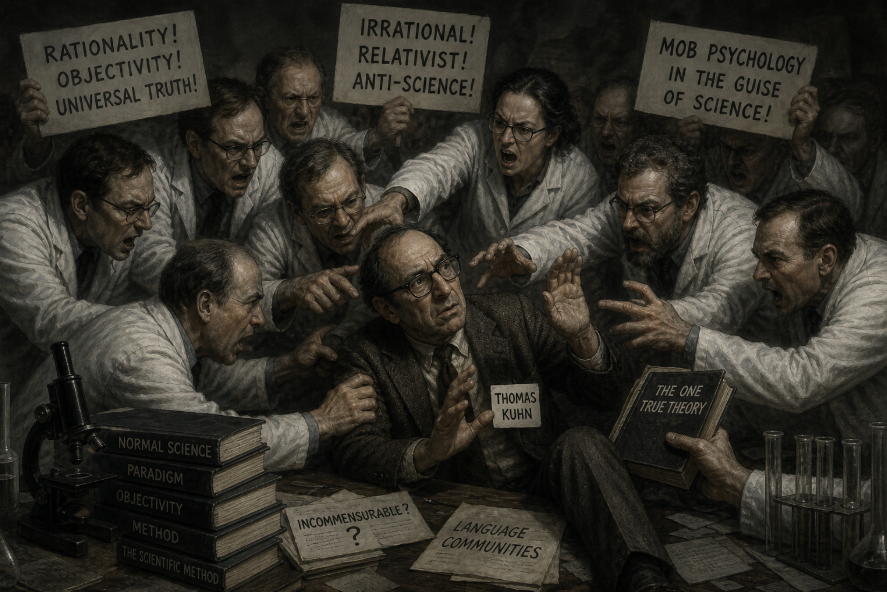
Did Thomas Kuhn Reject Mob Psychology in Science?


Many people know that the philosopher of science Thomas Kuhn was often accused of encouraging “mob psychology” in science. (This accusation dates back to the words of Imre Lakatos.) Kuhn was said to have rejected objectivity and rationality in science too. In this essay, it’s shown that the philosopher of science Ian Hacking defended Kuhn from these accusations. However, he might have been guilty of going too far in the opposite direction.

Kuhn on Incommensurability

According to the philosopher and historian of science Ian Hacking, Thomas Kuhn believed that “[y]ou don’t have two theories in mind and compare them point by point — they are too different for that”. So if they’re too different to compare, then what happens? Perhaps what happens is what has already happened. A scientist has already placed his bet on one of the rival theories. But why did he do so in the first place? Kuhn believed that he “gradually convert[ed], and that shows itself by moving into a new language community”. Then such a scientist “begin[s] to speak the language like a native”, yet no “choice has occurred”.

The way all the above is put makes it seem as if the process is almost purely sociological in nature. So it’s not that two theories are compared point by point. A scientist moves into a new language community, and only then does he choose a theory. And the theory he chooses is expressed in the language of the new community. Other rival theories are expressed in the languages of other communities. It may not even be the case that a scientist chooses the language community, let alone which scientific theory to adopt or endorse.

Again, this process seems entirely sociological (as well as psychological) in nature.

What begins as a sociological process becomes a historical process in retrospect. And that’s another lesson from Kuhn. Hacking put it bluntly:

“The discourse of the philosophy of science has been transformed since the time Kuhn wrote. No longer shall we, as Nietzsche put it, show our respect for science by dehistoricizing it.”

Hacking provides the example of Larry Lauden, who “draws his conclusion ‘from the existing historical evidence’”.

Note that the first quote states that “philosophy of science has been transformed since the time Kuhn wrote”. It doesn’t say that the philosophy of science was transformed by what Kuhn wrote… at least he wasn’t the only man in the team. According to Hacking, “When his book The Structure of Scientific Revolutions came out in 1962, similar themes were being expressed by a number of voices.” Indeed, in 1962 and just before, “a new discipline, the history of science, was forming itself”. Moreover, “[y]oung Kuhn, training as a physicist, was attracted to history just at the moment when many other people were looking that way”.

The point about scientific rationality is that it’s linked, or can be linked, to the subject of incommensurability. Hacker supplies some basic historical details about this term’s use:

“The new philosophical use of the word ‘incommensurable’ is the product of conversations between Paul Feryerabend and Thomas Kuhn on Berkeley’s Telegraph Avenue around 1960.”

So what does the word “incommensurable” mean?

“It has an exact sense in Greek mathematics. It means ‘no common measure’. [ ] Not all lengths are commensurable.”

More relevantly:

“Philosophers have nothing so precise in mind when they use the metaphor of incommensurability. They are thinking of comparing scientific theories, but of course there could be no *exact* measure for that purpose.”

The word “incommensurable” certainly sounds forceful. Moreover, that word has led to many philosophical and political consequences. Yet, in Greek mathematics the term was precise. Not so in philosophy. Hacking says the word is a “metaphor”. Yes, it’s a metaphor that’s done a hell of a lot of good or bad work.

When used to describe scientific theories, Hacking concedes that “there could be no exact measure for that purpose”. From how Hacking phrases it both here and elsewhere, this isn’t a monumental fact about scientific theories. Instead, it’s rather mundane. Think about it, both in the abstract and in concreto, what form would such a measure take? Even if there were such a measure, would it apply to all aspects of all theories when measured one-to-one or one-to-many?

Precisely because the philosophical word “incommensurable” is both a metaphor and imprecise, it’s no surprise that the (possible) anecdote that Kuhn used the word in 21 different ways (in his well-known book) did the rounds so often. (See here.)

So we can respect science and scientists and still place them within their historical contexts.

Was Kuhn Against Scientific Rationality?

Many commentators took Kuhn to have questioned scientific rationality. Some commentators even believed that was his main aim. Perhaps relevantly, they questioned why he used the strong word “revolution” (as in “scientific revolution”).

According to Hacking, Kuhn was “taken aback by the way in which his work (and that of others) produced a crisis of rationality”. Of course, even if Kuhn was taken aback, that doesn’t mean that his work didn’t produce a crisis of rationality. Perhaps he simply didn’t think through the consequences of his own theories, and how they may be interpreted.

The following description of what Kuhn believed is an attempt to show that he didn’t reject rationality:

“He subsequently wrote that he never intended to deny the customary virtues of scientific theories. Theories should be accurate, that is, by and large fit existing data. They should be both internally consistent and consistent with other accepted theories. They should be broad in scope and rich in consequences. They should be simple in structure, organising facts in an intelligible way. They should be fruitful, disclosing new events, new techniques, new relationships.”

That paragraph almost reads like something you’d come across in an introductory book on the philosophy of science. In fact, at first sight, the words “consistent with other accepted theories” seem to go against Kuhn’s known views.

All the above now needs to be placed in the context that Kuhn believed that “his five values and others of the same sort are never sufficient to be decisive among competing theories” too. So what, in addition to Kuhn’s five values, would make a theory win out?

The biologist and parapsychology researcher Rupert Sheldrake, who mentions and quotes Kuhn a few times, makes much of the fact that “scientists are people”. Yet science itself isn’t a person. Perhaps we can see science as being made up of people. However, even if we take science as a combination of people, that collective is still not a single person.

Hacking also says that “scientific societies are societies”. One would assume, then, that if sociology is the study of society, then it must study scientific societies too. Does that mean it should study science itself? Does that question tie into the earlier one about science being made up of people?

Conclusion

Kuhn is known for using the case of Aristotle to get his point across. According to Hacker’s Kuhn, the latter tells us that

“Aristotle’s physics relies on ideas of motion that are dissociated from ours, and one can understand him only by recognising the network of his words”.

This passage isn’t that clear, especially the use of the words “dissociated from ours”. However, the words “the network of his words” can be tied to the earlier use of “language community”. In basic terms, Aristotle belonged to his own language community, not ours. Kuhn had much more to say about stepping into Aristotle’s world in order to understand him. (Historians often say something very similar about historical characters, ideas and events.) Thus, Hacker concluded:

“Kuhn is one of many historians to teach the need to rethink the words of our predecessors in their own way, not ours.”

Writing in 2026, it seems remarkable that any philosopher, scientist or political activist could ever have thought otherwise. That said, present-day presentism has never been so rife. Of course, rethinking Aristotle or anyone else doesn’t mean that we should accept his own way. Indeed, we should neither accept nor reject it (at least not judgementally or even morally). Instead, we can, or should, learn from it. Kuhn himself learned that the words and theories of scientists are historically and contextually bound. Yet even if that is acknowledged, some philosophers of science believe that the matters of truth and correctness are still relevant, and even important. As earlier, just as science being carried out by flesh-and-blood scientists doesn’t make science itself suspect, so the words and theories of scientists being historically, sociologically and contextually bound doesn’t automatically make such words and theories suspect or false. It is up to philosophers of science, scientists (less so) and others to sort the wheat from the chaff.

Friday, 3 July 2026

How Rupert Sheldrake Uses Kuhn and Latour to Attack Scientists


Much has been made of the fact that many critics have used the work of the American historian and philosopher Thomas Kuhn to attack both science and scientists. The English biologist, parapsychology researcher and writer Rupert Sheldrake fits this pattern perfectly. He brings on board the French philosopher and sociologist Bruno Latour too. This is odd really because they are coming at this issue from very different angles to Sheldrake’s own. Still, there’s nothing to stop Sheldrake — and others — using the work of Kuhn to attack science and scientists. Indeed, even some philosophers, scientists, etc. who weren’t critical of Kuhn picked up on the fact that many of the critics of science and scientists (some religious people, postmodernists, post-structuralists, political activists, etc.) would use his work. And they did!

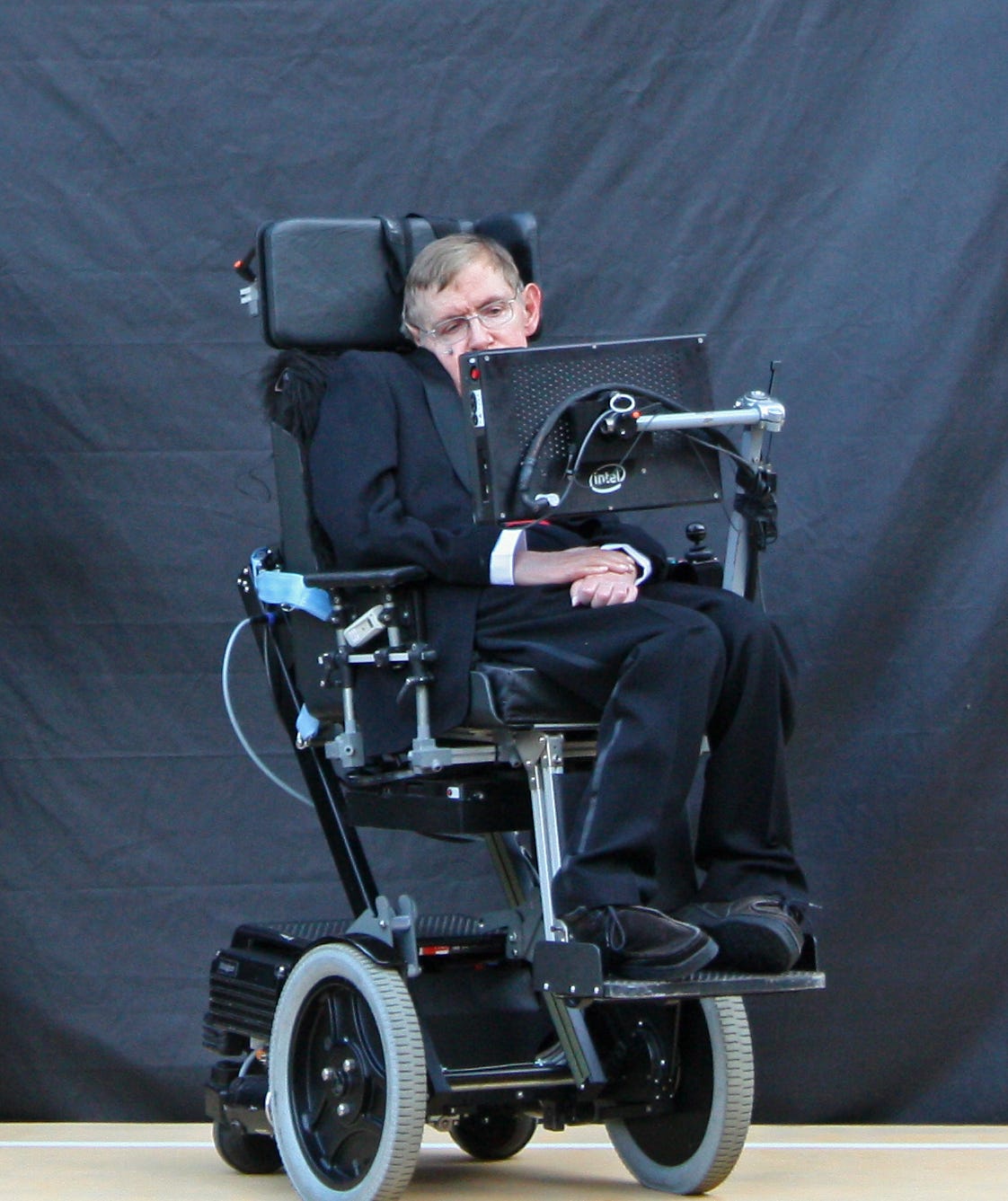
Photo of Stephen Hawking from Wiki Commons. Source here.
“Science became a view from nowhere. The minds of scientists were somehow disembodied. This is why Stephen Hawking is such an iconic figure in the popular imagination. Through the misfortune of his illness, he is as close to a disembodied mind as a human can be.”

— Rupert Sheldrake (from The Science Delusion)


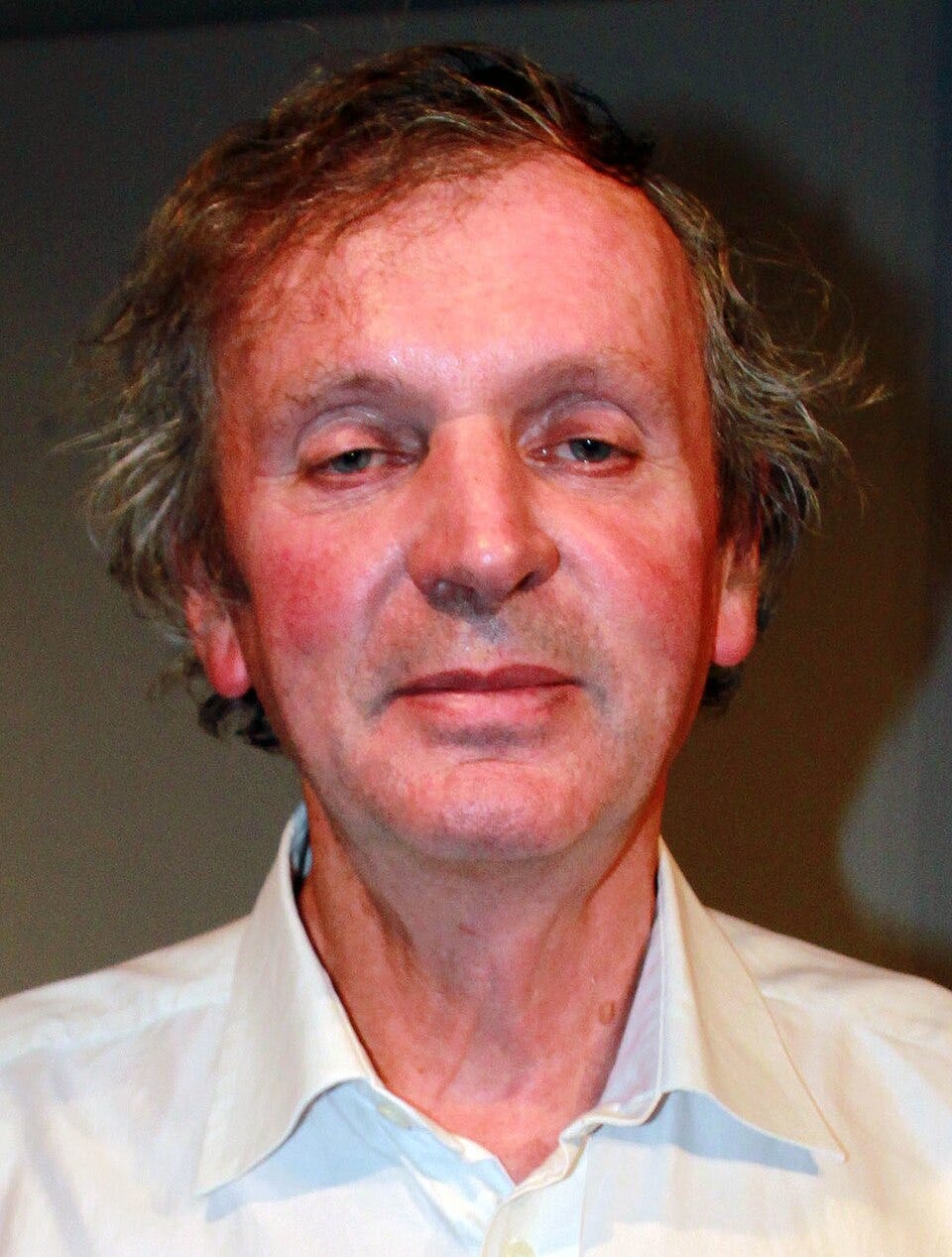
Photo of Rupert Sheldrake from Wiki Commons. Source here.

Sheldrake on Science and Scientists

Many philosophers and others would say that a strong distinction can and should be made between science and scientists. Sheldrake doesn’t accept this distinction at all. Neither do the sociologists, postmodernists, etc. he relies upon. Take this passage:

“Sciences are human activities. The assumption that the sciences are uniquely objective not only distorts the public perception of scientists, but affects scientists’ perception of themselves. The illusion of objectivity makes scientists prone to deception and self-deception. It works against the noble ideal of seeking truth.”

It can be supposed that the words “the sciences” aren’t identical to “science”. Still, Sheldrake is talking about science. Basically, this is his argument:

i) Scientists are human persons.
ii) The sciences are human activities.
iii) Therefore, scientists are not objective.

Sheldrake then warns his readers about the “illusion of objectivity”. Yet how does it follow that because scientists are human persons, that science is not objective? Of course, it may depend on what Sheldrake meant by the word “objective”. However, is there an alternative to science being carried out by human persons? Should science be carried out by AI or by Sheldrakian mystics instead?

In any case, Sheldrake is keen to tell his readers that he believes that “seeking truth” is a “noble ideal”. It’s just that some, many, most or all mainstream scientists are not seekers of truth. Sheldrake, on the other hand, is a seeker of truth.

Despite Sheldrake’s many negative generalisations about scientists, he does state the following:

“Among the many scientists I have known, some are ruthlessly ambitious, others kind and generous; some boringly pedantic, others excitingly speculative; some narrow-minded, others visionary. [ ] They vary, just as other kinds of people vary.”

Now that seems to go against everything else Sheldrake writes about scientists. (For example: “Scientists constitute a priesthood superior to the priesthoods of religions, which maintain their prestige and power by playing on human ignorance and fear.”) He’d probably argue that I’ve missed the sophistication of his position. Yet, apart from this passage, that’s not at all clear. Indeed, if Sheldrake admits that some — even only some — scientists are “excitingly speculative”, “visionary”, “brave”, “honest”, “original”, etc., then his general position collapses. Unless, that is, all these noble scientists are out of the mainstream of science. In other words, unless they’re all scientists just like Sheldrake himself.

The whole point of the passage above is to tell readers that “scientists are indeed like other people”. So, again, if some scientists are excitingly speculative, visionary, brave, honest, original, etc., then do these scientists maintain their prestige and power by playing on human ignorance and fear too?

Sheldrake on the Scientific Priesthood

Even though there’s an element of truth in what Sheldrake says about scientists, what he does say is still monumentally rhetorical and over the top. Take this paragraph for starters:

“Scientists constitute a priesthood superior to the priesthoods of religions, which maintain their prestige and power by playing on human ignorance and fear.”

This is so hyperbolic it’s difficult to know where to start.

When Sheldrake says that “[s]cientists constitute a priesthood superior to the priesthoods of religions”, this hints at the possibility (or likelihood) that he isn’t against priesthoods per se: he’s against the scientific priesthood. In fact, in the very same book from which this passage is taken (i.e., The Science Delusion), he says very positive things about religious priesthoods of both the past and today.

Is there a scientific priesthood?

If there is, then it’s only a metaphorical one. In history and in many cultures, priesthoods had literal power over many aspects of life, and the publics were well aware of this. In contrast, Sheldrake says that “human ignorance” means that most publics today aren’t aware of the scientific priesthood.

Is there really much human ignorance of the scientific priesthood?

Some laypeople may be ignorant of scientists and scientific institutions. Other laypeople aren’t. In fact, many scientists and scientific institutions face much scrutiny from laypeople, far much so than historical religious priesthoods. Of course, laypeople don’t know as much about scientists, scientific institutions and science than scientists. But how could it ever be otherwise? Indeed, if ever Sheldrake’s central hypothesis of morphic resonance ever became mainstream, and enforced by a new priesthood, then laypeople would be equally ignorant of that too.

Sheldrake on Scientific Objectivity

Image of Thomas Kuhn from Wiki Commons. Source here.

Here’s another passage against scientists from the very same paragraph:

“For those who idealise science, scientists are the epitome of objectivity, rising above the sectarian divisions and illusions that afflict the rest of humanity. Scientific minds are freed from the normal limitations of bodies, emotions and social obligations, and can travel beyond the earth-bound realm of the senses to see all nature as if from outside, stripped of subjective qualities.”

It’s clear that Sheldrake has drank the cool aid of Thomas Kuhn, Bruno Latour, postmodernists, sociologists, etc. (Kuhn wrote a paper on scientific objectivity called ‘Objectivity, Value Judgment, and Theory Choice’.) Such people have been at pains to tell their own readers that “scientists are people” too.

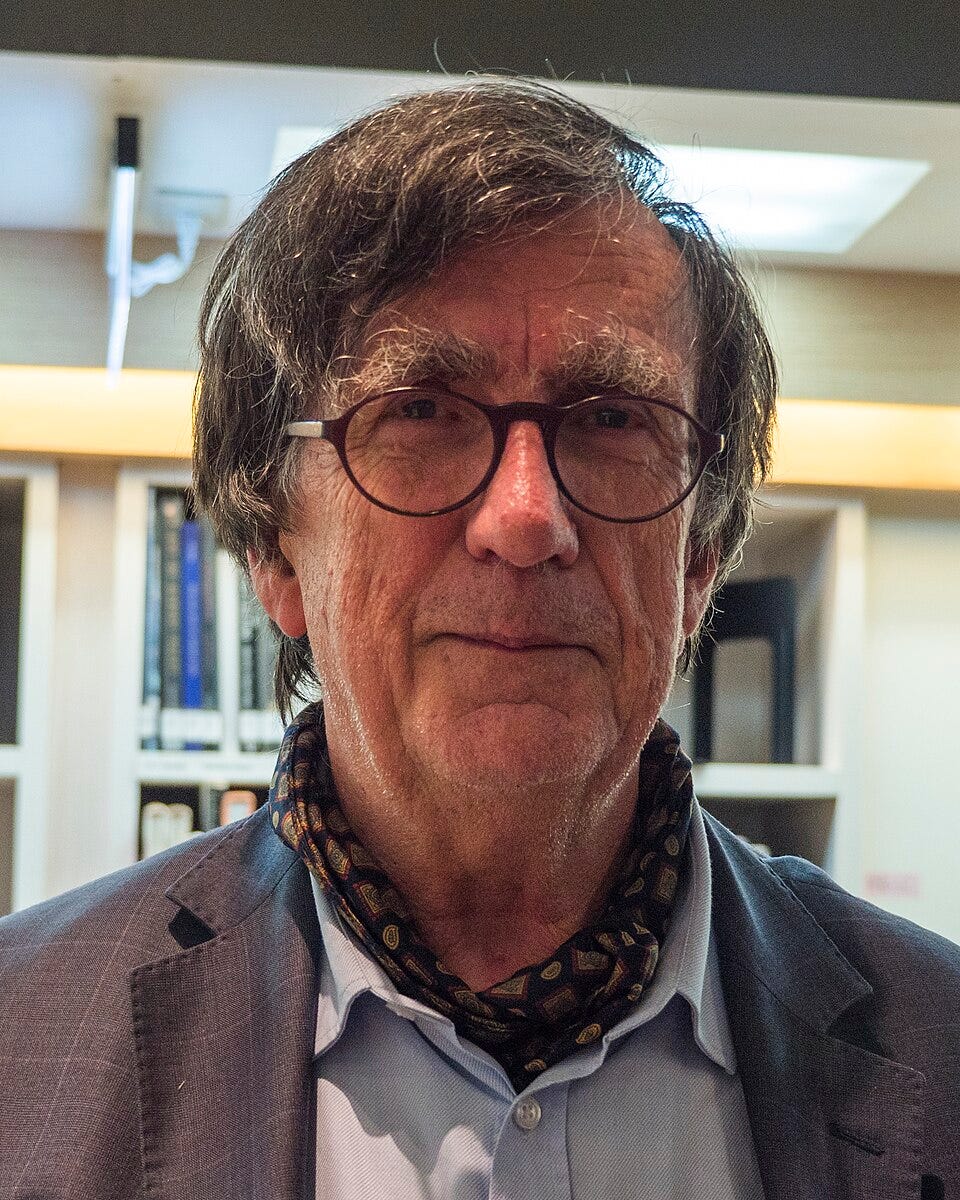
Photo of Bruno Latour from Wiki Commons. Source here.

There are some interesting parts of the passage above that need commenting upon. Take the clause that scientists “can travel beyond the earth-bound realm of the senses to see all nature as if from the outside, stripped of subjective qualities”. Sheldrake explicitly connects this position to Plato. Yet even this take isn’t original to him. It’s a picture which he directly takes from Latour. For example, Sheldrake quotes Latour:

“‘Although the world of truth differs absolutely, not relatively, from the social world, the Scientist can go back and forth from one world to the other no matter what… In the original myth [i.e., Plato’s Cave], as we know, the Philosopher managed only with the greatest difficulty to break the chains that attached him to the shadowy world…’”

What about the clause “[s]cientific minds are freed from the normal limitations of bodies, emotions and social obligations”? This picture is taken from Descartes. And here too Sheldrake has borrowed from others. Descartes has been a favourite bogeyman of many postmodernists, post-structuralists, sociologists, political activists, etc. Sheldrake himself (elsewhere) tells us why that’s so.

Many scientists have not believed that they should be free of social obligations, and have openly expressed that view. What’s more, many political activists have demanded that they shouldn’t be free of social and political obligations. Indeed, a small number of scientists, and numerous academics and activists, have said that scientists should always be aware of the political implications of their work and their social status… Unless, that is, Sheldrake is fixated on scientists as they existed in Descartes’ time and, say, up to the 19th century. Yet even then, he would be guilty of generalising. That said, Sheldrake is talking about the scientists of today.

Sheldrake gives a concrete example of his idea that scientists supposedly see themselves as (Cartesian) disembodied minds: Stephen Hawking. He says that “[s]cience became a view from nowhere”, and that “the minds of scientists were somehow disembodied”. Then comes the conclusion:

“Through the misfortune of [Stephen Hawking’s] illness, he is a close to a disembodied mind as a human can be.”

The philosopher Thomas Nagel did say that science does attempt to capture “the view from nowhere”. But he said that positively, unlike Sheldrake. For example:

“If there is a way things really are, which explains their diverse appearances to differently constituted and situated observers, then it is most accurately apprehended by methods not specific to particular types of observers. That is why scientific measurement interposes between us and the world instruments whose interactions with the world are of a kind that could be detected by a creature not sharing the human senses.”

It’s very possible that Sheldrake won’t be impressed with this passage from Nagel. (Sheldrake does quote Nagel, as with Kuhn and Latour, positively elsewhere.) After all, scientific measurements are carried out, and instruments are used, by scientists who are human persons.

That said, Nagel did say that science fails, or at least it’s problematic, when it comes to the nature of subjectivity. Sheldrake, on the other hand, believes that science fails in multiple respects. Thus, a Sheldrakian revolution, not unlike a Kuhnian revolution, needs to occur in science in order to rectify such failings.