Monday, 6 December 2021

Wolfgang Pauli’s *Philosophical* Position on Quantum Mechanics and Angels


The Swiss-American theoretical physicist Wolfgang Pauli (1900–1958) once stated (in a 1954 letter to Max Born) the following often-quoted words:

[O]ne should no more rack one’s brain about the problem of whether something one cannot know anything about exists all the same, than about the ancient question of how many angels are able to sit on the point of a needle. But it seems to me that Einstein’s questions are ultimately always of this kind.”

Despite the bluntness and irony of that passage, it can still be argued that Pauli had a philosophical position on the reality that some scientists, philosophers and laypeople believe (as it were) hides behind our observations, experiments, tests, etc. So Pauli’s position can itself be interpreted as a philosophical position. In other words, Pauli wasn’t just offering a philistine scream of “shut up and calculate!”. (This is somewhat parallel to, for example, eliminative materialists and ontic structural realists whom are often deemed to offer “anti-philosophical” and “scientistic” positions while at the very same time being philosophers themselves.)

More specifically, Pauli rejected the opposition between reality itself (or “ultimate reality”) and what we can can know about reality (as did Niels Bohr). In other words, knowing “how Nature is” amounts to no more than a metaphysician’s dream. All we actually have is “what we can say about Nature”. And, at the quantum-mechanical level, what we can say is what we can say with the mathematics — in conjunction with experiments, tests, predictions, observations, etc. Consequently, just about everything else is analogical and/or imagistic in nature. Indeed the analogical/imagistic stuff can — and often does — mislead us.

Of course it can be asked whether or not Pauli was really talking about something that “one cannot know anything about” — or just being very impatient. (It must be noted that Pauli wrote these words in 1954 — long after the “quantum revolution” of the 1920s and 1930s.) Similarly, how did Pauli himself know that we could never know these things? After all, this is very unlike some of the perennially unsolvable problems in metaphysics. Here, instead, Pauli was discussing the very real (or concrete) experiments, data and observations which physicists (as it were) held in their hands and not the things which hide (as it were) underneath. And that distinction doesn’t even arise when it comes to most purely metaphysical disputes. This means that Pauli wasn’t turning his nose up at ancient philosophical problems as, say, Martin Heidegger and Ludwig Wittgenstein did. No, Pauli had a problem with something that was very new (i.e., well before the opening quote) — the interpretations of quantum mechanics. (The theoretical physicist Paul Dirac took a similar — though less sarcastic — stance on this when he stated the following: “The interpretation of quantum mechanics has been dealt with by many authors, and I do not want to discuss it here. I want to deal with more fundamental things.”)

So why was Wolfgang Pauli so quick off the mark with his remarks?

That said, perhaps Pauli wasn’t so quick off the mark at all.

Perhaps Pauli realised that the quantum-mechanical equivalents of angels sitting on the point of a needle would be forever beyond the grasp of physicists — by definition! After all, such arguments exist even when it comes to the macro (or “classical”) world. So they’re even more likely to be on the right track when it comes to quantum-mechanical phenomena.

So Pauli might have had incredible foresight on these matters.

Take the physicist David Finkelstein’s words on the problems with the many different interpretations of quantum mechanics.

He firstly tells us that “[q]uantum theory was split up into dialects” and that this was the case because “[d]ifferent people describe the same experiences in remarkably different languages”. Consequently, that widespread pluralism may seem fine and healthy … except for the fact that all “[t]his is confusing even to physicists”.

It was said earlier that Wolfgang Pauli’s position is philosophical precisely because if some x (or the supposed “reality”) is by definition always closed off to us (as well as the fact that we can never measure x or measurements always “disturb” x), then to question both the acceptance and importance of this hidden reality is a philosophical position. Sure, it can also be seen as a pragmatic position. Yet that too is still a philosophical position.

It’s of course the case that Pauli himself might well have believed that his position wasn’t at all philosophical. Or, at the least, he probably didn’t believe that it was a philosophical position which he could back up with lots of — philosophical! — arguments, conceptual analyses, etc.

But that doesn’t matter.

Other people can and did fill in the philosophical details which Pauli himself — qua physicist, not philosopher! — never got around to filling in.

So now take the words of physicist N. David Mermin (1935-) on this subject.

He tells us that quantum theory

“is so beautiful and so powerful that it can, in itself, acquire the persuasive character of a complete explanation”.

Is that a philosophical position? Well, both yes and no. Perhaps it doesn’t even matter what the answer to that question is — especially if we buy into the “shut up and calculate” mantra in the first place!

In any case, an anti-philosopher (or someone against the interpretation of QM) could argue that we have no need, right or philosophical justification to interpret the mathematical formalism/s, observations, data, experimental results, tests, etc. Of course it can be asked if it’s ever possible — even in principle — to completely bypass all interpretation in quantum mechanics. Probably not. So, in that case, we’d need to be specific as to what the interpretation is and what precisely it is that’s being interpreted. Indeed can we even say what it is (beyond the mathematics, etc.) without relying on at least a degree of interpretation?

Conclusion

All the above means that one can take a positive and pragmatic (or instrumentalist) position on all the many and various interpretations of quantum mechanics. Alternatively, one can take a pessimistic position on them.

The theoretical physicist Steven Weinberg (1933–1921) took the latter option. He wrote:

“My own conclusion is that today there is no interpretation of quantum mechanics that does not have serious flaws. This view is not universally shared. Indeed, many physicists are satisfied with their own interpretation of quantum mechanics. But different physicists are satisfied with different interpretations. In my view, we ought to take seriously the possibility of finding some more satisfactory other theory, to which quantum mechanics is only a good approximation.”

Now is Weinberg’s position philosophical in nature (just as with Wolfgang Pauli earlier)? Is Weinberg saying that it’s not all about observations, predictions, experiments, tests, etc. — it’s also about (Einstein’s) what is? In other words, is it a realist position on the interpretation of quantum mechanics?

Finally, one can even take a philosophical position against all interpretations of quantum mechanics. And, of course, all the interpretations of quantum mechanics are at least partly — often mainly — philosophical in nature. That’s right — even an outright rejection of all the interpretations of quantum mechanics will (or may ) still be a philosophical position. That’s especially the case if the person rejecting the interpretations of quantum mechanics believes that there’s something fundamentally suspect about the very idea of interpretation in the first place— at least as it’s usually found in quantum mechanics.

[I can be found on Twitter here.]

Sunday, 5 December 2021

Einstein’s Special Relativity is “Relativist” — Just Not Morally, Politically or Philosophically So


(i) Introduction
(ii) Against Relativism
(iii) Operationalism
(iv) Is Special Relativity at Least Partly Relativist?

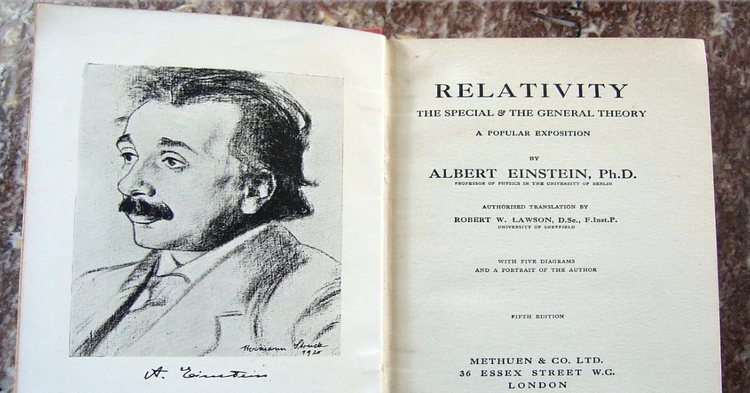
To begin with, it can easily be doubted that any flesh-and-blood relativist has ever actually claimed that Albert Einstein’s Special Relativity (SR) is itself an example of philosophical, moral or political relativism. Instead, the best that’s been argued is that some of the positions advanced in that theory (if amended somewhat) are applicable across the board.

Moreover, the word “relativity” is more likely to be used than “relativism” (or “relativist”) by postmodernists, post-structuralists, constructionists, etc. For example, the works of Jean Baudrillard and his commentators are liberally peppered with the word “relativity” (see here.)

Added to that is the fact that hardly any theorist, philosopher or political activist has ever classed himself as a “relativist”. (Perhaps, in these contexts at least, self-descriptions don’t really matter that much.)

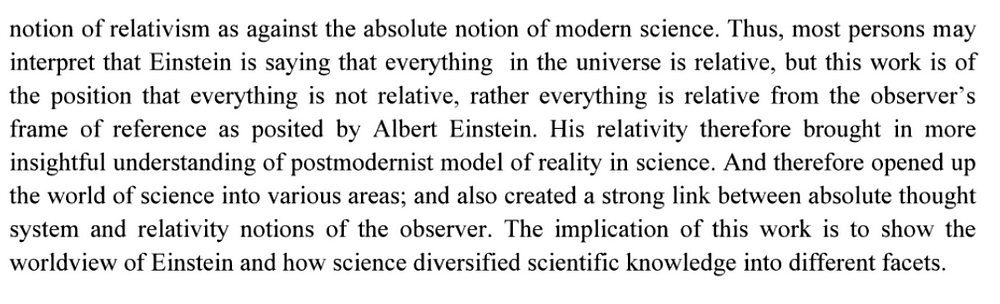
In any case, the following passage displays some of the problems which will be tackled in this essay:

Firstly, in the passage above there’s an explicit rejection of the “relativist” interpretation of Einsteinian Relativity when the author says that

“most persons may interpret that Einstein is saying that everything in the universe is relative, but his work is of the position that everything is not relative, rather everything is relative from the observer’s frames of reference”.

Yet isn’t that precisely what the relativist argues — that “everything is relative from” the subject’s point of view? In other words, does using the words “observer’s frame of reference” (rather than “subject’s point of view”) really make that much of a difference — at least outside the precise context of Einstein’s own physics?

The writer then goes on to conclude:

[T]herefore [Einsteinian Relativity] brought in more insightful understanding of postmodernist model of reality in science.”

Of course it’s true that there’s no explicit mention of moral or political relativism here — but he does tie Einsteinian Relativity to postmodernism. And the fact remains that no postmodernist philosopher (or theorist) I know has been at all concerned with “frames of reference” as exclusively found in physics. In other words, it’s clear here that such postmodernists, etc. were hoping to apply Einstein's findings to domains far outside physics. (Jean Baudrillard — as mentioned in parenthesis earlier - is a good example of this.)

Against Relativism

The American journalist and author Walter Isaacson (1952-) sums up the (as it were) non-relativist reality of Einstein’s Relativity in the following words:

“In both his science and his moral philosophy, Einstein was driven by a quest for certainty and deterministic laws. If his theory of relativity produced ripples that unsettled the realms of morality and culture, this was not caused by what Einstein believed but by how he was popularly interpreted.”

In addition to the above, the British historian Paul Johnson (1928-) made similar points in the following passage:

“At the beginning of the 1920s the belief began to circulate, for the first time at a popular level, that there were no longer any absolutes: of time and space, of good and evil, of knowledge, above all of value. Mistakenly but perhaps inevitably, relativity became confused with relativism.”

Indeed, Einstein’s best-known quote - “God does not play dice” — is hardly a claim of any kind of political, moral or philosophical relativist. Moreover, Einstein was a vocal and long-standing scientific realist. (Special Relativity, of course, predates the “quantum revolution” of the 1920s and wasn’t usually directly tied in with it — at least not in the early days.)

Yet Einstein-the-realist can still easily be squared with Special Relativity.

So it’s hugely ironic that poststructuralists, postmodernists, constructionists, etc. have used Albert Einstein’s Special Relativity as a means to bolster their own philosophical, epistemic or political theories of relativism. (That’s even though they’ve rarely used the actual word “relativism” about their own positions.) Indeed, using (or misusing) SR for relativism began well before any post-1960s postmodernists, etc. got hold of it. Einstein himself, for example, was disturbed by the fact that his SR was said to gave rise to some kinds of modern art and to moral relativism (see here). In this case, however, unlike postmodernists, etc. using SR for relativism, Einstein’s SR was thought to have actually given rise to various culturally, politically and philosophically relativist positions. That is, it was Einstein’s SR itself that was blamed (or sometimes praised) for such things.

Indeed, there was even more grist to the relativists’ mill when Einstein took a stand on absolutes. Einstein did so in the following passage:

“The ‘Principle of Relativity’ in its widest sense is contained in the statement: The totality of physical phenomena is of such a character that it gives no basis for the introduction of the concept of ‘absolute motion’; or, shorter but less precise: There is no ‘absolute motion.’ [].”

… Well, as you can see, Einstein didn’t actually take a position on absolutes (as an abstraction) at all . He took a position on “absolute motion”… absolute time, absolute space, etc — as indeed did Gottfried Leibniz (1646–1716) long before him (see here).

Yet, despite all that, one main point of the Special Relativity was to demonstrate that

“the laws of physics work the same for everyone, regardless of how they’re moving through space”.

So Einstein did indeed stress various and many relativities (the precise kinds will be discussed in a moment) in order to demonstrate universality and constancy. This means that what was deemed to be relative by Einstein was mainly a means to that end.

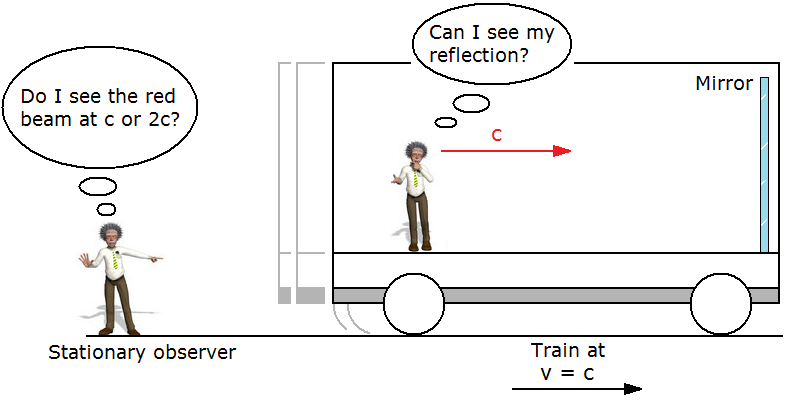
More specifically, with SR we have various relativities alongside the universal constant that is the speed of light (c). In other words, the speed of light doesn’t change relative to the motion of the object which is emitting the light (or light itself) or the person who’s observing that light. So c is constant even though everything else can and does change.

So even though time, position and motion are relative , the laws of physics are the same in all cases. And, as we’ve just seen, so is the speed of light. Another ways of putting this is to say that even though there are many genuine relativities (as well as constant change), none of these things change the universal and constant nature of the laws of physics themselves — at least not in Einstein’s view.

That said, and taking on board all the above, the closest one could come to justifying any connection between Einstein and relativism was his brief embrace of what was once called operationalism.

Operationalism

The odd thing about Einstein’s (early) operationalism is that in many ways Einstein has always been seen as the supreme example of a theoretical physicist and exponent of many thoughts experiments. (See Einstein’s thought experiments here.) So perhaps this reference to operationalism is all down to two different stages in Einstein’s career. Alternatively, perhaps it’s simply about different ways of tackling the same problems in physics — at any stage in anyone’s career.

Primarily, then, an “operationalist” stance on physics stresses the role of the subject (or observer) and his/her “operations” (e.g., experiments, tests, observations, etc.). And, indeed, operationalism could be seen in the Copenhagenist stress on experiments, predictions and observations in the 1920s and 1930s — i.e., rather than on “reality” (or “metaphysical reality”). This stress on experience can be traced back to the empiricists of the 18th century — if not well before that.

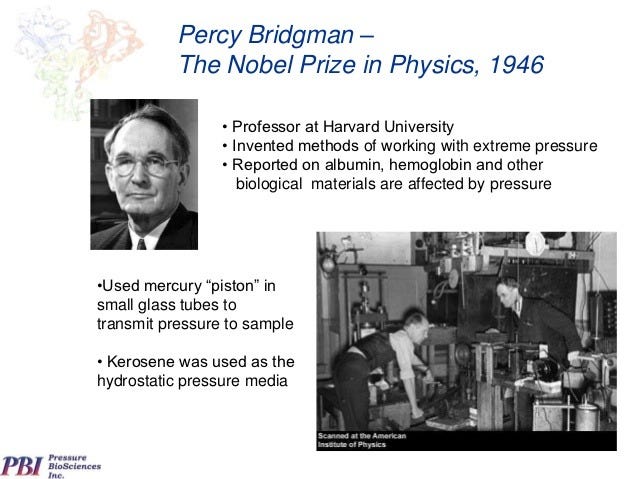
Yet many commentators have also stressed Einstein’s own problems with operationalism. Indeed, the main early exponent of operationalism, Percy Williams Bridgman (1882–1961), once stated the following words:

“Einstein did not carry over into his general relativity theory the lessons and insights he himself has taught us in his special theory.”

In addition to that, other commentators have said that Einstein’s “operationalist remarks” weren’t an attempt to advance a specific philosophical position on physics. And, as already hinted at, Einstein did indeed move away from operationalism after his General Relativity of 1915.

So Bridgman (primarily in his book The Logic of Modern Physics of 1927) was retrospectively providing a detailed philosophical account of all those mentions of “clocks”, “measuring rods”, “rigid bodies” and frames of reference in Einstein’s published words — see here. (Note that Bridgman’s book was written some 12 years after Einstein’s General Relativity and some 23 years after Special Relativity.)

Despite that and according to Bridgman, Einstein’s (early) work did nonetheless stress the need to link all scientific concepts to experimental procedures. (This was certainly something the Copenhagenists also stressed in the 1920s and 1930s.)

In more philosophical and fundamental terms, operationalism — just like the Copenhagen interpretation of quantum mechanics — had nothing to say about “objectivity” or the “objective world”. Indeed, this operationalist position can be directly tied to Einstein’s SR in that, say, length and mass weren’t seen as being absolute properties. Specifically, in Einstein’s SR, length is entirely dependent on the ruler used to measure an object, specific reference frames and what number is then given to that measurement. Mass too was — and still is — deemed relative to velocity, etc.

What’s more, an operationalist stance — despite Bridgman’s earlier words — can also be detected in Einstein’s General Relativity. (Perhaps it would be more accurate to say that an operationalist interpretation of General Relativity can be given.) After all, Einstein’s well-known distinction between inertial mass and (universal) gravitational mass is made in terms of “operational definitions”. (Einstein himself never used these two words.) That is, inertial mass is first noted when an operation is carried out. And that operation is the application of a force to a given mass (or object) and then observing its acceleration. (All this is in accord with Newton’s Second Law of Motion.) Similarly, gravitational mass is first noted when an operation is carried out. Yet this time the operation is putting the same object (or perhaps a different one) on a scale to insure a balance which disregards force and acceleration.

So here we have two different operations on a given mass (or given object) which produced the same result. And thus we had Einstein’s Principle of Equivalence.

Having stated all the above, this essay will now advance the position that the denial of literally any connection whatsoever between Special Relativity and (moral, philosophical or political) relativism is far too strong a stance to take.

Is Special Relativity at Least Partly Relativist?

According to Alan Sokal and Jean Bricmont, one person who was at least formerly seen (by some commentators) as a postmodernist or poststructuralist, Bruno Latour (1947-), did make a correct distinction between Einsteinian Relativity and relativism. Thus:

[] Latour draws an eminently sensible distinction between ‘relativism’ and ‘relativity’: in the former, points of view are subjective and irreconcilable; in the latter, space-time coordinates can be transformed unambiguously between reference frames.”

Yet there most certainly is an element of the “subjective” (or a stress on experience) in Special Relativity — but simply (as already stated) as a means to an end.

Philosophically, it can be argued that even if — or even though — “points of view are subjective”, then that doesn’t also mean that they’re (always) “irreconcilable”. Indeed, from that very subjectivity (or at least from the recognition of that subjectivity) one can work towards intersubjectivity. (This squares with Einstein’s own position in his SR.) To use Sokal and Bricmont’s own words, that intrinsic and given subjectivity can itself “be transformed unambiguously between reference frames”. Moreover, even the reference frames of physics are chosen from a subjective standpoint. That is, intersubjective reference frames firstly arise from the many previous subject-based choices of reference frames.

More fundamentally and as many philosophers — of many different persuasions (e.g., from empiricists to idealists) — have argued, the first port of call is always one’s own consciousness or experience. Thus, it’s where laypersons, theorists or scientists go from their subjectivity (or personal experiences) that matters — as Einstein himself (kinda) indirectly argued in his Special Relativity. In other words, Einstein explained how to unite different subjectivities (or experiences) together in order to advance various projects and theories within physics… not within morality, politics or philosophy.

[I can be found on Twitter here.]

Sunday, 28 November 2021

Quantum Particles are Neither Classical Particles Nor Weird Objects


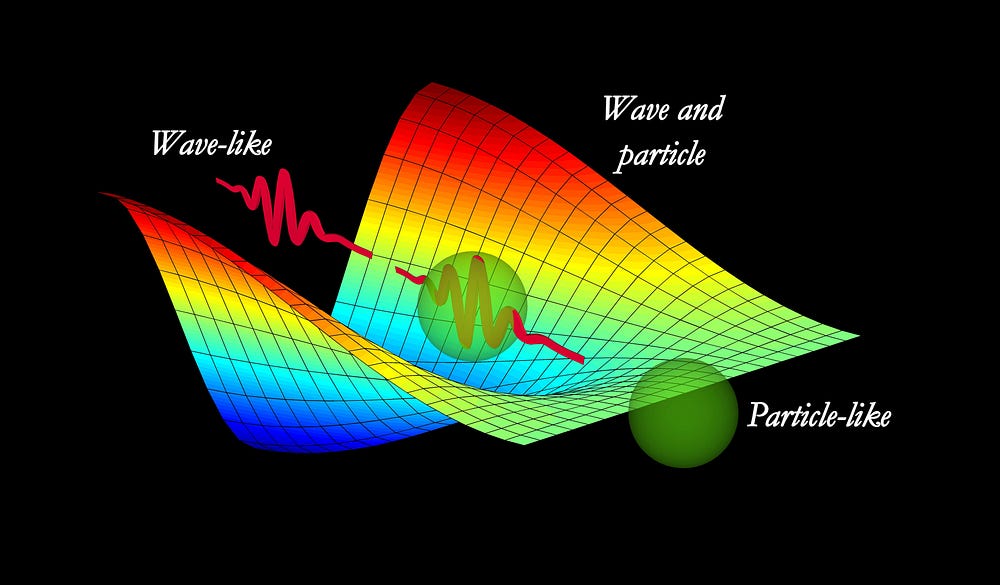
The primary problem is that of thinking of quantum particles as classical particles which nonetheless behave in very non-classical ways. (Alternatively, the problem is thinking of quantum particles as what Michael Brooks calls “objects” in the first place.) Many of the examples of quantum “weirdness” stem from that fact — at least those weird things which belong to the many and various interpretations of quantum mechanics. Yet whatever it is that quantum physicists deal with, it isn’t equivalent to classical objects or even equivalent — or similar — to particles of dust, sand or glass. (Here’s Carlo Rovelli playing down quantum weirdness.)

Quantum particles are staggeringly smaller than classical particles. Unbelievably so. And because of that, almost (to use Philip Ball’s words) “everything is different” (i.e., not simply weird) at the quantum scale. This means that using words like “object”, “particle”, etc. problematises things. And even the quantum-mechanical word “wave” is often misleading. That’s primarily because quantum waves are something presented purely by equations - they’re not, strictly speaking, descriptions of parts of reality. (Here’s Lee Smolin playing down quantum weirdness.)

More specifically, if particles are waves, then (wave) interference isn’t really that weird at all. And superposition isn’t that weird either. (That said, seeing a quantum x as a wave is also problematic — as stated a moment ago.)

Technically, a quantum x (i.e., something not as yet given a name) and a quantum y interfere with each other — just like waves on the sea. Thus when quantum x and quantum y interfere, they create a superposition. Of course a classical object can’t interfere with another classical object — at least not in the same quantum sense or way. And neither can a classical x and classical y be in a state of superposition.

Yet we’re not talking about classical objects — or even classical particles - here!

Thus why should it be weird that a quantum x doesn’t behave like a classical object or even a classical particle? In reverse, if a classical object were to behave like a quantum x, then that would be weird. But that doesn’t happen. So many people believe that quantum phenomena are weird mainly because they see them as classical phenomena which nonetheless behave in very non-classical ways. Yet, in actual fact, we only have quantum phenomena behaving in quantum ways — just as classical phenomena behave in classical ways.

And again Michael Brooks shows us the problem with the word “particle” when he uses the words “a single positive nuclear charge, or proton”. Here we surely have a statement of identity. Thus:

proton = (a single) positive nuclear charge

Thus a particle in this case is simply a positive charge. Now a positive (or negative) charge is hardly particle-like — at least when taken on its own. And even if there’s more to a proton (or another particle) than its positive charge (such as spin, mass, size, etc.), the word “particle” still seems inappropriate… yet also useful!

If we return to waves, one way (among many) to get the point across is to state that the de Broglie wavelength of a fullerene molecule (made up of 60 atoms!), which is a large quantum “object”, is around 10–¹² metres, or a thousand billionth of a metre! Now how on earth can that have anything to do with a wave on the sea or with any other kind of classical (or macro) wave?

The following discussion is as close as we can come to a classical particle in quantum mechanics.

When Waves Become Particles

As already hinted at, when two quantum waves interact with one another, they produce a superposition. That superposition is the sum of the waves at any given point. Moreover, that “sum” is more particle-like than the two waves as they were before they became a sum. (This is roughly in line with Max Born’s 1920s/30s position — see ‘Born rule’.) This particle-like something is the (as it were) massy result of the sum of two — or more — quantum waves. In other words, if you stick one trough and another trough together (or one peak and another peak together), then you get something particle-like or massy. Alternatively put, waves become more (as it were) solid when squashed, fused or mixed together…

Of course all these words and descriptions are largely analogical in nature!

In other words, the words “wave” and “particle” (along with “trough” and “peak”, never mind “squashed”, “fused” and “mixed”) are still being used here. And that primarily because I have no choice but to do so.

Indeed all these words belong to the interpretation of quantum mechanics. This means that simply using the bald variables x, y and so on isn’t really of much help when it comes to interpreting quantum mechanics. And it certainly won’t help any vaguely-interested layperson.

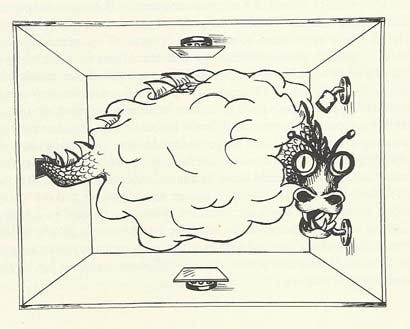
The Great Smoky Dragon’s Body

Despite the earlier passage from Michael Brooks, he states the following words elsewhere in the same book:

“The ultimate reality behind Schrödinger's wave equation was neither wave nor particle, Bohr felt, and so could not be described in any terms we can deal with.”

Of course Brooks merely putting Niels Bohr’s position doesn’t also mean that he agrees with it. Still, Bohr did pick up an a problem that needs addressing — even if one needn’t accept his overall position or interpretation. (Many did disagree with Bohr — notably such physicists as Albert Einstein and, later, David Bohm.)

John Wheeler

The American theoretical physicist John Archibald Wheeler (1911–2008) also picked up on these — or at least similar — problems. He used the image of a “great smoky dragon” to get his point across. That is, he stated that “we have no right to speak about what is present” in between experimental inputs and experimental outputs (or observations). Thus words like “particle” and “wave” are automatically suspect — at least when used about this experimental (as it were) in between (i.e., the supposed “reality” of the dragon’s body).

So there’s a distinction to be made here between describing a quantum x as a “particle” or “wave” before the output (i.e., what exists and happens before the actual experiment or observation) and describing that x in that way after there is an experimental or observational output. However, perhaps it’s still problematic to use these classical words even when an experiment (or observation) has been carried out — or when a quantum wave function has been “collapsed”.

Take Bohr’s position again. According to Brooks, Bohr believed that

“once a measurement is made, the type of measurement will determine what we see”.

What’s more,

[i]f you use an instrument that detects something’s position is space, for instance, you’ll see something that has a definite position in space — the entity that we call a particle”.

The point here is that the use of the word “particle” to refer to something (as it were) on the dragon’s body, and also to refer to something after “an instrument that detects something’s position is space”, are both suspect. So it’s not only that this (noumenal?) x isn’t a particle before detection or observation — it isn’t even a particle after detection (or observation) either.

To sum up: the classical word “particle” is problematic in all quantum cases.

Note:

If it’s problematic to see quantum particles as particles (or objects), then that’s even partially true of atoms too.

Perhaps a single atom can’t be seen as a single “object” at all. After all, if the nucleus of, say, a helium atom is seen as being the size of a lemon, then the edge of that atom (which is defined by the outer orbit of its electrons) would be 2.5 miles in diameter. Proportionately, then, the nucleus is staggeringly disproportionate to the seize of the entire atom. And each electron within the atom is unbelievably smaller than the atom to which it belongs. (It’s equivalent to a pencil dot within a 2.5 mile diameter.)

Of course most/all (classical) entities are also constituted by separate elements — so this isn’t in itself problematic.

[I can be found on Twitter here.]

Thursday, 25 November 2021

Does Your Occurrent Thought About X Have a Spatial Location?


(i) Introduction
(ii) Location, Spatiality and Brain States
(iii) Can a Conscious State be Non-Spatial?
(iv) The First-Person (or Private) View on Conscious States
(v) Paul Churchland on Introspection and Neural States

The word “thought” is used in the following essay. That’s even though it isn’t a discussion of the semantic content of particular thoughts. It’s not about what thoughts are about either. (All that would bring up all sorts of other issues such as externalism, “the extended mind”, reference, sense, “you are not your brain”, etc.) Instead, this is a discussion of any occurrent thought. That is, it’s simply about the mental process of thinking a thought and how that thought (or thinking process) is embodied (if it is embodied) in — or identical to (if it is identical to) — a brain state.

To repeat. All this means that we can discuss an occurrent thought without being committed to any particular semantic (rather than purely philosophical) theory or position.

That said, some of the claims in the following may seem a little extreme. Specifically the central claim about thoughts being located in the brain.

The eliminative materialist Paul Churchland — who’ll be featured in this piece — believes that the Identity Theory and in his own eliminative materialism may well come across as extreme. But that doesn’t matter much to him.

For example, Churchland ties his overall eliminativism to his revolutionary stance on the use of everyday words in science. He writes:

“The ‘abuse’ of accepted modes of speech is often an essential feature of real scientific progress!”

He then applies that to the case of mental states and their location by continuing:

“Perhaps we shall just have to get used to the idea that mental states have anatomical locations [].”

Churchland also frequently relishes citing the fact that many new claims in science have been deemed to be extreme or perverse only in time to be accepted by most people. (Of course that’s not also to say that all extreme or perverse claims will in time be accepted by most people.)

Location, Spatiality and Brain States

When you move across a room, your occurrent thought about, say, the price of bread (as it were) follows you. That is, if you begin thinking about the price of bread at one end of a room and move to the other end, then you’ll still be thinking the same thought (or set of thoughts) in another spatial location. And that’s because your brain has moved along with (as it were) you. (See “You are not your brain”.) Thus that thought must occur within the head.

In the past, thoughts were placed in the heart (see here) and, in later periods, just behind the eyes.

In any case, the fact that thoughts seem to be “inside” the head (or skull) must surely mean that they have a spatial nature. For something to be located in something spatial (a head or a brain), must hint that this something itself has a location and is therefore spatial.

Yet many philosophers and laypeople don’t believe that thoughts and other mental states have any spatial location whatsoever. (See ‘Consciousness and Space’ by Colin McGinn.) So why is that?

Much of what follows highlights the problems which come from simply assuming that conscious states are not brain states. And, if that’s assumed, then all sorts of things will follow (as we shall see).

That said, this piece is going to deal specifically with the spatial location of mental states.

So here’s the British-American philosopher Peter Carruthers (1952-) offering an argument (though not one he accepts) against the Identity Theory. He writes:

(1) All brain-states must occupy some particular position in space.
(2) It is nonsense (meaningless) to attribute any particular spatial position to a state of consciousness.
(C) So (by Leibniz’s Law) conscious states cannot be identical with brain-states.

The blatantly obvious problem with the argument above is that it simply and clearly assumes the fundamental distinction between brain states and conscious states from the very beginning — or at least from the second premise. So if the Identity Theorist takes his position seriously, then he’ll argue that conscious state C is a brain state B. Thus C — if only by this definition - can indeed have “some particular position in space”.

If, on the other hand, the conscious state isn’t a brain state, then it — again by this definition — can’t occupy the same position as a brain state.

The Canadian philosopher Paul Churchland (1942-) too is explicit on the subject of spatial location. He writes:

[I]f mental states are identical with brain states, then they must have the very same spatial location.”

In other words, if mental states are indeed brain states, then it logically follows that they must have a spatial location.

So, to be fair to other options, here’s Churchland putting the arguments of those philosophers and laypeople who’re against the idea that mental states have a location. He continues:

“But it is literally meaningless, runs the argument, to say that my feeling-of-pain is located in my ventral thalamus, or that my belief-that-the-sun-is-a-star is located in the temporal lobe of my cerebral hemisphere. Such claims are as meaningless as the claim that the number 5 is green, or that love weighs twenty grams.”

The basic point here is the if such mental states are brain states, then because brain states have a spatial location, then mental states too must have a spatial location. Thus it’s often simply assumed that a thought is not a brain state. And if that’s assumed, then it becomes very feasible — or even logically necessary — to believe that it doesn’t have a (physical) spatial location.

Yet, despite all the above, many laypeople locate pains in the parts of the body which have been damaged, not in either the brain or mind!

It must also be noted here that Paul Churchland himself freely admits that feelings of pain and other mental states won’t be neatly mapped to any specific areas of the brain — but that doesn’t matter one jot. (Churchland doesn’t believe that beliefs and other propositional attitudes will be mapped at all — and that’s simply because he doesn’t believe that they exist in the brain.) As long as it’s the case that such pains, mental states, etc. are entirely identical to parts of the brain — no matter how complex these mappings are — that is all that matters. Indeed this is the case even if the entire brain needs to be brought into the mapping, explanation or description of a particular mental state!

And then there’s also the very big problem of externalist, extended mind, embodiment, etc. positions on mental content and semantics— especially when it comes to beliefs. (Arguably, less so when it comes to pain.)

In any case, what exactly does it mean to claim that conscious states don’t have a particular position or location in physical space?

Can a Conscious State be Non-Spatial?

Think about what it would mean to argue that a particular conscious state is non-spatial or has no location.

Wouldn’t that mean it is in some way — or even literally — abstract?

Would that mean that such a conscious state is equivalent to a number, a set, an equation, a law of physics, a Platonic universal, etc? Surely no one believes that — not even a fierce critic of the Identity Theory.

So if conscious state C isn’t abstract — then what, exactly, is it? What are the options?

The main option will be some kind of dualism in which the thought is believed to be non-physical and also (as it were) imbedded within some kind of (non-physical) substance. (The words “imbedded within” seem like a spatial metaphor and even the phrase “part of” is usually seen to be in some way spatial in nature — though abstract objects can have parts.) What’s more, this non-physical something still has a close and intimate relation — in terms of endless interactions — with the brain and the body.

The First-Person (or Private) View on Conscious States

Perhaps the seemingly(?) non-spatial nature of conscious states is largely — or even entirely — down to our subjective (or first-person) take on them. That is, to the (as it were) “owners” of conscious states, they do indeed seem to be non-spatial. Yet does a mental state seeming-to-be-non-spatial mean that it is non-spatial? Perhaps there’s a fundamental reason (perhaps purely phenomenological in nature) as to why the owner (or haver) of mental state C takes it to be non-spatial.

All this all ties in with broader takes on the privacy of conscious states.

So why is fundamental privacy given so much credence in this philosophical debate?

Firstly, how do we move from that stress on privacy (in this case, the non-spatial nature of mental states) to anything outside the domain of the private? Then how do we move to anything specifically scientific — and indeed anything philosophical — from that which is deemed to be intrinsically private? In other words, what work is this privacy doing? Is it just a brute and/or fundamental fact — full stop?

The following argument is how Peter Carruthers (again) expresses the importance and relevance of privacy to this debate. He writes:

(1) Conscious states are private to the person who has them.
(2) Brain-states are not private: like any other physical state, they form part of the public realm.
(Conclusion) So (by Leibniz’s Law) conscious states are not in fact identical with brain-states.

Not many people doubt premise (1). What’s more, a behaviourist or eliminativist position isn’t being advanced in this essay either. However, this question remains:

What can we conclude given that conscious states are private?

More clearly:

Is the claim that conscious states are non-spatial itself largely (or even entirely) down to their being private?

This means that it follows that because “[c]onscious states are private to the person who has them”, then the notion of the non-spatiality of those states will also be private to the person who has them. Yet how can we draw out the actual non-spatiality of conscious states from the personal “reports” on them?

Again, from a private (or phenomenological) viewpoint, conscious states do seem to be non-spatial. Yet that private seeming doesn’t mean that mental states are non-spatial.

To repeat.

When a subject has a conscious state, it seems (to that subject) to be non-spatial. Yet why should we accept that conscious state C is non-spatial simply because its owner takes it to be that way? What relevance does that personal (or private) account of a mental state have on its actual metaphysical status?

To take an extreme analogy.

Subject S may believe that the cricket bat in the water is bent. Yet that doesn’t mean that the cricket bat in the water is bent — it is refracted. Similarly, subject S hallucinating a red goblin is “private to the person” who has that hallucination. Yet we wouldn’t conclude that the red goblin exists. So perhaps we can conclude that the seemingly non-spatial nature of mental states is purely a product of private states. Thus we shouldn’t also conclude that such mental states actually are non-spatial.

Now take another loosely analogical argument.

The reader’s experience (or observation) of a specific concrete building isn’t identical to that concrete building itself. And my own experience (or observation) of that concrete building isn’t identical to the reader’s experience (or observation) of that same concrete building. In these simple cases, then, few people would claim an absolute identity between an experience (or observation) of a concrete building (or an experience/observation of anything else) and the building itself. That is, the experiences (or observations) of that building are never confused (or conflated) with the building itself.

Yet aren’t many people doing something similar to that when it comes to their own mental states?

More specifically, conscious states seem to be non-spatial. Therefore many people believe that conscious states are non-spatial. Yet that would be like seeing the concrete building as actually being black and white when wearing sunglasses (or even if one is suffering from a retinal problem of vision). Sure, the cases aren’t identical because mental states are private; whereas the concrete building is far from being private. Yet that doesn’t mean that we can’t make mistakes about private conscious (or mental) states. Indeed there’s a large literature on this very subject which tells us that we often do (see here).

So are such people taking their own positions — or views — on their own mental states to be gospel?

That last claim doesn’t mean that people make mistakes about the very (as it were) having of a mental state or even their experience of its phenomenology. The mistakes come when people describe — or theorise about — their mental states. Mistakes also come about because of people’s assumptions about their own mental states. (The non-spatial nature of thought isn’t the only example of this.) So such descriptions, theories and assumptions may be highly mistaken or confused.

All that said, there’s no eliminativist or behaviourist denial of private conscious states here. What is being questioned is what we say or believe about our mental states. And, in this case at least, many people believe (if only when pressed and given a philosophical vocabulary) that all their conscious states are non-spatial.

Paul Churchland on Introspection and Neural States

Despite all the above, mental privacy can be — or at least it can become — scientifically kosher.

So let’s get back to Paul Churchland on the introspection of mental states.

Despite what some (or even many) philosophers and laypeople believe, Churchland does not deny that there is such a thing as introspection. (For that matter, Churchland doesn’t deny that people have thoughts, pains or mental states generally.) That said, his position on introspection — and on much else — is truly radical, if not revolutionary.

For example, take Churchland’s detail as to why even introspection deals with scientifically acceptable phenomena.

To begin with, Churchland states the following:

“For if mental states are indeed brain states, then it is really brain states we have been introspecting all along, though without fully appreciating what they are.”

So when we introspect we “may discriminate efficiently between a great variety of neural states”. However, we may not “being able to reveal on its own the detailed nature of the states being discriminated”.

The conclusion here is that although Churchland wants to eliminate propositional attitudes, he doesn’t actually want to eliminate mental states in toto. Quite simply, that’s because this would be impossible. Instead Churchland wants to re-envision what mental are and how we should theorise (or philosophise) about them.

**********************************

Note

(1) Initially I was both wary and embarrassed about discussing the subject above because it has literally generated hundreds — or much more! — papers and articles over the last four decades. (Most papers have been written within the limited domain of analytic philosophers and postgraduate students — but that’s still a huge amount of words.) So I deliberately didn’t do extensive research on this subject because there’s simply so much one could research! And I didn’t do what postgraduates usually do — study everything (academically trendy) that’s been written on subject X in the last two decades, go through all the multiple options, comment a little, then tweak one’s own take on the subject. All to display one’s “research skills” into the bargain — with the addition academese prose style plus an infinite number of footnotes, endnotes and references.

[I can be found on Twitter here.]