Thursday, 27 October 2022

I’m Sick of Philosophical Zombies!

In the last twenty years (or even longer), philosophical zombies have been very popular in philosophy. The exotic and sexy appeal of “p-zombies” has even spread to those people who don’t usually care about philosophy or (particularly) consciousness. So has far too much time been spent on entities which are, after all, only meant to be (even by their adherents) logical possibilities?
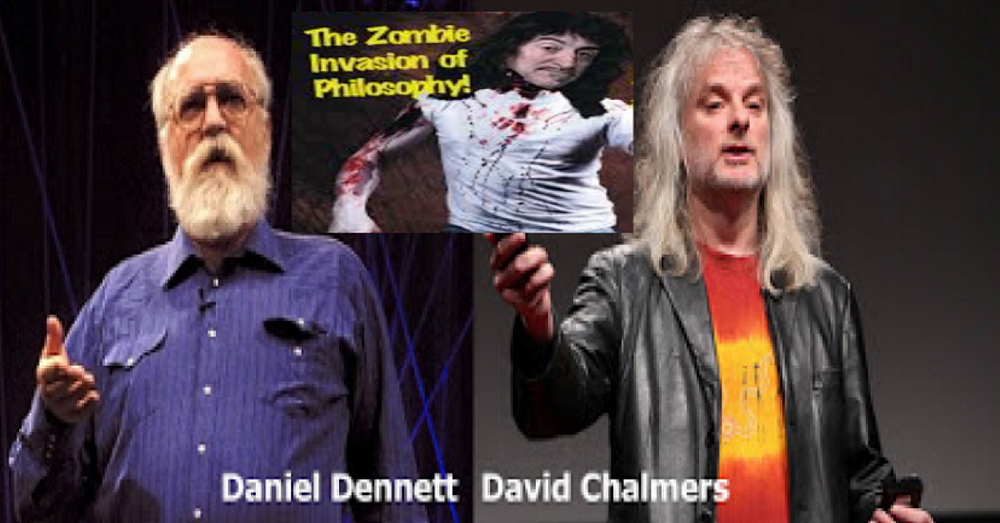
So what is a philosophical zombie? This is one account:

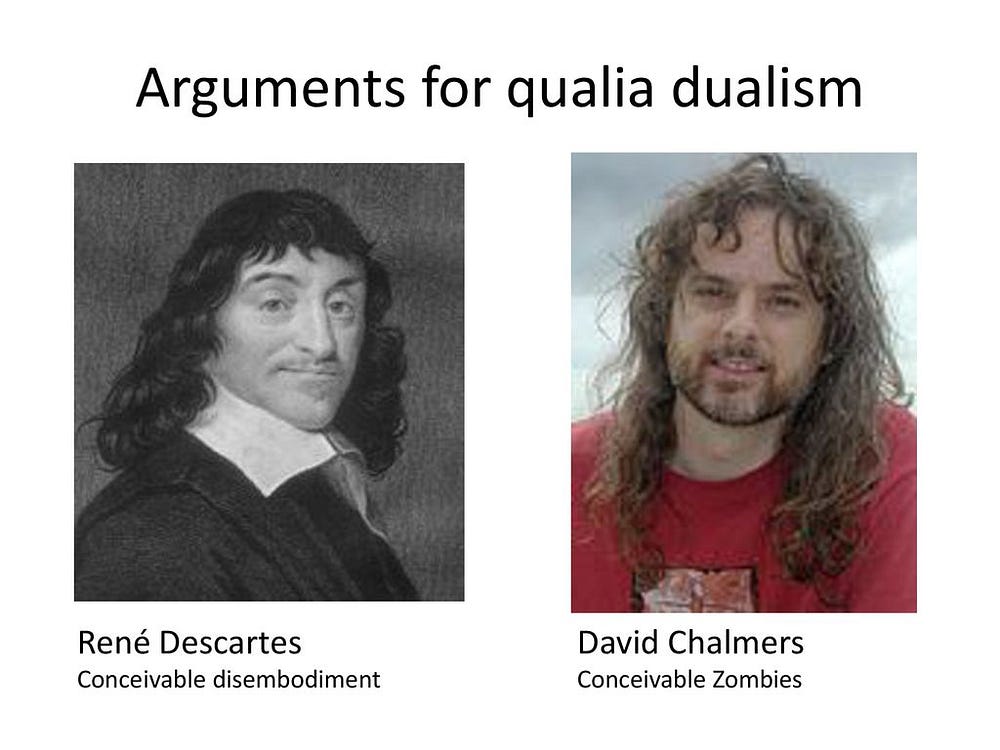
“A philosophical zombie or p-zombie is a hypothetical being that is physically identical to and indistinguishable from a normal person but does not have conscious experience, qualia, or sentience. [] Proponents of philosophical zombie arguments, such as the philosopher David Chalmers argue that since a philosophical zombie is by definition physically identical to a conscious person, even its logical possibility would refute physicalism, because it would establish the existence of conscious experience as a further fact.”

The Australian philosopher David Chalmers (1966-) argues that it’s logically possible that philosophical zombies could exist.

So what does this claim amount to?

Does it amount to much and should we spend much (or even any) time on it?

Essentially, much (or all) zombie-talk involves philosophical thought experiments. Such thought experiments can irritate people — even some philosophers. That said, thought experiments certainly serve some purpose.

Thought experiments have certainly been very important in theoretical physics. However, many historical thought experiments in physics later came to be backed up by experiments/tests, confirmed predictions and/or actual observations. Yet this certainly hasn’t been the case when it comes to most (or even all) philosophical thought experiments. Such experiments, almost by definition, can never be confirmed or disconfirmed. Indeed, they seem to be designed to have no (ironically) experimental, testable or observational element to them.

And all that is certainly true of thought experiments about philosophical zombies.

In that respect, then, perhaps the well-known and ironic question

“How many angels can dance on the head of a pin?”

is just as acceptable as — at least some — philosophical thought experiments.

So, as just stated, many people are bemused — and sometimes annoyed — by the various zombie scenarios. Perhaps that’s because they believe that such scenarios involve natural or metaphysical claims; whereas, in fact, they’re often only about logical possibility.
That basically means that they’re only about possibilities — not actualities or realities. That said, most people already know that there are no zombies in this world. Thus, the purely logical nature of these thought experiments should already be apparent…

Yet these zombie scenarios are about much more than mere logical possibility. They’re also about logical possibility leading in all sorts of other non-logical and (apparently) important directions.

Almost Everything is Possible

The English philosopher Bertrand Russell (1872–1970), in his The Problems of Philosophy, wrote the following words about another well-known logical possibility:

“No logical absurdity results from the hypothesis that the world consists of nothing but myself [] and that everything else is mere fancy. But although this is not logically impossible, there is no reason whatever to suppose that it is true; and it is, in fact, a less simple hypothesis, viewed as a means of accounting for the facts of our own life, than the commonsense hypothesis that there really are objects independent of us, whose action on us causes our sensations.”

When I woke up this morning, it was logically possible that I was still asleep. And when I moved over to the tap, it was logically possible that poison (not water) could have come out of the tap. (If it were only water, then it was still logically possible that I might have choked on it.) Then I looked out of the window, and it was logically possible that the town I saw in front of me was a projected simulation of what I’d seen the day before. And so on and so on and so on.

Despite these over-the-top (or simply silly) scenarios, David Chalmers believes that p-zombies are worth discussing because (to use his own words) “there seems to be no a priori contradiction in the idea” of them. Yet there’s also no a priori contradiction in a human being having 107 legs. However, such a possibility won’t really tell us much — at least not outside human biology and anatomy.

Well, Chalmers believes that it’s not just about the bare possibility that philosophical zombies could exist. It’s that this possibility can tell us something about consciousness, and, perhaps, much else too.

In more detail. Chalmers argues that we can conceive of a physical system that’s note-for-note identical to a normal human being, but which doesn’t instantiate consciousness. Such as system would therefore be a philosophical zombie.

Alternatively, it may be a “zombie-invert” in that some of its experiences (usually those of colour) could be inversions of those of a normal human being. Yet the invert-zombie still has the same nuts and bolts as a normal human being. However, it/she/he has different experiences.

So the zombie-invert is still allowed his/her/its experiences.

There’s also a partial zombie who/which also instantiates experiences. However, it/she/he doesn’t have as many experiences as normal human beings. (Perhaps he/she/it can only feel pain or experience orgasms.)

The point is that all these zombies are physically identical to normal human beings from the third-person point of view. That is, the behaviour and physical constitution of p-zombies is indistinguishable from that of normal human beings.

So what about the first-person point of view of such zombies?

In other words, “what is it like” to be a philosophical zombie?

Well, there’s nothing it’s like to be such a zombie! (Except, of course, in the partial and inverted zombie cases.)

On a larger scale. What about a physically identical universe which doesn’t give rise to consciousness, though which does give rise to p-zombies? Can we therefore argue that such zombies are (to use Chalmers’ words) “naturally possible” (see here)? That said, the usual argument against this particular scenario is that according to our own laws of nature, such p-zombies (probably?) couldn’t exist. That is, given identical physical, bodily and environmental facts, then such a universe couldn’t help but give rise to consciousness. (All these subjects have been debated to death by analytic philosophers, so I won’t even attempt to add anything here.)

So what is the actual link between possibility and actuality?

Chalmers — for one — never really discusses coming across real (or actual) p-zombies because the whole point of his thesis hinges on the importance of simply and purely conceiving of them. He’s also keen to show us how that very conceiving establishes certain other(!) philosophical positions. In the main case, then, one other philosophical position is that consciousness (or experience) is over and above everything physical and functional. In other words, even though this conceived of (or even real) p-zombie behaves and looks just like a normal human being, it still may not (or does not) instantiate consciousness at all. This means that, for all intents and purposes, a p-zombie is a (as it were) robot or machine in human clothing.

In broader terms, thought experiments about philosophical zombies stem from the philosophical, logical and psychological move from conceivability to possibility (as with Descartes’ reliance on his own conceivings — see here). So these notions shall now be tackled.

The Arguments
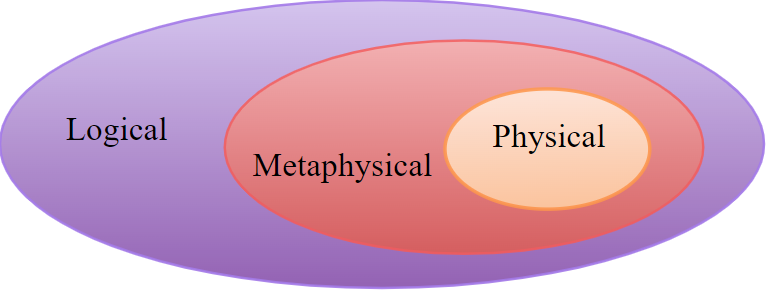
Clearly, possibilities can be a thousand miles away from actualities. Indeed, the zombie scenario appears to be a good example of this. However, Chalmers believes (as already stated) that p-zombies tell us something about the limits of physicalism.

In more detail, p-zombies are (in Chalmers’ own words) “microphysically identical to us without consciousness”. Thus:

(i) If zombies are physically and behaviourally identical to normal human beings,
(ii) then consciousness must be something over and above the physical.

In addition, Chalmers explains this disjunction between logical possibility and actuality (in relation to qualia) in the following ways.

Firstly, Chalmers argues that absent qualia and inverted qualia are “logically possible”. However, they’re still “empirically and nomologically impossible”. In terms of science and the problem of consciousness, it can be intuitively said that if any given x is both empirically and nomologically impossible, then why should we care that it’s still also logically possible? What do we gain (scientifically, and, perhaps, philosophically) from thinking about scenarios which involve logical possibility, yet, at the very same time, also involve empirical and nomological impossibility?

In any case, if there could be an identical universe to our own which didn’t give birth to consciousness, then, Chalmers concludes, consciousness must be something above and beyond the physical.

So this is where conceivability and metaphysical possibility will be discussed in detail.

Zombies and Conceivability
Conceivability and possibility are central to David Chalmers’ work on zombies, panpsychism, physicalism, and all sorts of other stuff too. More relevantly, conceivability-leading-to-metaphysical-possibility is central to much of Chalmers’ work.

Chalmers states that “a claim is conceivable when it is not ruled out a priori.

However, there are an indefinite (even infinite?) number of states of affairs (or claims) which can’t be ruled out a priori. Even the existence of sharks with legs or mushrooms with a sense of humour can’t be ruled out a priori. In other words, the only things which can be ruled out a priori are claims or states of affairs which break known logical laws or which contain contradictions. Thus, the (as it were) conceivable universe is highly populated with strange and bizarre entities, conditions, events, etc.

To put some meat on all this. Chalmers offers his own example of the conceivable. He tells us that it’s “conceivable that there are mile-high unicycles”. So what are we supposed to conclude (or philosophically achieve) by saying that mile-high unicycles are conceivable and therefore possible? Where does it take us?

In detail, Chalmers argues:

(i) If we can conceive of zombies in our world (or at other worlds),
(ii) then zombies are metaphysically possible.

Chalmers (in his own words) supports his conceivability argument by arguing thus:

“If P & -Q is conceivable, [then] P & -Q is metaphysically possible [as well as being] supported by general reasoning.”

Is there such a link between conceivability and possibility? If there is, then what kind of link is it?

Is that link itself grounded in conceivability, possibility or both?

Chalmers codifies all this with a logical argument:

i) It is conceivable that P & not-Q.
ii) If it is conceivable that P & not-Q, then it is metaphysically possible that P and not-Q.
iii) If it is metaphysically possible that P & not-Q, then materialism is false.
iv) So materialism is false.

In the above, Chalmers’ slide here from conceivability to metaphysical possibility can easily be seen.

The argument above can be made even clearer (as well as more blatant or obvious) in the following way:

i) Can we conceive of a round square? No.
ii) Then a round square isn’t metaphysically possible.
iii) Can we conceive of a man with 105 legs? Yes.
iv) Then a man with 105 legs is metaphysically possible.

Yet, again, what are we supposed to philosophically gain (or achieve) by saying that x or y are conceivable and therefore possible? Where does it take us?

In any case, logical possibility excites philosophers like Chalmers. So should readers conclude in the same way as Bertrand Russell above? That is, should readers state the following? -

Even though x (or a zombie) is not logically impossible, then there is still no reason to suppose that claims about x are true or that x is real or can be instantiated.

Put simply: something that’s logically possible may not be actual (or the case). Indeed, what’s logically possible is often not the case. So why contemplate the logically possible at all — even in philosophy? Where will it get us?

***********************

Part Two: The Psychology of Conceiving
How could a philosopher or anyone else (in a strict sense) know that he’d conceived of a philosophical zombie? What if some readers of these words can’t conceive of a phil-zombie — even if other people can do so? And even if some readers of these words can (seemingly) conceive of a p-zombie, then how could other people know that they’d done so? Indeed wouldn’t the best philosophical policy be to accept (or believe) that such people hadn’t actually conceived of a p-zombie?

Moreover, isn’t the very notion of conceiving of any given x far too psychologistic (or mentalistic) an idea to be sustaining metaphysical theses? What’s more, if other minds are a philosophical “problem”, then other minds conceiving of p-zombies (or anything else for that matter) is a problem within an already-existing problem.

More concretely, if any readers of these words actually came across an entity which acted and looked — in every single detail — like an ordinary human being (which is the whole point of the p-zombie thought experiment), then how could they extract from all this that it may, in fact, be a p-zombie? In addition, if such readers ever did come across a p-zombie which acted and looked just like them, then surely the obvious conclusion would be that it instantiated consciousness (or experiences) just like them. In other words, wouldn’t these people simply assume that this “zombie” (or x) felt pain, sometimes gets angry, could smell garlic, etc?

It can also be asked if when Mary supposedly conceives of a p-zombie, then how does it differ from her conceiving of her mother, father or her best friend? After all, when she conceives of any of the latter three, she can’t literally conceive of his/her consciousness or of his/her actually being conscious. Instead, all she’s got to go on is the physical and verbal behaviour of her mother, father or best friend. And that’s also true of p-zombies.

So perhaps that’s Chalmers’ point!

If it is Chalmers’ point, then let’s spell it out again.

Conceiving of a p-zombie is no different from conceiving of your mother, father or best friend.

Again, perhaps that’s partly why Chalmers believes conceiving of a p-zombie is possible. And if conceiving of p-zombie is possible, then its actual existence must also be (metaphysically) possible.

But does all that actually work?

When people conceive of a p-zombie (just as when people conceive of their mothers, fathers or best friends), perhaps they don’t conceive of an entity (or being) actually lacking consciousness. Perhaps that’s because such a thing can’t be conceived of in the first place. Yet the argument is that a person is supposed to be capable of conceiving of a being (or entity) behaving like his mother, father or best friend — though which doesn’t instantiate consciousness. However, how is that different to that very same person conceiving of his mother, father or best friend? And perhaps it’s no different because he can neither conceive of the consciousness of a fellow human being nor of a p-zombie.

Basically, then, consciousness is (as it were) known because it’s behaviourally or physically expressed. Unexpressed consciousness, on the other hand, is not conceivable. This means that it’s just as hard to conceive of another being’s consciousness as it is to conceive of its lack of consciousness (or vice versa).

Despite all the above, can the contrary ever be categorically stated?

That is, can it really be argued that no one could ever conceive of a p-zombie (or a “p-zombie world”)? In other words, if Chalmers, etc. can’t categorically claim that they have conceived of a p-zombie, then perhaps we can’t categorically claim that they haven’t done so. How could you, I or anyone else know that Chalmers hasn’t conceived of a p-zombie or anything else? Consequently, this may mean that all the sceptical questions aimed at such conceivings can now be aimed at the sceptics about such conceivings.

Yet that last conclusion surely demonstrates the central point of this issue.

That point being that since we’re talking about mentalistic (or psychological) conceivings, then whether or not subject S has truly conceived of a p-zombie can never be established. And if it can never be established, then how can such conceivings provide the basis of a philosophical thesis?

So, again, what is it to conceive of a philosophical zombie? What is the mental or abstract (mental) content of such an act of conceiving?

The American philosopher Daniel Dennett has also discussed all of this.

Daniel Dennett’s Zimbo

Dennett (1942-) has a big problem with David Chalmers’ philosophical zombies.

Specifically, Dennett, too, focusses on the notion of conceiving. (He does so in the ‘Zombies and Zimboes’ chapter of his book, Intuition Pumps and Other Tools for Thinking.)
For Dennett, the main point of what he calls a ‘zimbo’ is that there’s no way of knowing if it/she/he instantiates — or doesn’t instantiate — experiences or consciousness. And if there’s no way of knowing that (at least according to Dennett’s behaviourist and verificationist position), then why deny less to the zimbo than one would do so to a normal human being?

There’s a problem here.

If Dennett’s zimbo were literally identical — in every respect — to a normal human being, then how could we say that there’s either something less — or, indeed, something more — to it/him/her? And that’s because we could never know that we were actually confronting a zimbo. That said, this is part of the very point of Dennett’s thought experiment: a thought experiment which is itself a response to other philosophers’ thought experiments.

Dennett puts it this way:

“When people say they can conceive of (philosophical) zombies, we are entitled to ask them how they know. Conceiving is not easy!”

More particularly, how does a dualist, anti-physicalist or anyone else know that he’s conceived of a philosophical zombie? How do the readers of these words know that such a person has conceived of a philosophical zombie? In addition, how does any conceiver-of-a-zombie (to use Michael Dummett’s term) “manifest” his act of conceiving to others? What if it’s a thoroughly private act? And, if it is private, then what status could it possibly have when it comes to establishing a metaphysical position or thesis?

We can get even more fundamental here:

What is it to conceive of… anything?

This isn’t to argue that people don’t conceive of things. (They obviously do.) It’s just a demand for some kind of account of the act of conceiving-of-a-zombie.

In any case, Dennett gave some examples of things which he believes are difficult to conceive. He writes:

“Can you conceive of more than three dimensions? The curvature of space? Quantum entanglement?”

The least that can be said here is that Dennett’s examples are all very different.

So perhaps we can’t actually imagine (or, more literally, picture) more than three dimensions, the curvature of space and quantum entanglement. However, can we conceive of them?

Dennett continues:

“Just imagining something is not enough — and, in fact, Descartes tells us, it is not conceiving at all.”

The thing is that the existence of more than three dimensions, the curvature of space and quantum entanglement surely must have been conceived of — many times — because they’re accepted notions in physics. Indeed they’re even accepted aspects of the physical world (or at least two of them are). That is, no one has ever seen or observed these things. And, depending on definitions, not one has ever imagined these things either. So all we have left is to conceive of more than three dimensions, the curvature of space and quantum entanglement.

Thus, Descartes and Chalmers may be onto something here!

Yet even here conceiving of these things may be in a different logical space to conceiving of a philosophical zombie. After all, there are a lot of equations, natural laws, theories, indirect/direct observations, experiments, tests, etc. to account for the curvature of space and quantum entanglement (if not extra dimensions).

So are there a lot of equations, natural laws, theories, experiments, tests, indirect/direct observations, etc. to account for philosophical zombies? It can be supposed, however, that someone like David Chalmers wouldn’t claim that there are…

After all, philosophical zombies are only a possibility.


Sunday, 23 October 2022

Six New Theories of Consciousness Before Breakfast

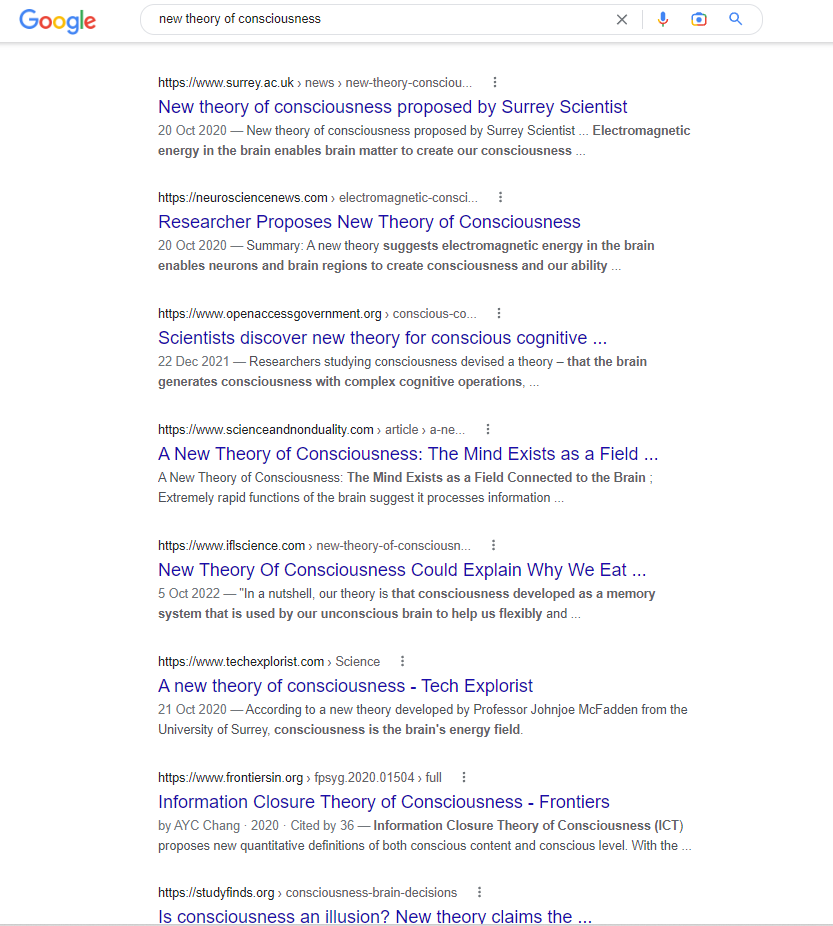
It seems (at least to those who care) that there are six new theories of consciousness offered to the public before each breakfast. Indeed there are 14 Google pages of “search results” (with around 13 different links on each page) which refer to “a new theory of consciousness” (see here)… So what’s going on here?

There have been dozens — perhaps more — of books on consciousness published in recent years. More relevantly, many of these books use the words “A New Theory of Consciousness […]” in their titles.

So some readers may now ask how the word “new” is being used here. That is, are all these theories really new or are they simply brightly-coloured packages placed around old theories?

And even if they are new — so what!

Being new isn’t a big deal in itself.

For example, a theory that consciousness is the manifestation of the green gremlin field would be new, but only a few hip nerds or those intoxicated by woo would care about it. Indeed a theory can be new in all sorts of superficial or silly ways.

One problem with many of the books which offer us a new theory of consciousness is that their authors often fixate on what is only a single aspect of consciousness. They then go on to more or less ignore everything else to do with this subject. This is one reason why we have a large amount of sexy, titillating and pseudo-scientific theories of consciousness. That is, the authors concerned overplay their own angles on consciousness seemingly without realising that it may be precisely that: a single angle.

Why are tacky “psychedelic” images like this often used when consciousness is discussed?

Added to all that is the fact that a lot of new theories of consciousness are wacky, pretentious and/or obscurantist. So perhaps the Slovenian philosopher Slavoj Žižek’s words on (particularly) pseudo-scientific obscurantism may be helpful here. (Ironically enough, obscurantism is something which Žižek has himself been accused of.)

Žižek places his cards firmly on the table when it comes to the people he calls “obscurantists”. More specifically, however, he’s talking about those who annex (or appropriate) quantum mechanics for their own “spiritual” projects. That said, this can just as easily be applied to most of the daily theories of consciousness discussed here.

Žižek writes:

[] I am opposed as ferociously as possible to these obscurantist appropriations of quantum physics and astronomy.”

Žižek is even more explicit when he warns us about the

“New Age obscurantists appropriations of today’s ‘hard’ sciences which, in order to legitimize their position, invoke the authority of science itself”.

It can now be added that we all know about the Flat Earthers, New-Agers, Creationists, Intelligent Designers (at least the explicitly religious ones), spiritual idealists (or consciousness-firsters), etc. whose books are replete with mathematical equations and technical terms from physics, as well as lots of stats ’n’ graphs. In other words, we need to be careful when people arbitrarily drop scientific technical terms into their books. Or, alternatively, we need to be careful when such people include only certain sexy aspects of science (just about anything from quantum mechanics will do); though who then also ignore what could very well be far more scientifically important (or relevant) detail — especially when it comes to the legitimacy of their non-scientific (or spiritual) claims.

Definitions

So consciousness is a debate that’s hot and trendy. However, it’s also often (almost) pointless. The main reason for this is that many people are talking about different things when they talk about consciousness. What’s more, there’s often a conflation between what brings about consciousness and what consciousness is.

More relevantly, writers on consciousness use the word ‘consciousness’ in many different ways. Added to that is the fact that many authors never actually get around to defining the word at all. Of course it’s probably the case, it can be conceded, that they have their own tacit pet definitions deep within their minds. However, they rarely — if ever — explicate or articulate such definitions precisely or in any detail.

In any case, there have been countless definitions of the word ‘consciousness’ from the 19th century until 2022.

Many philosophers have been concerned with these many definitions of the word ‘consciousness’. Yet that has often been because they’ve had a problem with consciousness itself. That main problem with consciousness is its non-scientific status.

[It doesn’t help when philosophers use such phrases as “experience is a datum in its own right” (or “nothing is more real than consciousness”) because that itself doesn’t provide a definition or tell us what consciousness is.]

As a consequence, many definitions of the word ‘consciousness’ are both so multifarious and vague precisely because of the non-scientific (or, say, private) nature of consciousness itself. So perhaps if consciousness were as intersubjective a phenomenon as a cat or a neuron, then we wouldn’t have as many definitions — and so many vague and sexy theories before breakfast.


Tuesday, 18 October 2022

The Wittgenstein Interpretation Industry

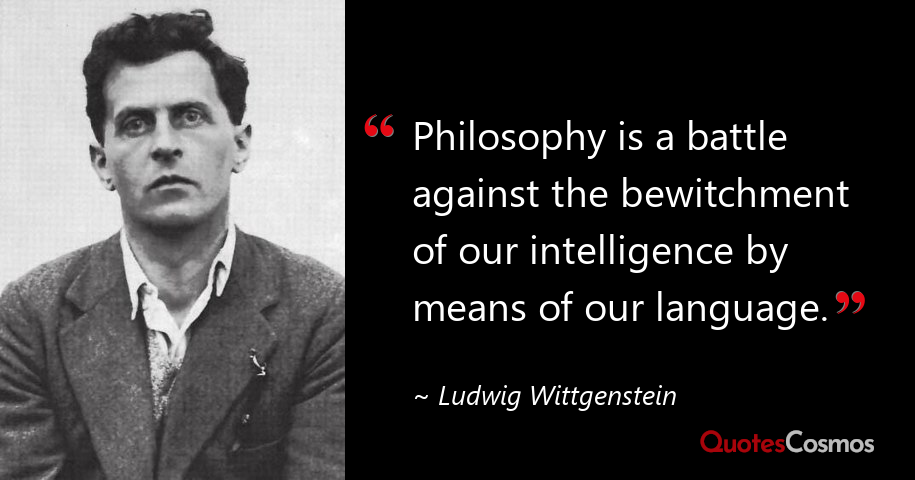
The philosopher Lee Braver claimed that Wittgenstein’s “writing style is perhaps the most obscure of all the great analytic figures”. This has led to a “cottage industry of exegetical work and scholarly contention”. What’s more, according to Crispin Sartwell, “the only thing that mattered to [the interpreters] was the question: ‘What did Wittgenstein really mean?’”. All this has often resulted in situations in which there wasn’t “a question as to what’s the best position”.

Not: “Do you agree or disagree with Wittgenstein on this?”

(i) Introduction
(ii) Is Wittgenstein Dead?
(iii) What Did Wittgenstein Mean?
(iv) The Case of Saul Kripke
(v) The History of the Wittgenstein Industry
(vi) Conclusion: In Defence of Wittgenstein

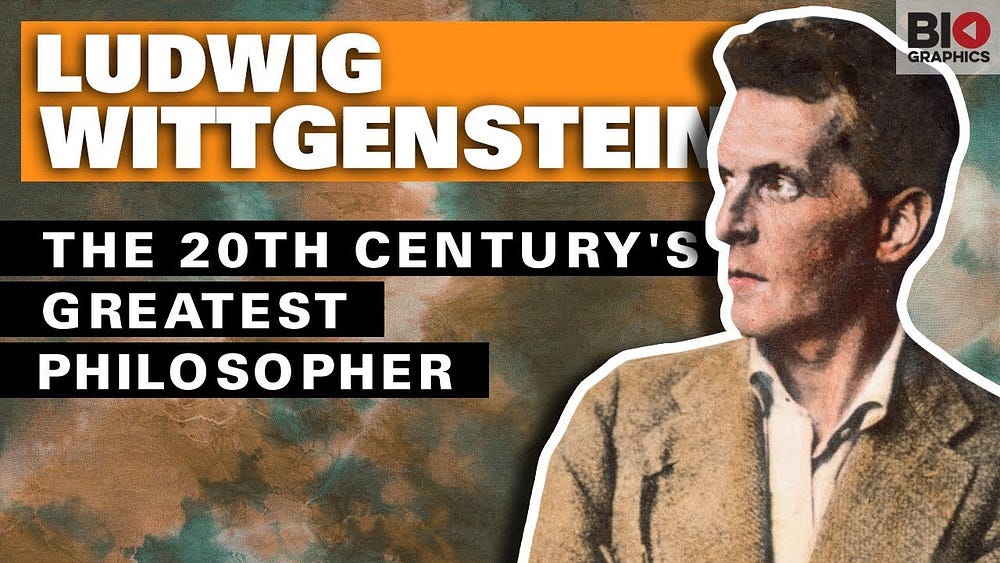
Much of what the Austrian philosopher Ludwig Wittgenstein (1889–1951) wrote is hard to decipher. Indeed that’s the primary reason why there’s what can (sarcastically) be called a Wittgenstein Interpretation Industry. This also explains why so many loyal Wittgensteinians have got so hot under the collar when other commentators (as it’s often put) “get Wittgenstein wrong!”. Moreover, unlike many other philosophers, much of the debate around Wittgenstein’s work isn’t about whether or not what he wrote is correct or incorrect, well-argued or badly-argued, worthwhile or worthless, etc. — but about what he actually meant.

This need for endless interpretation is strongly connected to Wittgenstein’s appeal.

Yet many — or even most — of the people who read Wittgenstein don’t get him. They don’t understand what he is saying. (This is even true of some professional philosophers too.) Indeed even his fans admit this…

And perhaps that is precisely part of Wittgenstein’s appeal.

What’s more, the fact that Wittgenstein himself said that no one understood him simply compounds the problem even more. (See James C. Klagge’s chapter ‘No One Understands Me’, from his book Wittgenstein in Exile.)

So there are two ways of looking at all this:

(1) Those who claim to understand Wittgenstein deem themselves to occupy a higher intellectual — and perhaps even moral — ground.
(2) Any lack of understanding of Wittgenstein is itself part of the appeal. (As with — esoteric — religious, mystical and poetic writers and thinkers throughout history.)

In terms of one fairly recent example of Wittgenstein veneration, it’s worth mentioning the (otherwise excellent) book Groundless Ground: A Study of Wittgenstein and Heidegger (2012), by Lee Braver. This book is 239 pages long, yet it doesn’t contain a single criticism of Wittgenstein or his ideas (except the mention of his prose style below). What’s more, Lee Braver doesn’t even quote any critical words (i.e., against Wittgenstein) of any philosophers or commentators.

Yet, at the very same time, Braver also puts the problem-with-Wittgenstein (at least the one focussed upon in this essay) very well when he wrote the following words:

[Wittgenstein’s] writing style is perhaps the most obscure of all the great analytic figures, leading to an unusual state of affairs: ‘one of the most striking characteristics of the secondary literature on Wittgenstein is the overwhelming lack of agreement about what he believed and why.’ Already in 1961, the literature on the Tractatus was compared to literary scholarship in dissension and sheer mass. His opaque prose and sparse argumentation have given rise to a cottage industry of exegetical work and scholarly contention [].”

So along with the aforementioned Wittgenstein Interpretation Industry comes Wittgenstein worship (or “Bible study”, as the Guardian’s Giles Fraser put it). That is, Wittgenstein worship generates the Wittgenstein Interpretation Industry.

Despite such problems with interpretation, Wittgenstein has of course been hugely influential outside the Philosophy Academy in the Sky. Filmmakers have produced biographical works on him, poets have written poems about him, and sociologists, psychologists, linguists and even religious thinkers have borrowed — or simply used — his ideas….

So if the views articulated by many commentators about Wittgenstein’s (as it were) essential mysticism are correct, then perhaps it’s not so strange that Wittgenstein is loved outside the set of all philosophy departments. (See John Horgan’s ‘Was Wittgenstein a Mystic?’.) Indeed it may be Wittgenstein’s esoteric prose that appeals to many of those Wittgensteinians on the outside of the Academy…

So, to track back, can we really accept the possibility which some professional Wittgensteinians (i.e., certain analytic philosophers) seem to believe: viz., that all of these outsiders get Wittgenstein wrong?

It’s interesting, then, that Wittgenstein (in a letter — dated 1932 - to the logical positivist Maurice Schlick) wrote that

“from the bottom of my heart it is all the same to me what professional philosophers of today think; for it is not for them that I am writing”.

All that said, is the Wittgenstein Interpretation Industry now dead anyway?

Is Wittgenstein Dead?

The philosopher Daniel A. Kaufman once stated (in a video discussion with Crispin Sartwell called ‘Is Wittgenstein Overrated?’) the following:

“Wittgenstein has almost zero influence in analytic philosophy today. The interesting thing is that your experience [i.e., Crispin Sartwell’s negative experience] represented the last gasp of that tradition.”

Kaufman also stated (ironically, I presume) that there are only “three Wittgensteinians around today”. (He mentions P.M.S. Hacker as one of them.) Kaufman continued by saying that “analytic philosophy went completely beyond [Wittgenstein]”. He cited the influence of cognitive science as an example of this. Kaufman claimed that the “whole point of [cognitive science] is doing exactly what Wittgenstein believed that you shouldn’t do”. (It’s not clear what this means.) Despite that, Kaufman is also against what he called the “cognitive science revolution” in philosophy. He also believes in “bringing Wittgenstein back” in order to fight a counter-revolution against that cognitive science hegemony (at least within philosophy).

Kaufman admitted that Wittgenstein’s Philosophical Investigations would still come out as a “number one” book in many polls of analytic philosophers. In addition, it’s ironic that Kaufman says that Wittgenstein today is a “dead parrot” when one considers the fact that only recently there were as many as 1000 publications on Wittgenstein in one year alone. (As of 2022 and in ResearchGate, there are 22,934 publications which both mention and are about Wittgenstein.)

But perhaps all this entirely depends on whether Wittgenstein is now a dead parrot to analytic philosophers alone or whether he’s also a dead parrot to intellectual culture generally.

What Did Wittgenstein Mean?

The Wittgenstein Interpretation Industry is primarily driven by the following question (or variations upon it):

What did Wittgenstein really mean by written words […].?

It’s usually only professional philosophers who believe that they’ve got Wittgenstein right. Indeed it’s often a subset of such professional philosophers: Wittgenstein Experts.

However, if professional philosophers often accuse each other of getting Wittgenstein wrong, then what hope have non-professionals got of getting him right? A few, though not many, Wittgensteinians may say, however, that non-professional Wittgensteinians actually have more chance of getting Wittgenstein right. That said, this is certainly not the general view amongst professional Wittgensteinians.

The American philosopher Crispin Sartwell (1958-) picked up on all this (in the video discussion mentioned above) when he stated the following:

“The only thing that mattered to them [the Wittgenstein “cult”] was the question: ‘What did Wittgenstein really mean?’. [] There wasn’t a question as to what’s the best position here [] but what did Wittgenstein really mean?”

That’s what you find with many of Wittgenstein’s acolytes. That is, they’ll shout you down for getting Wittgenstein wrong. (Who knows, they may sometimes be right about this.) However, whether or not the interpreter is right or wrong, Wittgenstein’s ideas or positions (as they can be agreed upon by all the parties concerned) aren’t often the main theme of debate or discussion. Instead, the primary question is usually the following:

“What did Wittgenstein mean by […]?”

Either that, or the opponent-interpreter becomes a victim of the exclamation:

“Stop getting Wittgenstein wrong!”

So we have the classic problem of how to correctly interpret Wittgenstein.

Unlike many other philosophers of the analytic tradition, most of what’s said (or argued about) when it comes to Wittgenstein is about interpretation. Thus, we have Philosopher X saying that Philosopher Y has “got Wittgenstein wrong!”. And then Philosopher Z ostentatiously comes along and says that both Philosopher X and Philosopher Y haven’t “got Wittgenstein right”. And this goes on and on and on.

Ironically, Crispin Sartwell himself says that he “rebelled against Rorty as he read Wittgenstein”. So here again we have another example of the Wittgenstein Interpretation Industry. [Read Sartwell’s article on Wittgenstein quoted here. The original article has since — seemingly — disappeared.]

It gets worse.

Daniel A. Kaufman (again) then asks Sartwell this question: “Do you believe that Rorty read Wittgenstein correctly?” And Sartwell answers: “Yes and no. He read him tendentiously.” Sartwell continued:

[Rorty’s] basic premise was not to get Wittgenstein right; but to annex him for his own project.”

Yet isn’t that what many — or even most — philosophers have done when they’ve discussed the works of other philosophers?

All the above raises this question:

Is there such a thing as Wittgenstein’s Wittgenstein?

Or is Wittgenstein’s Wittgenstein simply Sartwell’s (or add some other name here) Wittgenstein? And, controversially, if the French philosopher Jacques Derrida was correct when he stated that “there is no outside-text” (or, perhaps better expressed by other theorists, authorial intent is irrelevant when it comes to what we can get from texts), then perhaps it doesn’t really matter what Wittgenstein really meant! (Of course Derrida’s odd utterance about texts has itself been interpreted in multiple ways.)

A more particular example of the history of the Wittgenstein Interpretation Industry (if not Wittgenstein worship) can be found in the case of the philosopher and logician Saul Kripke.

The Case of Saul Kripke

This pressure to respect — or even worship — Wittgenstein was obliquely commented on by Saul Kripke (1940–2022).

Kripke was honest enough to admit (in the video Wittgenstein and Kripkenstein’) that his initial interest in Wittgenstein was solely down to who taught him at university when he was a student. (He mentions “three faculty members”.) Kripke also said that he didn’t at first see the importance of Wittgenstein (particularly, Wittgenstein’s Philosophical Investigations). Indeed he didn’t “develop [his] own take on what [Wittgenstein] was doing until 1962 and 1963”. (Then again, Kripke was still only 22 in 1962!)

More relevantly, the very neologism, Kripkenstein, was coined to express the idea (or feeling) that Kripke got Wittgenstein wrong! (This was particularly in reference to the issues of rule-following and the Private Language Argument.)

Kripke obviously denied that he “didn’t understand Wittgenstein at all”. Indeed Kripke backed this up when he says that “it’s hard for anyone to claim that he or she has got the right understanding of Wittgenstein”…

So why is that?

Kripke continued by saying that

“both the early and late Wittgenstein writes in some style which invites one to wonder what it really means”.

More surprisingly, Kripke then said that Wittgenstein’s work “may be more like continental philosophy than analytic philosophy”. However, it’s still the case that Wittgenstein is “mostly thought to be an analytic philosopher anyway”.

The interviewer of Kripke herself picked up on Wittgenstein’s obscure style of writing. She put forward the possibility that perhaps Wittgenstein wrote in that style “on purpose in order to get readers to think on their own terms”. (This has also often been said about Jacques Derrida — see my Derrida’s Obscure Style of Writing: A Philosophical Critique’.) Kripke responded by saying: “Well, yes, that’s what he says.” Kripke then agreed that Wittgenstein wanted to “encourage readers to think for themselves”.

More importantly, Kripke argued that Wittgenstein didn’t “state theses in philosophy, since everyone would agree to them”. In other words, Wittgenstein didn’t want agreement.

The History of the Wittgenstein Industry

Those who use Facebook will be familiar with the endless quotes (in the guise of memes) from people like Albert Einstein, Richard Feynman, Carl Sagan, etc. on every subject under the sun. Even pretty banal words from these people are turned into memes which are then spread like confetti around Facebook…

Perhaps something similar is (or was) true of Wittgenstein.

Historically, some of Wittgenstein’s early followers treated Wittgenstein’s every off-the-cuff comment as a nugget of pure gold. And then they quoted these comments verbatim to their students, fellow academics and friends. Indeed, according to Julian Baggini, “[a]colytes at Cambridge would even mimic Wittgenstein’s mannerisms and ways of speaking” (see here). Moreover, according to Timothy Williamson (see here), philosophers were scared of criticising Wittgenstein and his work because his cultish followers would respond to such criticisms with anger and aggression.

All that said, we really need to go back to the English philosopher Bertrand Russell (1872–1970) to trace the roots of the Wittgenstein Industry.

Russell once stated that Wittgenstein was “the most perfect example I have ever known of genius”. Yet that was despite Russell admitting that he didn’t understand Wittgenstein! More precisely, Russell wrote (in 1913) the following:

“I couldn’t understand his objection — in fact he was very inarticulate — but I felt in my bones that he must be right. I saw that I could not hope ever again to do fundamental work in philosophy.”

So exactly why did Russell believe that Wittgenstein “must be right” at the very same time as admitting that he “couldn’t understand his objection”? The following is Professor Bejamin Murphy’s neat take on this matter:

“That Wittgenstein’s mysterious charisma disabled a philosopher and logician as brilliant as Russell was among the first of its baleful effects, and Russell did in fact largely abandon logic at that moment. For a while, instead, he concentrated on spreading the Wittgenstein miasma, and his admiration turned Wittgenstein into an intellectual superstar. Ever since, Wittgenstein has been more of a cult than an argument, an irrationalist movement in a supposedly rational discipline. Like Russell, Wittgenstein’s followers know he is right; the only difficulty is knowing what he meant.”

Now let’s jump forward to the 1980s.

Sartwell (again) pointed out that Wittgenstein worship was still prevalent in the 1980s. So that’s some 40 years or more after Wittgenstein worship had first kicked in (if within small circles). Sartwell mentioned Cora Diamond, who was teaching at the university he was a student at. Sartwell stated that “it felt like a cult” at the time… And that’s exactly something that the English philosopher Gilbert Ryle (also an admirer of Wittgenstein) noted some 30 or more years before the 1980s! (Read Ryle’s article ‘Ludwig Wittgenstein’ from 1951, written in the year Wittgenstein died.)

Conclusion: In Defence of Wittgenstein

Of course contemporary Wittgensteinians (as well as Wittgenstein’s defenders) will explain the appeal of Wittgenstein, rationalise why many people don’t get him (as well as why many people have spent so much time arguing about what he means) and even justify the existence of the Wittgenstein Interpretation Industry itself.

So this is how one fan (a Steve Tolley) of Wittgenstein characteristically sums up the critics of Wittgenstein. He does so with a quote from… Wittgenstein:

“It is one of the chief skills of the philosopher not to occupy himself with questions which do not concern him.”

Another Wittgensteinian (a Jim Michmerhuizen) sums up both the critics and fans of Wittgenstein in the following way:

“I get the impression, surveying the answers to this question so far, that most of the respondents fall into one of two classes:
those who are looking for answers
those who are looking for questions
People in the first group appear to assume that Wittgenstein’s importance must be measured by the correctness of his answers. Invariably, these people are horribly disappointed. People of the second class, discovering that Wittgenstein asks far more questions than he answers, are generally ecstatic. I am one of the these.
No one since Socrates has probed his interlocutors as deeply, precisely, and empathetically as Ludwig Wittgenstein.”

Of course there must be at least some consensus on Wittgenstein’s writings. For example, almost everyone agrees that there are “two Wittgensteins”… or do they? (See this article, which has the words “Wittgenstein’s two philosophies are not in conflict; they are complementary” within it.)

So it can’t entirely be a chaotic free-for-all when it comes to Wittgenstein’s words. That said, the problem readers have is wading through the mountains of interpretation — and the heaps of outrage and anger those interpretations bring about — in order to get close to at least some form of consensus. That said, if one is a True Wittgensteinian, then consensus will be the last thing one desires.

Finally, it must now be said that I too have a high regard for much of Wittgenstein’s philosophy. (I’ve written many essays on Wittgenstein — see here.) The problem (if it is a problem) here is that what I’ve gained from Wittgenstein might well have been a result of my misinterpretations of him! (What I’ve gained might also have been partly down to how I’ve unconsciously added to Wittgenstein without even realising it.) That said, if what Derrida and others claimed above is correct (i.e., that “there is no outside text” and/or that authorial intent doesn’t matter), then who cares! That is, who cares if I have or haven’t got Wittgenstein right. Whatever the case is, I’ve still gained something from the Austrian philosopher.