Tuesday, 23 April 2024

Spiritual Idealist Bernardo Kastrup Slanders Hossenfelder, Coyne, Pigliucci, Etc: Should they Sue Him?

 Probably not.


The following passages are from Bernardo Kastrup’s blog Bernardo Kastrup, PhD, PhD: Meditations on life, the universe, and everything.


Kastrup on the American philosopher Tim Maudlin:


[Tim] Maudlin’s unbecoming, unacademic and rude behaviour made it clear that such was not the case. He came across to me as a nasty and crass street brawler, not a thinker. [] Nor do I find his ungrounded, tendentious, hand-waving and wishful technical statements worthy of in-depth discussion in debate format. I am sure he can continue to believe in his unfalsifiable, pseudo-scientific fantasies without my help.”



Kastrup on the German theoretical physicist and science communicator Sabine Hossenfelder:


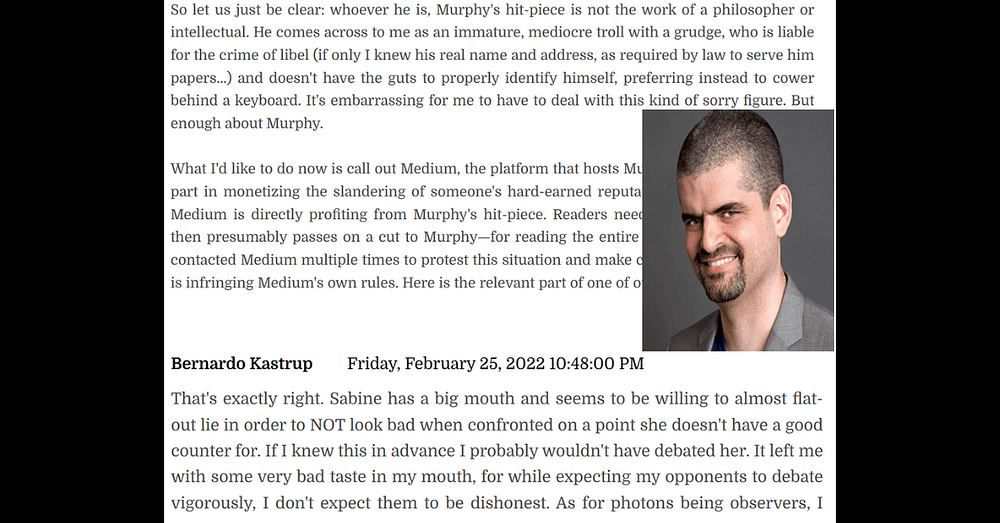
“Sabine [Hossenfelder] has a big mouth and seems to be willing to almost flat-out lie in order to NOT look bad when confronted on a point she doesn’t have a good counter for. [] Her rhetorical assertiveness is, at least sometimes, a facade that hides a surprising lack of actual substance.”


[I]t is entirely possible for someone who sincerely considers themselves honest to arbitrarily dismiss substantive points, deflect and mislead to a level that flirts with lying, just to save face and avoid being pinned down during a debate, thereby protecting their public image at the cost of someone else’s.”


“I am now convinced, to my own satisfaction, that Hossenfelder does not engage according to what I consider to be the minimum level of intellectual honesty required to render the debate fruitful.”


“I am not doing this just to gratuitously and repeatedly stick my finger in the wound; I’m not trying to do character assassination. [Sic!] [] by flat-out misrepresenting her own output. I ought to defend myself against that overt suggestion, which I consider to have been rhetorical and dishonest, violating all basic debate ethics.”
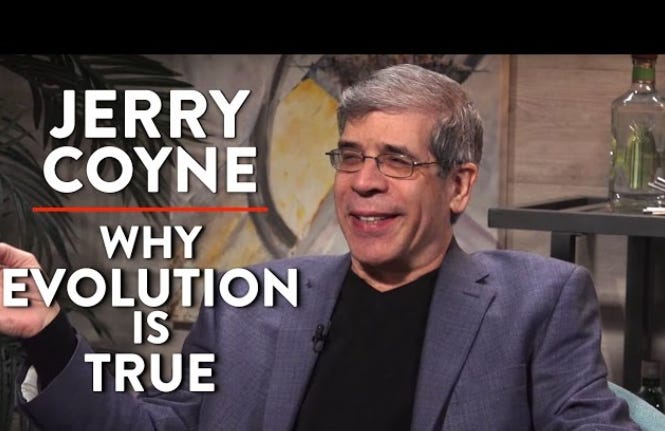


Kastrup on the American biologist Jerry Coyne:


“Dim-witted biologist [].”


“The target of Jerry Berry’s [Jerry Coyne] latest rant and rage has been an essay I wrote.”


“This is one of those embarrassing passages in which Jerry Berry [Jerry Coyne] unwittingly makes painfully clear to the whole world the depths of his philosophical ignorance.”
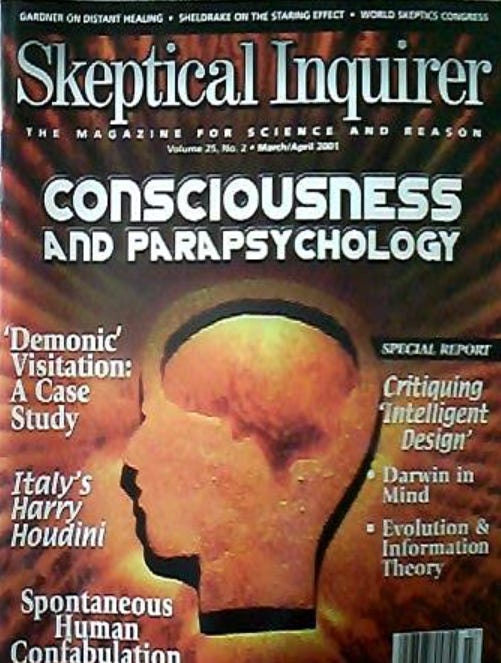


Kastrup on the Skeptical Inquirer magazine:


“What makes the profound ignorance betrayed by the ‘review’ even worse is the conceitedness and pretentiousness that oozes through it.”


“How can a magazine with ambitions to ‘promote scientific inquiry, critical investigation, and the use of reason’ publish this kind of juvenile garbage?”


“If I were a subscriber to the Skeptical Inquirer, I would feel offended by this ‘review.’ [].”


[W]hat kind of psychological disposition makes one feel entitled to publicly criticize something one has admittedly not understood?”



Kastrup on the English philosopher Philip Goff:


“Since he [Philip Goff] was a cosmopsychist just a couple of years ago, then a constitutive panpsychist for the duration of one book, and now seemingly something else already again, who knows what his position will be by the time we debate?”


“Many academic philosophers love to indulge in these tortuous conceptual games that achieve lift off from the firm ground of reality and end up in some other galaxy. This is no news. But I confess to feeling disappointed at Philip [Goff], an academic philosopher I thought would see through this nonsense. I regret that so much energy and time was wasted, during the debate [].”
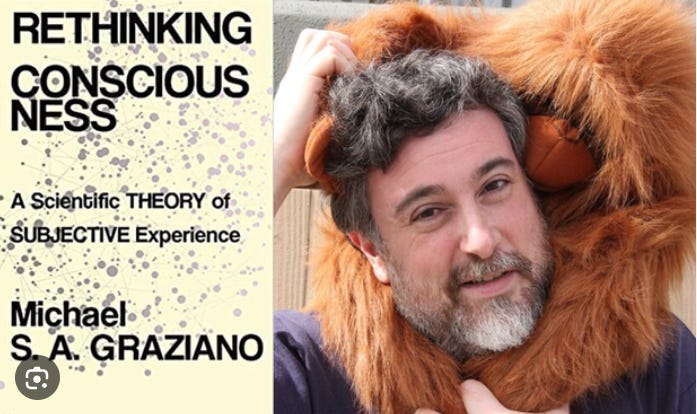


Kastrup on the American neuroscientist Michael Graziano and the British philosopher Keith Frankish:


[Keith] Frankish has accomplished precisely nothing in his long essay; at least nothing more than tortuous obfuscation and hand-waving.”


“Not only that, he [Michael Graziano] is a Princeton neuroscientist who couldn’t even weave a conceptually consistent counter-argument in his ‘reply’ of little more than 800 words.”


[T]o watch him [neuroscientist Michael Graziano] babble incoherently in front of you and think, ‘this is actually happening.’”


[W]hen it comes to Graziano and [Keith] Frankish, things are different. They truly are emperors with no clothes.”


“Their [Graziano and Frankish] nonsense is toxic, corrosive and pernicious, not only because it is nonsensical, but because — if believed — it could undermine the very foundations of our secular ethics and moral codes.”


“Our emperors [Frankish and Graziano] are parading proudly in front of us, but they really have no clothes. Watch carefully, ignore the posturing cacophony around you, and you shall see it in horror.”


Kastrup on the American philosopher and biologist Massimo Pigliucci:


“[T]here is little of substance in [Massimo] Pigliucci’s essay to actually rebut or respond to. [] Unlike Pigliucci, I shall comment based on substance. Yet, I shall also comment vigorously and honestly, not through a smokescreen of passive aggression.”



Kastrup on the American philosopher, neuroscientist and author Sam Harris:


[Sam] Harris seems to be, at best, confused and ignorant of the facts; or, at worse, wilfully biased in his appraisal of the available data. [] The irony would be sweet if it weren’t concerning as far as what it seems to say about Sam Harris.”


Kastrup on “academic philosophers”:


[S]ome seem to react to what I have accomplished with covetousness — as opposed to the objectivity that academics are expected to embody — is both a serious problem and a missed opportunity for desperately-needed change. [] many academic philosophers have abandoned reality and now spend their time playing entirely abstract conceptual games of no relevance to you and me. But they still insist that what they do is ‘real’ philosophy. [] Academic philosophy is funded by public money paid out of our taxes. As such, it must be relevant to us.”
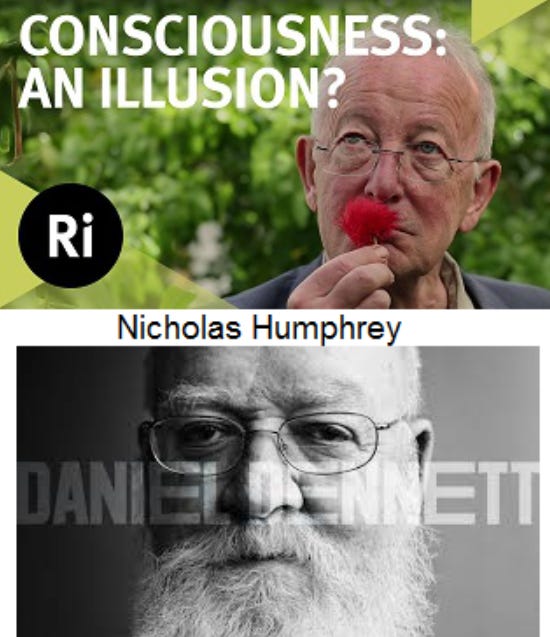


Kastrup on the American philosopher Daniel Dennett and the English neuropsychologist Nicholas Humphrey:


“And [Daniel] Dennett isn’t alone. Others, like psychologist Nicholas Humphrey, suggest the same thing [] Despite being a surreal display of in-your-face incoherence, the fact that the video is cladded with the gentle and trust-inspiring demeanor of an affable old man [].”



Kastrup on the British psychologist and writer Susan Blackmore:


“I rather think she [Susan Blackmore] and the other magicians are fooling themselves; the left hand doesn’t know what the right hand is doing.”


Kastrup on “fundamentalist atheists”:


“There is a significant way in which fundamentalist atheists may be unconsciously attributing to others their own cognitive limitations. In psychological terms, this is called a projection. By passing judgment onto their own projections according to the rules of their own private games, they reveal parts of their psychological makeup but assert nothing of relevance about the nature of reality.”


And, finally, Kastrup on yours truly:


“It makes no argument, probably because Murphy just isn’t intellectually capable of making one. [] we can only assume that he is what he seems to be: a spiteful nobody living on social security and spouting his grievances from a rented bedroom). His piece is petty, small-minded, and childish.”


So should Philip Goff, Keith Frankish, Sam Harris, Sabine Hossenfelder, Massimo Pigliucci, Nicholas Humphrey, Jerry Coyne, Tim Maudlin, etc. sue Bernardo Kastrup for his insulting and slanderous claims?


Probably not. 


Thursday, 18 April 2024

Two Contemporary Wittgensteinians Fight Against Scientism in Philosophy


The British philosophers P.M.S. Hacker (Peter Hacker) and Paul Horwich speak out against scientism in contemporary analytic philosophy.

[See my previous essay, ‘Two Worshippers of Wittgenstein: Paul Horwich and Peter Hacker’.]


[Scientism is] an exaggerated trust in the efficacy of the methods of natural science applied to all areas of investigation (as in philosophy, the social sciences, and the humanities). [] [S]ome scholars, as well as political and religious leaders, have also adopted it as a pejorative term [].”

— See source here.


Dating back to the late 19th century, many philosophers, religious commentators and others have stated that bad philosophy “mimics science”. More relevantly to the theme of this essay, this has also been said specifically about analytic philosophy. [See here and here.]

One account of philosophical scientism I came across (which mentions Paul Horwich, who’ll be discussed in a moment) just seems like fantasy to me. Here is that account:

“It is this scientistic nature that in Horwich’s reading of Wittgenstein is based on the illusion that the philosopher, just like the scientist in the empirical sciences, can make fundamental discoveries if only he uses the same kind of methods the scientist applies to analyze his a posteriori data.”

The fantasy here isn’t that of philosophers attempting to mimic science. The fantasy is believing that all?/most?/many? philosophers have ever done such a thing. More particularly, the fantasy is believing that analytic philosophers particularly have attempted to make “fundamental discoveries” by “us[ing] the same kind of methods the scientist applies to analyze his a posteriori data”.

It was Ludwig Wittgenstein particularly who started this (as it were) anti-scientism war — at least against the philosophers he had in mind at the time. [Mainly the logical positivists. See here too.]

The British philosopher Paul Horwich continues this (Wittgensteinian) anti-scientism-in-philosophy war.

Sure, the charge of “scientism” (with its “hissing suffix”) might well have been true of some philosophers who were around when Wittgenstein was writing (say, from the 1920s to the early 1950s). However, has it really been true of all analytic philosophers since the 1920s until today?…

Has it been true simply of most of them?

Many of them?

Or just some of them?

It can be argued that there was never any literal mimicking of science by any philosophers anyway — even back in Wittgenstein’s day. Sure, materialists, naturalists and positivists admired science. Indeed, they looked to science for philosophical inspiration. However, none of that is the same thing as actually “imitating science”.

So perhaps Paul Horwich’s distinction here is actually between those philosophers who self-consciously mimic science, and those who somehow mimic science by default (or by habit).

Thus, perhaps Horwich has the latter philosophers in mind.

However, even this qualification can be questioned.

Hacker and Williamson on Science and Philosophy

On the one hand, “philosophy” (actually, Horwich and Hacker mean analytic philosophy) gets it in the ear for its (as it’s put) apriorism. On the other hand, it’s also accused of scientism. That said, Paul Horwich’s additional argument is that philosophy could never actually be scientific. Thus, all it can do is mimic science in a rather pedestrian and/or naive way.

So let’s move on to British philosophers P.M.S. Hacker (Peter Hacker) and Timothy Williamson here.

One can see how a Wittgensteinian would have serious problems with what Timothy Williamson says about the relation of philosophy to science.

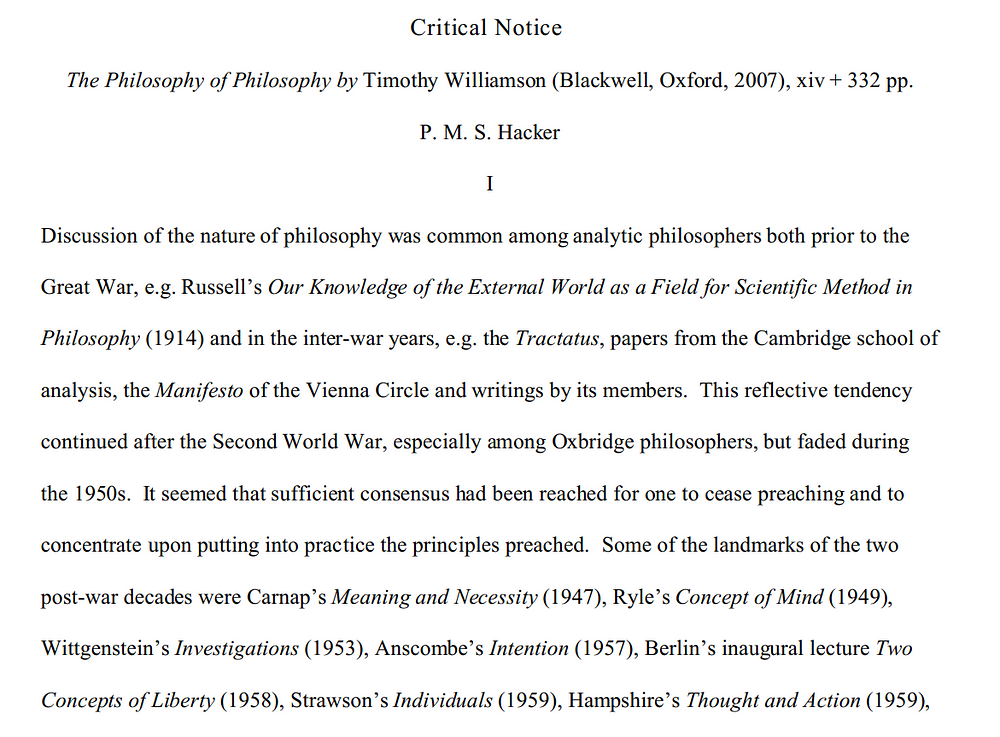
Peter Hacker’s ‘critical notice’ of Timothy Williamson’s book The Philosophy of Philosophy.

Peter Hacker writes:

“Three themes dominate the book [i.e., Timothy Williamson’s Philosophy of Philosophy]. First, that it is false that the a priori methodology of philosophy is profoundly unlike the a posteriori methods of natural science; indeed that very distinction allegedly obscures underlying similarities. Second, that the difference in subject matter between philosophy and science is less deep than supposed; ‘In particular, few philosophical questions are conceptual questions in any distinctive sense’. Third, that much contemporary philosophy is vitiated by supposing that evidence in philosophy consists of intuitions, which successful theory must explain.”

As already hinted at, Wittgensteinians don’t like “philosophical apriorism”. And they don’t like philosophical scientism either. Hacker believes that Williamson is guilty of both these sins against Wittgensteinian philosophy.

In any case, perhaps all that the words “a priori methodology of philosophy” basically mean is that such philosophy isn’t… well, science. In other words, philosophers don’t employ (to use Peter Hacker’s words) “measurement, observation or experiment”. [Note: observation is the odd one out here.]

In detail.

In the passage above, Hacker quotes Williamson stating that

“few philosophical questions are conceptual questions in any distinctive sense’”.

Perhaps it would have been better if Williamson stated the following instead:

Few philosophical questions are purely conceptual in any distinctive sense’.

Arguably, Hacker, on the other hand, believes that (virtually?) all philosophy should be conceptual analysis. (He comes very close to actually stating this. See here.) Yet Williamson too is wrong to play down “conceptual questions” entirely. Thus, both Hacker and Williamson — at least as quoted here — seem to offer their readers equally extreme positions.

As for “intuitions”.

Hacker has it that Williamson believes that

“evidence in philosophy consists of intuitions, which successful theory must explain”.

Many naturalists and physicalists are suspicious of intuitions too. Yet they usually aren’t also Wittgensteinians. In addition, explaining intuitions isn’t the same as placing them on a untouchable pedestal.

In any case, Peter Hacker also claims that Timothy Williamson sees “fundamental similarities between philosophical and scientific knowledge”. More specifically, Williamson is said to make a move from the “armchair” to “knowledge of truths about the external environment”.

Yet Hacker also hints at (as it were) philosophical apriorism in the following passage:

“It consists of thinking, without any special interaction with the world beyond the armchair, such as measurement, observation or experiment would typically involve.”

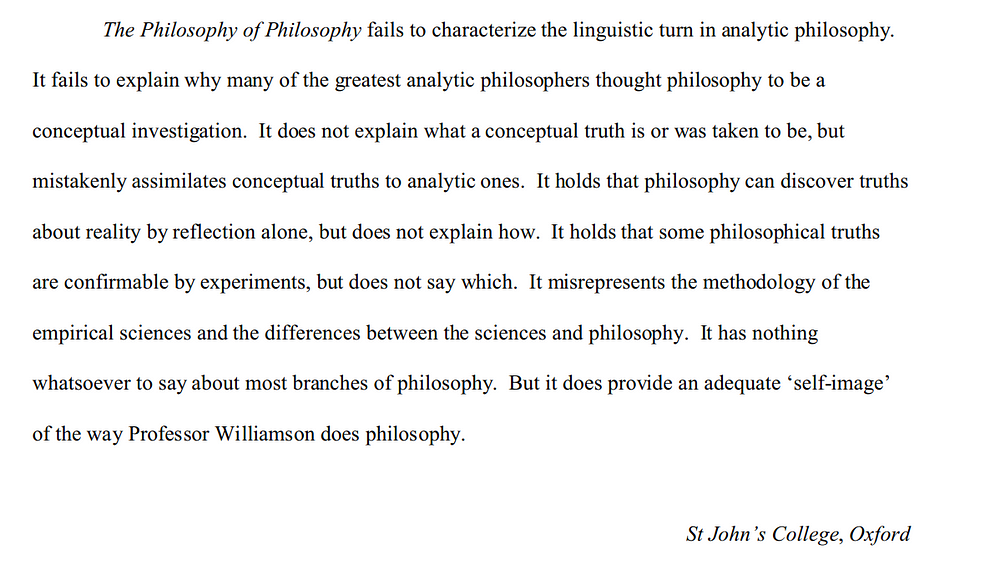
Whatever the answers to these questions are, Hacker also says that Williamson “holds that philosophy can discover truths about reality by reflection alone”. Despite that, Williamson also believes that “some philosophical truths are confirmable by experiments”.

That last passage may simply mean that even though “philosophical truths” are “armchair” phenomena, then there’s still nothing to stop them from being backed-up (or “confirmable”) by scientific experiments — or by other a posteriori factors. (This is a little like Laurence BonJour’s position on a priori statements.)…

Actually, if a philosophical truth is indeed a philosophical truth, then some philosophers would argue that it can hardly be contradicted by scientific experiments. And — almost as a consequence of this — it must be confirmable by them too. However, all that would depend on whether experiments can have any impact on such philosophical truths at all.

Thus, in the case of certain philosophical truths at least, it can also be said that scientific experiments can neither confirm nor disconfirm them. In other words, experiments are basically irrelevant to most (or perhaps simply many) philosophical truths.

Peter Hacker’s ‘critical notice’ on Timothy Williamson’s book.

Hacker offers us more on Williamson’s position:

[S]ince philosophical ways of thinking are no different in kind from other ways, philosophical questions are not different in kind from other questions. Most importantly, philosophy is no more a linguistic or conceptual inquiry than physics.”

As for Williamson himself, he’s attempting to bridge the gap between philosophy and science when he says that “[p]hilosophy, like any other science (including mathematics) [ ] has evidence for its discoveries”. Williamson then says (i.e., against people like Peter Hacker) that “philosophy is no more a linguistic or conceptual inquiry than physics”.

Does all the above basically mean that philosophy both is and is not like science?