Monday, 27 January 2025

On Consciousness and Intelligence: Is It Mainly About Definitions?

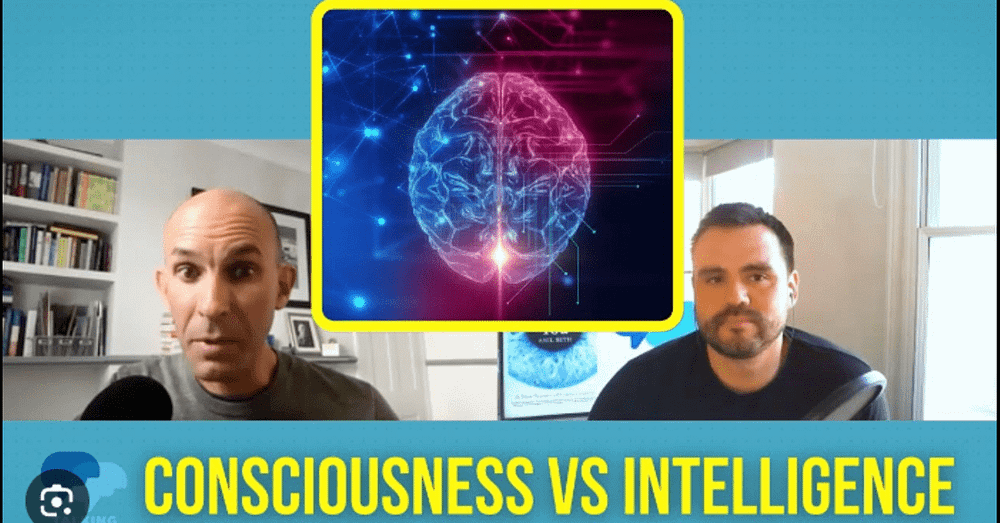
This essay is on the importance and relevance of definitions when it comes to debates about consciousness and intelligence. (As mainly found in Anil Seth’s book Being You.) More specifically, it focuses on definitions when it comes to the relation of intelligence to consciousness, and vice versa.

Philosophers and laypeople can use the same terms in very different ways. What’s more, not all people define or explain their terms in the first place. Nor do they always explain how and why such terms almost entirely flow from their very particular philosophies.
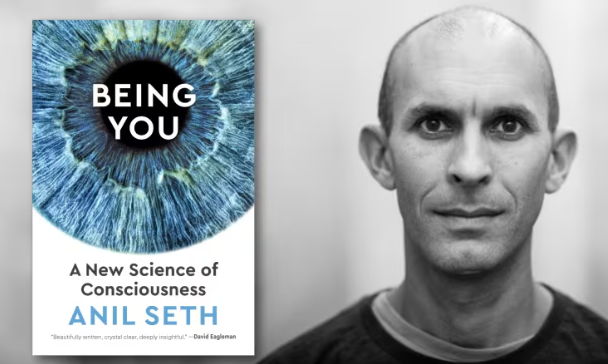
The British neuroscientist Anil Seth (implicitly) recognises the importance of definitions when he tells us that “[f]or me, there are no knock-down arguments”. That is, they’re no knock-down arguments when it comes to some of the issues around consciousness which he discusses (i.e., in his book Being You: A New Science of Consciousness).

Is that primarily because it partly — or even mainly — depends on definitions?

Moreover, just as definitions are important in this debate, so too is the (to quote Seth again) “theory of consciousness you subscribe to”.

Thus, according to a certain theory of consciousness, certain things will account for what would makes an entity conscious and/or intelligent. With another theory, (completely?) different things will account for what makes an entity conscious and/or intelligent.

It’s (Nearly) All About Definitions
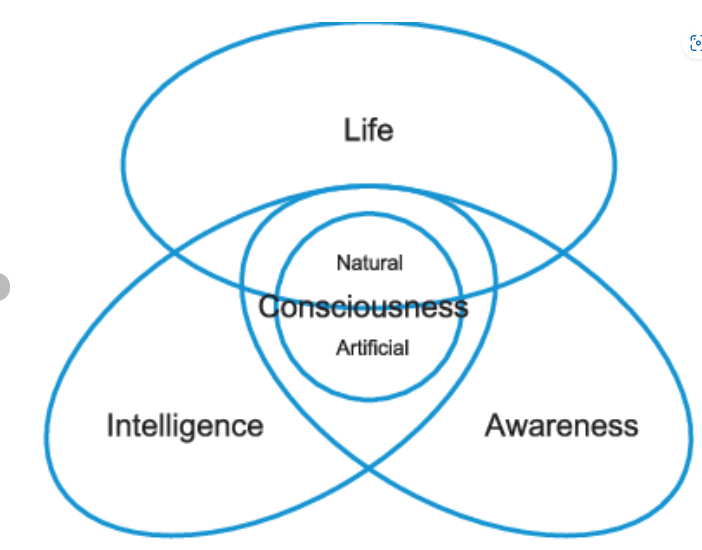
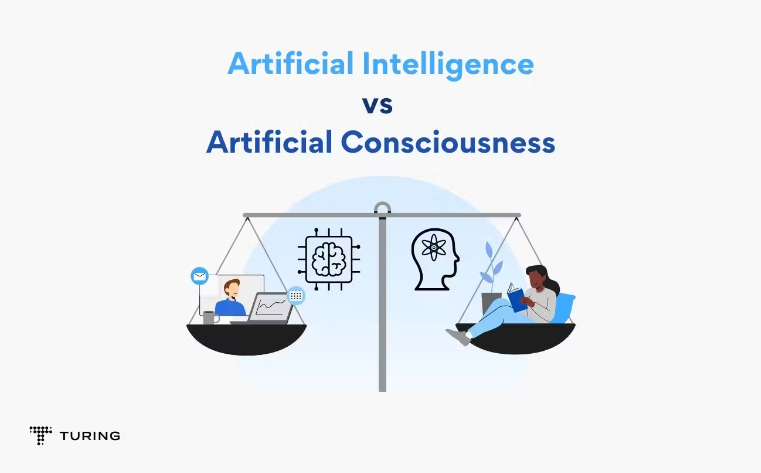
Just one of the very many schematic representations of this issue.

Anil Seth lays his own cards on the table when he states the following:

[C]onsciousness is not determined by intelligence, and intelligence can exist without consciousness.”

Of course, some theorists and philosophers believe that (high levels of?) intelligence must always come along with a degree of consciousness. Others simply invert this binary relation and argue that consciousness is intrinsically linked to intelligence…

Anil Seth rejects both these positions.

Put simply, Seth argues that computers and robots can be (very) intelligent without ever instantiating consciousness. And ants, viruses, etc. may be conscious without also being intelligent

But hang on a minute!

All this depends on how we define the words “intelligence” and “consciousness” in the first place!

After all, on many definitions, intelligence does indeed come along with consciousness. And, on other definitions, consciousness doesn’t (necessarily?) come along with intelligence.

This means that in this debate at least, many people may well be talking passed each other.

More concretely, the importance of definitions is — again, implicitly — recognised by Seth when he tells us that

“it could be that all conscious entities are at least a little bit intelligent, if intelligence is defined sufficiently broadly” .

Yet this isn’t just a problem created by the broad definitions of the words “intelligence” and “consciousness” (or “conscious”). It’s also about the different definitions of these two words. That said, some differences between these words may themselves be a result of their very-broad definitions.

In addition, if an entity displays “at least a little bit [of] intelligence”, then some may well argue that it must also be displaying at least a little bit of consciousness.

So, here again, it not only depends on definitions: it also depends on how different words (in this case, “intelligence” and “consciousness”) depend on each other for their meaning. [See note 1 on Ferdinand Saussure.]

David Chalmers on Stipulation
The Australian philosopher David Chalmers often stresses the importance of what he calls “stipulation” when it comes to philosophically-loaded terms. His basic point is that if we stipulate what we mean by a particular word, then the answers to any questions we have about facts, data, what x is, etc. must — at least partly — follow from such prior stipulations.

Of course, there is a problem with over-stressing the importance of stipulation. Indeed, Chalmers himself sums up this problem with a joke. He wrote:

“One might as well define ‘world peace’ as ‘a ham sandwich.’ Achieving world peace becomes much easier, but it is a hollow achievement.”

Clearly, even when someone argues that stipulation is important, he or she won’t also accept that we can define the words “world peace” as “a ham sandwich”. In turn, some philosophers and laypersons will feel just as strongly about claiming that, say, a computer virus is alive (see here) or that bacteria learn (see here).

As it is, Chalmers only applies his joke to a single case: consciousness.

So perhaps it can be applied to other cases too.

The History of the Word “Consciousness”

As a result of all the problems highlighted above, perhaps it would be wise to adopt a deflationary — as well as a stipulational (as with Chalmers)— view of the word “consciousness’”. That’s what the philosopher Kathleen Wilkes did when she wrote that

“perhaps ‘consciousness’ is best seen as a sort of dummy-term like ‘thing’, useful for the flexibility that is assured by its lack of specific content”.

Yet writing at the end of the 19th century, the psychologists James Ward and Alexander Bain took a strong line against the ostensible liberalism (or pluralism) toward the word “consciousness”. They argued that it’s precisely because that word is a dummy-term (as Wilkes put it) that it traps us in the mud. They wrote:

“‘Consciousness’ is the vaguest, most protean, and most treacherous of psychological terms.”

With strong words like that, one can see how it didn’t take long for behaviourism to take up its hegemonic position in psychology and philosophy in the 1920s and beyond.

Conclusion
The problem is that if people engaged in an exchange are using the same term in very different ways, then we can hardly say that there’s any debate occurring in the first place. What’s more, this situation is confounded by the fact that the debaters assume — or simply believe — that his/her opponent is using the same word (or term) in the same way. That’s the case even when it’s clear to some on the outside that this isn’t happening. Thus, again, how can we even say that there is a debate (or dialogue) going on here if the debaters are talking about different things — even when they’re using exactly the same words (or terms)?

More relevantly to this essay, when people use, mention and share the words “consciousness”, “intelligence”, etc., and mean very different things by them, then that situation is far worse than one in which a debater simply makes a statement which is followed by a largely unrelated counter-statement (though not a counter-argument) from his fellow debater. In this former case, there’s the seeming situation that the debaters are talking about the same thing. Yet if they’re using their primary terms in very different ways, and those terms are born of very different philosophies, then that’s even worse than a simple shouting match between two rival debaters. At least in this latter case the debaters are talking about the same thing — even if they strongly disagree with each other.

Finally, it’s of course the case that any given philosopher or layperson might well have defined his terms elsewhere — even in great detail. Moreover, you can’t expect a philosopher or layperson to define his (disputed) terms every time he uses them. All that said, even if he has defined his terms elsewhere, the chances that the reader (or fellow debater) has read those definitions may well be — and usually are — very slim indeed.


Note

(1) Take Ferdinand de Saussure’s stress on the (rather obvious?) relation of words to other words, the nature of linguistic “systems”, and the “[system of] differences” set up between words within such systems.

More relevantly, the words “intelligence” and “consciousness” not only need to be defined: they can also be seen to be involved in various negative and positive “binary oppositions”.



Monday, 6 January 2025

Carlo Rovelli on the Religious Critics of Science

The theoretical physicist Carlo Rovelli writes: “The world is full of people who say that they have The Truth. [] There is always someone with his own real Truth.”

This essay is about those critics of science who yearn for (to quote Rovelli again) “some prophet dressed in white, uttering the words, ‘Follow me, I am the true way’”.

(i) Introduction
(ii) David Berlinski’s Criticisms of Contemporary Science
(iii) Henri Poincaré on the Critics of Science


In the book What Is Religion? (published in 1902), the Russian writer Leo Tolstoy wrote the following words:

“What we call science today is merely a haphazard collection of disconnected scraps of knowledge, most of them useless, and many of which, instead of giving absolute truth provide the most bizarre delusions, presented as truth one day and refuted the next.”

Here we have Tolstoy openly yearning for what he called “absolute truth”. He strongly believed that science didn’t offer people absolute truth. However, religion did.

To move on to 2016.

The Italian theoretical physicist and writer Carlo Rovelli picked out those contemporary critics of science who’ve taken a very similar position to that of Tolstoy.

In his book Reality Is Not What It Seems, Rovelli writes:

“The answers given by science are reliable because they are the best available today.”

So science does offer us answers. However, it doesn’t offer us absolute answers. In other words, scientific answers are never “considered [] to be definitive”. Or, in Tolstoy’s own terms, they’re never absolute

And a good thing too!

If scientific theories were deemed to be absolutely true, and if all its answers were definitive, then scientists wouldn’t “see them as open to improvement”

And, again, that would be disastrous for science (or for scientific advance).

Rovelli goes into more detail on all this when he states the following:

“As every researcher working in every laboratory throughout the world knows, doing science means coming up hard against the limits of your ignorance on a daily basis — the innumerable things which you don’t know, and can’t do.”

Rovelli then provides his readers with a longish list of some of the present-day limits of science:

“We don’t know which particles we might see next year at CERN, or what our next telescopes will reveal, or which equations truly describe the world; we don’t know how to solve the equations we have, and sometimes we don’t understand what they signify; we don’t know if the beautiful theory on which we are working is right. We don’t know what there is beyond the Big Bang; we don’t know how a storm works, or a bacterium, or an eye — or the cells in our own bodies, or our thought processes.”

Tolstoy himself would have been shocked by these confessions — especially since they come from a well-known and respected scientist!

On the other hand, there’s still a degree of hyperbole in Rovelli’s own words. That’s said because we do, in fact, know a lot about our thought processes, the cells in our own bodies. We also know a lot about the Big Bang, about storms, bacteria, etc…

Sure!

It’s still the case that scientists as a whole don’t have the final word on any of these things.

Yet Tolstoy — for one — yearned for that final word… on everything. Hence he came down on the side of religion in his very own religion-vs-science war.

Tolstoy’s positions on science are relevant in other respects too.

For a start, it’s odd that scientists get it on the chin for believing that “they can explain everything”, as well as for not actually being able to do so.

Of course, there may be no actual contradiction here. It depends.

Some critics of science don’t like the belief (or idea) that science can — in principle — explain everything. Other critics (like Tolstoy himself) believe that science should explain everything. Thus, they become emotionally unhappy when it doesn’t do so.

Just to be clear.

There are two types of critic hinted at here:

(1) Those critics who find it audacious to even claim that science can “explain everything”. 
(2) Those critics who actually
want science to explain everything. However, they become deeply unhappy when they discover that it can’t.

It can be seen that these two types of critics can sometimes crossover.

If we return to Tolstoy’s words again.

David Berlinski’s Criticisms of Contemporary Science

In the passage above we had Tolstoy openly yearning for what he called “absolute truth”. He strongly believed that science didn’t offer people absolute truth: religion did.

However, let’s now quickly move from Tolstoy in 1902 to tackle the up-to-date example of the American writer and polemicist David Berlinski.

Berlinski has his very own Tolstoyan criticisms of contemporary science.

A good place to start is with Berlinski’s article ‘Was There a Big Bang?’. More particularly, take this literary passage (which can be found at the end of his article):

“Like Darwin’s theory of evolution, Big Bang cosmology has undergone that curious social process in which a scientific theory is promoted to a secular myth. [] Myths are quite typically false, and science is concerned with truth. Human beings, it would seem, may make scientific theories or they may make myths, but with respect to the same aspects of experience, they cannot quite do both.”

[See my ‘A Case Against Contemporary Theoretical Physics and Cosmology’.]

So, just like Tolstoy before him, does Berlinski yearn for absolute truth? And, in so doing, does he get science (at least as it was expressed by Rovelli earlier) drastically wrong? (Perhaps, instead, Berlinski is simply a contrarian and showman.)

To repeat:

(1) Is it that science is merely offering us (to use Tolstoy’s words again) “a haphazard collection of disconnected scraps of knowledge” under the disguise of truth? 
(2) Alternatively, is (absolute) truth not even aimed at by scientists in the first place?

It seems that, in this case at least, science can’t win.

By many scientists’ own admissions, science never even attempts to offer us absolute truth. Indeed, according to some philosophically-inclined scientists, science doesn’t even offer us truth. (This is a tricky position that not many scientists themselves would accept.)

In tune with Rovelli, take the philosopher of science and Catholic priest Ernan McMullin (who died in 2011). He didn’t believe that the “acceptance of a scientific theory [also] involves the belief that it is true”. Moreover,

“to suppose that a theory is literally true would imply that no further anomaly could arise”.

And surely such a belief in literal truth (or in absolute truth) is counterproductive in science. [See my Scientific Theories Don’t Need To Be True’.]

Yet, as Rovelli puts it, science is also attacked for “pretending to explain everything”, and also “for thinking it has an answer to every question”.

So did Tolstoy himself really want science to explain everything, and to answer all questions? What’s more, when he saw that science failed in these regards, did that prompt him to embrace religion instead?

Alternatively, was Tolstoy already committed to the absolute truths of religion long before he made his rhetorical criticisms of science?

In any case, let’s now take the example of the French mathematician, theoretical physicist and philosopher of science Henri Poincaré, who was certainly well aware of Tolstoy’s views on science. [See here.]

Henri Poincaré on the Critics of Science

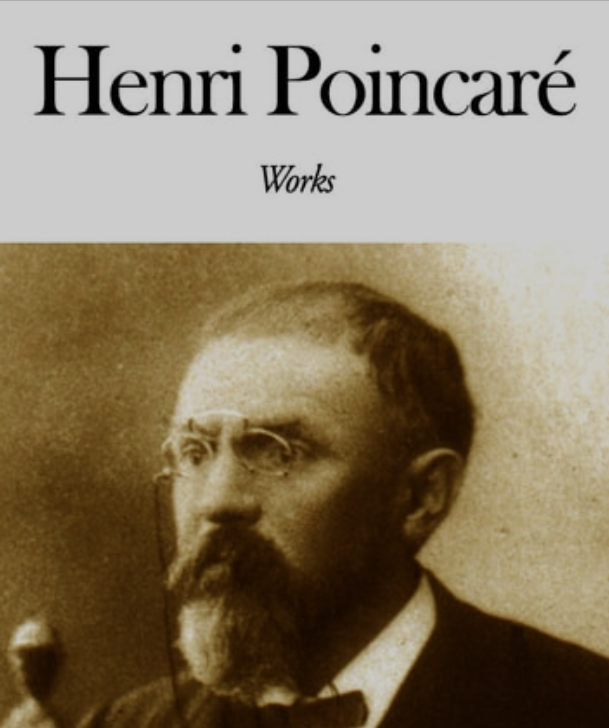
Henri Poincaré (roughly a contemporary of Tolstoy) can be seen to have been responding to positions such as Tolstoy’s when he wrote the following often-quoted words:

“The laity are struck to see how ephemeral scientific theories are. After some years of prosperity, they see them successively abandoned; they see ruins accumulate upon ruins; they foresee that the theories fashionable today will shortly succumb in their turn and hence they conclude that these are absolutely idle. This is what they call the *bankruptcy of science*.”

However, Poincaré then concluded by saying that this “scepticism is superficial”.

Why superficial?

Poincaré continued:

“The [laity] give[s] no account to themselves of the aim and the role of scientific theories; otherwise they would comprehend that the ruins may still be good for something.”

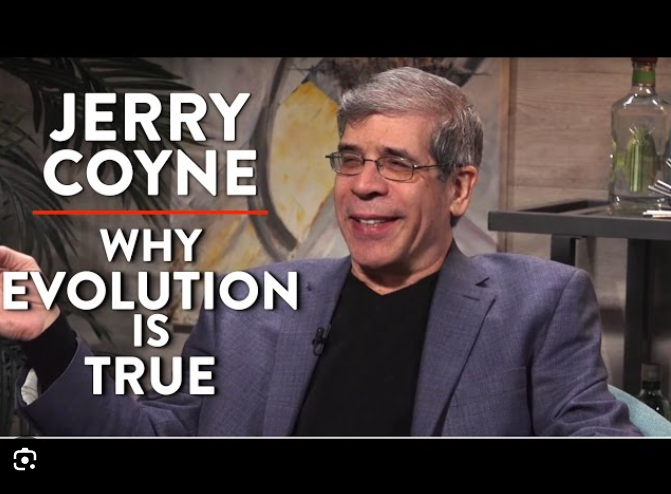
Just as I brought Tolstoy up to date by discussing Rovelli’s position on the contemporary critics of science, so lets now bring Henri Poincaré up to date by quoting the American biologist Jerry Coyne and his own response to Berlinski:

[According to David Berlinski] [s]cience has no answers to ‘The Big Questions’ like ‘why is there something instead of nothing?’ (the answer that ‘it was an accident’ is fobbed off by Berlinski as ‘failing to meet people’s intellectual needs’, which of course is not an answer but a statement about confirmation bias); ‘where did the Universe come from?’; ‘how did life originate?’; ‘what are we doing here?’, ‘what is our purpose?’, and so on. Apparently Berlinski [like Leo Tolstoy] doesn’t like ‘we don’t know’ as an answer, but as a nonbeliever I’d like to know his answer! He has none; all he does is carp about science’s ignorance.”

It’s useful to bring in the American science writer Kitty Ferguson here.

Ferguson is very sympathetic to religion. At the very same time, she also seems to have understood science far better than either Tolstoy or Berlinski when she wrote the following words:

[S]cience doesn’t make any claim to have discovered the ultimate truth about anything. [Scientists] don’t speak of ‘the verdict of science’, but of ‘the standard model’. [] They speak of ‘approximate theories’. [] They speak of ‘effective theories’, which means that something we can work with for the present while knowing it isn’t absolutely and unequivocally correct.”

[These words can be found in Ferguson’s book The Fire in the Equations: Science, Religion and the Search For God.]

Finally, we can see that not only does Rovelli (in a manner of speaking) play down science, he’s also well aware of what at least some of its critics really want. In conclusion, he writes:

“There is always, in this world, someone who pretends to tell us ultimate answers. The world is full of people who say that they have The Truth. Because they have got in from the fathers; they have read it in a Great Book; they have received it directly from god; they have found it in the depths of themselves. There is always someone who has the presumption to be the depository of Truth, neglecting to notice that the world is full of *other* depositories of Truth, each one with his own real Truth, different from that of the others. There is always some prophet dressed in white, uttering the words, ‘Follow me, I am the true way.’”

So did Leo Tolstoy and David Berlinski yearn for someone “dressed in white” who would offer them absolute truth? And do many of the other critics of science (i.e., whom Rovelli refers to in his book) also yearn for “real Truth”?


Sunday, 5 January 2025

Anil Seth: Intelligence ≠ Consciousness ≠ Intelligence

The critics of both panpsychism and integrated information theory (IIT) rely on an implicit— although sometimes explicit — strong connection which they make between intelligence and consciousness. In basic terms, then, they believe that because very basic entities can’t be deemed to be intelligent, then they can’t be deemed to instantiate consciousness either.

(i) Introduction
(ii) Thermostats, Computers and Animals
(iii) According to Seth, Chalmers and Penrose, Functionalism Fails
(iv) John Searle on Biological Brains


Without actually mentioning panpsychism and integrated information theory (IIT), the British neuroscientist Anil Seth states the following:

“This is the assumption that consciousness and intelligence are intimately, even constitutively, linked: that consciousness will just come along for the ride.”

Now let’s take an extreme version of this position.

If intelligence and consciousness (with a stress on the former) are necessarily linked, then (depending on how “intelligence” is actually defined in the first place) thermostats can’t be conscious. And neither can ants, mice and even human babies.

Seth draws his own conclusions from this when he continues with these words:

[T]he tendency to conflate consciousness with intelligence traces to a pernicious anthropocentrism by which we over-interpret the world through the distorting lenses of our own values and experiences. *We* are conscious, *we* are intelligent, and *we* are so species-proud of our self-declared intelligence that we assume that intelligence is inextricably linked with our conscious status and vice versa.”

Seth seems to pick up on a Cartesian strand here when he adds the following warning:

“If we persist in assuming that consciousness is intrinsically tied to intelligence, we may be too eager to attribute consciousness to artificial systems that appear to be intelligent, and too quick to deny it to other systems — such as other animals — that fail to match up to our questionable standards of cognitive competence”

It’s not entirely clear that any collective “we” has ever “conflate[d] consciousness with intelligence”. Perhaps only a single philosophical tradition — i.e., Cartesianism — did so. However, it’s still of up for debate how much of an influence that tradition had outside of philosophy and science.

In addition, not all other cultures and traditions — i.e., outside the West — have had benevolent and sympathetic attitudes to all animals. Added to that is the fact that individuals or collectives can be cruel to animals, deny them dignity and worth, etc. and still believe that they are indeed conscious, and, to a degree, even intelligent.

So there’s a danger of conflating Descartes’ own technical and somewhat philosophically-arcane position on animals, with what Western “folk” believed. [See Note 1.]

To sum up. It’s hard to believe that there are any strict Cartesians nowadays. Thus, anthropocentrism itself may not be as big a problem as Seth believes.

It depends…

It depends on the philosophical ism being discussed, and also on what particular philosophers and scientists have to say on the matters in hand.

All that said, and as ever, much of this depends on what’s meant by the words “consciousness” and “intelligence” in the first place!

Thus, if the word “intelligence” is taken (as Seth puts it) “anthropocentrically”, then we’re driven to a Cartesian position which denies most (even all?) animals consciousness. From a different direction, we’re also driven to a position which laughs at panpsychists for supposedly believing that stones or atoms “think”. [See my ‘Sabine Hossenfelder Doesn’t Think… About Panpsychism’.]

Thermostats, Computers and Animals

Against both anthropomorphism and Cartesianism, there’s a passage from Anil Seth (which doesn’t express his own position) which actually widens the domain of consciousness, rather than narrows it. However, even though it widens it to all animals, it doesn’t also do so to computers, robots, thermostats, etc. Seth writes:

“For some people — including some AI researchers — anything that responds to stimulation, that learns something, or that behaves so as to maximise a reward or achieve a goal is conscious.”

Thus, according to this account, thermostats may not be deemed to be conscious because they don’t — again, depending on definitions — learn anything, and they don’t do anything to maximise a reward or achieve a goal

However, thermostats do respond to stimulation.

In any case, Seth’s account of consciousness above can be applied to literally all animals.

So is this an account which leaves out intelligence?

Or is responding to stimulation, learning something, and behaving so as to maximise a reward or achieve a goal not only constitutive of being conscious, but also of being intelligent?

Indeed, does it matter?

Which sets of data and arguments could possibly help us decide which is the best term (i.e., “intelligent” or “conscious”) to use here?

Still, Seth warns us that consciousness and intelligence are often juxtaposed. Yet they’re sometimes being juxtaposed in such a way (i.e., in the passage above) so as to work against anthropocentrism, and toward a widening of the domains of both intelligence and consciousness.

According to Seth, Chalmers and Penrose, Functionalism Fails

Anil Seth argues that functionalism is at the heart of both AI theory generally, as well as being at the heart of the belief that intelligence (or at least “intelligent behaviour”) and consciousness are intrinsically connected.

So first things first.

According to Seth’s account of functionalism,

“what matters for consciousness is what a system *does*”.

What does the relevant system do?

In this case, it “transforms inputs into outputs”. And if it does that “in the right way”, then, according to some functionalists, then “there will be consciousness”.

Thus, on this definition, a thermostat must be conscious — at least to some degree…

The Australian philosopher David Chalmers seems to agree.

In his ‘What is it like to be a thermostat?’, Chalmers writes:

[Thermostats] take an input, perform a quick and easy nonlinear transformation on it, and produce an output.”

What Chalmers adds to this story, however, is the important notion and reality of information. [See here.] However, let’s just say here that ants and viruses take inputs too, and they perform quick and easy nonlinear transformations on such inputs, to produce outputs. (It can be doubted that a thermostat’s transformations are, in fact, nonlinear.)

So what about a paramecium and its own inputs and outputs?

The mathematical physicist Roger Penrose writes:

“For she [a paramecium] swims about her pod with her numerous tiny hairlike legs — the cilia — darting in the direction of bacterial food which she senses using a variety of mechanisms, or retreating at the prospect of danger, ready to swim off in another direction. She can also negotiate obstructions by swimming around them. Moreover, she can apparently even learn from her past experiences [].”

Chalmers has referred to proto-experiences when discussing a thermostat (although not actually quoted doing above), and here we have Penrose using the unadulterated word “experiences” in reference to a paramecium.

As already stated, functionalists stress… well, functions. In other words, they stress what systems do. Thus, functionalists also stress substrate-independence. Yet, as just mentioned, Penrose is actually stressing biology itself.

In more detail.

Penrose believes that ants are one step ahead of computers and other artificial entities when he claims that the

“actual capabilities of an ant seem to outstrip by far, anything that has been achieved by the standard procedures of AI”.

The molecular biologist, biophysicist and neuroscientist Francis Crick also argued that the study of consciousness must be a biological pursuit.

According to Crick, psychologists (as well as philosophers) have

“treated the brain as a black box, which can be understood in terms merely of inputs and outputs rather than of internal mechanisms”.

The biologist, neuroscientist and Nobel laureate Gerald Edelman (1929- 2014) is also said to have held the position that the mind

“can only be understood from a biological standpoint, not through physics or computer science or other approaches that ignore the structure of the brain”.

All this brings us to the more (philosophically) detailed account of these issues as offered to us by the American philosopher John Searle.

John Searle on Biological Brains

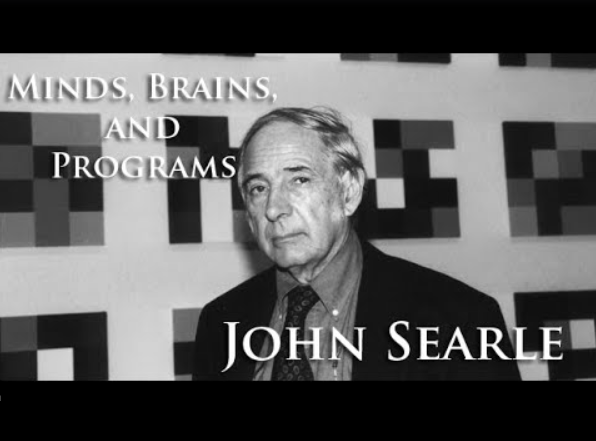
Searle’s basic position is that if functionalists ignore the physical biology of brains and nervous systems, and, instead, focus exclusively on syntax, computations or functions, then that will lead to a kind of 21st century mind-body dualism. What he means by this is that in much AI theory and functionalism there’s a radical disjunction created between the actual physical reality of the brain and how we explain — or account for — consciousness (as well as for intentionality and the mind generally).

Searle himself wrote the following words:

“I believe we are now at a point where we can address this problem as a biological problem [of consciousness] like any other. For decades research has been impeded by two mistaken views: first, that consciousness is just a special sort of computer program, a special software in the hardware of the brain; and second that consciousness was just a matter of information processing. The right sort of information processing — or on some views any sort of information processing — would be sufficient to guarantee consciousness. [] it is important to remind ourselves how profoundly anti-biological these views are. On these views brains do not really matter. We just happen to be implemented in brains, but any hardware that could carry the program or process the information would do just as well. I believe, on the contrary, that understanding the nature of consciousness crucially requires understanding how brain processes cause and realize consciousness. ”

He continued:

“Perhaps when we understand how brains do that, we can build conscious artifacts using some nonbiological materials that duplicate, and not merely simulate, the causal powers that brains have. But first we need to understand how brains do it.”

To Searle himself, it’s mainly about what he calls “causal powers”.

This refers to the fact (or possibility) that a certain level of complexity is what’s required (as against panpsychism, and perhaps against integrated information theory too) to bring about those causal powers which are necessary for consciousness (as well as for intentionality and mind generally).

Despite that, Searle never argues that biological brains are the only things capable — in principle — of bringing about consciousness and (genuine?) intelligence. (Therefore, in Searle-speak, semantics.) He only argues that biological brains are the only things known to exist which are complex enough to do so. Again, Searle doesn’t believe that only brains can give rise to minds. Searle’s position is that only brains do give rise to minds. In other words, Searle is emphasising an empirical fact. However, he’s not also denying the logical, metaphysical and even natural possibility that other things can bring forth consciousness and intelligence.


Note:

It can be argued that Descartes’ view on animals filtered down to the folk. On the other hand, it can also be argued that Descartes himself latched onto preexisting (Christian?) views about animals.

It’s also worth noting here that Descartes stressed mind, not consciousness itself.

(*) See my ‘Neuroscientist Anil Seth Links Panpsychism To Integrated Information Theory’ and ‘Anil Seth: Consciousness ≠ Integrated Information’.