Friday, 16 September 2022

Scientists at War With Scientists: Insults, Politics, and Darwinism

Lynn Margulis said that Richard Dawkins is “arrogant” and “solipsistic”. Richard Dawkins, in turn, said that Margulis is an “extremely obstinate” person who “doesn’t listen to argument”. These are just two examples among many in one single book. This helps show us that (nearly?) all scientists are emotional creatures (just like us) — often with both fragile and large egos. They also hold strong political and moral views. Arguably, those views sometimes impinge on their science. And that’s precisely why the distinction between science and scientists must be made.
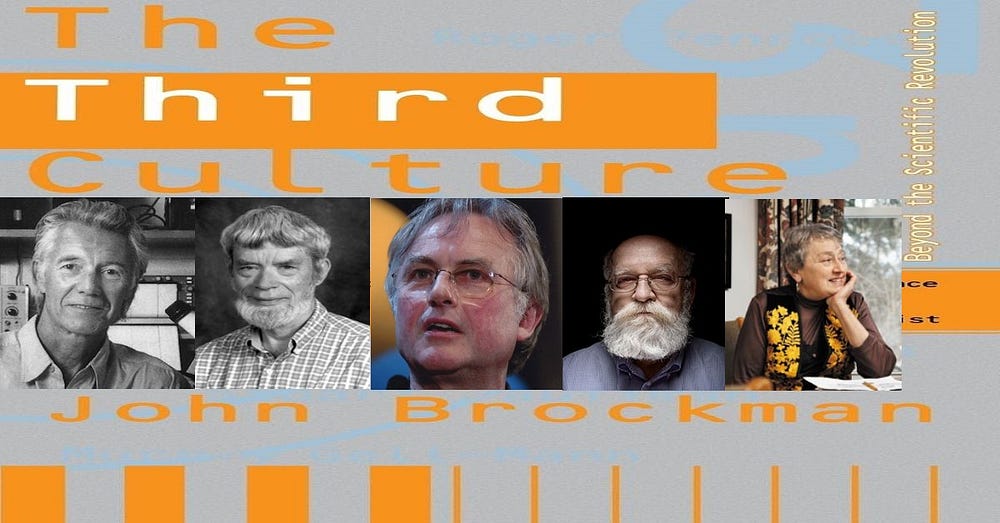
Brian Goodwin, G.C. Williams, Richard Dawkins, Daniel Dennett and Lynn Margulis.
“Science is politics by other means.”

Sandra Harding, from her book Whose Science? Whose Knowledge?
(i) Introduction
(ii) John Brockman’s The Third Culture
(iii) Scientific Metaphors (Such as “the Selfish Gene”)
(iv) Nature: Gaia vs Hell
(v) Politics and Scientific Metaphors
(vi) Brian Goodwin on Capitalist Science
(vii) Brian Goodwin’s Metaphors?


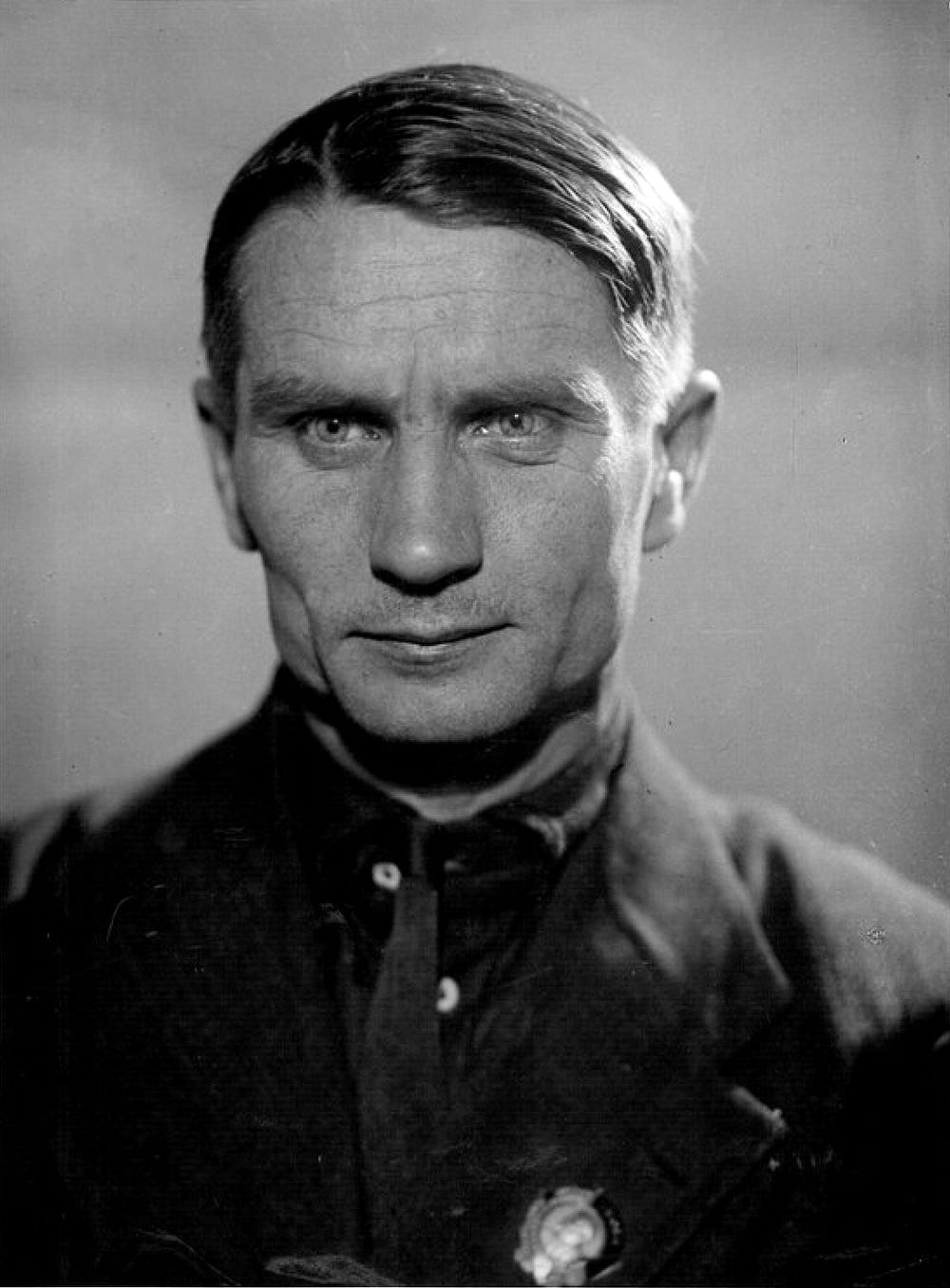
Trofim Lysenko

Science is science.

And scientists are scientists.

Of course you can’t have science without scientists. Yet, in broad terms, it can still be said that science is an abstraction from the work of all individual scientists.

So it’s wise not to confuse what an individual scientist states— or believes — with science itself.

This basically means that Stephen Hawking isn’t theoretical physics. Michael Mann and James Hansen aren’t climatology. (Richard Lindzen and Freeman Dyson aren’t climatology either.) Richard Dawkins isn’t evolutionary biology or Darwinism. (Stephen Jay Gould isn’t evolutionary biology or Darwinism either.) Anthony Fauci isn’t immunology or medical science. Steven Pinker isn’t evolutionary psychology. Brian Cox and Nigel DeGrasse Tyson aren’t the whole of science.

To state the obvious: scientists are human beings. And, like all human beings, they are emotional creatures who also have strong political and moral views. Not only that: those views sometimes impinge on their science…

And that’s precisely why the distinction between science and scientists must be made.

It’s also worth making a distinction here between the following:

(1) Those scientists who use science (or specific scientific theories) to advance their prior political goals, values and ideologies. 
(2) Those scientists who believe that science
itself is always political (i.e., regardless of the specific goals, values and ideologies of particular scientists).

Of course there can be much overlap between (1) and (2).

Sandra Harding (quoted at the top), for example, believes that science itself is (aways) political. In that, she’s following the footsteps of Soviet agronomist and biologist Trofim Lysenko (1898–1976), who divided science into “bourgeoise science” and “proletarian science”. (Interestingly, Lysenko too had a problem with the Darwinian notion of competition — see later sections.) And Harding herself speaks of “gendered science” and “white male science”.

However, all the scientists featured in this essay (except for Brian Goodwin) wouldn’t say that science itself is always political (although they may say that science can be political). However, it can be argued that some scientists do use their scientific theories to advance their prior political goals and values.

In terms of the following essay itself.

John Brockman’s The Third Culture
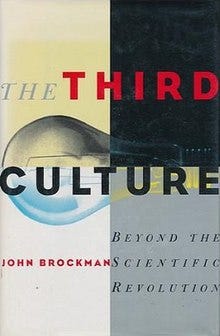
Virtually all the quotes in this piece are taken from The Third Culture: Beyond the Scientific Revolution. This book was edited by John Brockman, who also wrote the introductions to all the individual chapters.

John Brockman

Brockman also runs the Edge Foundation website, in which the header reads:

“To arrive at the edge of the world’s knowledge, seek out the most complex and sophisticated minds, put them in a room together, and have them ask each other the questions they are asking themselves.”

Wikipedia also tells us that in The Third Culture “leading scientists and thinkers contribute their thoughts in plain English”.

More relevantly, the interesting thing about Brockman’s The Third Culture is how clear, open and honest the scientists within it are (hence the words “plain English”). It can also be assumed that this clarity and honesty was due to the simple fact that the book’s contents contain the transcripts of various taped interviews with the featured scientists. In other words, this isn’t the kind of stuff you’d read in academic papers or even in popular- science books.

Scientific Metaphors (Such as “the Selfish Gene”)
Of course it may be (or actually is) the case that metaphors are of vital importance in science — and not only to help laypersons understand matters. It must also be acknowledged that scientists get annoyed when others — especially philosophers — pick up on their use of metaphors and other poorly-defined terms. (Such critics have been accused of conceptual conservatism.) One also needs to decipher how aware the scientists discussed are of the metaphorical nature of the words (or phrases) they use. Indeed it also needs to be asked if such scientists take these words (or phrases) to be metaphors at all!

Take Richard Dawkins’ well-known phrase “the selfish gene”.

These words are extremely problematic.

The simple argument in this essay is that genes are neither selfish nor not selfish.

So let’s rewrite a passage from the Dutch philosopher Baruch Spinoza (1632–1677) in which the word “genes” is substituted for Spinoza’s own word “nature”:

I would warn you that I do not attribute to genes either selfishness or cooperativeness. Only in relation to our imagination can genes be called selfish or cooperative.

Of course the phrase “the selfish gene” has been debated to death. And Dawkins has himself stressed its metaphorical nature (see here).

Yet if you take away the phrase’s metaphorical content, readers may wonder what, precisely, is left.

Nature: Gaia vs Hell
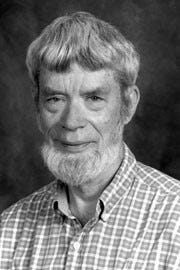
G.C. Williams

In John Brockman’s The Third Culture, the Gaia hypothesis is discussed by various scientists. Those scientists include G.C. Williams, Lynn Margulis, Richard Dawkins and Brian Goodwin.

Let’s begin with the American biologist George Christopher Williams (1926–2010).

Lynn Margulis

G.C. Williams puts the boot into fellow biologist Lynn Margulis (1938–2011) in the following manner:

[] I would say that Lynn Margulis is very much afflicted with a kind of ‘God-is-good’ syndrome, in that she wants to look at nature and see something benign and benevolent and ultimately wholesome and worth having [].”

The obvious riposte to that passage is to state that very similar things could have been said about G.C. Williams himself. Indeed Williams actually admitted that! That is, he said that

[Margulis] could say the same about me — that I think ‘God is evil,’ and I look out there at His creations and see nothing but evil”.

Perhaps Margulis would have been right to do so. After all, Williams also talked about nature being (although quoting Tennyson) “red in tooth and claw”.

Yet what if nature is neither “benign and benevolent” nor “red in tooth and claw”? Perhaps Spinoza was right after all.

In any case, G.C. Williams continued on the same theme:

[Margulis] likes to look out there and see cooperation and things being nice to each other. This culminates in this Gaia idea. [] But that’s what she wants to see, and therefore, come what may, that’s what she’s going to see.”

Of course Williams might well have been purely metaphorical and/or rhetorical when he used the words “red in tooth and claw” and even when he talked about “competition”. (Obviously, Tennyson’s poetic phrase is a metaphor.) But so too might Margulis when she said the things she said.

So does all this simply mean that this is only a debate about which metaphors scientists should use and how they should use them? In that case, then, where does the anger and sarcasm come from (i.e., as displayed in The Third Culture)?

Ironically enough (i.e., considering G.C. Williams’s take on Margulis), even James Lovelock’s friend — i.e., Margolis herself — admitted that Lovelock had political (or perhaps moral) motivations when it came to his own Gaia theory.

In detail, Margulis stated the following:

“Lovelock’s position is to let the people believe that Earth is an organism, because if they think it is just a pile of rocks they kick it, ignore it, and mistreat it. If they think Earth is an organism, they’ll tend to treat it with respect. To me, this is a helpful cop-out, not science.”

This basically means that what G.C. Williams accused Margulis of (in the quoted passage a few moments ago), Margulis accused Lovelock of (in the passage directly above).

The passage from Margulis is also odd because it’s basically saying that Lovelock was dishonest and/or insincere. That is, Lovelock didn’t actually (or really) believe that the Earth is an “organism” at all. Instead, he simply wanted “to let the people believe [my italics] that Earth is an organism”.

So why did Lovelock want people to believe that?

He wanted people to believe that Earth is an organism because he believed that if this noble lie (or “lie for Justice”) wasn’t peddled by scientists such as himself, then — most? all? — people would think that the Earth is “just a pile of rocks”. And if people thought that, then “they [would] kick it, ignore it, and mistreat it”.

[This way of looking at things was replicated by the mathematician and sci-fi novelist Rudy Rucker, who’s also a panpsychist. In another book edited by John Brockman, Rucker stated the following: “If the rocks on my property have minds, I feel more respect for them in their natural state. If I feel myself among friends in the universe.”]

So if Lovelock was indeed being dishonest and/insincere when he argued that Earth is an “organism”, then it’s not surprising that Margulis should have continued by saying that Lovelock’s position is a “helpful cop-out, not science”.

Yet even here Margulis is still buying into Lovelock’s noble lie (or “pious fiction”) in that she also argued that it’s “helpful”. That said, even though this noble lie (i.e., about Earth being an organism) just happens to be helpful; then that still doesn’t stop it from also being a “cop-out” that’s “not science”.

This simply raises the question: Did Lovelock believe that the Earth is an organism or not?
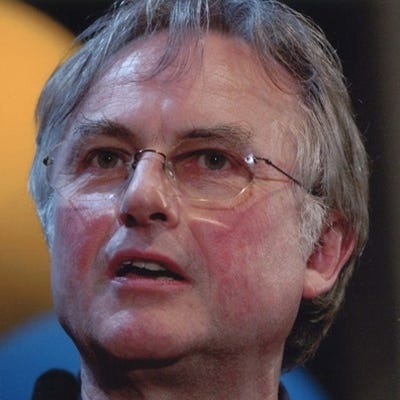
Richard Dawkins

Ironically enough, the evolutionary biologist and author Richard Dawkins (Margulis’s scientific and personal foe) seems to be (kinda) in tune with Margulis here. That said, one wonders if Dawkins was being rhetorical (a word he uses against his opponents in Brockman’s book) when he stated that Gaia theorists believe that

“there will be some gas produced by bacteria which is good for the world at large and so the bacteria go to the trouble of producing it, for the good of the world”.

Do Gaia theorists really believe that bacteria have the good of the world in mind when they produce a certain gas?

Again, perhaps it’s just a metaphor.

Indeed the palaeontologist Stephen Jay Gould once argued that Gaia hypothesis itself is “a metaphor, not a mechanism”. That is, the very name and heart of Gaia is metaphorical (i.e., not only the claims and terms used within the theory itself). That said, the ecologist David Abram responded by arguing that Stephen Gould didn’t seem to realise that the word “mechanism” is itself a metaphor — just one which happens to have lost its metaphorical (as it were) ambience. (See David Abram here.)

However, if it’s just a metaphor (as Lynn Margulis herself hinted), then what would be left of the Gaia hypothesis once stripped of its metaphors; and, therefore, its political (or moral) affiliations and ramifications? Would this be a case of unweaving the rainbow that is the Gaia hypothesis?
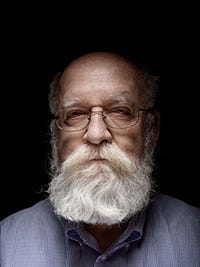
Daniel Dennett

Despite Margolis’s words of warning about Lovelock’s romantic(?) take on Gaia, it’s ironic that the American philosopher Daniel Dennett (just like G.C. Williams) accused Margulis of (more or less) the same thing she accused Lovelock of.

Dennett stated:

“Some of her recent popular writing disturbs me, because I think she’s trying to take that wonderful idea and harness it as a political idea, stressing cooperation over competition. Yes, the eukaryotic revolution was an instance in which what began as competition evolved into what is fundamentally a cooperative arrangement.”

However, Dennett continued:

[B]ut precisely what it doesn’t show is that cooperation is the norm or that cooperation is always good or that it’s always possible. It’s the rare and wonderful thing that enabled multicellular life to take off. But you can’t read into it any message such as that nature is fundamentally cooperative; it isn’t.”

As some readers will probably guess, the traffic wasn’t all one way on this issue.

Despite that seeming concordance between Margulis and Dawkins (mentioned earlier) on Lovelock’s Gaia, Margolis also attacked Dawkins (also in relation to Gaia) when she stated the following:

“That quote captures the arrogance of Dawkins. [] He prefers to take potshots instead of actually discussing the details of Gaia. When he says that Gaia is ‘dangerous and distressing to scientists who value the truth,’ he’s talking about himself. Gaia is dangerous and distressing to him because, unlike the rest of us, HE values the truth. The inference of his statement simply exposes his solipsism.”

As stated, this is odd when bearing in mind what Margulis herself said about Lovelock.

So does this mean that, firstly, there’s Margulis’s Gaia; and then there’s Lovelock’s Gaia?

That could have meant that Margulis was stating that Dawkins is arrogant and solipsistic only when it came to her own take on Gaia, not Lovelock’s.

In any case, Richard Dawkins returned the favour here:

“I first met Lynn some years ago at a conference in the South of France, and I think we got on rather well together. I have since, when I’ve met her, found her extremely obstinate in argument. I have the feeling that she’s the kind of person who just knows she’s right and doesn’t listen to argument. [] [I]n the case of the theory of the origin of the eukaryotic cell, she was right to be obstinate. She’s turned out, probably, to be right, but that doesn’t mean she’s always right. And I suspect that she isn’t always right.”

Well, that’s the personal stuff out of the way.

What about Margulis’s actual scientific theories? Dawkins continued:

“Some of her recent popular writing disturbs me, because I think she’s trying to take that wonderful idea and harness it as a political idea, stressing cooperation over competition.”

Of course “stressing” competition is just as bad.

Again, it can be argued (à la Spinoza) that neither cooperation nor competition exist in nature — at least not in the sense that these things exist in the world of socialised and intelligent human beings.

Yet if these words and phrases are “only metaphors”, then surely they’re… only metaphors.

And this is where the prior politics of scientists often slips in.

Politics and Scientific Metaphors
The following sums up the problems discussed so far:

(1) There have been scientists (along with political activists on the periphery) who’ve stressed — for political reasons - competition and ignored (or simply played down) cooperation.
(2) And then there have been scientists (along with political activists on the periphery) who’ve stressed — for equally political reasons — cooperation and ignored (or simply played down) competition.

The simple and obvious thing to do here, then, would be to stress both cooperation and competition!

However, one other option (as already mentioned) would be to deny that there is either cooperation or competition in nature.

Of course it may well be the case that scientists — on both sides — will (rather predictably) respond to this last claim by saying that they’ve stressed neither cooperation nor competition. Alternatively, they may say that they’ve stressed both. Yet, when you read much of the literature, this simply hasn’t been the case!

Indeed Brockman’s The Third Culture is just one among many more graphic examples which display that political bias toward either cooperation or toward competition when it comes to discussions of Darwinism and nature generally.

So nature may not be “red in tooth and claw”, but politicised science most certainly is!

All this stuff about competition vs cooperation (which is clearly political) has also been tied to one other frequent part of this debate — the supposed role of capitalism within Darwinism.

Brian Goodwin certainly tied what he called “Darwinism” to capitalism… and also to much else that’s not (strictly speaking) biological.

Brian Goodwin on Capitalist Science
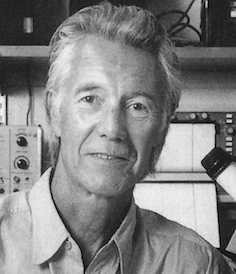
Brian Goodwin

Just as Darwinism has been linked to capitalism via the former’s stress on competition, so Brian Goodwin also links Darwinism to Calvinism (which, of course, has also been linked to capitalism).

The Canadian mathematician and biologist Brian Goodwin (1931–2009) makes the connection in the following passage:

“There’s a focus on competition in Darwinism because of the notions of progress and struggle. Now we get into theology and how it influences Darwinism, through the Calvinist view that people who have the greater accumulation of goods have proved themselves superior in the race of life. That for me is a whole lot of garbage that can be chucked.”

All that came after the following words:

“There’s too much work in our culture, and there’s too much accumulation of goods. The whole capitalist trip is an awful treadmill that’s extremely destructive.”

Brian Goodwin even connects Richard Dawkins’ Darwinism to what he calls “Christian fundamentalism”. But not in the usual way of saying that “Darwinists are as fundamentalist as Christian fundamentalists”. No, Goodwin also connects Dawkins’ bad Darwinism to fundamentalist Christianity in detailed theological ways which (seemingly at least) have nothing directly to do with fundamentalism. This is Goodwin on Dawkins:

“I suddenly realized that this set of four points was transformation of four very familiar principles in Christian fundamentalism, which go like this; (1) Humanity is born in sin; (2) we have a selfish inheritance; (3) humanity is therefore condemned to a life of conflict and perpetual toil; (4) but there is salvation.
“What Richard has done is to make absolutely clear that Darwinism is a kind of transformation of Christian theology. [] I suspect that Richard was at one stage fairly religious, and that he then underwent a kind of conversion. [].”

Technically, isn’t it the case that points (1), (2), (3) and (4) were vital parts of mainstream — i.e., not “fundamentalist” — Christianity for over 1,500 years? (Unless, that is, Goodwin believed that virtually all Christianity was fundamentalist.) Weren’t those precepts built into almost all Christianity?

In any case, instead of capitalism, Darwinism, Calvinism, fundamentalist Christianity, etc., Goodwin offered this alternative:

“Once you get rid of it, you’re into a different set of metaphors, related to creativity, novelty for its own sake, doing what comes naturally.”

This is very vague stuff. And, of course, if one is that way inclined, then being vague (if also poetic) and following one’s emotions are fine. Nonetheless, why isn’t there any “creativity” built into Darwinism — at least of the kind of Darwinism Goodwin pointed his finger at? And was Goodwin keen on literally all examples of “novelty for its own sake”? Did that include the many types of cancer, creative forms of violence and torture, capitalist creativity and novelty, etc? And, finally, Goodwin must have realised that everything that everyone and everything does “comes naturally” because there’s no other way for it to come.

That said and to repeat: Goodwin believed that all this creativity, novelty and doing what comes naturally (whatever those things could possibly mean) are in opposition to

“the image of organisms struggling up peaks in a fitness landscape, doing ‘better than’ — which is a very Calvinistic work ethic”.

Goodwin, on the other hand, sums up his political vision as a “creative dance”.

Brian Goodwin’s Metaphors

Goodwin said that what he was against was only a “set of metaphors”. Indeed he (more or less) admitted that his own alternative was only a set of metaphors too.

Firstly, the metaphors he politically disliked:

“Instead of the metaphors of conflict, competition, selfish genes, climbing peaks in fitness landscapes, what you get is evolution as a dance. It has no goal. As Stephen Jay Gould says, it has no purpose, no progress, no sense of direction.”

And there are similar metaphors (if about a different subject) in the following passage from Brockman’s book. However, this time these metaphors aren’t from Brian Goodwin himself: they’re from the biologist Francisco Varela:

“Deconstruct the militaristic notion that the immune system is about defense and looking out for invaders. Deconstruct the notion that evolution is about optimizing fitness to live in the conditions present in some kind of niche. [] Deconstructing adaptation means deconstructing neo-Darwinism.”

There are certainly problems with using metaphors. And it’s not just a question of using ideologically incorrect (or ideologically correct) metaphors either. Sometimes metaphors themselves (i.e., whatever political content they may contain) are overused or inherently problematic.

For example, I doubt that Goodwin or Verela would have liked the following metaphors from the inventor and computer scientist W. Daniel Hillis (again, from Brockman’s book):

“Would you please take the 10 percent of those random programs that did the best job, save those, kill the rest, and have the ones that sorted the best reproduce by a process of recombination, analogous to sex. Take two programs and produce children by exchanging their subroutines.”

Despite mentioning metaphors, Brian Goodwin did start off with a critical tract about Calvinism, capitalism and competition in which he doesn’t even mention metaphors — or, indeed, use any metaphors.

What’s more, substituting one set of political metaphors for another set of political metaphors seems to defeat the object. Or, at the very least, we’ve clearly moved way beyond biology and evolutionary science here…

Unless, that is, politics and metaphor are inescapable in this area of science. Indeed some “politically-engaged scientists” have argued precisely that.

Brian Goodwin then moved on to advance his more obviously political vision. Or, at the least, Goodwin demanded that “nature and culture” must merge. And that demand can very easily be interpreted as meaning that nature and politics (i.e., the right kind of politics) must merge. (It can be doubted that Goodwin would have put it that clearly and openly.)

In detail, Goodwin stated:

“This is why indigenous cultures are beginning to be recognised for their values — because they were not accumulating good; they were living in harmony. They were expressing their own natures, as cultures. Nature and culture then come together.”

Firstly, this is a very vague use of the term “indigenous cultures”. It’s rarely clear what people mean by those words. In any case, isn’t it a generalisation to put literally all (well) indigenous cultures in the same basket? (Indeed, if Goodwin’s stereotypes had been negative, then they would have been classed as racist.) The literary critic and political activist Edward Said (1935–2003) picked up on this line of thinking when he argued that positive Orientalism (see here) is just as bad as negative Orientalism.

Indeed this Goodwinian romanticisation of non-Western cultures — which parallels its negative (or openly racist) opposite in both historical lineage and style — dates back to Jean-Jacques Rousseau (via people like the cultural anthropologist Margaret Mead — see here). For Rousseau, his positive Orientalism (or his purely positive view of… indigenous cultures) was largely a figment of his own romantic imagination (though his admirers are keen to say that the term “noble savage” was never uttered by Rousseau himself), his dearth of genuine knowledge of any cultures outside Europe (see here), and his hatred of what he saw around him in the West (or simply in France) …

And all that seems very familiar and contemporary.


Friday, 9 September 2022

Carving Nature at Its Joints: Natural Kinds and Essences

The philosopher Roger Scruton argued that “we do not create natural kinds simply by our classifications”. Metaphysicians, then, should “suggest that science look for necessary connections” as one way of “detaching science from our observations”. Why? In order to “attach science to an objective order”.

Why do we accept the statement

(1) “All ravens are black.”

but not

(2) “Non-black things are non-ravens.”?

(1) and (2) are said to be “logically equivalent”. That is, when we “count” all non-black things and all non-ravens, what are we left with? We’re left with black ravens. Thus, we arrive back at (at least in a sense) the statement “All ravens are black”. That’s why they the two statements are said to be logically equivalent. So if something (or anything) is a non-black thing, then it can’t be a raven. And if anything is a non-raven, then (well) it can’t be a raven. Thus, a blue bird isn’t a raven. A banana isn’t a raven. Get it?

This is all part of the ‘Raven paradox’ issue, as expressed in the following way:

“The raven paradox [] is a paradox arising from the question of what constitutes evidence for the truth of a statement. Observing objects that are neither black nor ravens may formally increase the likelihood that all ravens are black even though, intuitively, these observations are unrelated.”

[I personally have a problem with the idea that the statements “All ravens are black” and “Non-black things are non-ravens” are logically equivalent and scientific. They certainly aren’t non-logically equivalent or semantically equivalent. However, these issues must be discussed elsewhere; though there’s been a huge debate on black ravens.]

More relevantly, all this talk about black crows usually occurs — and perhaps must occur — within the context of natural kinds and essences.

The 19th-century English philosopher J.S. Mill (1806- 1873), for example, believed that the world contains (natural) kinds. That is, he believed that we don’t create or “invent” these kinds. They’re actually there in the world and therefore mind-independent.

Prima facie, this talk of mind-independence may seem to go against Mill’s own empiricism (or phenomenalism). So perhaps Mill wouldn’t have used the term “mind-independence” in this context. Perhaps, instead, he’d have used his own much-quoted words: “the permanent possibility of sensation”. That is, if we were to observe a natural kind like a raven, then we’d note properties x, y and z.

So what binds kinds together?

According to Mill, it’s their “common nature”.

Of course ravens and other biological species aren’t the only natural kinds.

Gold and water are also natural kinds. Perhaps it should be said that collections of H₂O molecules, rather than water, is a natural kind. That’s because the word “water” usually refers to secondary properties or to John Locke’s “nominal essences” (which, according to Locke, are based on our “experiences” and on the “common names” we use).

The English philosopher Roger Scruton (1944–2020) argued (in his book Modern Philosophy) that “we do not create the kind water simply by our classifications”. However, can’t it be argued that we only (as it were) get to water (as water) through our classifications? And if we only get to water (at least scientifically and philosophically) through our classifications, then perhaps, in a strong sense, we do actually create that natural kind in that we can only know and observe it (i.e., qua water) through such classifications.

In any case, the words “real essences are the thing(s) that makes a thing a thing” don’t really get us anywhere.

So Scruton explains what a real essence is.

But firstly, let’s take the nominal essence of diamonds.

Scruton argues that laypersons “pick out diamonds by means of their hardness and transparency”. Scientists, on the other hand, have no time for these properties. According to Scruton, hardness and transparency are only “interest-relative”; as well as being mind-dependent and sense-dependent.

According to this story, then, science discovers real essences.

Yet does all that automatically mean that such scientific properties won’t be interest-relative, mind-dependent and sense-dependent?

Not according to many other philosophers — not least those of who deny essences altogether.

So what is the real essence of a diamond?

It is carbon, which, according to Scruton again, is “the very same thing as charcoal”. (See Activated charcoal and “Diamond is composed of the single element carbon.”)

Now how can we flesh out the essence of a diamond?

According to Scruton, we can do so by arguing that the claim that diamonds are essentially carbon “is another instance of an a posteriori necessary truth”. That is, it’s necessary that diamonds are carbon even though we can’t know that a priori. (It’s a scientific discovery.) Alternatively, diamonds are carbon at every possible at which they exist.

The result of this view is that a diamond could lose its “hardness, sheen and transparency — without ceasing to be what it is”. In other words, a diamond wouldn’t lose its essence if it had no (as they’re usually called) contingent properties. However, would a diamond still be “what it is” after losing such properties?

It depends on what the words “what it is” mean.

In addition, if diamonds are nothing more than their essences, then this conclusion must follow by definition.

So could we still have a diamond without its sheen, transparency, hardness, etc. — or would we just have a lump of charcoal?

Certainly, no layperson would recognise it as a diamond.

The raises this question:

Why are the views of all laypersons irrelevant when it comes to establishing what a diamond is?

Moreover, why are sheen, hardness, transparency, etc. irrelevant when it comes to diamonds?

Is a lump of charcoal really a lump of diamond?

More generally, natural kinds became fashionable (roughly in the late 1960s and after Saul Kripke’s work) in analytic philosophy after a long period (at least in some quarters) of criticism of metaphysics (i.e., not only from the logical positivists). More particularly, that criticism included much anti-essentialism. (see ‘Essentialism’ and ‘Non-Essentialism’.)

So what new brand of metaphysics is all this a reference to?

Firstly, such metaphysicians (according to Scruton) “suggest[ed] that science looks for necessary connections”. Does that mean the necessary connections between natural kinds? Does it mean that that the necessary connections between natural kinds are themselves natural kinds? And/or does it mean that there are necessary connections between the (essential) properties which constitute natural kinds?

Moreover, is it really the case that (as Scruton put it) “it is the task of science to discover” these necessary connections?

According to some metaphysicians, the postulation — or actuality — of natural kinds and their essences increased the possibility of objectivity in science. That is, we can have objectivity (only?) if we can discover natural kinds, essences and necessary connections. In addition, this interest in natural kinds and necessary connections helped “detach [science] from our observations and attach it to an objective order”.

So is science (well, physics) really detached from our observations?

It can easily be accepted that observations (or experiences) aren’t everything in science because of the fundamental importance of both theory and mathematics. However, surely observations must account for something. Indeed perhaps observations still account for a hell of a lot!


Monday, 5 September 2022

Ludwig Wittgenstein Embraced Contradictions: Alan Turing Didn’t

Wittgenstein once argued that “if a contradiction were actually found in arithmetic, then that would only prove that an arithmetic with such a contradiction in it could render very good service”. He also claimed that “the laws of logic are arbitrary”.

(i) Introduction
(ii) Systems, Systems and More Systems
(iii) Wittgenstein’s Anti-Platonism
(iv) Constructivism and Wittgenstein’s Roads
(v) Part Two: Alan Turing’s Bridge
(vi) Note: Wittgenstein’s Dialetheism?

The Austrian-British philosopher Ludwig Wittgenstein (1889–1951) laid his cards on the table when he warned against “the superstitious dread and veneration of contradiction”. Indeed, at one point, Wittgenstein even advocated “a new logic of contradictions”.

In Lectures, Cambridge 1930–1933, Wittgenstein can also be found stating the following:

[T]he laws of logic, for example, excluded middle and contradiction, are arbitrary. This statement is a bit repulsive, but nevertheless true.”

To some readers it may seem like a jump to apply a mode of reasoning about mathematical systems (see later section) to the laws of logic themselves. Alternatively, to other readers the application of this line of reasoning (i.e., about mathematical systems) may seem like a (well) logical consequence of such a position.

Thus, if only on this reading of Wittgenstein, it’s literally all about systems or human creations, then why not create a new logic of contradictions?

Take the cases of Nikolai Lobachevsky (1792–1856) and Bernhard Riemann (1826–1866) and their alternative non-Euclidean geometries.

If Riemann and Lobachevsky felt no qualms about breaking free of the system of Euclidean geometry, then perhaps Wittgenstein might have felt at ease about endorsing the adoption — or creation — of alternative logics. Indeed, at this juncture at least, it doesn’t really matter if such alternative logics are self-contradictory or if they tacitly assume — and even tacitly employ — the aforementioned laws of logic.

That said, what if a contradiction could (in Wittgenstein’s own words) “render very good service”?

Wittgenstein’s following words can be found in the Remarks on the Foundations of Mathematics:

[I]f a contradiction were now actually found in arithmetic — that would only prove that an arithmetic with such a contradiction in it could render very good service.”

Wittgenstein also seemed to be a dialetheist when he argued that “an arithmetic with such a contradiction in it could render very good service”. That is, philosophers, mathematicians and even laypersons can indeed work with contradictions.

It’s always possible, of course, that a mathematician (or, more likely, a philosopher) may say that if there were any genuine contradictions, then — by definition — they simply couldn’t “render very good service”. So, in that case, we’d be wrong to class them as workable contradictions at all.

So how, exactly, could we make use of contradictions?

Well, dialethic logicians and philosophers do. What’s more, they cite various concrete examples. For example, dialethic logic can make sense of inconsistent theories in science, moral and political beliefs which clash with each other, the paradoxes of set theory, etc. (See note at the end of this essay.)

However, I don’t really believe that Wittgenstein had the same kinds of thing in mind as the dialetheists. That’s primarily because his central positions on contradictions and the “arbitrary” nature of the laws of logic were purely abstract and metaphilosophical.

Wittgenstein also advanced an (as it were) mathematics-is-use (or pragmatic) position when he argued the following:

“The point is that we all make the SAME use of it. To know its meaning is to use it in the same way as other people do. ‘In the right way’ means nothing.”

When Wittgenstein used the phrase “in the right way” above, it can be taken to imply that some mathematicians and philosophers believed that there’s a right way that’s completely separate from mathematicians and their systems (or completely separate from conventions, symbols and their meanings, etc.). That is, they believed that there could be a right way without literally anyone actually knowing anything about it. (This is the position of mathematical realism.)

Yet Wittgenstein might well have asked what purpose this hidden right way serves.

In other words, if no one actually knows that right way, and no one can even say anything about it, then what role does it have? Indeed can it even be known to exist (or have being) at all?

If we return to Wittgenstein’s position on mathematical systems.

Systems, Systems and More Systems

As found in the book Wittgenstein: Lectures, Cambridge 1930–1933, Wittgenstein wrote (or actually spoke) the following words:

“Reason only applies within a system of rules [] It is nonsense to ask for reasons for the whole system of thought. You cannot give justification for the rules.”

Wittgenstein believed that (to use his own words) the “game” of contradiction-spotting was “pointless” because any such paradoxes or contradictions which do occur (or which even exist) only do so because they’re the consequences of the “system of rules” which the logicians and mathematicians created in the first place. That is, these contradictions and/or paradoxes don’t exist separately from such systems.

That shouldn’t be a surprise.

Take Kurt Gödel’s incompleteness theorems.

These theorems only apply to mathematical systems. What’s more, the so-called “Gödel truths” only occur within the mathematical systems of which they are parts.

So systems (whether logical or mathematical) are in the driving seat here.

Moreover, if such systems are indeed creations — human creations, then one can see where Wittgenstein was coming from.

Wittgenstein’s position seems to have been that those in search of paradoxes and contradictions believed that such things existed separately from the systems in which they were embedded — indeed separately from all human minds.

So even if it can be accepted that such contradictions and paradoxes are hidden, then they’re still only hidden within the systems created by logicians and mathematicians.

The upshot here is that all this is loosely equivalent to someone creating an antidote which, unknown to the creator, would also bring about brain damage when administered. Thus the creator doesn’t know that it can bring about brain damage. However, the antidote is still his own creation. And without the administration of his antidote, such specific cases of brain damage would never occur.

Wittgenstein became even more concrete and radical about systems when he wrote the following words:

[T]here is nothing there for a higher intelligence to know — except what future generations will do. We know as much as God does in mathematics.”

In other words, there are no mathematical equations or timeless abstract numbers in the Platonic ether waiting for mathematicians to discover.

That said, it’s of course possibly — or actually — the case that mathematical structures or equations contain content that no mathematician alive today is actually aware of (i.e., just like the aforementioned antidote).

For example, in The Emperor’s New Mind, Roger Penrose wrote:

“The Mandelbrot Set is not an invention of the human mind: it was a discovery. Like Mount Everest, the Mandelbrot Set is just there!”

However, even in this case it will still require mathematicians (or computer programmes) to bring out that now-hidden content.

Of course a Platonist (or mathematical realist) may now ask this question:

How can you accept that there’s anything hidden (or out there) at all before such so-called “creations” of mathematicians?

In other words, according to Wittgenstein’s (as it were) anthropological position (see here), there can’t be anything hidden. That’s because that something would need to be independent of all mathematicians and all mathematical systems.

Wittgenstein himself uses the words “higher intelligence” as a virtual synonym for Platonic realm. So just as there’s no Platonic realm which contains all mathematics and all mathematical truths (or equations), so there’s no higher intelligence that (as it were) has all of mathematics in His head.

So it can be argued that, at least as far as contradictions and paradoxes are concerned, Wittgenstein was a systemist (rather than, say, a structuralist). That is, he believed that mathematicians and logicians (as well as philosophers of mathematics) can never step outside of the systems they construct.

[See my ‘Kurt Gödel, Vacuous Paradoxes and Self-Reference’ and ‘Why Empty Logic Leads to the Liar Paradox’ in which it’s argued that the discussed paradoxes are a result of the systems in which they are embedded.]

Wittgenstein’s Anti-Platonism

Platonism has already been mentioned a couple of times in this piece. So it’s important to note here that not only mathematical Platonists have had problems with Wittgenstein’s philosophy of mathematics.

In any case, the term “Platonism” is — at least partly — used for convenience’s sake in that the words mathematical realist could also have been used.

That said, Wittgenstein does indeed explicitly express his anti-Platonism in the following passage (which was aimed at Alan Turing):

“If you say, ‘The mere fact that a proof could be found is a fact about the mathematical world,’ you’re comparing the mathematician to a man who has found out something about a realm of entities, the physics of mathematical entities.”

Wittgenstein was arguing that the Platonist (or Alan Turing himself) believes that there’s a “mathematical world” which contains “entities”. And this is equivalent to a someone discovering a physical world (or a new country) which is full of physical entities (e.g., animals, trees, mountains, rivers, etc.).

Yet this is a misleading analogy.

In fact the problem is that Platonists don’t even see it as being an analogy at all!

Most people would accept that the physical world (or country) in this analogy would exist regardless of its discovery. However, nothing is known about it. Despite that, it would still exist (or be real).

So can we glide so easily over from that position on an undiscovered physical place (or country) to the existence of an abstract entity in an abstract mathematical world which has so far been undiscovered?

Wittgenstein believed that such a mathematical entity is actually created, constructed or even invented — not discovered. That is, it is brought into existence by the very act of construction (or invention).

This seems to make Wittgenstein an intuitionist or constructivist. (See mathematical constructivism and mathematical intuitionism.) However, as with all “Wittgenstein scholarship”, there are some scholars who accept this conclusion and just as many scholars who don’t. (This isn’t the place to run through what the legions of “Wittgenstein experts” have said on this subject.)

All that said, we still have at least one clear example of Wittgenstein expressing his literal (for want of a better word) constructivism.

Constructivism and Wittgenstein’s Roads

Take Wittgenstein’s image of an unbuilt road. Wittgenstein said:

“Professor Hardy says, ‘Goldbach’s theorem is either true or false.’ — We simply say the road hasn’t been built yet.”

Put simply, Goldbach’s theorem (or “conjecture”) is neither true nor false until a road has been built which leads to it being known to be either true or false. That is, the truth or falsity of Goldbach’s theorem must be constructed! After all, how could its truth or falsity be established without such a construction?

Yet there’s a rather obvious response to that last paragraph.

That response is to argue that although human beings need a road that leads to the destination that is the truth or falsity of any theorem, that truth or falsity still exists even without such a road. So, sure, we don’t know if it’s true or false without such a road (or construction), but it’s still (ontologically) either true or false without it.

Indeed Wittgenstein himself conceded that

[a]t present you have the right to say either; you have a right to postulate that it’s true or that it’s false”.

Of course that’s not much of a concession.

That is, until you built the road, you simply don’t know if a theorem is true or false. So the claim that it’s either true or false regardless is (almost) without substance. Again, according to Wittgenstein’s own logic, it can’t be either true or false until the (or a) road to it is built…

Yet how can a road lead to somewhere that doesn’t, as yet, exist?

In this analogy, then, the building of the road seems to be (at least part of) the actual creation of the place it leads to!

In any case, Wittgenstein elaborated in this way:

“For which road you build is not determined by the physics of mathematical entities but by totally different considerations [].”

In other words, these analogical roads (as just hinted at) literally construct the “mathematical entities”: they don’t “discover them”.

To continue with Wittgenstein’s analogy.

We are free to construct any road we like. Yet this “isn’t because the mathematics says that the road goes there”. It’s “because the road isn’t built until mathematics [or a mathematician] says it goes there”.

It’s of course the case that the place itself doesn’t (as it were) tell the roadbuilders to build the road to it. To use Wittgenstein’s own words: the place doesn’t “say [] that the road goes there”. Instead, a decision has to be made to build the (literal) road. And it’s the roadbuilders who build the road, not the place it’s going to.

Surely (as already hinted at) this analogy is too strained.

That’s because no road is built unless whatever it leads to already exists. In the case of literal roads, no road is built unless it leads to somewhere which already exists (even if not a town or city, then just a given place or area). The road, either during or after being built, doesn’t literally bring into being the place it leads to. The road is built precisely because such a place already exists…

In the end, then, perhaps this is a (scare-quoted) “misreading” of Wittgenstein’s words. (This is often the case when it comes to interpreting the Austrian philosopher’s very-odd prose.)

Finally, if the grammar (or analogy) of a road constructing something is a little odd, then settle for the simple idea that mathematical entities are constructed, not discovered.

All the above contains echos of Alan Turing’s well-known dispute with Wittgenstein.

Alan Turing’s Bridge

In 1939, Alan Turing (1912–1954) attended Wittgenstein’s ‘Lectures on the Foundations of Mathematics’ at Cambridge University. At these lectures, Wittgenstein discussed mathematical contradictions.

More relevantly, Turing strongly disagreed with Wittgenstein’s argument that mathematicians should happily allow contradictions to exist within mathematical systems.

When it came to Wittgenstein himself, he stressed two things:

1) The strong distinction which needs to be made between accepting contradictions within mathematics and accepting contradictions outside of mathematics.
2) The supposed applications and consequences of these mathematical contradictions and paradoxes outside mathematics.

As for 1) above, Wittgenstein said (as quoted by Andrew Hodges):

“Why are people afraid of contradictions? It is easy to understand why they should be afraid of contradictions in orders, descriptions, etc. outside mathematics. The question is: Why should they be afraid of contradictions inside mathematics?”

Wittgenstein can be read as not actually questioning the logical validity or status of these paradoxes and metatheorems. He was making a purely philosophical point about their supposed — as well as numerous — applications and consequences outside of mathematics. (These consequences — if not always applications — usually include the subjects of consciousness, human uniqueness, God, human intuition, meaning, purpose, the universe, religion, arguments against artificial intelligence, etc.)

In terms specifically of contradictions and paradoxes.

All the above means that if mathematics is a human invention, then any contradictions and paradoxes there are (i.e., within mathematics) must be down to… mathematicians and their systems. And if they’re down to mathematical systems alone, then they aren’t telling us anything about the physical world (which includes Alan Turing’s bridge — see later) or even about a Platonic world of numbers.

Turing stated (to put it simply) that if there are any contradictions embodied in the mathematics used to construct a bridge, then that bridge would end up falling down! Yet, according to Wittgenstein, the bridge wouldn’t fall down even if the maths used in its construction did contain a contradiction. (This last statement may actually be an overextension of Wittgenstein’s position.)

Turing himself stated the following words:

“The real harm will not come in unless there is an application, in which a bridge may fall down or something of that sort [] You cannot be confident about applying your calculus until you know that there are no hidden contradictions in it.”

It does seem bizarre that Turing should have even suspected that “hidden contradictions” (his debate with Wittgenstein was primarily about the Liar Paradox) could lead to a bridge falling down. That is, Turing believed — if somewhat tangentially — that a bridge may (or even would) fall down if some of the mathematics used in its design somehow instantiated a paradox or a contradiction.

But surely it’s hard to imagine the precise route from any paradox (especially the Liar Paradox) to the practical (or concrete) applications of mathematics of any kind — let alone to the building of a bridge and then that bridge falling down.

Yet perhaps Turing’s argument is that there could never be such a concrete manifestation. And that’s precisely because the builders wouldn’t even get as far as finishing the bridge because the contradiction would have already shown itself.

So what about Wittgenstein’s response to this line of reasoning by Turing?

Wittgenstein responded by saying that “[b]ut nothing has ever gone wrong that way yet”. That is, no bridge has ever fallen down due to a paradox or contradiction in mathematics.

More generally, of course Wittgenstein was well aware of many of the arguments against embracing contradictions. And he played all of them down.

For example, when discussing the possibility of anything and everything being deduced from a contradiction (see the principle of explosion), Wittgenstein stated the following:

[W]ell then, don’t draw any conclusions from a contradiction; make that a rule.”

Wittgenstein wasn’t actually arguing that everything and anything couldn’t be drawn from a contradiction. He was simply arguing that we shouldn’t draw such conclusions. That is, such ridiculous and/or irrelevant conclusions (see irrelevant conclusion) may indeed be drawn — so simply don’t draw them!

Interestingly enough, there may be a (as it were) Platonist assumption hidden in Wittgenstein’s riposte above. That’s because these bizarre conclusions must — or simply may — still exist in a (as it were) Platonic space. However, we still have a choice as to whether or not to draw (or deduce) them.

It’s worth noting here, then, the many comments written and spoken about “everyday mathematicians” not caring too much about “the foundations of mathematics”, “hidden contradictions” or, indeed, Kurt Gödel’s incompleteness theorems. That’s because — as many mathematicians and others have argued — such things simply don’t impinge on everyday mathematics. (I’m willing to be told otherwise by mathematicians, rather than by philosophers.)

All this is summed up by the mathematician and physicist Alan Sokal when he focussed on Gödel’s metatheorems.

Firstly, Sokal stressed the difference between “metatheorems” and “conventional mathematical theorems” in the following way:

[] Metatheorems in mathematical logic, such as Gödel’s theorem or independence theorems in set theory, have a logical status that is slightly different from that of conventional mathematical theorems.”

And it’s largely because of that difference that Sokal continues with these words:

“It should, however, be emphasized that these rarefied branches of mathematics have very little impact on the bulk of mathematical research and almost no impact on the natural sciences.”

So if such metatheorems (if not the logical sport of contradiction-spotting) have almost zero “impact on the natural sciences”, then surely they have less than zero impact on, say, Turing’s bridge.

*******************************

Note: Wittgenstein’s Dialetheism?

Dialetheists “embrace contradictions”. (See ‘Setting Contradictions Together’.)

Take the dialetheist Graham Priest (1948-).

Is Graham Priest’s own dialetheism about the world (i.e., an ontological position) or is it about what we can — or even should — say about the world? Clearly, if it’s about the world, then it’s far more radical than merely being about our epistemic, scientific or logical takes on the world.

These questions are asked because there’s virtually nothing in Priest’s work where he explicitly states that contradictions exist in the world. In basic terms, it’s all about how “contradictions can be embraced” in logic, epistemology and the philosophy of science — as well as in science itself.

Yet Priest does argue that dialetheism isn’t (purely) a formal logic. He states that it’s “a thesis about truth”.

One way to put all this is in terms of set-theoretic paradoxes, as discussed by Bryson Brown.

Brown says that “the dialetheists take paradoxes such as the liar and the paradoxes of naïve set theory at face value”. That is, it may be the case that dialetheists choose — for logical and/or philosophical reasons — to accept paradoxes and/or contradictions even though they also believe that, ultimately, they aren’t true of the actual world. (What of the abstract world?)

As dialethic logicians have stated, we can accept inconsistent scientific theories if they still prove to be useful and have predictive consequences. In fact scientists (especially physicists) have been fine with this situation for a long time. Priest himself puts it this way:

“Inconsistent theories may have physical importance too. An inconsistent theory, if the inconsistencies are quarantined, may yet have accurate empirical consequences in some domain. That is, its predictions in some observable realm may be highly accurate. If one is an instrumentalist, one needs no other justification for using the theory.”

Bryson Brown also says that our

“best theory of the structure of space-time, Einstein’s general theory of relativity, is inconsistent with our quantum-mechanical view of microphysics”.

Brown also mentions the Danish quantum physicist Niels Bohr within this context.

So did Bohr believe that there were inconsistencies — let alone contradictions — actually in the world? Philosophers have disagreed on this. However, it can be argued that Bohr (as an epistemic anti-realist) might have found it difficult to grasp what an inconsistent world (or any aspect of the world) would — or could — be like. This is at least the case when it comes to worldly contradictions. That is, it is hard to see how A & not-A can be the case at one and the same time (despite the wave/particle duality, etc.).

This means that we need to decide if embracing theoretical inconsistencies (in science, logic, etc.) also means embracing worldly contradictions.

Bryson Brown also acknowledges the fact that, in general, we “accept non-trivial but inconsistent obligations and/or beliefs”. Here again this is really an epistemic and moral matter. More explicitly, it isn’t being argued that, for example, we can believe that “Cats have tails” and also believe that “Cats don’t have tails” at one and the same time. No one believes that an individual cat both has a tail and doesn’t have a tail. So, in that case, A works may work in one context; and ¬A may work in another context. In other words, “Cats have tails” (which, grammatically, doesn’t entail “All cats have tails”) is about cats in the plural; whereas any statement about an individual cat won’t be about all cats. Yet an individual cat both having and not having a tail means that the statements “Cats have tails” and “Cats don’t have tails” are both true. (This, admittedly, is also about cats in the plural.)

In Priest’s own terms, this truth-value indeterminacy (though p’s being indeterminate is itself be seen as a truth value) results in a scientific theory (or logical system) being inconsistent. And that inconsistency is a result of the logician or scientist being unable (at least at a given point in time) to erase certain inconsistencies from his system or theory. (This is something that’s often been said about Bohr’s well-known model of the atom.)

What we say about the world (whether in science, philosophy, mathematics, logic or everyday life) may well be consistent or inconsistent. However, the world itself can neither be consistent nor inconsistent.

Yet if dialethism is about the world, then Priest (to use his own example — see here) could indeed be both in New York and not in New York at one and the same time! If it’s about what we can say, on the other hand, then it’s simply a logic that can helpfully capture and formulate such things as the inconsistencies in scientific theories. Alternatively, dialetheic logic can advance the pragmatic option of seeing two contradictory positions as both being true (or simply usable) — at least for the time being!

Thus nearly all Priest’s examples of dialetheic contradictions are really about human perceptions of — or attitudes towards — the world, not the world itself. They also concern inconsistencies in scientific and (another area mentioned by Priest himself) legal theories about the world. This makes dialetheism either a position in epistemology and/or one in the philosophy of science. So, if all that is the case, then surely dialetheism isn’t a “robust ontology” which happily embraces contradictions-in-the-world at all.

Of course Priest’s next move may be to question this possibly bogus distinction between the world and our statements about — and knowledge of — the world. Actually, he does question this distinction. He even uses the term “social constructionism” about his own position.

All in all, then, it can be said that Priest uses positions in epistemology and the philosophy of science as means to back up (or defend) his (seemingly) very-radical logical dialetheism.

But what about Wittgenstein himself?

Wittgenstein wasn’t a dialetheist primarily because he wasn’t talking about contradictions-in-the-world, but contradictions-as-creations-of-systems. Indeed it can be suspected that Wittgenstein would have had a problem with the very notion of contradictions-in-the-world.

However, it’s still not clear (to me at least) if dialetheists actually do believe that there are contradictions-in-the-world.

Take the words of Bryson Brown again, in his paper ‘On Paraconsistency’. He writes:

[Dialetheists] hold that the world is inconsistent, and aim at a general logic that goes beyond all the consistency constraints of classical logic.”

Deriving the notion of an inconsistent world from our psychologistic and/or epistemological limitations (as well as from accepted notions in the philosophy of science) is problematic (see psychologism). In other words, the epistemological acceptance of inconsistencies can’t also be applied to the world itself.

So it may be the case that dialetheists choose — for logical and/or epistemological reasons — to accept paradoxes and contradictions (just like Wittgenstein) even though they also believe that, ultimately, they aren’t true of the world (or of bridges). Then again, Brown continues by saying that dialetheists “view these paradoxes as proofs that certain inconsistencies are true” …

But true of what?

True only of the logical, linguistic and systemic expressions of the paradoxes or true of the world itself?

Nonetheless, Graham Priest does mention “reality” when he talks of consistency and inconsistency. For example, when discussing the virtue of simplicity, Priest asks the following question:

“If there is some reason for supposing that reality is, quite generally, very consistent — say some sort of transcendental argument — then inconsistency is clearly a negative criterion. If not, then perhaps not.”

As it is, how can the world be either inconsistent or consistent? Indeed a position can be taken on this which is similar — or parallel — to Baruch Spinoza’s philosophical — and perhaps moral — point that the world can only… well, be.

All this may be betraying my implicit (naïve) realism. Yet it must still be stated that what we say about the world (whether via science, philosophy, mathematics or logic) may well be consistent or inconsistent. (We may also say, with Spinoza, that the world is “beautiful” or “ugly”.) However, the world itself — along with its bridges — can be neither consistent nor inconsistent.