Friday, 30 September 2022

There Are No Conceptual Schemes

Philosopher Donald Davidson once wrote that conceptual schemes are deemed to be “ways of organizing experience”; as well as “systems of categories that give form to the data of sensation”. What’s more, “they are points of view from which individuals, cultures, or periods survey the passing scene”. From this line of reasoning (which Davidson himself rejected), we pass on to such things as “linguistic relativity” (or the Sapir-Whorf hypothesis) and, perhaps (!), Kuhnian paradigms and Wittgensteinian language games.

Let’s start off with Donald Davidson’s take on what conceptual schemes are supposed to be. Davidson wrote the following:

“Conceptual schemes, we are told, are ways of organizing experience; they are systems of categories that give form to the data of sensation; they are points of view from which individuals, cultures, or periods survey the passing scene.”

This passage can be found in Davidson’s paper ‘On the Very Idea of a Conceptual Scheme’. That paper at least partly inspired the following essay.
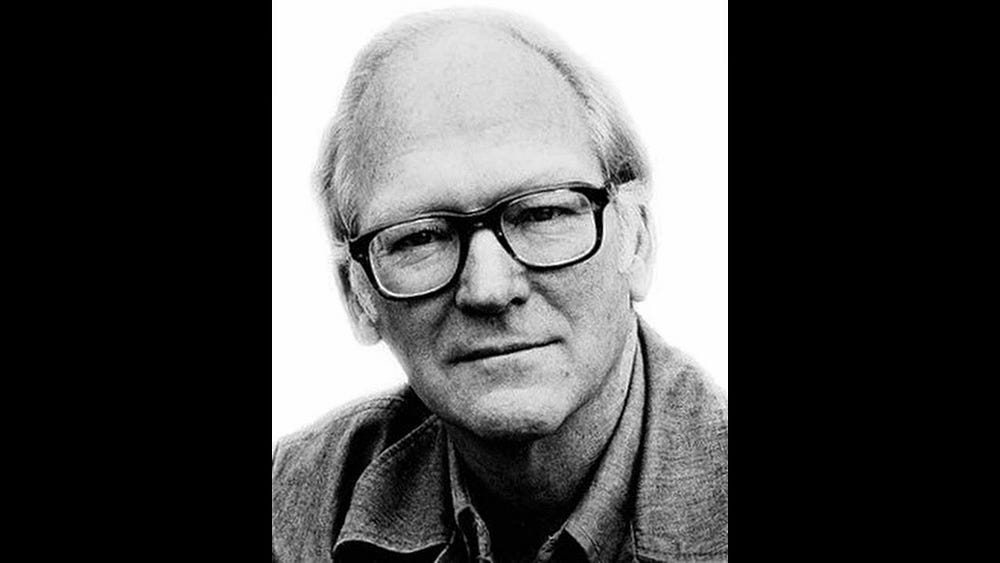
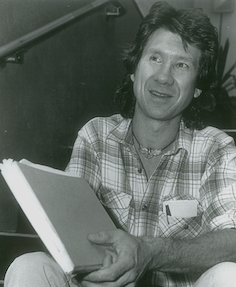
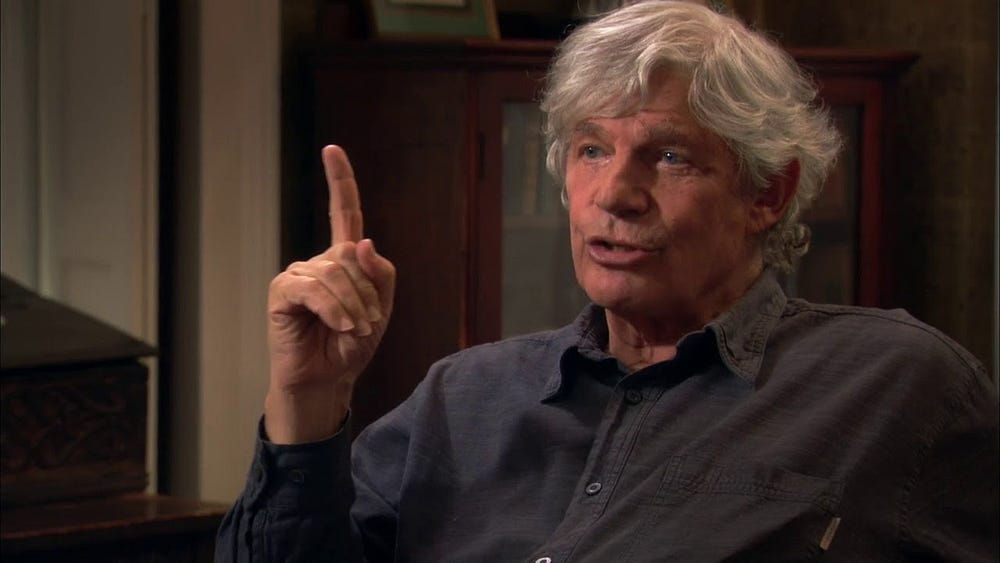
Donald Davidson (1917–2003)

Davidson (who died in 2003) was primarily responding to the thesis that different “individuals, cultures, or periods” have different conceptual schemes. What’s more, these schemes are said to be at odds — or even in conflict — with each other.

The position that Davidson was at least partially arguing against is what’s called the Sapir-Whorf hypothesis. (It’s worth stressing here that Davidson certainly wasn’t doing anthropology, history or political commentary.) The following is one definition of that hypothesis:

“The simplest Sapir-Whorf hypothesis definition is a theory of language that suggests that the language a person speaks determines or influences how they think. According to Sapir-Whorf, a person’s native language has a major impact on how they see the world.”

This means that Davidson’s clause “we are told” (in the opening passage) gave his game away…

That game being his rejection of the very idea of a conceptual scheme.

Davidson’s position was that there is only one conceptual scheme.

This basically means that, in a strong sense, there are no conceptual schemes at all… Or at least there are no conceptual schemes as such things came to seen by certain philosophers — and, indeed, by various social scientists.

Crudely speaking, this particular take on conceptual schemes (i.e., the one which Davidson had a problem with) partially mirrors Thomas Kuhn’s notion of a scientific paradigm and Ludwig Wittgenstein’s notion of a language game. However, if anything, a conceptual scheme has been deemed to be much deeper and far broader than a (scientific or otherwise) paradigm or a language game. Indeed it can even be argued that paradigms and language games must themselves belong to (or be embedded within) broader conceptual schemes.

All that said, I won’t be commenting on Davidson’s paper or even on anything specific within it. The main reason for that is that Davidson had a particularly epistemological take on this issue. (See the note at the end of this essay.)

We can start here with the American philosopher Thomas Nagel.

Nagel advanced the view that we can divorce ourselves from our conceptual schemes and even from our concepts. (It must be stressed here that the position which Nagel advanced is quite unlike Davidson’s.)

Thomas Nagel, Thomson Clarke and Steven Stitch

In his book The Last Word (1997), Thomas Nagel argued that the “obsession with language” and conceptual schemes has “contributed to the devastation of reason”. He went on to argue that if philosophers and laypersons stress the importance of language and conceptual schemes generally (which are, after all, contingent), then they’re in effect stressing the contingencies of psychology and culture too. And it’s this approach, Nagel concluded, which “leads to relativism”.

All this raises the following two questions:

(1) How many (broadly speaking) differences are required to create a separate conceptual scheme?
(2) How many differences are required to make two different conceptual schemes mutually incompatible or even incommensurable?

If a distinction were to be made between two different conceptual schemes, then the boundary between them may well be vague. So how deep must conceptual variance go before something is christened a conceptual scheme? Would it necessarily mean that a new conceptual scheme would — or could — never (metaphorically) look out at other (possibly rival or competing) conceptual schemes in order to judge (or simply evaluate) them?

Clearly, simple differences in beliefs can’t themselves constitute different conceptual schemes. If that were the case, then we’d all belong to different conceptual schemes. In fact each individual would have his or her own conceptual scheme.

So perhaps it’s when concepts and/or beliefs begin to link up together and have mutual implications and entailments that the question of different conceptual schemes arises.

Take the following technical distinction which was made by the American philosopher Steven Stitch (1943-) in his paper ‘The Problem of Cognitive Diversity’. He wrote:

[T]he Yoruba do not have a distinction corresponding to our distinction between knowledge and (mere) true belief.”

In this essay’s context, this raises the question as to whether or not having (or accepting) the distinction between knowledge and true belief itself entails, implies or generates other concepts which, in turn, partly help form a distinctive conceptual scheme. (Of course we can also ask if this is just a philosophical distinction that not even all members of “our own” culture — whatever we take that to be — share.)

Firstly, a belief in true belief or knowledge isn’t itself really a single belief. It’s a belief made up of other beliefs.

Again, the main question is whether or not we can stand outside our conceptual scheme (or conceptual schemes) and evaluate other conceptual schemes (or other cultures and historical periods).

Perhaps the American philosopher Thompson Clarke (1928–2012), for one, believed that we can. In his paper ‘The Legacy of Scepticism’, he wrote:

“Each concept or the conceptual scheme must be divorceable intact from our practices, from whatever constituted the essential nature of the plain. […] [O]bservers who usually by means of our senses, ascertain, when possible, whether items fulfil the conditions legislated by concepts.”

So did Thompson Clarke himself step outside his own conceptual scheme into other conceptual schemes in order to evaluate them? Alternatively, did he adopt a God’s-eye view (or “view from nowhere”) of what he called “the plain”?

There is a hint in the above passage that Clarke believed that he could become free of both concepts and conceptual schemes when he asked “whether [sensory] items fulfil the conditions legislated by concepts”. Thus, these sensory items (contrary to the note on Davidson at the end of this essay) seem to come first — at least in this instance. In any case, Clarke was certainly committed to the world’s “essential” nature when he wrote about “the essential nature of the plain”.

Some readers may now ask what “truth in all discourses” (if not in all conceptual schemes) actually is. It may also be asked if truth can be external to all conceptual schemes.

Truth in All Conceptual Schemes

What if a member of each conceptual scheme has his/her own version (or versions) of the nature of truth? And what if each member of such conceptual schemes also has his/her own truths?

Wouldn’t this create difficulties in communication… or worse?

That said, if different conceptual schemes can accept or believe (discounting different languages) the same claims (for example, that 2 + 2 = 4 or that Napoleon was an Emperor of France), then why can’t they agree on other more esoteric, recondite or controversial things too? Indeed it could be the case that from the fact that different conceptual schemes accept the non-contentious, then they may then (mutually) accept the contentious too.

Think here of how easy it is to agree on the weather, “established facts”, etc., and yet how hard it sometimes is to agree on politics, morality, art, music, etc.

More particularly, if different conceptual schemes can discuss and even agree on the weather, when Hitler died or what is the largest body in the Solar System, then perhaps they can also discuss and agree upon more contentious issues…

Or are there language games about the weather, historical facts and astronomy too?

Let’s get back to truths (or indeed facts) which are external to conceptual schemes.

If a conceptual scheme is chosen (rather than, say, born into) by an adult individual, then it must be so for reasons which are external to that conceptual scheme. Similarly, an individual may reject his — or a — conceptual scheme for reasons external to that conceptual scheme.

Now let’s (perhaps) be a little naïve here. Take these three simple logical examples and statements:

(1) A = A (in all conceptual schemes)
(2) A = B = CA = C (in all conceptual schemes)
(3) PQ
P
Q
(in all conceptual schemes)

Similarly, does the schema (if not the actual content)

The sentence “Snow is white” is true if and only if snow is white.

hold in only one conceptual scheme?

More factually and empirically.

If everyone — or almost everyone — believes that Napoleon was an Emperor of France, then they must also believe many other things which can be — or are — derived from (or dependent upon) such a belief. For example, that France exists. That France did indeed have an Emperor. That there was a time when France didn’t have an Emperor. (This last belief isn’t logically derived from the initial belief.) And if we all believe that Napoleon was an Emperor of France, then surely we may then also mutually believe that there were specific reasons as to why he became such a leader. So perhaps there can be agreement on those reasons too.

Those simple bits of logic above were intended to show that the contentious can be derived from the uncontentious. This itself may shows that if conceptual schemes share the uncontentious, then there’s nothing to stop them — in principle — from sharing the contentious too.

All this, in turn, casts doubt on the incommensurability (see also Kuhnian incommensurability) and untranslatability theses when applied — specifically — to conceptual schemes. And, if that’s the case, then perhaps the idea of different — or even rival — conceptual schemes is flawed.

That said, none of the above need imply that there’s a possibility of escaping from all conceptual schemes into Thomas Nagel’s or Thomson Clarke’s wilderness of Nowhere — the view from where we can see the world As It Truly Is

*********************

Note: Donald Davidson’s Own Take

It’s worth stressing here that Donald Davidson’s own position (which is quite unlike anything advanced in the essay above) was grounded on purely epistemological and philosophy-of-mind considerations, not on denying (or, for that matter, stressing) anthropological, historical and/or cultural differences.

That grounding can be found in the following passage (from the paper ‘A Coherence Theory of Truth and Knowledge’), in which Davidson wrote:

“The relation between a sensation and a belief cannot be logical. Since sensations are not beliefs or other propositional attitudes. What then is the relation? The answer is, I think, obvious: the relation is causal. Sensations cause some beliefs and in this sense are the basis or ground of those beliefs. But a causal explanation of belief does not show how or why the belief is justified.”

Another passage (from the same paper) is even more apposite in this context. Davidson continued:

“Accordingly, I suggest that we give up the idea that meaning or knowledge is grounded on something that counts as an ultimate source of evidence. No doubt meaning and knowledge depend on experience, and experience ultimately on sensation. But this is the ‘depend’ of causality, not of evidence or justification.”

Basically, then, if this distinction between (as it were) pure and given “experiences” (or “sensations”) and later beliefs is rejected (as Davidson did), then the idea of conceptual schemes being free to (metaphorically) make sense (in multiple different ways) of those pure and given sensations is much harder to defend.

Monday, 26 September 2022

There Are No Abstract Propositions

Crudely, should we believe that there are abstract propositions simply because, say, the German for “Snow is white” is “Schnee ist weiß”?

One

Many philosophers and logicians have argued that abstract propositions don’t belong to a particular language or even to a set of languages. However, it can be argued that propositions (if not abstract propositions) do belong to the set of all languages — or to language simpliciter

Yet, if that’s the case, then perhaps such things aren’t propositions at all. That is, perhaps propositions don’t exist (or have being) if they’re seen to be abstract entities. (The British philosopher P.F. Strawson — some 70 years ago — suggested substituting the word “statement” for the word “proposition”.)

A proposition is often said to be a “unit of information”.

Thus, if propositions are abstract entities, then how do they contain (or deliver) such units of information? Surely only sentential expressions can offer us (or contain) units of information — at least of the informational form said to be (metaphorically) contained in propositions and which are then expressed by natural-language sentences.

Let’s concede that a proposition (like a mental image or a representation) is a… something. However, how can that something contain units of information unless that information is expressed by a sentence (or by sentences)? Perhaps it can be provisionally accepted that a proposition is the ground (or basis) of later units of information. But can an abstract proposition itself be a unit of information? Moreover, much like the mental images or representations mentioned in parentheses a moment ago, these (possible) grounds of later sentential expressions surely can’t be either true or false.

[Relevantly, Bertrand Russell believed — at least at one early point in his career — that abstract propositions were structured entities which have properties and objects as their parts or constituents. See here.]

Similarly, truth conditions and truthmakers alone don’t offer us fixed and determinate units of information. That said, they are still the conditions (or grounds) which give later sentential expressions their truth values — thus also offering us units of information. These units of information, however, only become determinate and fixed when expressed in sentential form. This means that sentential expressions must actually produce (or offer up) units of information and thus allow and determine truth values. Consequently, such units of information don’t actually have any status (or reality) as units of information before their sentential expressions. Indeed, even the aforementioned word “their” (as in “before their sentential expressions”) is incorrect because if abstract propositions don’t exist, then there can be no such thing as their expression. And that’s because this temporal position would entail a distinction between abstract propositions and their later (sentential) expressions.

[I’m not convinced about many of the distinctions which are made between truthmakers and truth conditions in the philosophical literature. For one, if truth conditions belong purely to semantics, then some of the truth conditions of specific sentences offered by philosophers and logicians certainly don’t supply what many laypersons — and other philosophers — would deem to be the meanings of those sentences… But, of course, that simply raises the issue as to what meanings are. In addition, even if a truthmaker (i.e., “that in virtue of which something is true”) is deemed to be a “parcel of reality” (or even a parcel of an abstract world), then it would still need to be expressed by a sentence (or sentences). Thus, truthmakers must become the subject of semantics. Moreover, the linguistic expressions of truthmakers also require semantic evaluation.]
 
All this raises further questions.

Two

Firstly, can the content of a (linguistic) statement be separated from the form of that statement?

Another way of putting that question is to ask what sort of being and identity an abstract proposition has before it finds itself expressed by a natural-language sentence.

So do we ever have the propositional content of a sentence before the sentence itself is constructed? (Propositions are sometimes said to be the “contents of truth-evaluable statements”.)

Take the following often-used T-schema:

The sentence “Snow is white” is true if and only if snow is white.

The words “snow is white” are in quotation marks and the italicised (on the right side) snow is white is (meant to be) the truth condition for the antecedent (in quotes) sentence.

An entire proposition, unlike truth conditions (such as snow being white), is believed to be either true or false. It tells us something either is or isn’t the case.

In the past there have been many candidates for the role of a proposition. Some of these candidates, admittedly, were simply variations upon — more or less — similar themes.

For example, is a proposition the meaning of a sentential statement?

So it’s worth noting here that in much 20th-century philosophy a “meaning” was also deemed to be an abstract (or at least non-linguistic) entity which is shared by all the natural-language sentences which were believed to “have the same meaning”. Clearly, this position is tied to the philosophical debate about abstract propositions.

Alternatively, is a proposition a Fregean “Thought”?

[Fregean Thoughts are entities “for which the question of truth arises”. Gottlob Frege himself held the view that propositions are abstract entities (or Platonic entities) which exist in a non-physical “third realm”.]

And a recent popular choice — at least from the 1970s to fairly recently — was that a proposition is the “set of possible worlds” which would make the sentence which expresses it true. (This position is said to date back to Ludwig Wittgenstein’s Tractatus.)

Again, provisionally it can be accepted that propositions may be distinguishable from particular sentences. However, a proposition can’t exist separately from all sentences. And if a proposition necessarily requires a sentence (or the set of all — synonymous — sentences) to be the proposition it is, then perhaps abstract propositions as a whole shouldn’t have been given so much kudos in the philosophical tradition.

That said, it seems fairly easy to accept that the following two sentences express the same proposition:

1) “The father of Johnny Smith is a liar.”
2) “Johnny Smith’s dad lies.”

However, even here we can say that (1) and (2) aren’t exact. Yet that difference isn’t all down to differences in wording. Thus, if two different sentences (in the same language) can never be exact equivalents, then perhaps it’s incorrect to say that they “share [the same] proposition”.

Despite that, it can be said that 1) and 2) above are simply (as two words can also be) sentential synonyms. This means that when we say that 1) and 2) are the same proposition, we mean that 2) is “simply the uttering of a synonym” of (1). Or, if 2) came first, then (1) would still be the uttering of a synonym of (2). (As Quine argued, the synonym needn’t be “clearer”, simply different.)

Does all this mean that it was the synonymous (or nearly synonymous) nature of two or more sentences which made philosophers and logicians think in terms of abstract propositions?

For a start, we can accept that such sentential synonyms do indeed — nearly — say the same thing. However, they don’t do so because they (metaphorically) share the same abstract proposition.

Take 1) and 2) again.

We can provisionally argue that they express the same proposition. Yet can the (supposed) abstract proposition (as it were) behind or underneath the natural-language sentences escape all such expressions?

On a related issue.

It can be argued that sentences (or persons-with-minds using natural-language sentences) individuate and determine the facts or states of affairs. Yet the fact of x being y has been seen to be a “gerrymandered entity”. (Philosopher P.F. Strawson called such things “sentence-shaped objects”.) That is, what Johnny’s dad did before he told lies, what he did after he told lies, the events and people which surrounded him when he did and didn’t tell lies, etc. — all these things are erased to create the determinate entity (or simply “string”) that is the statement, “The father of Johnny Smith is a liar”.

It’s not being said that x’s telling lies (or snow’s being white) only has any reality (or being) when expressed in a sentence (or sentences). It’s the individuating that’s sentential and therefore a product of human minds. It may be the case that both the concrete and abstract things which make such statements true do indeed exist independently of minds. However, the statements which capture such things are clearly not independent of minds.

Yet, again, all this depends on what philosophers, logicians and laypeople mean by the word “proposition”.

It can be admitted that many of the things which are required to make natural-language sentences true (facts, truth conditions, states of affairs, abstract objects, sets of possible worlds… take your pick) exist separately from all sentences and from all persons-with-minds. However, propositions themselves do not do so.

Consider this comparison.

Books can exist separately from libraries. However, when books are brought together, they constitute a library. Nonetheless, a single book isn’t a library. Similarly, many mind-independent things are necessary in order to make sentential statements true. However, only these things plus sentences (as well as persons-with-minds) are then sufficient for all the sentences which have truth-evaluable content.

Perhaps all this is what made propositional realists (a subset of metaphysical realists?) make a fundamental mistake.

Again, many of the (as it were) things required to make sentences true may well be mind-independent (or abstract) and therefore separate — or separable — from such sentences. Thus, because of that, propositional realists might well have concluded that propositions themselves are separable from all sentences — as well as separable from all persons-with-minds.

Finally, is an abstract proposition really non-spatiotemporal and mind-independent? Mind-independence, of course, has just been discussed. So what about propositions being non-spatiotemporal? If propositions are non-spatiotemporal, then how do we gain (causal) access to them? …

That issue is, of course, another very-familiar philosophical ballgame.

****************************

Final Thought

The essay above is a tidied-up version of something I wrote in 2015. So I’ve been thinking about this issue for a few years (on and off, of course). I’m still not sure about it. That said, I’ve seen no convincing arguments which have shown me that my (as it were) eliminativism about abstract propositions is incorrect.

Perhaps all this simply shows that this is really a non-issue. Either that, or it’s all mainly — or even entirely — down to how each individual defines the words “abstract proposition”. More fundamentally, it may depend on how each individual defines the word “proposition”. Alternatively, it may be a non-issue precisely because it all mainly boils down to conflicting definitions.


Thursday, 22 September 2022

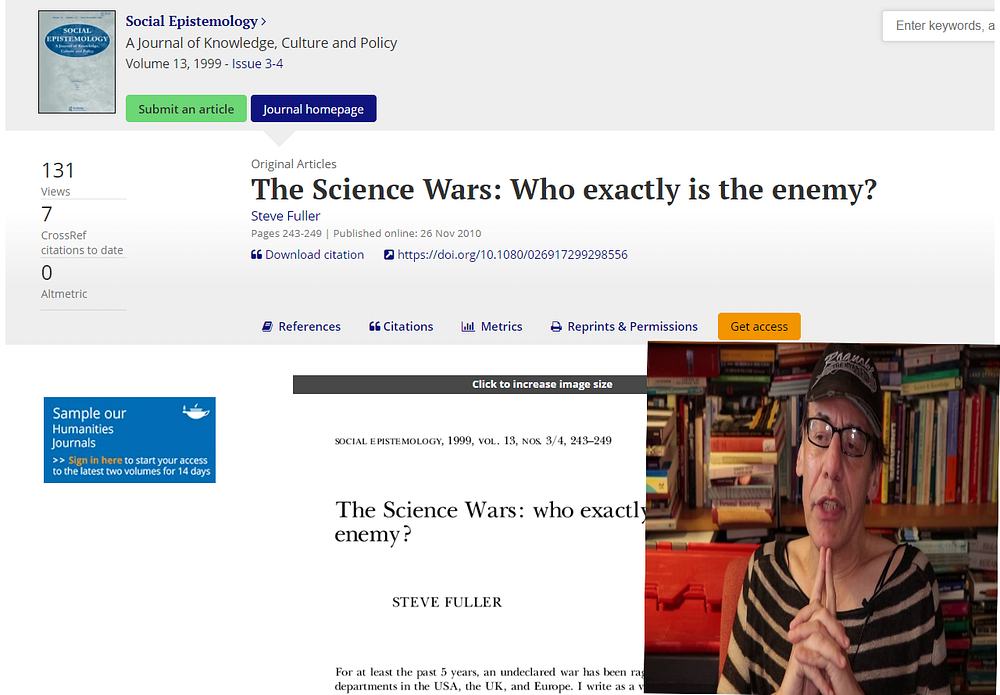
Sociologist Steve Fuller Challenges the “Would-Be Emperors” of Physics and Biology

Professor Fuller believes that his fellow sociologists (perhaps simply himself) could “solve, or at least “dissipate” the “deep puzzles” of physics and biology. He also wrote that some biologists have only “interdisciplinary pretentions” and that the evolutionary biologist “[Stephen] Gould wants to flaunt his well-roundedness”. Finally, Fuller believes that A.C. Grayling’s “grasp of the history of science [doesn’t go] beyond head-banging standards”.

“It seems to me that much of the comment on science by the social constructivists and postmodernists is motivated by the desire to enhance the status of the commentator — that he be seen not as a hanger-on or adjunct to science, but as an independent investigator, and perhaps as a superior investigator, by reason of his greater detachment.”

— Theoretical physicist Steven Weinberg (1933–2021), in his book Facing Up: Science and Its Cultural Adversaries. (See source here.)

[Professor Fuller is mentioned in Steven Weinberg’s book. Weinberg commented on Fuller’s defence of the journal Social Text, which published the “Sokal hoax”. Apparently, Fuller believes that Alan Sokal “abused the trust of the editors of Social Text.]

Introduction

The first two essays of this series concentrated on scientists criticising (sometime insulting) other scientists and other scientific disciplines. Now let’s move away from those scientists quoted in John Brockman’s The Third Culture: Beyond the Scientific Revolution to a sociologist commenting on that book itself.

In this case, then, we have a sociologist attempting to trump both other sciences and other scientists.

[See my first two essays: ‘Scientists at War With Scientists: Insults, Politics, and Darwinism’ and ‘Science is Red in Tooth and Claw: Biologists vs Physicists vs Biologists’.]

Professor Fuller Challenges Some Would-Be Emperors

In ‘Book Review: The Third Culture: Beyond the Scientific Revolution, Professor Steve Fuller (1959-) laid his cards on the table when he told us that his prime motive was to

“challenge these skimpily clad would-be emperors”.

Of course Fuller wasn’t entirely critical of Brockman’s book or the scientists included in it. After all, Fuller’s main (or only) gripe is that the social sciences (or his own sociology) aren’t included in it. That said, in Brockman’s later books, many social scientists have indeed been featured — see (here and here). But, alas, not Professor Fuller himself. (Perhaps Brockman read Fuller’s critical review.)

In any case, Steve Fuller went on to state the following:

[T]o a sociologist, it will be apparent that many of the ‘deep puzzles’ that these scientists brood over could be solved, or at least dissipated, by a dose of social science [].”

That’s an incredibly highfalutin claim.

That said, Fuller moves away from the obvious rhetoric when he also said that sociologists must

“assess critically their [i.e., natural scientists’] proposals and not be afraid to reveal gaps in their knowledge”.

He then went on to argue that

“much of what is said could have benefited from the presence of a sociological interlocutor”.

Isn’t all this simply an embarrassing display of outrage from someone who’s so immersed in his own subject (i.e., sociology) that he can’t see the wood for the trees? That said, it can of course be supposed that Professor Fuller will probably believe that the social sciences (or his own sociology) would enable both physicists and biologists to see the wood, rather than the trees.

Yet surely this simple embrace of social science (or Fuller’s own sociology) is hardly likely to solve these deep puzzles… That’s if Fuller believes that there are any deep puzzles at all in physics and biology.

The words “Fuller’s own sociology” (Fuller has also used the term “collective epistemology”) were put in parentheses a few moments ago. That’s because although Fuller used the words “social science” once or twice, he refers to “sociology” more often. For example, Fuller told his readers that

[w]hen Penrose sketches a unified theory of everything, he sees roles for physicists, psychologists, computer scientists and maybe even theologians — but not sociologists”.

Fuller also puts the words “deep puzzles” in scare quotes, which strongly suggests that he doesn’t actually believe that they are deep puzzles. More precisely, Fuller believes that if physicists and biologists injected themselves with a strong dose of social science (or Fuller’s own sociology), then these deep puzzles would simply (to change the tenses of his own words) dissolve or dissipate. (I suppose that this would make Professor Fuller the Wittgenstein of Sociology.)

Fuller continued:

[T]he most disturbing feature of these interviews is that despite their interdisciplinary pretensions, none of the scientists ever feels the need to refer to theories or findings of the social sciences (except for a few derogatory remarks about economists). When Gould wants to flaunt his well-roundedness, he quotes Horace and Shakespeare, not Marx and Weber [].”

This just sounds like a sociologist attempting to enlarge his own academic (or career) fiefdom.

Indeed, perhaps Fuller gave his political and career-minded game away when he used these (seemingly) envious words:

[T]he most highly subsidized areas of the natural sciences (high-energy physics, cosmology, evolutionary theory, artificial intelligence).”

This (what seems like) enviousness displays itself again when Fuller wrote the following:

“Whenever a non-fiction best- seller is written by an academic, it tends to be by a natural scientist, not a humanist or social scientist.”

Fuller’s problem above may have something to do with the prose styles of certain academics who’re also sociologists. That is, much stuff that’s written by sociologists (i.e., those indebted to Michael Foucault, poststructuralism, postmodernism, etc.) is arcane and sometimes outrightly pretentious. Such sociologists also don’t want to transcend their tribal academese because, if they did, then the paucity of their ideas would be clearly displayed to all those on the outside.

All that said, what about the (relative) “best-sellers” of such people (not all sociologists) as Karl Marx, Herbert Marcuse, Jean-Paul Sartre, Zygmunt Bauman, Slavoj Žižek, Michel Foucault, Judith Butler, Jurgen Habermas, Jean Baudrillard, Jacques Derrida, Pierre Bourdieu, Alain Badiou, etc?

Some of Professor Steve Fuller’s 21 books.

What’s more, Professor Fuller himself has been successful when it comes to selling his many (i.e., 21) books. He has also given more than 100 media interviews and his works have been translated into fifteen languages. In addition to all that, 23 academic symposia have been published on his work…

But, clearly, Fuller wants more.

That said, Fuller is still not, of course, a best-seller in the Stephen Hawking or Jackie Collins sense. But he’s still an (as it were) academic best-seller

In any case, perhaps there are many reasons as to why the scientists Fuller targeted didn’t embrace (or even refer to) the social sciences. Perhaps one such reason is that much social science (especially sociology) is devoted to advancing certain political and social goals — and surely that must get in the way of the science part of social science. And there may be many other reasons why Brockman’s (natural) scientists ignored sociology too, but none of them are mentioned by Professor Fuller. (As stated in the introduction, social scientists are extensively featured in Brockman’s later books.)

And let’s say that even if one of the scientists in The Third Culture did state (as Fuller says) “derogatory remarks about economists”, then does that also mean that all the scientists in that book believed exactly the same thing? (I actually recall some positive remarks about economics and other social sciences in the very same book.)

So the fact that such scientists didn’t mention Fuller’s examples of “Marx and Weber” may simply show us that Fuller himself can’t get over the fact that his targeted scientists simply don’t have the same interests, theories and (often political) concerns which he does. Indeed Fuller’s mention of Marx may also show us (as already mentioned) that the politics in social science (or, usually, sociology) can be much stronger than the science in social science…

So it’s worth saying here that Fuller himself is both honest and explicit about the political nature of all his work — even his epistemology. (He captures this by stressing the difference between “collectivism” and “individualism” in philosophy — specifically epistemology - and the sciences. See here.) …

Consequently, all this will almost certainly mean that Fuller would reject my (no doubt “naïve”) science-politics “binary opposition”.

So, again, all the above may be one reason as to why the scientists featured in The Third Culture kept away from Fuller’s own discipline — sociology.

Steve Fuller then went into more detail when he wrote the following:

“Clearly, Gell-Mann is not familiar with the ‘path-dependent’ accounts of technological development that sociologists and economists have set out over the years. Brockman has unwittingly given us a wake-up call to challenge these skimpily clad would-be emperors.”

Again, Fuller was simply displaying his highly-specific interests and biases when he mentioned “‘path-dependent’ accounts of technological development”. And, lo and behold, Fuller just happens to have written on this subject himself (see here)!

Moreover, Fuller even concedes that theoretical physicist Murray Gell-Man did acknowledge history when he wrote the following:

“Murray Gell-Mann observes that it ‘finally’ draws attention to the fact that history is determined by ‘frozen accidents’, such as the fact that Henry VIII, rather than his brother, ascended to the English throne.”

But that wasn’t enough for Professor Fuller!

Fuller effectively wanted Murray Gell-Mann to be as emersed in sociology (or the social sciences generally) as he is. But, of course, if that had been the case, then Gell-Mann would have actually become a sociologist.

Personally, I know a little about path dependence in physics. However, I confess to knowing nothing about path-dependent accounts of technological development. So that must mean that I’m precisely the kind of person Fuller castigates.

What’s more, Fuller might well have mentioned innumerable other theories which his targeted scientists didn’t mention — or which they don’t know anything about. So surely this must mean that Fuller mentioned a very-specific area (or “account”) which he does know about (i.e., path-dependent accounts of technological development). And then he went on to simply assume ignorance on the part of his targeted scientists for not knowing — or simply mentioning — it.

All that said, there will be many other (relevant) things which these scientists know, and which Fuller himself doesn’t know. So should such scientists now arbitrarily namedrop the theories and ideas which Fuller himself doesn’t know?

Professor Steve Fuller can also be quoted picking up on my first essay’s scientists-at-war-with-scientists theme (see ‘Scientists at War With Scientists: Insults, Politics, and Darwinism’) when commenting on Brockman’s The Third Culture. He wrote:

[] Darwin’s defenders seem keen on accusing each other of theological proclivities. For example, Gould attacks Dawkins’s belief in the adaptive quality of all organic traits as being a secular version of creationism, whereas Dennett diagnoses Gould’s belief in the limited explanatory powers of natural selection as a latent desire to hold something more exalted than blind natural forces responsible for things as they are.”

The problem here is that Fuller got involved with this war himself when he uses such phrases as “these skimpily clad would-be emperors”, “[Stephen] Gould wants to flaunt his well-roundedness”, “despite their interdisciplinary pretensions”, etc.

So it’s worth saying here that Fuller has also aimed his criticisms and insults at philosophers — as well as others — too.

Take his little spat with the British philosopher and author A.C. Grayling (1949-).

Steve Fuller says (in his article ‘Against the Faith’, which was published by New Humanist) that Grayling’s “grasp of the history of science [didn’t go] beyond head-banging standards”. (That’s not very humanist, is it?) And then Grayling got all macho himself (in his sarcastically titled article ‘Origin of the Specious’) when he retorted:

“I’ll take on Fuller any day regarding the history and theology of the various versions of Christianity with which humanity has been burdened. […] The same applies to the history of science.”

Perhaps all this is more a case of academics — rather than scientists — being at each other’s throats, vying for various academic and career fiefdoms, and crudely displaying their (manly) egos.


Monday, 19 September 2022

Science is Red in Tooth and Claw: Biologists vs Physicists vs Biologists

Christopher G. Langton (a former researcher into artificial life) once stated that biology is “infinitely richer in its potential” than physics. Biologist Fransico Verela “disputed the typical physicist who believes that he or she is dealing with fundamental reality”. In turn, physicist Paul Davies said that “biologists are strongly and evangelically reductionistic”…. And these are only three examples among many — and all in a single book.

(i) Introduction
(ii) Christopher G. Langton vs Physics
(iii) Biologist Fracisco Varela vs (Materialist) Physicists
(iv) Physicist Paul Davies vs (Reductionist) Biologists
(v) Lynn Margulis vs Palaeontologists and Fellow Biologists
(vi) Stuart Kauffman and Daniel Hillis on Physics and Biology

The following is a continuation of my previous essay, ‘Scientists at War With Scientists: Insults, Politics, and Darwinism’. That’s the case because it relies on the words of some of the same scientists in the very same book — John Brockman’s The Third Culture: Beyond the Scientific Revolution. It also covers fairly similar themes.

That said, there is one main difference.

In the last essay I focussed on scientists criticising (sometimes insulting) other scientists. In this essay the focus is mainly on the scientists of one discipline criticising (sometimes insulting) other scientific disciplines. Indeed, when it comes to at least some of the quotes featured in the following, it all comes across as being somewhat juvenile and tribal.

Of course it’s perfectly acceptable, correct and somewhat obvious to highlight the differences between biology and physics.

But what about the potshots and point-scoring that occurred between biologists and physicists in Brockman’s The Third Culture — and, indeed, which has occurred in many other places and at many other times?

So let’s begin with Christopher Langton.

Christopher G. Langton vs Physics

Take Christopher G. Langton’s words in the following passage:

“Biology is consequently much harder than physics but also infinitely richer in its potential, not just for understanding life and its history but for understanding the universe and its future. The past belongs to physics, but the future belongs to biology.”

[Langton wasn’t a biologist. He was a computer scientist. However, his main interest was in biology and what he called “artificial life”.]

What does it mean to argue that some scientific discipline is “harder” than another? Did Christopher Langton simply mean that those scientists who didn’t have his own experiences and knowledge would have found it difficult to be experts on what he was an expert on and to state the things he stated?

Sure. But wouldn’t that true (almost) by definition?

And why couldn’t Langton have been modest enough to accept that there are many different scientific ways of “understanding the universe”? Indeed what tortuous — and perhaps egocentric — chains of reasoning must such biologists have indulged in (if they did so at all) in order to come to the conclusion that there’s only one royal road — i.e., biology! — to understanding everything?

In any case, perhaps biology is “harder than physics”. However, it would still need to be spelt out what exactly that means.

For a start, it can be assumed that at least some physicists would argue that physics is much harder than biology. (Say, for argument’s sake, because of its use of mathematics, experiments, the importance of theory, etc.)

So what about biology being “infinitely richer in its potential” than physics?

What on earth does that mean?

Langton told us what that means… Well, at least he told us where we get that infinite richness from (i.e., from biology), but not really how and why that is so.

According to Langton, biology is infinitely richer than physics in terms of “understanding life and its history”. What’s more, biology is infinitely richer when it comes to “understanding the universe and its future” too.

One can guess as to what many physicists would say to all that. (It can be acknowledged that at least some physicists would agree with Langton!)

For example, if fundamental physics underpins biology and chemistry (as has been argued by many physicists since Paul Dirac and was still argued by theoretical physicist Steven Weinberg up until his death in 2021 — see here), then how can biology trump physics? Then again, saying that physics underpins chemistry, and that chemistry underpins (in terms of laws, etc.) biology (in either a loose or strong transitive sense) has none of the connotations which go along with Langton’s rhetorical words. That is, physics can underpin chemistry and biology and yet a physicist can still allow chemistry and biology to be (fully?) autonomous and even to be (to use Langton’s own words) “infinitely richer” than physics! (The American physicist Murray Gell-Mann took this position — if not the latter clause. See my Murray Gell-Mann on Scientific Reductionism’ and ‘Murray Gell-Mann on Complexity’.)

In addition, since physics itself (obviously) underpins physical cosmology, then what about Langton’s words, “understanding the universe and its future”?

Surely this is the domain of a physical cosmology which is steeped in both experimental physics and theoretical physics…

Except that I’m playing Langton’s silly and childish game here!

There’s simply no point in playing physics off against biology in these respects for the obvious reason that both disciplines are doing different things in different ways.

Now we’ll also have Fracisco Varela taking potshots at physicists.

Biologist Fracisco Varela vs (Materialist) Physicists

The Chilean biologist Francisco Varela (1946–2001) stated the following:

“I’d go one step further and dispute the typical physicist who believes that he or she is dealing with fundamental reality. A physicists will say that we’re made of atoms. Such statements, while true, are irrelevant.”

Have many — or even any — physicists really said such things? And even if they have, in what precise contexts have they done so? What’s more, is the fact that we’re made of atoms really “irrelevant”?

Again, it all depends on the precise context.

Perhaps Fransico Verela had in mind the following very-often-quoted and infamous passage from Francis Crick’s 1994 book, The Astonishing Hypothesis: The Scientific Search for the Soul:

“‘You’, your joys and your sorrows, your memories and your ambitions, your sense of personal identity and free will, are in fact no more than the behavior of a vast assembly of nerve cells and their associated molecules.”

Yet even here it can be argued that Francis Crick was being rhetorical simply in order to gain an audience. In other words, it’s fairly easy to argue that Crick was being wilfully provocative. At the same time, he may also have been offering at least some truth.

In any case, Varela then placed his position within a larger philosophical context. He continued:

“We have to abandon the enormous deadweight of the materialism of the Western tradition, and turn to a more planetary way of thinking.”

That last clause almost seems like a non sequitur.

Firstly, what is “planetary thinking”?

Secondly, why does planetary thinking (whatever it is) automatically follow from rejecting materialism?

Indeed, why can’t we have both materialism and planetary thinking at one and the same time?

If by the words “planetary thinking” Varela meant thinking that was in tune with his own political and moral views, then perhaps there’s no immediate reason why materialists can’t also embrace Verela’s politics… Unless, that is, Varela also believed that materialism — by definition! — is tied to a specific kind of politics and a specific and broader (philosophical) world view. However, if one looks at the history of materialism, one can quickly see that it has gone alongside all sorts of different political positions and other philosophical stances.

Ironically, Paul Davies (in the very same book) turned Varela’s physics-is-reductionist-and-biology-isn’t position on its head.

Physicist Paul Davies vs (Reductionist) Biologists

The English physicist, writer and broadcaster Paul Davies (1946-) did so in the following manner:

“I look forward to a time when the biologists stop berating physicists for abandoning reductionism. At the moment, the biologists are strongly and evangelically reductionistic, and any suggestion by physicists that one can deviate from the path of strict reductionism tends to evoke a rap over the knuckles from the biologists.”

It doesn’t help here that most of the users of the word “reductionism” deploy it as a plain and simple term of abuse. (The American biologist E.O. Wilson once wrote that the “very word ‘reductionism [has a] sterile and invasive ring, like a scalpel or catheter”.) This is ironic. That’s primarily because even the physicists who’re philosophically literate (such as Stephen Weinberg and Murray Gell-Mann) have been keen to stress the following:

Even though physics has indeed been built upon reductionism, physicists themselves can, at the very same time, accept the (relative) autonomy of other scientific disciplines, complexity and even certain types of emergence.

[See Steven Weinberg’s book Facing Up: Science and Its Adversaries and Murray Gell-Mann’s The Quark and the Jaguar.]

In any case, Paul Davies argued that it is biologists who’re the true reductionists, not (as Varela stated above) physicists.

And here Davies took a clear potshot at biologists:

“My personal belief is that biologists tend to be uncompromising and reductionistic because they’re still feeling somewhat insecure with their basic dogma, whereas physicists have three hundred years of secure foundation for their subject, so they can afford to be a bit more freewheeling in their speculation about these complex systems.”

If Francisco Verela, Christopher G. Langton and many other biologists (as well as sociologists, philosophers, religious people, journalists, etc.) accuse physicists of being reductionists, and the physicist Paul Davies, in turn, accuses biologists of being reductionists, then perhaps that simply shows us that this hissing ist-word no longer does much work — at least when used by most people.

Lynn Margulis vs Palaeontologists and Fellow Biologists

In my last essay (Scientists at War With Scientists: Insults, Politics, and Darwinism’), the American biologist Lynn Margulis (1938–2011) was quoted mounting a personal attack on Richard Dawkins. (Dawkins returned the favour.) In this instance, however, Margulis merges criticisms of scientists with criticisms of their disciplines.

Firstly, Margulis had strong words to say about the palaeontologists Niles Eldredge and Stephen Jay Gould:

“Eldredge and Gould and their many colleagues tend to codify and incredible ignorance of where the real action is in evolution [].”

This is a little embarrassing and, well, (almost) juvenile. It’s also a clear display of Margulis’s ego.

More broadly, Margulis’s words display the fact that many scientists who choose a particular discipline often believe that it’s extra-special precisely because they’ve chosen it. Of course, they often rationalise why they believe their own discipline is extra-special. And Margulis does so too.

In the following passage, for example, Margulis offers us some very snooty words against those fellow scientists who just don’t happen to be in the same discipline she’s in; and, therefore, who don’t share her own theories and her own interests.

Margulis stated:

“John Maynard Smith, an engineer by training, knows much of his biology secondhand. He seldom deals with live organisms. He computes and he reads. I suspect that it’s very hard for him to have insight into any group of organisms when he does not deal with them directly. Biologists, especially, need direct sensory communication with the live beings they study and about which they write.”

According to Margulis’s reasoning, then, it would be impossible for anyone outside her own discipline to say anything true — or even worthwhile — about “organisms” or “live beings”. After all, few such people will have had “direct sensory communication” with the organisms Margulis had in mind.

So, in this instance, Margulis was convinced that the scientific discipline she just happened to have chosen is “where the real action is”. Yet surely she believed that simply because she’d already immersed herself in her own discipline and interests for her entire career. Thus, Lynn Margulis took her little scientific bubble to be very special and not a bubble at all.

Stuart Kauffman and Daniel Hillis on Physics and Biology

Stuart Kauffman

The American biologist Stuart Kauffman (1939-) claimed that physics is

“concept-driven and theory-driven, biology is essentially experimental and grungy-fact-driven”.

He went on to say that, unlike in physics, in biology the

“standard view is that there are no deep theories of the deep meaning of ad-hoc contraption”.

What’s more, “notions of underlying deep principles are [] just considered foolish”.

The first clause from Kauffman is odd. It would have been more acceptable if he had said that theoretical physics is “[c]oncept-driven and theory-driven”. But he didn’t. He obviously hadn’t heard physicists stress the vital importance experiments, tests, observations, data, etc… Well, of course he must have done! So it’s possible that Kauffmann might have meant that despite the multitude of experiments, tests, observations, etc. found in physics, it is still concept-driven and theory-driven. And there would have been an element of truth to that.

In any case, there’s also an argument that even biology (not what’s now classed as theoretical biology) is girded by — and reliant upon — concepts and theories. It’s just that these underlying theories and concepts aren’t usually acknowledged. Indeed it’s hard for any scientific discipline not to be theory-driven and concept-driven to varying degrees.

What’s more, has any physicist ever claimed that biology too should have “deep theories” and “deep principles”? (Perhaps they have.) Of course physicists have demanded such things from physics. But why did Kauffman basically argue that physicists conflate two different disciplines here? Was it because some physicists have actually done so?

“Danny” Hillis

The inventor and computer scientist Daniel Hillis (1956-) seemed to back up Stuart Kauffman’s position in the following passage:

“The theory is almost the real stuff, and the experiments are just an approximation to test the theory [] The theory is the thing of perfection [] When Eddington went off during a solar eclipse to measure the bending of starlight by the sun and thus to test Einstein’s general-relativity theory, somebody asked Einstein what he would think if Eddington’s measurements to support his theory, and Einstein’s comment was, ‘Then I would have felt sorry for the dear Lord. The theory is correct.”

This is clearly about Einstein’s theoretical physics. Yet even here it’s often been said that the stress on Einstein’s “pure thought” has been exaggerated by many commentators. (Other commentators have expressed the exact opposite view.) So although it can be said that Einstein didn’t partake in experiments himself, he did note and depend upon those previous physicists who did.

So what about biology?

Hillis continued:

“In biology, however, this is reversed. The experimental is on top, and the theory is considered poor stuff.”

That quoted, Hillis, unlike Kauffman earlier, was simply noting the main scientific (as well as philosophical) differences (whether accurately or not) between physics and biology…

But do we really need all the potshots and tribal point-scoring on top of that too?