Tuesday, 16 April 2024

Two Worshippers of Wittgenstein: Paul Horwich and Peter Hacker


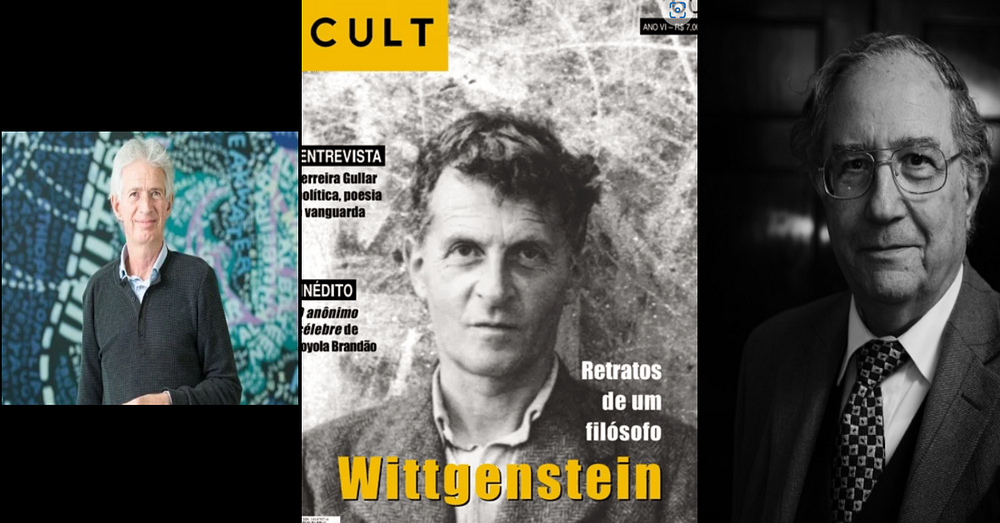
Paul Horwich (left) and P.M.S. Hacker (right)

[See my next essay, ‘Two Contemporary Wittgensteinians Fight Against Scientism in Philosophy’.]


(i) Introduction
(ii) The Wittgenstein Interpretation Industry
(iii) Wittgenstein on the True Nature of Philosophy
(iv) P.M.S. Hacker: A Wittgensteinian
(v) Consciousness as a Pseudo-Problem


“Is Ludwig Wittgenstein truly a hero of philosophy? [] I do think that a lot of people do not regard him as a true hero of philosophy and are too afraid to speak up because everyone else thinks he is a hero of philosophy. []
“I understand that LW was a fascinating figure majorly because of his highly unusual mannerisms and oracular pronouncements. [] [H]e thought most philosophical problems arose out of a misuse of language []. There have been dudes who have stated that we need to calm down about this Wittgenstein dude: Timothy Williamson [is one of them].”

— Ayokunle Afuye (Source can be found here.)
[Paul Horwich’s] book [] differs in substantial respects from what can already be found in the literature. For it is argued here that [Wittgenstein’s] fundamental idea is not a new conception of language (as most commentators have supposed), but rather a revolutionary conception of what philosophy is []
“Thus the first aim of the present work is to [] explain and justify [Wittgenstein’s] view of how philosophy should (and should not) be conducted, and of what it might achieve.”

— See source here.


Introduction
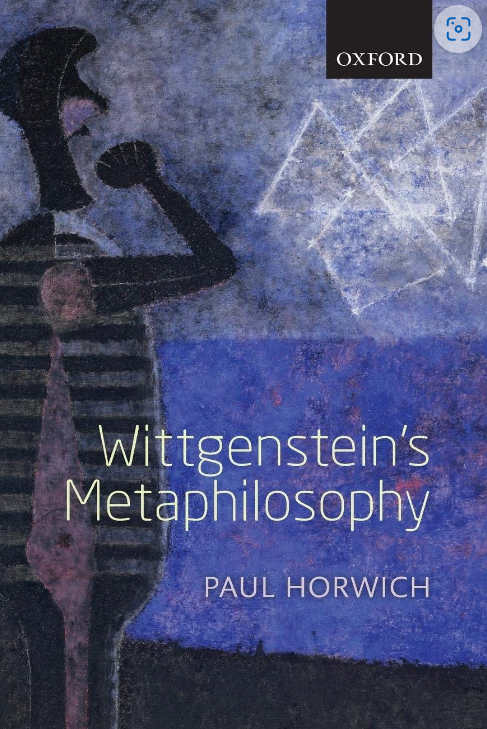
The English philosopher Paul Horwich wrote the following autobiographical introduction to his book Wittgenstein’s Metaphilosophy:

“As a schoolboy, I happened upon the Tractatus in Manchester’s Central Library. It was somehow impressive, and I wished I could understand it.”

Is it creepy to find Horwich’s own introduction to Ludwig Wittgenstein’s work creepy?

Let me explain why the word “creepy” was used…

How could a book be “impressive” to a person who also admits that he didn’t “understand” it?…

Unless the Tractatus was impressive to the young Horwich precisely because he couldn’t understand it.

Horwich’s bit of autobiography seems to be (more than) a hint at the fact that he got into Wittgenstein before he even understood a word of his work. So perhaps the esoteric and gnomic nature of Wittgenstein’s prose style (at least as found in the Tractatus) was part of the appeal for Horwich. Indeed, perhaps it was the entirety of the appeal to the young Horwich.

Horwich’s words actually remind me of Julian Baggini’s account of the poststructuralist (or deconstructionist) French philosopher Jacques Derrida.

In an article called ‘Think Jacques Derrida was a charlatan? Look again’, Baggini wrote the following words:

“One of Derrida’s examiners at his prestigious high school, the LycĂ©e Louis-le-Grand, wrote of his work: ‘The answers are brilliant in the very same way that they are obscure.’”

Perhaps this examiner was simply bowled over — or even hoodwinked — by Derrida’s obscurantist writing style. More relevantly, that writing style became one of the (main) reasons why so many people became Derrida’s disciples.

So, just like Horwich’s own personal introduction to Wittgenstein, how did this examiner know that Derrida’s answers were “brilliant” at the very same time as acknowledging that they were “obscure”? Yet Derrida’s answers were clearly not obscure enough for this examiner to recognise that they were brilliant.

Perhaps Derrida’s answers weren’t obscure at all, or they couldn’t actually have been known to have been brilliant (i.e., precisely because they were obscure).

The same line argument can be aimed at Michel Foucault’s words on Derrida. According to Baggini again, Foucault once stated that Derrida’s work was “either an F or an A+”.

To sum this introduction up.
Perhaps it’s indeed cheap and unphilosophical (although still possibly true) to say that many people believe that Wittgenstein was a great and profound philosopher because many people believe that Wittgenstein was a great and profound philosopher. (As already seen, Ayokunle Afuye hints at this in the opening quote.)

Yet, logically, this isn’t also to say that Wittgenstein isn’t a great and profound philosopher. It’s only to say that many people ride on the wave (or assumption) that Wittgenstein is a great and profound philosopher. And that assumption generates some of the (what I take to be) highfalutin and adoring bullshit written and said about the Austrian philosopher.

The Wittgenstein Interpretation Industry
“The only thing that mattered to them [the ‘Wittgenstein cult’] was the question: ‘What did Wittgenstein really mean?’. [] There wasn’t a question as to what’s the best position here [] but what did Wittgenstein really mean?”

Crispin Sartwell [See source here.]


Here’s a general overview of Paul Horwich’s take on Wittgenstein.

Much of Horwich’s book (i.e., Wittgenstein's Metaphilosophy) is made up of defences and expositions of Wittgenstein’s analyses.

So do Horwich’s portentous and universal conclusions about Wittgenstein’s philosophy follow from his own defences and expositions?

This isn’t to suggest that Wittgenstein himself was wrong on any of the issues discussed in that book. Instead, what may be wrong are the grand “metaphilosophical” conclusions Horwich and others have derived from their defences and expositions of Wittgenstein.

In any case, it just seems so absolutist and cringeworthy to be against all philosophy. This is especially the case when philosophising against philosophy. Of course, some workers in the Wittgenstein Interpretation Industry dispute that Wittgenstein actually was anti-philosophy

However, Horwich doesn’t seem to.

[All this is related to the Wittgensteinian-theory-against-theory contradiction, which Horwich claims doesn’t exist. This will be tackled in a later essay.]

And this is where those “Wittgenstein scholars” can be brought in.

So how much of an expert does one need to be in order to say anything about Wittgenstein?

Indeed, how much of an expert does one need to be in order to criticise a Wittgenstein expert?

And this is also where the Wittgenstein Interpretation Industry steps in. [See my ‘The Wittgenstein Interpretation Industry’.]

Paul Horwich himself works in the Wittgenstein Interpretation Industry.

The following passage is Horwich's own industrial product:

[A]n account of [Wittgenstein’s] mature philosophy can be extracted from Part I of the Philosophical Investigations, and that this work should be taken to override any other writings in tension with it.”

[As quoted by another part of the Wittgenstein Interpretation Industry — the British Wittgenstein Society.]

Now how can anyone make such a categorical claim about all of Wittgenstein’s philosophy?

Indeed, how can a Wittgensteinian make such a categorical claim?

By what possible argument, evidence or whatever could someone know (or simply demonstrate) that Part 1 of the Philosophical Investigations “override[s] any other writings in tension with it”?

Wittgenstein on the True Nature of Philosophy
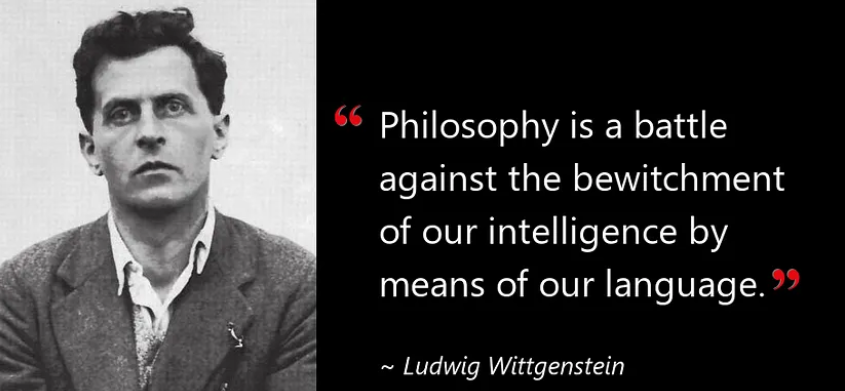
Paul Horwich (in the first chapter of Wittgenstein’s Metaphilosophy) sums up his prime position when he writes the following words:

“Wittgenstein’s most important insight is encapsulated in his remark that ‘Philosophy is a battle against the bewitchment of our intelligence by means of language’.”

Of course, there is some truth to that quoted statement from Wittgenstein. The problem is that Wittgenstein’s worshippers (or mere disciples) take it to be an absolute and all-encompassing truth.

It’s also odd that Horwich should states this:

“Arguably, Wittgenstein’s singular achievement was to have appreciated the true nature of philosophy.”

Surely the phrase “true nature of philosophy” is precisely the kind of phrase Wittgenstein himself would have hated.

Or perhaps I should really say this: Wittgenstein should have hated this phrase.

I offer that qualification because this is just my own interpretation of Wittgenstein. So unless Wittgenstein ever actually wrote “I hate the phrase ‘true nature of philosophy’”, then perhaps all we have is interpretation — at least on this precise matter…

And, precisely because of Wittgenstein’s unique and obscure prose style, that’s why we have the Wittgenstein Interpretation Industry.

P.M.S. Hacker: A Wittgensteinian
The English philosopher P.M.S. Hacker (1939-) also offers us what he takes to be (to use Paul Horwich’s words again) “the true nature of philosophy”.

Firstly, Hacker tells us that Wittgenstein was largely responsible for the linguistic turn in philosophy. This turn in philosophy became fashionable for a certain period (say, for two decades). Then it largely went out of fashion. Yet Hacker still believes that “it is what philosophy is good for”.

One result of the linguistic turn is that “Wittgensteinian quietists” (such as Horwich and Hacker themselves) still attempt to “dissolve philosophical problems, rather than solve them”.

So let’s discuss Peter Hacker in a little more detail.

Hacker is useful here because he perfectly encapsulates what a Wittgensteinian is.

Indeed, Hacker hasn’t only interpreted Wittgenstein for a living: he has attempted to become (as it were) at one with the Master.

Hacker expresses the Wittgensteinian position perfectly in the following passage:

[I’m only concerned with] what makes sense and what does not. The bounds of sense can be violated by the misuse of technical, not ordinary expressions no less than the misuse of ordinary ones.”

[This is taken from Hacker’s ‘Languages, Minds and Brains’ contribution to the book Mindwaves.]

Yet, on the surface at least, surely it is taking a tremendous liberty when a philosopher, scientist or academic uses an everyday word in a completely different way. This is Hacker’s take on that issue:

“And, in particular, [expressions] can and — in the cases I have examined — are violated by unconsciously crossing ordinary uses of expressions with half-understood technical ones.”

(As we shall see, this passage is especially germane when it comes to the later subject of consciousness.)

In any case, Hacker believes in what’s been called the “linguistic-therapeutic approach to philosophy, as originally advanced by Wittgenstein himself. Basically, then, Hacker believes that the words and concepts used by everyday people should be taken as (as it were) given by philosophers.

Consequently, Hacker sees the role of philosophy (as did Wittgenstein) as one of dissolving (or resolving) philosophical problems by examining (among other things) how words are actually used in everyday life.

More precisely, Hacker deems some?/many?/most? philosophical problems to be primarily conceptual in nature. To him, this also means that these problems can be dissolved (or resolved) purely by “linguistic analysis”.

All this lead us to Paul Horwich again and his stance on what he calls “pseudo-problems”.

Consciousness as a Pseudo-Problem
It was almost inevitable that Horwich would apply his “therapeutic” approach to consciousness. Predictably, he believes that the “mystery” (although not all philosophers use that word!) of consciousness can be dissolved in this way. That is done because “the problem of consciousness” can be shown to be a “pseudo-problem”.

Personally, I am somewhat sympathetic to this account of the problem of consciousness. However, because I’m neither a “Wittgenstein scholar” nor a worshipper of the philosopher, I don’t take every word Wittgenstein wrote (or uttered) on this subject as gospel.

In any case, one problem I have is with Horwich’s resurrection of the 1930’s term “pseudo-problem”. This is his definition of that term:

[A] pseudo-question or pseudo-problem is one that we should not attempt to answer — not because it is too difficult, but because it there is every reason to expect that no objectively correct answer exists.”

Then the (as it were) logic of pseudo-problems is specifically applied to consciousness. Horwich tells us that his job is

“to explain sympathetically Wittgenstein’s view that the traditional and still widely debated perplexities of consciousness are indeed the result of recognizable defective assumptions rather than the incompleteness of scientific knowledge and of our conceptual repertoire”.

This philosophical position on the philosophy of consciousness is also adopted by Peter Hacker.

Hacker believes that the “problems” and “mysteries” of consciousness dissolve once we realise that everyday words are either being (to use his own word) “misused”, or that new technical terms simply don’t have any substantive content.

(For example, Hacker believes that the term “qualia” is a, as Daniel Dennett has also put it, “philosopher’s artefact”. [See Hacker here.])

This philosophical stance is related to what was once called ordinary language philosophy.

This was a philosophy (rather than a specific school) which saw traditional philosophical problems as being rooted in the misunderstandings philosophers — and also scientists in Hacker’s case! — make when they distort (or simply change) everyday words. The upshot here is that using everyday words in new ways can often create philosophical problems, rather than help philosophers and scientists solve them.


Monday, 8 April 2024

Philosophy: My Posts (or Tweets) on X (8)


(i) Judith Butler’s Peculiar Prose Style
(ii) Reading and Listening to Music at the Same Time
(iii) Reading Kant Seriously
(iv) What Is a “Pseudo-Intellectual”?


Judith Butler’s Peculiar Prose Style

This is a serious question: Why does Judith Butler write in a very peculiar way?

The English philosopher Julian Baggini once argued that Jacques Derrida’s philosophy was somehow embedded in his “complex and difficult” prose style. This doesn’t mean that Derrida’s philosophy couldn’t help but be written in complex and difficult prose simply because the philosophy itself is difficult and complex. It means that the (supposedly) complex and difficult prose is actually part of the philosophy.

So is the prose style somehow part of the philosophy in Judith Butler’s case too?

An alternative way of looking at this is to say that Butler’s prose style is pretentious.

Butler has been accused of “bad writing” so many times that she’s had a couple of decades (or more) to come up with… pretentious rationalisations for her pretentious prose. She’s a skilled academic. So she can verbally worm her way out of a hermetically-sealed coffin. [See ‘We Got the Wrong Gal: Rethinking the “Bad” Academic Writing of Judith Butler’, which is a defence of Butler’s bad writing.]

So why is Butler’s prose style pretentious?

It’s mainly because it’s a prose style which was adopted by certain (largely American) academics, in certain (largely American) university departments, at a certain point in history. And they’ve adopted this prose style primarily to hide and obscure their bad arguments (or total lack of arguments), banal ideas, and their truisms.

Reading and Listening to Music at the Same Time

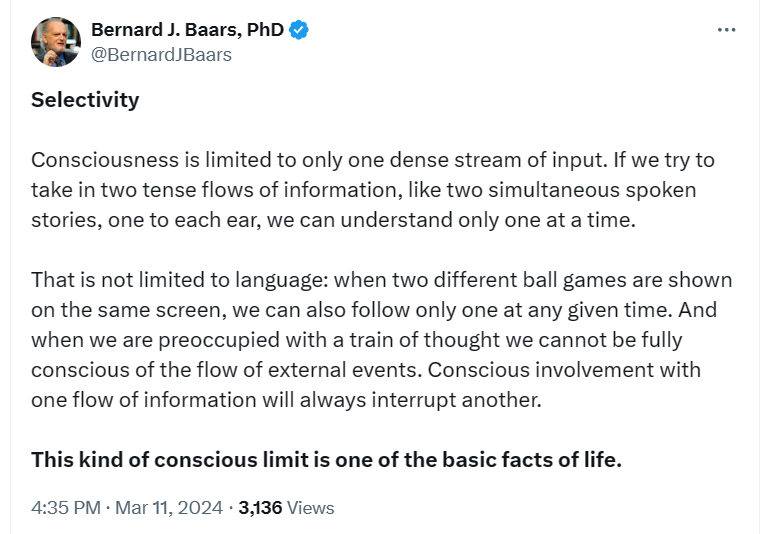
I wonder how reading and simultaneously listening to music fits into Bernard J Baars’ post above. Sure, you can’t concentrate as much on the music as you could do if you solely listened to the music. However, surely these two things do occur together. In fact, listening to music and reading is a common phenomenon. (Personally, I don’t do this anymore. However, I once did.)

One wonders — as a non-specialist — what’s going on in both the brain and mind to make this possible.

I don’t believe it’s a case of “switching” either.

That is, it’s not a case of switching between the reading and the music. (Bernard J. Baars writes: “Conscious involvement with one flow of information will always interrupt another.”)

All this reminds me of an example from the philosopher Ned Block of someone reading and all along there’s the noise of heavy wind outside. The reader hears the wind at all times. However, only at a certain time does he actually note (a loose word, admittedly) that it’s the wind he can hear. And he also notes that it’s a heavy wind.

As Block puts it: this person is phenomenally conscious of the wind, and then he becomes access conscious of the wind only at a certain point.

Reading Kant Seriously

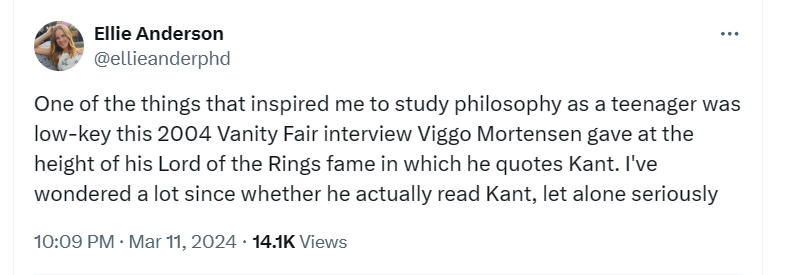
What is it to have read Kant “seriously”?

And how seriously must someone have read a philosopher before he or she can quote — or even mention — that philosopher?

Take Wittgenstein and the Wittgenstein Interpretation Industry, which publishes around 1000 articles, books, papers, etc. on the Austrian philosopher every year. (This is a figure I once read for a single year at least. Although it can’t be correct… Surely?!)

Do I need to heavily invest in this industry before I can quote — or even mention — Wittgenstein?

What Is a “Pseudo-Intellectual”?

Most of the time I come across the sneering term “pseudo-intellectual” all it means is that the person who uses it doesn’t like (or agree with) the person he’s criticising.

It also often means “non-academic” or “non-expert”.

Yet that too ties in with the first point.

Another related way the term “pseudo-intellectual” is used is to refer to those intellectuals who express political views that the critic doesn’t like or agree with. Thus, the very fact that the intellectual holds and expresses political views the critic doesn’t like (or agree with) renders him pseudo

Intellectuals with the correct political views, on the other hand, are Real Intellectuals.

That said, there is so much sneering jargon in the following passage that I don’t really know what to make of it. Here goes:

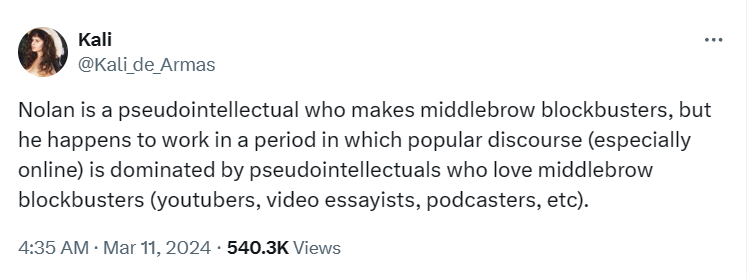
“Nolan is a pseudointellectual who makes middlebrow blockbusters, but he happens to work in a period in which popular discourse (especially online) is dominated by pseudointellectuals who love middlebrow blockbusters (youtubers, video essayists, podcasters, etc).”

[The following was an additional post on X.]

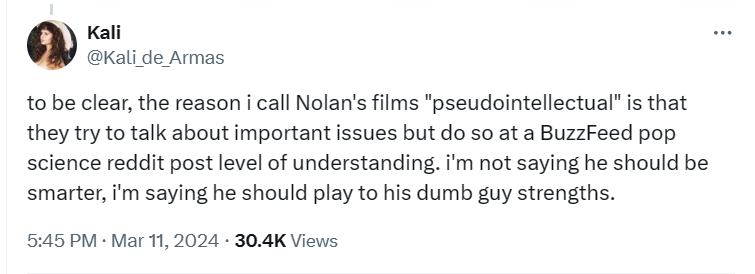
Sure. Many of Nolan’s films include scientific issues and references. So are you simply accusing Nolan of not being a… scientist? I think he’d hold up his hands to that charge. However, Nolan does have scientists helping him on the screenplays he writes, including Kip Thorne.

Instead of relying so heavily on words like “pseudointellectual”, “BuzzFeed pop science, “dumb”, etc., why not provide an argument? It seems that you rely too much on rhetoric.

Apart from posting on X, what are your own credentials? What gives you the right to speak so loudly on this subject?

Shorter

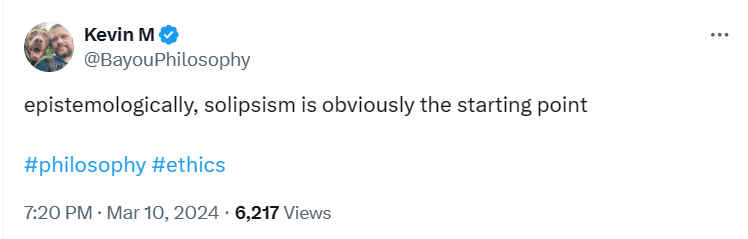
It couldn’t be a “starting point”.

Solipsism is (or was) the end product of a train of philosophical reasonings (epistemological or otherwise). More simply, it’s a philosophical position. So how could solipsism be an “obvious starting point” for epistemology — or for anything else?

Note that this isn’t to say that solipsism is either a valid or an invalid position.

Shorter

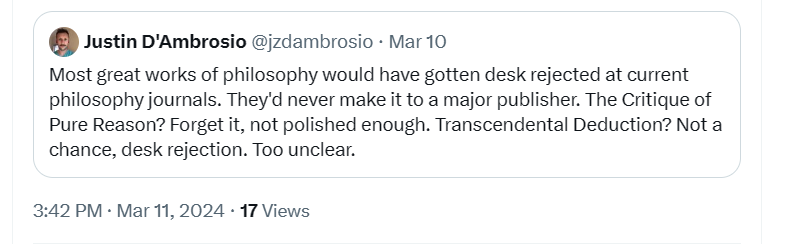
I’m not sure how Justin D’Ambrosio could know that these classic philosophical works would be rejected today…

Actually, if someone sent in a work of transcendental idealism, written in the dense style of of a 18th century German academic, then I suppose that it would be rejected. Yes, it would be a very odd submission. However, this may well apply to all works written before, say, the year 2000. Or even before the year 2020!

… But I don’t believe that’s what D’Ambrosio meant.

The Critique of Pure Reason was written in a very academic style. So it would have that going for it. Still, an 18th century academic style won’t be like the academic styles of 2024.


My X account can be found here.


Sunday, 31 March 2024

Margaret Boden on Qualia and Artificial Intelligence


(i) Introduction
(ii) Paul Churchland on Qualia
(iii) Colin McGinn and David Chalmers on Qualia
(iv) Aaron Sloman on Qualia
(v) Are Qualia Ineffable, Private, and Yet Causally Salient?
(vi) Dennett on Verbal Reports About Qualia


See my ‘Margaret Boden on Artificial Intelligence (AI) and Consciousness’ for a short introduction to both Margaret Boden herself, and her book AI: Its Nature and Future.

When it comes to qualia and artificial intelligence (AI), Boden discusses the ideas and theories of Paul Churchland and Aaron Sloman.

So let’s firstly deal with the Canadian philosopher Paul Churchland.

Paul Churchland on Qualia

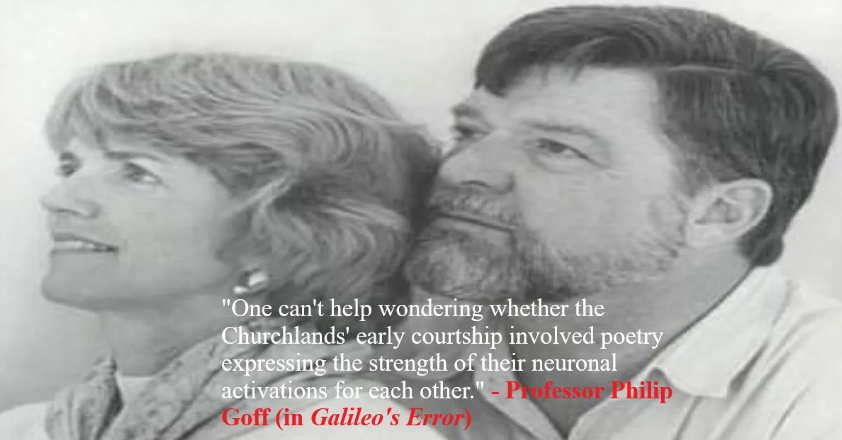
Patricia and Paul Churchland

At first, Margaret Boden presents Paul Churchland as an identity theorist (see ‘Identity Theory’), rather than as an eliminativist materialist (see ‘Eliminative materialism’) . In Boden’s own words:

“For Churchland, this isn’t a matter of mind-brain correlation: to have an experience of taste simply is to have one’s brain visit a particular point in that abstractly defined sensory space.”

This means that Churchland doesn’t offer us those “mere correlations” which anti-physicalists and others sniff at.

Indeed, if you only stress correlations, then (arguably) you’ll always need to deal with David Chalmers’ “hard problem”. After all, if brain state X is (always?) correlated with the bitter taste of a lemon, then Chalmers and others can always ask the following question:

Why does brain state X give rise to the bitter taste of lemon (even if that taste is correlated with that brain state)?

In any case, Churchland isn’t an eliminativist about qualia: he’s actually an eliminativist about propositional attitudes. [See Churchland’s Eliminative Materialism and the Propositional Attitudes’, which was published way back in 1981.]

To clarify. Churchland, as a materialist, isn’t out to eliminate qualia: he’s out to identity qualia with (to use Boden’s words) “particular point[s] in that abstractly defined sensory space”.

So Churchland doesn’t deny (or reject) qualia: he simply offers us his own account of them. [See note 1 on Dennett’s own account of consciousness.]

In Boden’s own words:

[Paul Churchland] offers a scientific theory — part computational (connectionist), part neurological — defining a four-dimensional ‘taste-space,’ which systematically maps subjective discrimination (qualia) of taste onto specific neural structures. The four dimensions reflect the four types of taste receptor on the tongue.”

Of course, some anti-physicalists, all dualists and others believe that qualia cannot possibly be (specific or otherwise) “neural structures”. That’s simply because they don’t deem qualia to be physical in nature at all. Indeed, even some physicalists don’t believe that a token or type neural structure and a token or type quale can be one and the same thing.

Identity theorists (old and new), on the other hand, do believe that they are one and the same thing.

More clearly. To some anti-physicalists, and to all dualists, the idea that

all phenomenal consciousness is simply the brain’s being at a particular location in some empirically discoverable hyperspace”

is actually to eliminate qualia completely — if only according to their own definition. So perhaps such people could state the following:

Brain states are brain states. Qualia are qualia.

Or in Boden’s own terminology:

Particular locations in some empirically discoverable hyperspace are particular locations in some empirically discoverable hyperspace. Qualia are qualia in no particular location.

… But it’s not just mere correlations which physicalists need to deal with.

Colin McGinn and David Chalmers on Qualia

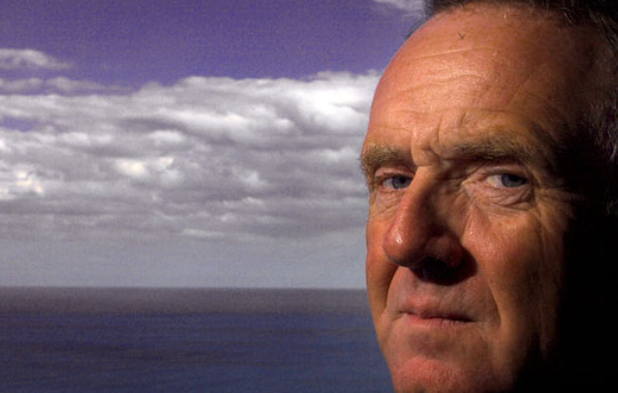
Colin McGinn

Margaret Boden also mentions (if only in passing) the British philosopher Colin McGinn and his own stance on the “causal link” between qualia and “the brain”. According to Boden, McGinn

“argued that humans are constitutionally incapable of understanding”

that link.

Yet perhaps this too is just another variation on the mere-correlations theme.

After all, and like most of the critics of physicalism, McGinn accepts that the correlations exist, and even that they’re relevant and important. However, how can we (philosophically) understand those correlations? How can we understand — or explain — the causal (or otherwise) link between a bit of the brain (or even the brain taken in toto) and, say, the quale we experience when drinking bitter lemon juice?

Boden covers this precise issue again in another place in her AI: Its Nature and Future. (This time when discussing the position of John Searle.) In line with McGinn, Boden states that

“qualia being caused by neuroprotein is no less counter-intuitive, no less philosophically problematic”

than stating that

“computers could really experience blueness or pain, or really understand language” .

Now what about the Australian philosopher David Chalmers?

Even though Chalmers (like McGinn) will be happy to accept that qualia are mapped onto specific neural structures, then that still leaves his “hard problem of consciousness” untouched. In other words:

Why does neural structure X lead to, say, the specific bitter taste of a lemon?

Moreover: Why don’t lemons taste like dog shit or like nothing at all?

But Hang on!

All this depends on what we take qualia to be in the first place. (See later section.)

Now for the philosopher and researcher Aaron Sloman on his (as it were) AI account of qualia.

Aaron Sloman on Qualia

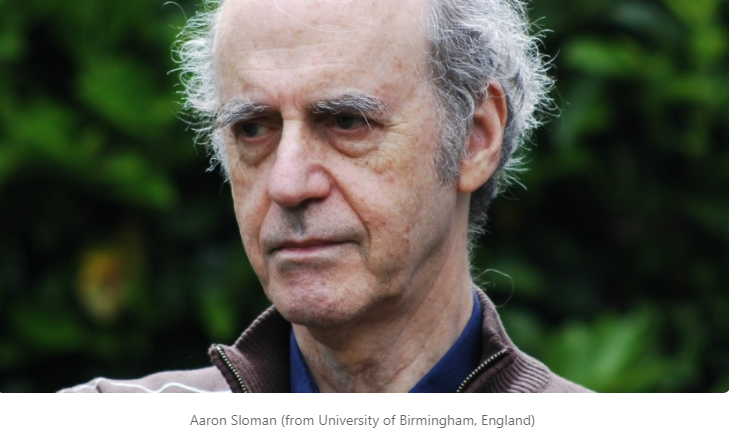
Like Paul Churchland earlier, Aaron Sloman (whom Boden refers to many times in her book) doesn’t eliminate qualia either. Far from it.

Basically, Sloman sees qualia as being “hosted” by the brain. Thus, there’s clearly no elimination of qualia here.

Indeed, according to Sloman (if via Boden), qualia don’t even require a biological brain!

It seems, them, that Sloman’s way of looking at things could also be adopted by idealists, dualists, and even by Platonists…

Platonists?

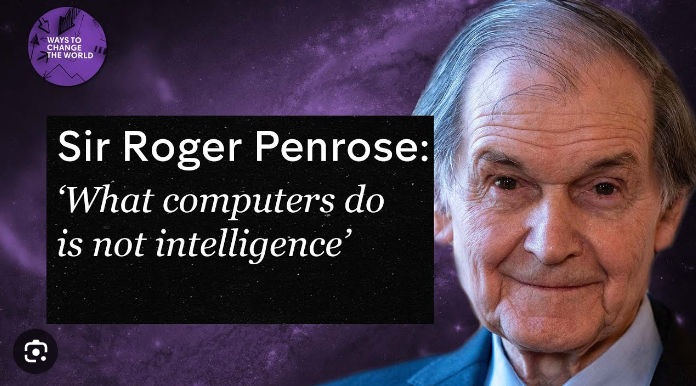
Take what the physicist and mathematician Roger Penrose argued on this subject.

Penrose discussed what he called a “qualium” (i.e., the singular of ‘qualia’), and its relation to the brain.

Penrose wrote:

“Such an implementation [of an algorithm] would, according to the proponents of such a suggestion, have to evoke the actual experience of the intended qualium.”

If the precise hardware doesn’t at all matter, then only the given algorithm (or the virtual machine) matters. Of course, the algorithm (or virtual machine) would need to be implemented… in something.

Yet this may not at all be the case if we follow this AI position to its logical conclusion.

Are Qualia are Ineffable, Private, and Causally Salient?

As already hinted at, it can be said that Sloman’s position on qualia and consciousness may be somewhat appealing to some anti-physicalists and anti-reductionists in that he argues that we can’t (in Boden’s words) “identif[y] qualia with brain processes”. What’s more, consciousness and qualia “can’t be defined in the language of physical descriptions”

Yet, despite all that, qualia still have “causal effects”.

So Sloman’s account of qualia (if accurately presented by Boden) is odd in that, on the surface at least, it perfectly squares with the (as it were) traditional account of qualia. Yet, at the same time, it’s also bang up-to-date in terms of its scientific references.

Why use the words “traditional account of qualia” here?

Sloman believes that qualia are ineffable and private, yet also of causal relevance when it comes to human subjects.

In terms of Sloman’s position on ineffable qualia, Boden writes:

“Moreover, they cannot always be described — by higher, self-monitoring, levels of the mind — in verbal terms. (Hence their ineffability.)”

In terms of privacy, Boden continues:

“They can be accessed only by some other pars of the particular virtual machine concerned, and don’t necessarily have any behavioural expression. (Hence their privacy.)”

Finally, in terms of causality, Boden finishes off with the following words:

“They can have causal effects on behavior (e.g. involuntary facial expression) and/or on other aspects of the mind’s information processing.”

Most (if not all) of the above seems to go against Daniel Dennett’s case against qualia. What’s more, the addition of up-to-date scientific jargon (such as “computational states”, “information processing”, “virtual machines”, etc.) doesn’t seem to make much difference to that.

Privacy

In terms of privacy again.

In broad terms, mental privacy has always been problematic in philosophy. However, perhaps Sloman’s way around this is to bring on board (as Boden puts it) “other parts of the particular virtual machine”.

In Boden’s words, qualia

“can be accessed only by some other parts of the particular virtual machine concerned, and don’t necessarily have any behavioural expression”.

Specifically, qualia

“can be accessed only by some other pars of the particular virtual machine concerned”.

Thus, it may seem that we don’t have the old-style privacy here in which a human subject is the sole (as it were) owner of whatever it is that’s going on inside his mind and brain. Instead, we have different “parts” of a “machine”.

Yet it’s still the same (or singular) virtual machine that’s doing the accessing — even if it does have parts.

So does privacy still rule okay?

Sloman (at least as presented by Boden) has the same position on privacy as the philosopher Owen Flanagan. That is, Flanagan accepts that (mental) privacy exists. However, he doesn’t see it as being such a big deal for naturalism. (At least it’s not a big deal to Flanagan himself, as well as to other naturalists.)

Epiphenomenalism

One important point stressed by Sloman (if in Boden’s words) is that qualia “don’t necessarily have any behavioural expression”. (Boden adds: “Hence their privacy.”)

In this passage we have an account of qualia’s causal effects, as well as a hint that they can also be epiphenomenal

However!

A particular quale may not be behaviourally expressed, and still not be epiphenomenal. After all, this reference to “behavioural expression” is usually a reference to the subject verbally reporting his quale — or even just physically reacting to it. However, the quale may still be causally relevant even without such (as it were) outward signs.

Despite the seemingly Cartesian account of qualia’s privacy, ineffability, and non-necessary link to behaviour, Sloman still believes that qualia

“can have causal effects on behavior (e.g. involuntary facial expression) and/or on other aspects of the mind’s information processing”.

This seems obviously true.

If someone tastes a bitter lemon and grimaces, then clearly the bitter quale of a lemon has had a “causal effect[] on behavior”…

But is it a philosophically-conceived quale that we’re talking about here?

It depends.

However, let’s return to the statement that qualia “don’t necessarily have any behavioural expression”. This possibility would definitely go against Daniel Dennett’s stance on this matter.

Dennett on the Verbal Reports of Qualia

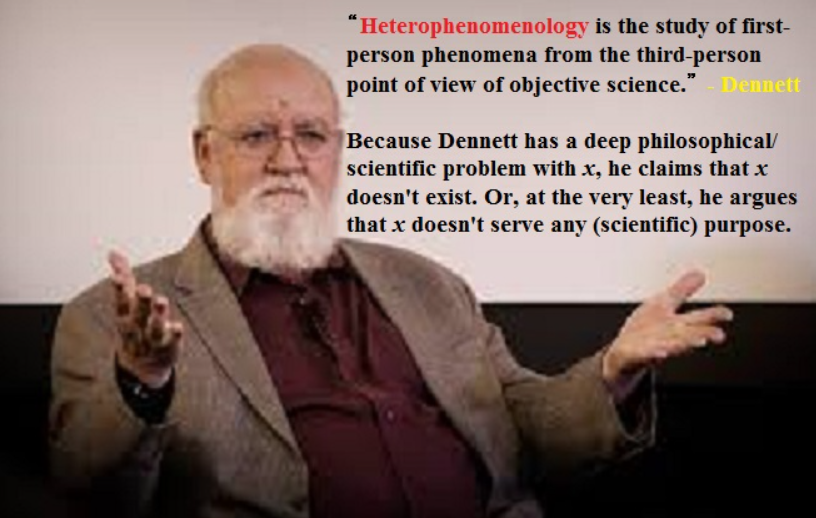
If qualia don’t “have any behavioural expression”, then they constitute (to quote Wittgenstein) “a wheel that can be turned though nothing else moves with”. (This position also goes against Dennett’s heterophenomenological stance on all qualia-talk.)

So can we also ask the following question here? —

If qualia aren’t behaviourally expressed, then how do we know that they exist at all?

Sure, a human subject may verbally report that his qualia exist. However, how would other human subjects know that his qualia exist? Or, less strongly, how would other subjects know that they his qualia have the qualities and characteristics which he says they have?

All this leads on to a fairly extensive section of Boden’s book in which she tackles Daniel Dennett’s position on this issue.

Boden actually quotes one of Dennett’s own dialogues between himself and someone called Otto. The following is part of Boden’s own extract from that dialogue:

[Otto] Look. I don’t just mean it. I don’t just think there seems to be a pinkish glowing ring; there really seems to be a pinkish glowing ring!
[Dennett] Now you’ve done it. You’ve fallen in a trap, along with a lot of others. You seem to think there’s a difference between thinking (judging, being of the firm opinion that) something seems pink to you and something really seeming pink to you. But there is no difference. There is no such phenomenon as really seeming — over and above the phenomenon of judging in one way or another that something is the case.”

This is essentially a position both against the ineffability of qualia, and in support of Dennett’s heterophenomenology.

Basically, Otto can’t rely on his own experience of qualia to defend their reality or existence.

So all we have are Otto’s “judgements” about, in this particular case, a particular quale.

Firstly, Otto claims to experience a “pinkish glowing ring”. To Dennett, this is fair enough. That is, he doesn’t reject that claim out of hand (or as it stands).

However, what of the quale itself?

Is it real?

Does it exist?

What qualities and characteristics does it have?

Well, Otto says that this quale is real because he experiences it. More specifically, Otto states that it “seems to be a pinkish glow”.

This means that Otto has moved on from this quale’s existence (or reality), to referring to his own personal (as it were) seemings.

So these seemings are surely real?

Dennett questions this too.

In response, Otto ups the ante by stating that he doesn’t don’t “just mean it” about the seeming. He continues:

“I don’t just think there seems to be a pinkish glowing ring; there really seems to be a pinkish glowing ring!”

So, again, we’ve moved from an implicit claim that the quale is real or exists, to the seeming-of-a-pinkish-glow being real or existing.

Again, forget the quale itself, what about the seeming-to-have-a-pinkish-glow?

Dennett’s main point is that all he has to go on (all we have to go on) are (at first) Otto’s judgments about the pinkish glow, and then, secondly, his judgments about the seemings-of-a-pinkish-glow.

Thus, we never get to either the quale or the seeming itself — only to the “verbal reports” about both.

However, is that a reason to deny reality or existence to (as it were) what’s behind the verbal reports?…

But what’s behind the verbal reports?

Are we in a loop of judgments here?


Note:

(1) This is parallel to Daniel Dennett’s position on consciousness. It’s not that he believes that “consciousness should be explained away”. It’s that his account of consciousness is at odds with at least some mainstream, as well as also philosophical, accounts of it.