Saturday, 14 March 2015

The Statements of Post-Structuralist (Etc.) Philosophy are Taken to be True


The philosophers who fall under the labels 'post-structuralist', 'post-modernist', 'structuralist', etc. (e.g., Derrida, Foucault, Baudrillard, Lyotard, etc.) are, in fact, pseudo-relativists, pseudo-historicists, pseudo-subjectivists, etc. because they take most of what they say to be true. If they didn't do so, then they'd be subject to what philosophers call “self-referential paradoxes”.
 
Basically, their relativisms, historicisms, subjectivisms, etc. are rhetorical moves intended to score various points against the traditions, political systems and philosophies they're trying to destroy. Nonetheless, they believe that what they say is true – absolutely.
 
They believe, for example, that equality and fairness are non-relative moral values. And their other political and philosophical views about racism, capitalism, Das System, imperialism, sexism, etc. are take to be true (i.e., non-relative). The pretentious prose and talk about “the deconstruction of the logos” is basically a lot of philosophical fluff hiding the underlying philosophical, political and moral beliefs and statements which they're very strongly defending and which they take to be true.

Friday, 6 March 2015

What is a(n Analytic) Philosopher?


Julian Baggini offers us psychological reasons and accounts to explain what a good philosopher should be like. He writes:

Firstly, a good philosopher should not get so attached to our theory that we find ourselves committed to it and no longer subjecting it to rational scrutiny.” 

We can even say that such theoretical open-mindedness is essential for a good philosopher. It is, after all, the case that many people often fiercely commit themselves to their own theories and truths and rarely, if ever, subject them to any kind of critical scrutiny.

Not only that: I think that Bertrand Russell once said that for very many people it's often the case that most of their theories and beliefs are acquired relatively early in life and thereafter become objects of irrational faith. In other words, too many people stick to their old beliefs for basically the emotional reasons of epistemic security and metaphysical comfort.

For example, the belief, for example, that ‘X is a good thing’ makes the subject both epistemically secure and in a state of emotional and cognitive equilibrium that would only be shaken if he or she began to genuinely question the epistemic and political validity and truth of their now entrenched belief.

Moreover, many people simply go out of their way to back up and nurture their old beliefs with more arguments and data. They do this while systematically ignoring or automatically rejecting any arguments or data that clearly shakes the cognitive and emotional equilibrium which is largely constituted by old and rigidly-held beliefs and theories. Sometimes it's simply too emotionally and cognitively disadvantageous to sincerely take on board arguments which may unsettle or even refute one’s otherwise cherished and static beliefs and theories.

In terms of the subject’s own mind: he or she will think it wise to keep the status quo. It's simply too much cognitive effort and emotional reassessment that frighten people away from self-scrutiny. So many times when we confront the beliefs of others it's often the case that one’s adversary doesn't genuinely listen to one’s counterarguments by either simply turning away or drowning out such counterarguments with the noise of their own arguments.

For example, very few people make a political or philosophical volte-face as a result of face-to-face argumentation. And that also true in the case of hours of face-to-face discussion. What often happens is that if there's any kind of volte-face or Damascene conversion, it's likely to occur when the subject is on his own or when he's free from the cognitive rigour and emotional flux of much face-to-face discussion. In a state of emotional equilibrium, the subject’s cognitive skills can more readily tackle the previously discussed counterarguments.

That's why such self-scrutiny "requires courage". It's not nice to jettison one’s old beliefs if they've provided emotional comfort and security.

Similarly, not many people can be bothered with the amount of cognitive activity required to question and then possibly jettison one’s long-held and cherished beliefs. One’s philosophical, ethical and political principles, after all, are so complicated in essence that a strong challenge to them would require a lot of cognitive energy. And that level of intellectual engagement is rarely possible for many people outside professional politics and philosophy departments.

It can even be said that it's not the theories and beliefs that the philosopher upholds and critically defends which are of importance to being a good philosopher: it's the ability to reason well about any subject, belief or theory. It's also the logic of clear thinking (in any domain) that's of importance, not the fact that the philosopher can offer us powerful theories about reality or all-encompassing philosophical systems. Indeed it can even be said that many hard-headed analytic philosophers (especially post-grad students) don’t really have philosophical theories at all. Instead they take their prime purpose to be the analysis of theories, beliefs and problems, not the creation of them.

Interestingly enough, this was Wittgenstein’s position on the role of philosophy in the 1920s and beyond. He believed that philosophy “should leave everything as it is”. More specifically, a philosopher shouldn't even come up with his own propositions: he should simply describe and analyse the propositions of science, logic and mathematics.

Moreover, Wittgenstein believed that the only propositions that one can accept are those of science, logic and maths. Thus, by definition, philosophy couldn't come up with its own genuine propositions. All propositions were either world-directed (or scientific) or essentially tautological or analytic (as in logic and maths).

Clearly, then, analysis and description was of paramount importance to Wittgenstein during this and his later period. The idea of philosophical theories, for example, disgusted him, as did philosophical propositions earlier. Only in science can there be genuine theories. Philosophical theories, on the other hand, are but examples of "meaningless metaphysics".

This deflationary attitude towards philosophy was passed on to “linguistic philosophers” like J.L. Austin and others and also, earlier, to other schools of philosophy such as logical positivism. However, even though logical positivism and linguistic philosophy are dead, and since the 1960s metaphysics has begun to thrive again, this deflationary attitude to philosophy as a whole is still (to a large extent) upheld by nearly all analytic philosophers – even by arch-metaphysicians such as Saul Kripke.


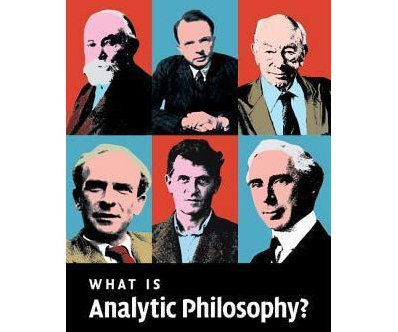
What is (Analytic) Philosophy?


This is a short and personal take on analytic philosophy. Therefore it generalises quite a lot and offers a very broad outline on matters.

The way analytic philosophy is defined in the following is by seeing how it differs to other kinds of philosophy. Though again, as ever, there'll be many exceptions to the points made.

*****************************

It's sometimes somewhat frustrating to hear what many other people think philosophy is.

For example, one man I once spoke to said she thought philosophy to be far too “mystical” and “airy-fairy” for her otherwise quite scientific mind.

Another person believed that Nostradamus was a philosopher and thus that philosophy is about all things prophetic and esoteric.

But most common of all, many laypersons believe that philosophy is an attempt to explain “the meaning of life” or “life’s ultimate purpose”.

Very few analytic philosophers have concerned themselves with such areas and questions. Virtually no 20th century philosopher saw himself in this mould. Perhaps only the philosophical Stoics took the meaning (or purpose) of life to be the prime object or subject of philosophy (as also with the Epicureans). To some extent both Plato and Aristotle also concerned themselves with these issues. However, both branched out into many other areas.

No doubt the layperson would be very suspicious of both the style and content of much contemporary analytic philosophy. The use of logic alone (along with the symbolism) would surely surprise the kind of layperson who takes the question ‘What is the meaning of life?’ to be philosophy’s ultimate question. Similarly, analytic philosophy’s close relation to science and mathematics would prove enlightening. (Not least, the logical positivists, the naturalisers of epistemology, ‘scientism’ or the subservience - if that’s what it is - to physics, etc.)

Similarly, contemporary philosophy no longer sees its primary role in terms of the discovery of the fundamental nature of reality or of Man. Such a pursuit - almost by nature - would render the philosopher an old-fashioned “system-builder” in the manner of, for example, Hegel.

Instead analytic philosophers often adopt what Bertrand Russell called a “piecemeal approach” to philosophy. That is, only small problems are tackled that don't bear strong relations to any larger metaphysical issues/systems. It isn't the philosopher’s job, they may think, to tie everything together into a philosophical system and thus gain access to what the 19th century idealists called the 'Absolute’.

Analytic philosophy is, well, analytic.

We can also say that it is fundamentally atomist in nature even when the philosopher concerned is a holist of some description! That is, even though Russell’s ‘logical atomism’ and sense-data theories are no longer upheld in analytic philosophy (because of the holistic realisation that such atomism couldn't be sustained or justified in its old crudely quasi-scientific way), there's a sense in which analytic philosophy is still atomistic in nature – or if not atomistic, then, again, analytical. In other words, analytic philosophy is rarely synthetical in the Continental manner. Even holists (at least when it came to the philosophy of science) like W.V.O. Quine looked askance at, for example, Hegel’s ostensibly extreme syntheticism or holism. Holism, therefore, can still be endorsed and utilised within a philosophical framework that's still, nevertheless, largely analytical in nature. Indeed Quine’s logical and scientific biases clearly make this the case.

Quine, therefore, can be seen as the archetypal analytic philosophy. That said, many other analytic philosophers had a problem with both his ideas and his concentration on logic. This basically means that analytic philosophy is very much a broad church. However, it's more of a broad church when it comes to philosophical content than when it comes to philosophical techniques/ways of arguing.

Finally, this piece on analytic philosophy is itself contextual, synthetic and (slightly) holistic. This simply goes to show how problematic many neat philosophical divisions really are.


Analytic Philosophy's Intertextuality of Proper Names


We get a good idea of the reality of what Continental philosophers call intertextuality when John Passmore discusses Michael Dummett’s theory of proper names:

“… to discuss, let us say, Dummett’s theory of proper names, one would have to take into account what Frege himself says, what Dummett says about Frege, what Kripke says about both Frege and Dummett, together with Dummett’s replies to, and his independent criticism of, Kripke. And this is clearly impossible in any reasonable compass.” (75)

In order to understand what Dummett says about proper names we would need to see what Frege says about them. Then we should see what exactly Dummett says about what Frege says about proper names. That isn't enough. We would also need to see what Kripke says “about both Frege and Dummett” on this issue because of Kripke’s own importance to this debate. Then we would also need to read Dummett’s replies to Kripke’s replies to Dummett, who was, in a sense, replying to Frege.

We know that Frege influenced Dummett. However, if we must read Frege and Kripke as well, what about the philosophers who influenced them? And so on.

Strangely, this extreme research on proper names is said to be “clearly impossible in any reasonable compass” (75) by Passmore. Though this is precisely the sort of research that is expected from the average post-graduate student at an average philosophy department which specialises in analytic philosophy. Philosophers too are expected to drop as many names as possible – especially fashionable up-to-date names. We must also bear in mind that Passmore wrote the passage above in 1985 – twenty three years ago. Since that time lots more has been written on proper names and indeed on Frege and Dummett’s stance on proper names. What would Schopenhauer think of all this philosophical parasitism?


A Short Piece on Dummett’s Theory of Meaning


What, exactly, did Michael Dummett mean by “a theory of meaning”?

Firstly, it concerns the “implicit knowledge we have of our language”. Dummett says:

It must issue in principles which will make explicit the implicit knowledge we have of the language we use, the knowledge we display in our practice, in such a way as to show that these principles do adequately reflect that practice.” (78)

This is not, then, unlike Chomsky’s enterprise of showing us the “implicit knowledge” we must have in order to generate an infinite possibility of grammatical sentences from a limited stock of linguistic material. This is accounted for, in Chomsky’s theory, by our “language faculty” which is built into our brains and thus also our minds.

Dummett is clearly doing something similar in his theory of meaning. Indeed we must have implicit knowledge of “the language we use” in order to account for that use. After all, not many non-philosophers know about truth-conditions, sense, reference, proper names and so on. Dummett must be arguing that we do have implicit knowledge of such things; just as Chomsky argues that we must have implicit knowledge of what he calls “universal grammar” and the “universals” contained in that grammar. This knowledge of truth-conditions, sense, etc. “we display in our practice” (78). Again, we wouldn’t display what we do display without such implicit or tacit knowledge.

These “principles”, however, must “adequately reflect that practice” (78) because Dummett isn't carrying out a normative or revisionary project. He is uncovering what we must actually know – even if only implicitly. Thus he mustn't “ascribe to us knowledge we could not possibly have” (78).

Many philosophers (for example Gilbert Ryle) have also distinguished “knowing how” from “knowing that”. The former is non-propositional or non-theoretical, unlike the latter.

Is our implicit knowledge of language a case of knowing how or of knowing that? Passmore writes that

we have an implicit knowledge, for example, of the physical principles which are manifested in our capacity to ride a bike”. (78)

Didn’t Ryle and others argue that we couldn't even express or formulate our implicit knowledge of how we can ride a bike even if we were asked to? In that case, would knowing how actually be a case of implicit knowledge at all? Or perhaps we have implicit knowledge without being able to express of formulate it.

In Dummett’s case, does he think, or expect, the layperson to express or formulate his implicit knowledge about his language or does he still have such knowledge even when he or she can't do so? In that case, is implicit knowledge, as it were, mechanical and non-propositional (or non-theoretical)? If that's the case, again, why is it knowledge at all and not something else? Does it matter to Dummett whether or not we can express or formulate our implicit knowledge?

Passmore reiterates Dummett’s position by talking in terms of our understanding. He writes:

A good theory of meaning, then, will be a theory of what it is to understand, of what one knows when one knows a language, so that, for example, ‘Meaning is use’ could serve as a thesis in such theory only if to know the meaning is to know the use – implicitly or explicitly.” (78)

To put this simply. Why and how is it that we understand what it is we understand when we hear or read examples of our own language? What enables us to understand such examples of our language? Another way of putting this is to ask, “what one knows when one knows a language” (78). After all, we must know something about our language and its sentences and words otherwise we wouldn’t understand our language. And what we know must be more than what we've learned at school. What we know, in a sense, must have come before our formal training (or our adult training) otherwise perhaps we couldn’t have even learned the basics in the first place (never mind the higher levels of grammar and vocabulary).

Interestingly enough, Passmore writes that the “meaning is use” thesis could be a part of Dummett’s overall theory of meaning. However, that would only be the case if “to know the meaning is to know the use – implicitly or explicitly” (78). That is, it's still about our knowledge or understanding of meaning. In this case, what we know is how we use words and sentences. These uses of words and sentences provide us with their meanings. Thus use-theory can become a part of Dummett’s general theory of meaning – that is, if he were to accept it in the first place.